Loading...
This comparison has not been analyzed yet.
One-time AI generation (~1 minute). Scores and timeline are already available below.
Ivo Josipovic vs Jomo Kenyatta
Jomo Kenyatta leads by 4.8 pts · 2 figures compared
…

Ivo Josipovic
Politician · Modern
53.3Total
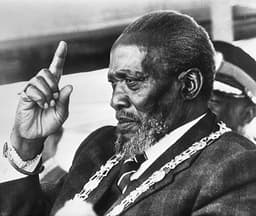
Jomo Kenyatta
Politician · Modern
58.1Total
Basic Information
Born
1957
1897
Died
—
1978
Era
Modern
Modern
Nationality
Croatia
Kenya
Occupation
Politician
Politician
Civilization
Western
Other
Score Comparison
Military (10%)
50.0
25.9
Political (20%)
68.0
72.0
Influence (20%)
52.5
65.0
Legacy (20%)
41.7
55.0
Leadership (15%)
68.0
72.0
Strategy (15%)
43.5
39.3
TOTAL
53.3
58.1
Ivo Josipovic — Complete Timeline
2010 AD
Elected President of CroatiaPolitical Action◆ Major
Josipovic was elected as the third President of Croatia, winning the runoff with 60.3% of the vote. He succeeded Stjepan Mesic and focused on EU integration, judicial reform, and reconciliation in the region.
ElectionPresidencyEU Integration
Impact: nationalconstructive
2013 AD
Croatia joined the European UnionPolitical Action
Under Josipovic's presidency, Croatia became the 28th member state of the European Union on July 1, 2013. This marked the culmination of years of negotiations and reforms, significantly impacting Croatia's political and economic trajectory.
EU AccessionIntegrationMilestone
Impact: regionalconstructive
2014 AD
Re-elected President of CroatiaPolitical Action◆ Major
Josipovic was re-elected for a second term, winning the runoff with 50.4% of the vote against Kolinda Grabar-Kitarovic. His second term focused on economic recovery and foreign policy, though he faced criticism for slow reforms.
Re-electionPresidencyEconomic Reform
Impact: national
2015 AD
Lost presidential election to Kolinda Grabar-KitarovicPolitical Action◆ Major
Josipovic lost the presidential election in the runoff to Kolinda Grabar-Kitarovic, receiving 49.5% of the vote. His defeat marked a shift in Croatian politics towards the conservative HDZ party.
Election LossPolitical ShiftHDZ
Impact: national
Jomo Kenyatta — Complete Timeline
1952 AD
Mau Mau Uprising and DetentionPolitical Action◆ Major
Kenyatta was arrested and tried for his alleged involvement in the Mau Mau rebellion against British rule. He was sentenced to seven years' imprisonment, becoming a symbol of African nationalism. His detention galvanized support for independence.
Mau MauImprisonmentNationalism
Impact: regional
1963 AD
Kenya IndependencePolitical Action
Jomo Kenyatta became the first Prime Minister of independent Kenya after negotiations with British colonial authorities. His leadership marked the end of British rule and the beginning of Kenya's sovereignty, with Kenyatta advocating for racial reconciliation and economic development.
IndependenceDecolonizationPrime Minister
Impact: nationalconstructive
1964 AD
Presidency and One-Party StatePolitical Action◆ Major
Kenyatta became the first President of Kenya and established a de facto one-party state under the Kenya African National Union (KANU). He consolidated power, suppressed opposition, and promoted a capitalist economy, diverging from the socialist paths of other African leaders.
PresidencyOne-Party StateKANU
Impact: national
1965 AD
Land Redistribution PoliciesReform◆ Major
Kenyatta implemented land redistribution programs that transferred large tracts of land from white settlers to Africans. However, the policies favored his political allies and ethnic Kikuyu supporters, leading to land inequality and ethnic tensions that persisted for decades.
Land ReformEthnic PoliticsEconomic Policy
Impact: national
This comparison has not been analyzed yet.
One-time AI generation (~1 minute). Scores and timeline are already available below.
Rankings
🥇
Jomo KenyattaLeader
Mil: 25.9Pol: 72.0Inf: 65.0
58.1
🥈
Ivo Josipovic
Mil: 50.0Pol: 68.0Inf: 52.5
53.3
+4.8 behind
How This Comparison Works
Algorithm
Each figure is scored on 6 dimensions (0—100 scale) based on structured historical data: Military (10%), Political (20%), Influence (20%), Legacy (20%), Leadership (15%), Strategy (15%). The weighted total produces the final ranking.
Data Sources
Scores are computed from structured sub-indicators in the database. Scale factors adjust for era (Ancient ×0.85, Modern ×1.0) and civilization size (Eastern ×1.05, Other ×0.80) to account for differences in population and military scale.
Maximum 3 Figures
Comparisons are limited to 2—3 figures to ensure readability and statistical meaningfulness.
Error Margins
±5 points per dimension — Sub-scores are derived from historical records with inherent uncertainty. Two figures within 5 points on a dimension should be considered roughly equivalent in that area.
Total Score Accuracy
±3 points overall — The weighted combination of 6 dimensions produces a total score with approximately ±3 points of uncertainty. Differences of less than 3 points are not statistically significant— the figures are effectively tied.
Known Limitations
- Historical records are incomplete and uneven across civilizations
- Figures from oral-tradition societies may be underrepresented
- Occupation labels can misclassify multi-role figures
- Scores measure capability and impact, not moral character
- Quantitative scoring is a comparison tool, not absolute truth
Capability Radar
Military (10%) — Battles & Warfare
Battles
27
20
Win Rate
32
26
Expansion
34
24
Political (20%) — Governance & Reform
Reform
45
65
Diplomacy
60
70
Economy
40
55
Influence (20%) — Cultural & Global Reach
Cultural
30
65
Global
25
55
Legacy (20%) — Historical Impact
Historical
30
70
Longevity
20
60
Leadership (15%) — Power & Stability
Tenure
55
60
Stability
50
50
Strategy (15%) — Tactics & Innovation
Strategy
40
33
Tactics
39
34
Reform
46
38
Similar Comparisons
Comments & Discussion
No comments yet. Be the first to share your thoughts!