Loading...
Jaime Lusinchi vs Napoleon Bonaparte
Napoleon Bonaparte leads by 24.3 pts · 2 figures compared
…
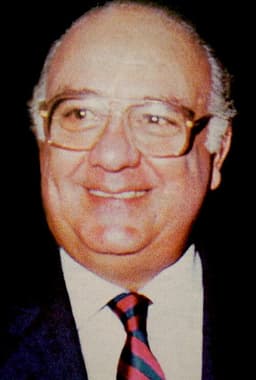
Jaime Lusinchi
Politician · Modern
46.6Total

Napoleon Bonaparte
General · Modern
70.9Total
Basic Information
Born
1924
1769
Died
—
1821
Era
Modern
Modern
Nationality
Venezuela
France
Occupation
Politician
General
Civilization
Western
Western
Score Comparison
Military (10%)
49.8
94.0
Political (20%)
39.4
72.0
Influence (20%)
48.6
40.0
Legacy (20%)
38.3
80.0
Leadership (15%)
64.0
78.0
Strategy (15%)
43.5
90.0
TOTAL
46.6
70.9
Jaime Lusinchi — Complete Timeline
1983 AD
Election as presidentPolitical Action◆ Major
Lusinchi won the 1983 presidential election as the candidate of Acci
ElectionPresidencyAD
Impact: nationalconstructive
1985 AD
Mistress scandalPolitical Action◆ Major
Lusinchi's extramarital affair with his secretary, Blanca Ib
ScandalCorruptionPersonal
Impact: nationaldestructive
1986 AD
Economic mismanagement and debt crisisReform◆ Major
Lusinchi's government failed to address the economic crisis, with inflation rising and foreign debt mounting. His administration's policies were criticized for being ineffective, leading to a loss of public confidence.
Economic CrisisDebtMismanagement
Impact: nationaldestructive
Napoleon Bonaparte — Complete Timeline
1799 AD
Coup of 18 BrumaireOther◆ Major
Napoleon Bonaparte, with support from his brother Lucien and key political figures, overthrew the Directory in a bloodless coup. He established the Consulate with himself as First Consul, effectively becoming the ruler of France. This event ended the French Revolution's most unstable period.
French RevolutionCoupRise to Power
Impact: regional
1804 AD
Promulgation of the Napoleonic CodeOther◆ Major
Napoleon enacted the Civil Code of the French, known as the Napoleonic Code, a comprehensive set of laws that replaced the fragmented feudal legal systems. The code established legal equality, protected property rights, and secularized law. It became the basis for legal systems in many European and world countries.
Legal ReformNapoleonic CodeCivil Law
Impact: globalconstructive
1805 AD
Battle of AusterlitzWar◆ Major
Napoleon's Grande Arm
Napoleonic WarsBattleDecisive Victory
Impact: global
1812 AD
Invasion of RussiaWar◆ Major
Napoleon led the Grande Arm
Napoleonic WarsInvasionDisaster
Impact: globaldestructive
1815 AD
Battle of WaterlooWar◆ Major
Napoleon's French army was defeated by the combined forces of the Duke of Wellington's Anglo-Allied army and Gebhard Leberecht von Bl
Napoleonic WarsBattleFinal Defeat
Impact: globaldestructive
Expert Analysis
jaime-lusinchi-vs-napoleon-bonaparte
# The Emperor and the Enabler: Why Napoleon Shaped History While Lusinchi Was Shaped by It
On a June morning in 1815, Napoleon Bonaparte stood on a muddy field near Waterloo, watching his Imperial Guard march into cannon fire that would end an era. One hundred and sixty-eight years later, in a Caracas presidential palace, Jaime Lusinchi signed documents that would quietly sink a nation. Both men held power. Both governed in times of crisis. But one remade the map of Europe and the other merely mismanaged a country into deeper trouble. The question is not who was greater—that is obvious—but why two men born into Western civilization, both rising to supreme authority, produced such wildly different outcomes. The answer lies not in their eras but in their characters, and in the terrible gap between ambition and competence.
Origins
Napoleon Bonaparte was born in 1769 on the island of Corsica, a recent French acquisition, into a minor noble family with more lineage than money. He grew up speaking Italian, not French, and his childhood was marked by the humiliation of being a colonial outsider in a rigidly hierarchical society. That sting never left him. It drove him to prove himself—first at the military academy of Brienne, where classmates mocked his accent, then on the battlefields of the Revolution, where talent mattered more than birth. France in the 1790s was a volcanic nation, erupting with revolutionary energy and surrounded by enemies. It rewarded audacity.
Jaime Lusinchi was born in 1924 in eastern Venezuela, a country then emerging from decades of military dictatorship. He trained as a doctor, not a soldier. His Venezuela was not a revolutionary powder keg but a petro-state whose oil wealth had created a fragile democracy. The system rewarded loyalty and party connections. Lusinchi rose through the ranks of Acción Democrática, a social-democratic party, by being reliable and unthreatening. Where Napoleon’s world demanded he conquer, Lusinchi’s world only asked him to manage.
Rise to Power
Napoleon’s ascent was a series of explosions. In 1793, at age twenty-four, he drove the British out of Toulon and became a brigadier general. In 1796, he took command of a starving, mutinous army in Italy and turned it into a conquering force, winning battles at Lodi, Arcole, and Rivoli. By 1799, he had overthrown the French government in a coup and made himself First Consul. He was thirty. His path was forged by war, and war never left him.
Lusinchi’s rise was a slow, quiet climb. He served as a deputy, then a senator, then party secretary. In 1983, when he won the presidency with 56.7% of the vote, it was less a personal triumph than a party victory. Venezuela’s economy was already showing cracks after the oil boom of the 1970s, and Lusinchi inherited a nation that expected easy answers. He offered none. He was a consensus-builder in a country that needed a surgeon.
Leadership & Governance
As ruler, Napoleon was a force of nature. He centralized the French state, created the Napoleonic Code—a legal system that still shapes much of the world—and reformed education, banking, and public administration. He also waged war continually. Between 1805 and 1809, he defeated Austria, Prussia, and Russia, dismantled the Holy Roman Empire, and installed his brothers on European thrones. His military genius was unmatched: at Austerlitz in 1805, he crushed a larger Russo-Austrian army with a feigned retreat that became a textbook maneuver. He governed with the same energy he fought—working eighteen-hour days, reading every report, demanding absolute loyalty.
Lusinchi governed by delegation, and he delegated badly. His administration’s response to Venezuela’s debt crisis was to print money and postpone reforms. Inflation rose. Foreign debt mounted. By 1986, the economy was in freefall, and Lusinchi’s government had no plan. Worse, he allowed his mistress, Blanca Ibáñez, to exercise influence over appointments and policy—a scandal that consumed public attention and paralyzed decision-making. The affair became a national joke, then a national tragedy. A president who could not control his own household could not control an economy.
Triumph & Tragedy
Napoleon’s greatest triumph was the Napoleonic Code, a system that abolished feudal privileges, guaranteed religious freedom, and enshrined merit over birth. His greatest tragedy was the invasion of Russia in 1812. He marched 600,000 men into the snow and returned with fewer than 100,000. The disaster shattered his aura of invincibility and set the stage for his exile to Elba in 1814. He returned for a hundred days in 1815, raised another army, and met his final defeat at Waterloo. He died six years later on Saint Helena, a prisoner of the British, still dictating memoirs that would shape his legend.
Lusinchi’s triumph was modest: he completed his five-year term, a rare feat in Venezuelan politics. His tragedy was that he left the country worse than he found it. By 1988, Venezuela’s economy was in collapse, and the next president, Carlos Andrés Pérez, would face the Caracazo riots—a violent uprising that foreshadowed the Chávez era. Lusinchi did not cause the fall of Venezuelan democracy, but he did nothing to prevent it. He was a caretaker who forgot to care.
Character & Destiny
Napoleon was driven by a demon: the need to prove himself. He once said, “Power is my mistress.” He meant it. He could be ruthless, vain, and paranoid—he executed prisoners, suppressed dissent, and crowned himself emperor in a ceremony where he took the crown from the Pope’s hands. But he also possessed a terrifying clarity of vision. He saw what France could become and made it happen. His flaws were the price of his greatness.
Lusinchi was not driven by any demon. He was a decent man, a competent doctor, a loyal party member. But he lacked the fire that makes history. He governed by inertia, not ambition. His personal scandal exposed something deeper: a leader who confused private indulgence with public duty. Where Napoleon’s character created his destiny, Lusinchi’s character was his destiny—a quiet, unremarkable slide into irrelevance.
Legacy
Napoleon’s legacy is global. His legal code influences countries from Brazil to Japan. His military tactics are still studied in war colleges. His name is synonymous with ambition, genius, and hubris. He reshaped the modern state and the modern world.
Lusinchi’s legacy is local and fading. In Venezuela, he is remembered, if at all, as the president who let the economy rot while his mistress ran the palace. His name appears in footnotes about the prelude to the Bolivarian Revolution. He is a cautionary tale, not an inspiration.
Conclusion
What separates Napoleon from Lusinchi is not talent alone—though talent matters. It is the scale of their ambition and the weight of their responsibility. Napoleon lived in an age of revolution, where a Corsican outsider could conquer Europe. Lusinchi lived in an age of democracy, where a Venezuelan doctor could lead a nation. Both men were given power. One used it to remake the world; the other used it to lose it. The difference is not in the era but in the man. Napoleon once said, “Impossible is a word to be found only in the dictionary of fools.” Lusinchi never said anything so memorable. Perhaps that is the truest measure of all.
Rankings
🥇
Napoleon BonaparteLeader
Mil: 94.0Pol: 72.0Inf: 40.0
70.9
🥈
Jaime Lusinchi
Mil: 49.8Pol: 39.4Inf: 48.6
46.6
+24.3 behind
How This Comparison Works
Algorithm
Each figure is scored on 6 dimensions (0—100 scale) based on structured historical data: Military (10%), Political (20%), Influence (20%), Legacy (20%), Leadership (15%), Strategy (15%). The weighted total produces the final ranking.
Data Sources
Scores are computed from structured sub-indicators in the database. Scale factors adjust for era (Ancient ×0.85, Modern ×1.0) and civilization size (Eastern ×1.05, Other ×0.80) to account for differences in population and military scale.
Maximum 3 Figures
Comparisons are limited to 2—3 figures to ensure readability and statistical meaningfulness.
Error Margins
±5 points per dimension — Sub-scores are derived from historical records with inherent uncertainty. Two figures within 5 points on a dimension should be considered roughly equivalent in that area.
Total Score Accuracy
±3 points overall — The weighted combination of 6 dimensions produces a total score with approximately ±3 points of uncertainty. Differences of less than 3 points are not statistically significant— the figures are effectively tied.
Known Limitations
- Historical records are incomplete and uneven across civilizations
- Figures from oral-tradition societies may be underrepresented
- Occupation labels can misclassify multi-role figures
- Scores measure capability and impact, not moral character
- Quantitative scoring is a comparison tool, not absolute truth
Capability Radar
Military (10%) — Battles & Warfare
Battles
31
95
Win Rate
29
90
Expansion
35
95
Political (20%) — Governance & Reform
Reform
30
95
Diplomacy
40
80
Economy
20
85
Influence (20%) — Cultural & Global Reach
Cultural
10
85
Global
10
90
Legacy (20%) — Historical Impact
Historical
20
95
Longevity
10
90
Leadership (15%) — Power & Stability
Tenure
60
85
Stability
15
70
Strategy (15%) — Tactics & Innovation
Strategy
39
95
Tactics
42
98
Reform
44
92
Similar Comparisons
Comments & Discussion
General Bonaparte6/17/2026
Look, I'm not saying Lusinchi didn't matter to Venezuela, but comparing him to Napoleon is like comparing a firecracker to a supernova. Napoleon rewrote the legal code of Europe, reorganized entire kingdoms, and invented modern warfare at Austerlitz. Lusinchi... survived a coffee price crash. The fact that this comparison even exists proves how much we inflate modern presidents who just manage decline. Give me one Lusinchi accomplishment that still echoes today.
历史解剖师6/17/2026
把一个靠石油红利苟且八年的总统跟拿破仑比?这简直是对历史比较法的亵渎。拿破仑搞出了《民法典》、现代行政体系和战争艺术;卢辛奇的最大成就是跟委内瑞拉人玩了一场十年之久的货币游戏。我建议把这种类比扔进历史学的废纸篓——不是因为拿破仑太伟大,而是因为这种比较本身就没有任何分析价值。