Loading...
James Douglas vs Napoleon Bonaparte
Napoleon Bonaparte leads by 18.8 pts · 2 figures compared
…
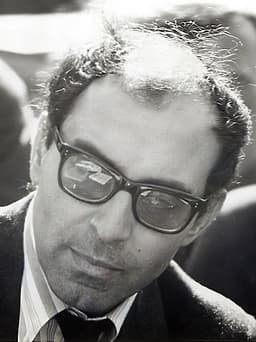
James Douglas
General · Medieval
52.1Total

Napoleon Bonaparte
General · Modern
70.9Total
Basic Information
Born
1286
1769
Died
1330
1821
Era
Medieval
Modern
Nationality
Scotland
France
Occupation
General
General
Civilization
Western
Western
Score Comparison
Military (10%)
74.7
94.0
Political (20%)
30.8
72.0
Influence (20%)
54.1
40.0
Legacy (20%)
46.7
80.0
Leadership (15%)
54.2
78.0
Strategy (15%)
66.3
90.0
TOTAL
52.1
70.9
James Douglas — Complete Timeline
1314 AD
Capture of Roxburgh CastleWar◆ Major
Douglas led a daring night assault on Roxburgh Castle, scaling the walls with rope ladders. The capture of this key English-held fortress was a major victory for Robert the Bruce during the Scottish Wars of Independence.
SiegeCastleScottish Independence
Impact: national
Battle of BannockburnWar
Douglas commanded a division of the Scottish army at Bannockburn, where Robert the Bruce defeated Edward II's English forces. His leadership contributed to the decisive Scottish victory that secured Scottish independence.
BattleScottish IndependenceVictory
Impact: national
1327 AD
Raid on WeardaleWar◆ Major
Douglas led a devastating raid into northern England, burning towns and villages in Weardale. The raid forced the English to negotiate the Treaty of Edinburgh
RaidWarfareTreaty
Impact: regional
1330 AD
Carrying the Heart of Robert the BruceWar◆ Major
Douglas carried the embalmed heart of Robert the Bruce on a crusade to Spain, fulfilling Bruce's dying wish. He died in battle against the Moors at Teba, throwing the heart forward before being killed.
CrusadeDeathChivalry
Impact: regionaltragic
Napoleon Bonaparte — Complete Timeline
1799 AD
Coup of 18 BrumaireOther◆ Major
Napoleon Bonaparte, with support from his brother Lucien and key political figures, overthrew the Directory in a bloodless coup. He established the Consulate with himself as First Consul, effectively becoming the ruler of France. This event ended the French Revolution's most unstable period.
French RevolutionCoupRise to Power
Impact: regional
1804 AD
Promulgation of the Napoleonic CodeOther◆ Major
Napoleon enacted the Civil Code of the French, known as the Napoleonic Code, a comprehensive set of laws that replaced the fragmented feudal legal systems. The code established legal equality, protected property rights, and secularized law. It became the basis for legal systems in many European and world countries.
Legal ReformNapoleonic CodeCivil Law
Impact: globalconstructive
1805 AD
Battle of AusterlitzWar◆ Major
Napoleon's Grande Arm
Napoleonic WarsBattleDecisive Victory
Impact: global
1812 AD
Invasion of RussiaWar◆ Major
Napoleon led the Grande Arm
Napoleonic WarsInvasionDisaster
Impact: globaldestructive
1815 AD
Battle of WaterlooWar◆ Major
Napoleon's French army was defeated by the combined forces of the Duke of Wellington's Anglo-Allied army and Gebhard Leberecht von Bl
Napoleonic WarsBattleFinal Defeat
Impact: globaldestructive
Expert Analysis
james-douglas-vs-napoleon-bonaparte
# The Conqueror and the Knight
In the spring of 1327, a raiding party of Scots slipped through the mist of the English borderlands, their leader a man whose very name would become a curse whispered by English mothers to frighten their children. Three centuries later, another soldier would stand on a hill in Corsica, watching the French Revolution consume his homeland, and dream of a conquest that would reshape the entire continent. James Douglas and Napoleon Bonaparte never met, never could have met—they belonged to different worlds separated by centuries. Yet both were warriors who rose from turbulent times to carve their names into history. One would die a knight, carrying a king's heart across Spain. The other would die an emperor, exiled on a remote Atlantic island. What drove these two men down such different paths?
Origins
James Douglas was born in 1286 into a Scotland bleeding from English occupation. His father, William Douglas, had fought for Scottish independence and died a prisoner in the Tower of London. Young James grew up in Paris, an exile nursing a burning hatred for the English crown. He returned to a homeland where Robert the Bruce was fighting a desperate guerrilla war against Edward I's formidable army. Douglas's world was one of clan loyalty, feudal oaths, and a struggle for national survival—a world where honor and vengeance were not abstract concepts but the very currency of life.
Napoleon Bonaparte, born in 1769 on the French island of Corsica, entered a world in transformation. His family were minor Corsican nobility, but Corsica itself had only recently been conquered by France. Young Napoleon spoke Italian-accented French, an outsider among the French elite. He attended military school, where he was mocked for his accent and small stature, but he devoured books on military history and Enlightenment philosophy. While Douglas's world was medieval and local, Napoleon's was modern and global—the Age of Reason was dawning, and the old order of kings and nobles was crumbling.
Rise to Power
Douglas's path was forged in blood and darkness. In 1314, he captured Roxburgh Castle through a daring night assault, his men scaling the walls with rope ladders while the English garrison slept. The same year, at the Battle of Bannockburn, he commanded a division of the Scottish army that shattered Edward II's forces. Douglas became Robert the Bruce's most trusted lieutenant, the hammer that smashed English strongholds and the shadow that haunted their borders. His rise was not through political maneuvering but through relentless service to a single cause: Scottish independence.
Napoleon's ascent was a masterpiece of timing and ambition. The French Revolution had thrown open the doors of opportunity to talented men regardless of birth. In 1793, at age twenty-four, he drove the British from Toulon with a brilliant artillery plan. By 1796, he commanded the Army of Italy and stunned Europe with a lightning campaign that forced Austria to sue for peace. Unlike Douglas, who served a king, Napoleon served himself—or rather, he saw his own destiny as inseparable from France's glory. He seized power in the 1799 coup of 18 Brumaire, becoming First Consul, then Emperor in 1804.
Leadership & Governance
Douglas led by example, sharing the hardships of his men, sleeping on the ground, eating the same meager rations. His military style was guerrilla warfare—strike fast, vanish into the hills, terrify the enemy. The English called him the "Black Douglas," a figure of almost supernatural dread. In 1327, his raid on Weardale burned English villages to the ground, forcing the English to sue for peace. But Douglas had no interest in governance; he was a weapon, not a ruler. His loyalty to Bruce was absolute, his vision limited to Scotland's freedom.
Napoleon was a different creature entirely. He was not merely a general but a state-builder. His Napoleonic Code reformed French law, establishing principles of equality before the law and protection of property that would influence legal systems worldwide. He centralized the French state, created the Bank of France, and reformed education. His military genius was overwhelming—at Austerlitz in 1805, he destroyed a combined Russian-Austrian army with a feigned retreat that became his masterpiece. But Napoleon governed as an emperor, not a liberator. He placed his brothers on European thrones, suppressed dissent, and treated conquered nations as resources to be exploited.
Triumph & Tragedy
Douglas's greatest moment came not in victory but in devotion. In 1330, Robert the Bruce lay dying and asked that his heart be carried to the Holy Land. Douglas took the embalmed heart, hung it in a silver casket around his neck, and rode to Spain to fight the Moors. At the Battle of Teba, surrounded by enemy forces, he threw the casket into the fray and cried, "Lead on, brave heart, as thou wert wont, Douglas will follow thee or die." He died there, cut down, but his loyalty became legend.
Napoleon's triumph was his empire—by 1812, he controlled most of Europe. His tragedy was the invasion of Russia that same year. He marched 600,000 men into the vastness of Russia; only 100,000 returned. The Grand Army was destroyed by winter, starvation, and Russian tenacity. Exiled to Elba, he escaped and returned for one hundred days, only to meet final defeat at Waterloo in 1815. He died in 1821 on Saint Helena, a prisoner of the British, his empire shattered.
Character & Destiny
Douglas was a man of medieval honor—fierce, loyal, and limited by his time. His personality was forged in the crucible of Scotland's struggle, and he never questioned the feudal world he inhabited. He died as he lived, a knight serving his lord.
Napoleon was a man of the modern age—ambitious, rational, and utterly ruthless. He believed in destiny and saw himself as a force of history. "Impossible is a word to be found only in the dictionary of fools," he once said. But his boundless ambition was also his flaw. He could not stop conquering, could not share power, could not see that even genius has limits.
Legacy
Douglas's legacy is the heart of Scottish national identity. He is remembered as the "Good Sir James," the faithful companion of Robert the Bruce, whose bones lie in Spain but whose spirit remains in Scotland's hills. His story is one of loyalty, sacrifice, and a cause greater than self.
Napoleon's legacy is the modern world. His legal codes, administrative systems, and military tactics shaped Europe for two centuries. He is remembered as a tyrant and a genius, a liberator and a conqueror. His name still evokes awe and controversy.
Conclusion
Standing at the end of their stories, we see two warriors who chose very different paths. Douglas chose service; Napoleon chose power. Douglas found meaning in loyalty to a king and a cause; Napoleon found meaning in the expansion of his own will. One died a knight, his heart still following his king's heart into battle. The other died an emperor, his heart embittered by exile and defeat. Perhaps the deepest difference is this: Douglas's story is a poem of devotion, while Napoleon's is a symphony of ambition. Both are beautiful. Both are tragic. And both, in their own ways, teach us what it means to be human—capable of greatness, doomed by our limits, and forever reaching for something beyond ourselves.
Rankings
🥇
Napoleon BonaparteLeader
Mil: 94.0Pol: 72.0Inf: 40.0
70.9
🥈
James Douglas
Mil: 74.7Pol: 30.8Inf: 54.1
52.1
+18.8 behind
How This Comparison Works
Algorithm
Each figure is scored on 6 dimensions (0—100 scale) based on structured historical data: Military (10%), Political (20%), Influence (20%), Legacy (20%), Leadership (15%), Strategy (15%). The weighted total produces the final ranking.
Data Sources
Scores are computed from structured sub-indicators in the database. Scale factors adjust for era (Ancient ×0.85, Modern ×1.0) and civilization size (Eastern ×1.05, Other ×0.80) to account for differences in population and military scale.
Maximum 3 Figures
Comparisons are limited to 2—3 figures to ensure readability and statistical meaningfulness.
Error Margins
±5 points per dimension — Sub-scores are derived from historical records with inherent uncertainty. Two figures within 5 points on a dimension should be considered roughly equivalent in that area.
Total Score Accuracy
±3 points overall — The weighted combination of 6 dimensions produces a total score with approximately ±3 points of uncertainty. Differences of less than 3 points are not statistically significant— the figures are effectively tied.
Known Limitations
- Historical records are incomplete and uneven across civilizations
- Figures from oral-tradition societies may be underrepresented
- Occupation labels can misclassify multi-role figures
- Scores measure capability and impact, not moral character
- Quantitative scoring is a comparison tool, not absolute truth
Capability Radar
Military (10%) — Battles & Warfare
Battles
65
95
Win Rate
70
90
Expansion
55
95
Political (20%) — Governance & Reform
Reform
20
95
Diplomacy
45
80
Economy
25
85
Influence (20%) — Cultural & Global Reach
Cultural
50
85
Global
35
90
Legacy (20%) — Historical Impact
Historical
55
95
Longevity
45
90
Leadership (15%) — Power & Stability
Tenure
40
85
Stability
35
70
Strategy (15%) — Tactics & Innovation
Strategy
75
95
Tactics
80
98
Reform
30
92
Similar Comparisons
Comments & Discussion
No comments yet. Be the first to share your thoughts!