Loading...
Jawaharlal Nehru vs Oscar Arias
Jawaharlal Nehru leads by 2.4 pts · 2 figures compared
…
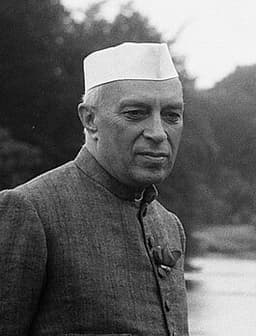
Jawaharlal Nehru
Politician · Modern
59.9Total

Oscar Arias
Politician · Modern
57.5Total
Basic Information
Born
1889
1940
Died
1964
—
Era
Modern
Modern
Nationality
India
Costa Rica
Occupation
Politician
Politician
Civilization
Indian
Western
Score Comparison
Military (10%)
10.0
50.0
Political (20%)
78.0
59.3
Influence (20%)
88.0
56.7
Legacy (20%)
40.0
58.0
Leadership (15%)
78.0
72.0
Strategy (15%)
35.0
41.6
TOTAL
59.9
57.5
Jawaharlal Nehru — Complete Timeline
1919 AD
Jallianwala Bagh Massacre ResponsePolitical Action◆ Major
Nehru, deeply affected by the Jallianwala Bagh massacre, joined the Indian independence movement. He became a key leader in the Indian National Congress, advocating for non-violent resistance against British rule.
Independence MovementIndian National CongressNon-violence
Impact: national
1929 AD
Election as Congress President (Lahore Session)Political Action◆ Major
Nehru was elected President of the Indian National Congress at its Lahore session, where he declared Purna Swaraj (complete independence) as the party's goal. This marked a shift from dominion status to full independence.
Indian National CongressIndependencePurna Swaraj
Impact: nationalprogressive
1942 AD
Quit India Movement LeadershipPolitical Action◆ Major
Nehru, alongside Gandhi, led the Quit India Movement, demanding an end to British rule. He was arrested and imprisoned for nearly three years, but the movement intensified pressure on Britain to leave India.
Quit IndiaCivil DisobedienceImprisonment
Impact: nationalprogressive
1947 AD
First Prime Minister of IndiaPolitical Action
Nehru became the first Prime Minister of independent India, delivering his 'Tryst with Destiny' speech. He led the nation through partition, integration of princely states, and the drafting of a secular, democratic constitution.
IndependencePrime MinisterConstitution
Impact: globalconstructive
1961 AD
Founding of the Non-Aligned MovementPolitical Action◆ Major
Nehru co-founded the Non-Aligned Movement with Tito, Nasser, and Sukarno, advocating for a third way during the Cold War. This positioned India as a leader of developing nations, promoting peace and decolonization.
Non-Aligned MovementCold WarForeign Policy
Impact: globalconstructive
Oscar Arias — Complete Timeline
1987 AD
Awarded Nobel Peace PrizeCultural
Óscar Arias received the Nobel Peace Prize for his efforts to end the civil wars in Central America. His peace plan led to the Esquipulas Peace Accords, which brought stability to the region.
Nobel PrizePeace ProcessCentral America
Impact: regionalconstructive
Signed Esquipulas Peace AccordsPolitical Action◆ Major
Arias, as President of Costa Rica, brokered the Esquipulas II agreement among Central American presidents. The accords called for ceasefires, democratization, and an end to foreign support for insurgents.
Peace AccordsCentral AmericaDiplomacy
Impact: regionalconstructive
2006 AD
Re-elected President of Costa RicaPolitical Action◆ Major
Óscar Arias was re-elected as president of Costa Rica after a constitutional change allowed a second term. He won a narrow victory over Ottón Solís, returning to office after 16 years.
Re-electionPresidencyCosta Rica
Impact: national
2007 AD
Ratified CAFTA-DR Trade AgreementPolitical Action◆ Major
President Arias pushed for Costa Rica's ratification of the Dominican Republic-Central America Free Trade Agreement (CAFTA-DR). The agreement passed a national referendum, integrating Costa Rica into the U.S. trade bloc.
Free TradeCAFTA-DRCosta Rica
Impact: regional
Expert Analysis
Origins
Jawaharlal Nehru was born on November 14, 1889, in Allahabad, India, into a wealthy Kashmiri Brahmin family. His father, Motilal Nehru, was a prominent lawyer and early Indian National Congress leader. Nehru was educated at home by British tutors and later attended Harrow School in England, followed by Trinity College, Cambridge, where he studied natural sciences, and then the Inner Temple in London to study law. He returned to India in 1912 and practiced law, but was soon drawn to the Indian independence movement.
Óscar Arias Sánchez was born on September 13, 1940, in Heredia, Costa Rica, into a wealthy coffee-growing family. He studied law and economics at the University of Costa Rica, then earned a Ph.D. in political science from the University of Essex in England. He entered politics early, serving as a minister under President José Figueres Ferrer.
Rise to Power
Nehru's political rise was closely tied to the Indian National Congress and his association with Mahatma Gandhi. He was deeply affected by the Jallianwala Bagh massacre in 1919, which propelled him into the independence movement. He became Congress President at the Lahore session in 1929, where he declared Purna Swaraj (complete independence) as the party's goal. He led the Quit India Movement in 1942 alongside Gandhi, resulting in his imprisonment for nearly three years. After India's independence in 1947, he became the first Prime Minister, a position he held until his death in 1964.
Arias rose to prominence as a reformist politician. He served as Minister of Planning and National Political Economy (1970–1972) and later as Minister of National Planning and Economic Policy (1972–1977). He was elected President of Costa Rica in 1986, campaigning on a platform of peace and neutrality. His major turning point came when he brokered the Esquipulas Peace Accords in 1987, which ended civil wars in Nicaragua, El Salvador, and Guatemala. This earned him the Nobel Peace Prize in 1987. He was re-elected in 2006 after a constitutional change allowed a second term.
Leadership & Governance
Nehru's leadership was characterized by democratic socialism, secularism, and non-alignment. He established a mixed economy with state-owned enterprises and five-year plans to industrialize India. He championed parliamentary democracy, universal adult suffrage, and secularism in a diverse society. He also founded the Non-Aligned Movement in 1961, positioning India as a leader of developing nations during the Cold War. However, his economic policies led to slow growth and bureaucratic inefficiency, scoring 78.0 in political and 35.0 in strategy.
Arias governed with a focus on peace, democracy, and free trade. He abolished the Costa Rican army in 1949 (preceding his presidency) and maintained a neutral foreign policy. His Esquipulas peace plan emphasized ceasefires, democratization, and reconciliation. Domestically, he promoted economic liberalization and environmental protection. He signed the CAFTA-DR trade agreement in 2007, which passed by a narrow referendum. His leadership score is 72.0, reflecting his ability to inspire peace but limited by small-state constraints.
Triumph & Tragedy
Nehru's greatest triumph was leading India through its formative years as a democratic republic. His non-alignment policy gave India global influence disproportionate to its economic power. He also laid the foundations for scientific development, including the Indian Institutes of Technology. His greatest failure was the 1962 Sino-Indian War, where India suffered a humiliating defeat due to his flawed military strategy and trust in Chinese intentions. This tarnished his legacy and exposed his military weakness (military score: 10.0).
Arias's greatest triumph is the Esquipulas Peace Accords, which ended decades of civil war in Central America and earned him the Nobel Peace Prize. His decision to abolish the army in Costa Rica has kept the country stable and peaceful. However, his second term was marred by controversies over CAFTA-DR, which many Costa Ricans opposed, and allegations of corruption. His military score of 50.0 is a default neutral value since Costa Rica has no army.
Character & Destiny
Nehru was an intellectual, idealist, and aristocrat. He was deeply influenced by Fabian socialism and secular humanism. His character was marked by a blend of pragmatism and ideological conviction. He was often seen as aloof but charismatic, and his decisions were shaped by a desire to modernize India while maintaining democratic values. His trust in China and underestimation of border tensions led to the 1962 war, a pivotal failure.
Arias is a pragmatic idealist, focused on peace and negotiation. He is persistent and strategic, able to bring warring parties to the table. His character is more cautious and diplomatic than Nehru's, but he is also criticized as being elitist and out of touch with grassroots concerns. His destiny was shaped by the opportunity of Central American conflicts, which he turned into a personal and national triumph.
Legacy
Nehru's legacy is immense: he shaped Indian democracy, secularism, and foreign policy. His vision of a mixed economy influenced decades of development. He is remembered as the architect of modern India, but his economic policies are now seen as overly statist. His legacy score is 40.0, reflecting mixed long-term outcomes.
Arias's legacy is more concentrated: he is a symbol of peace and demilitarization. Costa Rica remains a stable democracy without an army, a model for other nations. His peace plan is a template for conflict resolution. However, his impact is limited to Central America, and his later presidency diluted his moral authority. His legacy score is 58.0.
Conclusion
Jawaharlal Nehru had a greater overall impact than Óscar Arias. Despite his military failure and economic missteps, Nehru's political score of 78.0 and influence score of 88.0 reflect his role in shaping the world's largest democracy and leading a non-aligned movement that gave voice to the Global South. Arias's peace achievements are significant but regionally confined. Nehru's total score of 59.9 edges Arias's 57.5, and his legacy as a founder of a nation outweighs Arias's as a peacemaker in a smaller theater. Thus, Nehru's impact on global history is more profound.
Rankings
🥇
Jawaharlal NehruLeader
Mil: 10.0Pol: 78.0Inf: 88.0
59.9
🥈
Oscar Arias
Mil: 50.0Pol: 59.3Inf: 56.7
57.5
+2.4 behind
How This Comparison Works
Algorithm
Each figure is scored on 6 dimensions (0—100 scale) based on structured historical data: Military (10%), Political (20%), Influence (20%), Legacy (20%), Leadership (15%), Strategy (15%). The weighted total produces the final ranking.
Data Sources
Scores are computed from structured sub-indicators in the database. Scale factors adjust for era (Ancient ×0.85, Modern ×1.0) and civilization size (Eastern ×1.05, Other ×0.80) to account for differences in population and military scale.
Maximum 3 Figures
Comparisons are limited to 2—3 figures to ensure readability and statistical meaningfulness.
Error Margins
±5 points per dimension — Sub-scores are derived from historical records with inherent uncertainty. Two figures within 5 points on a dimension should be considered roughly equivalent in that area.
Total Score Accuracy
±3 points overall — The weighted combination of 6 dimensions produces a total score with approximately ±3 points of uncertainty. Differences of less than 3 points are not statistically significant— the figures are effectively tied.
Known Limitations
- Historical records are incomplete and uneven across civilizations
- Figures from oral-tradition societies may be underrepresented
- Occupation labels can misclassify multi-role figures
- Scores measure capability and impact, not moral character
- Quantitative scoring is a comparison tool, not absolute truth
Capability Radar
Military (10%) — Battles & Warfare
Battles
26
27
Win Rate
28
33
Expansion
32
32
Political (20%) — Governance & Reform
Reform
85
70
Diplomacy
90
85
Economy
70
55
Influence (20%) — Cultural & Global Reach
Cultural
80
45
Global
85
70
Legacy (20%) — Historical Impact
Historical
85
65
Longevity
80
50
Leadership (15%) — Power & Stability
Tenure
85
60
Stability
75
50
Strategy (15%) — Tactics & Innovation
Strategy
35
36
Tactics
37
41
Reform
36
42
Similar Comparisons
Comments & Discussion
No comments yet. Be the first to share your thoughts!