Loading...
Jayaprakash Narayan vs Napoleon Bonaparte
Napoleon Bonaparte leads by 13.1 pts · 2 figures compared
…
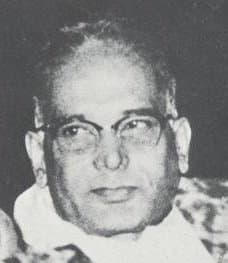
Jayaprakash Narayan
Politician · Modern
57.8Total

Napoleon Bonaparte
General · Modern
70.9Total
Basic Information
Born
1902
1769
Died
1979
1821
Era
Modern
Modern
Nationality
India
France
Occupation
Politician
General
Civilization
Indian
Western
Score Comparison
Military (10%)
37.9
94.0
Political (20%)
68.0
72.0
Influence (20%)
62.0
40.0
Legacy (20%)
54.0
80.0
Leadership (15%)
58.8
78.0
Strategy (15%)
60.0
90.0
TOTAL
57.8
70.9
Jayaprakash Narayan — Complete Timeline
1934 AD
Founded the Socialist PartyPolitical Action◆ Major
Narayan was a founding member of the Congress Socialist Party, a left-wing faction within the Indian National Congress. The party advocated for socialist policies and greater economic equality.
Socialist PartyLeft-WingEconomic Equality
Impact: nationalconstructive
1952 AD
Led the Bihar movement for land reformsPolitical Action◆ Major
Narayan led a movement in Bihar demanding land reforms and the abolition of the zamindari system. He organized peasants and pressured the government to implement land redistribution, though with limited success.
Land ReformsBiharPeasant Movement
Impact: regionalconstructive
1974 AD
Led the Total Revolution movementPolitical Action◆ Major
Narayan launched the 'Total Revolution' (Sampoorna Kranti) movement against the government of Prime Minister Indira Gandhi. He called for a complete overhaul of the political system, leading to widespread protests and the eventual imposition of the Emergency in 1975.
Total RevolutionEmergencyProtest
Impact: nationalconstructive
1975 AD
Imprisoned during the EmergencyPolitical Action◆ Major
Narayan was arrested and imprisoned during the Emergency imposed by Indira Gandhi. His imprisonment made him a symbol of resistance against authoritarian rule.
EmergencyImprisonmentResistance
Impact: nationaltragic
1977 AD
Mediated the formation of the Janata PartyPolitical Action◆ Major
Narayan played a key role in uniting opposition parties to form the Janata Party, which defeated Indira Gandhi's Congress in the 1977 general election. He declined to become Prime Minister, instead supporting Morarji Desai.
Janata Party1977 ElectionCoalition
Impact: nationalconstructive
Napoleon Bonaparte — Complete Timeline
1799 AD
Coup of 18 BrumaireOther◆ Major
Napoleon Bonaparte, with support from his brother Lucien and key political figures, overthrew the Directory in a bloodless coup. He established the Consulate with himself as First Consul, effectively becoming the ruler of France. This event ended the French Revolution's most unstable period.
French RevolutionCoupRise to Power
Impact: regional
1804 AD
Promulgation of the Napoleonic CodeOther◆ Major
Napoleon enacted the Civil Code of the French, known as the Napoleonic Code, a comprehensive set of laws that replaced the fragmented feudal legal systems. The code established legal equality, protected property rights, and secularized law. It became the basis for legal systems in many European and world countries.
Legal ReformNapoleonic CodeCivil Law
Impact: globalconstructive
1805 AD
Battle of AusterlitzWar◆ Major
Napoleon's Grande Arm
Napoleonic WarsBattleDecisive Victory
Impact: global
1812 AD
Invasion of RussiaWar◆ Major
Napoleon led the Grande Arm
Napoleonic WarsInvasionDisaster
Impact: globaldestructive
1815 AD
Battle of WaterlooWar◆ Major
Napoleon's French army was defeated by the combined forces of the Duke of Wellington's Anglo-Allied army and Gebhard Leberecht von Bl
Napoleonic WarsBattleFinal Defeat
Impact: globaldestructive
Expert Analysis
jayaprakash-narayan-vs-napoleon-bonaparte
# The Conqueror and the Conscience: Napoleon Bonaparte and Jayaprakash Narayan
In the summer of 1815, Napoleon Bonaparte stood on the muddy fields of Waterloo, watching his Imperial Guard crumble under the combined fire of British and Prussian forces. A century and a half later, in the winter of 1975, Jayaprakash Narayan lay in a Delhi hospital bed, arrested by Indira Gandhi’s government, his body broken but his spirit unyielding. One man commanded armies that reshaped Europe; the other led a revolution of the soul that toppled a prime minister. What drives a man to conquer, and what drives a man to liberate? The answer lies not in the clash of swords, but in the collision of two profoundly different visions of power.
Origins
Napoleon Bonaparte was born in 1769 on the island of Corsica, a place of rugged mountains and fierce independence. His family, minor Italian nobility, scraped by on modest means. The young Napoleon was a solitary child, small and intense, who devoured books on military strategy and ancient history. His world was one of conquest—the Roman Empire, Alexander the Great, Charlemagne. France, in the throes of revolution, offered him a ladder. He climbed it with ruthless ambition, believing that destiny belonged to those who seized it.
Jayaprakash Narayan, born in 1902 in the village of Sitabdiara, Bihar, came from a very different soil. His father was a minor government official, but the family’s roots were in the peasantry. Young Jayaprakash lost his mother early and was raised by an aunt in a household steeped in poverty and Hindu piety. He was sent to the United States in 1922 to study, where he encountered the ideas of Karl Marx and Mahatma Gandhi—two forces that would forever shape him. Unlike Napoleon, who absorbed the lessons of power, Narayan absorbed the lessons of justice. His world was not one of empires, but of villages, fields, and the quiet dignity of the oppressed.
Rise to Power
Napoleon’s ascent was meteoric and bloody. In 1793, at age 24, he recaptured the port of Toulon from British forces, earning promotion to brigadier general. By 1796, he was commanding the Army of Italy, where his lightning campaigns crushed Austrian forces and made him a national hero. In 1799, he staged a coup d’état, becoming First Consul of France. Five years later, he crowned himself Emperor. His path was one of ambition, speed, and violence—each step a calculated gamble.
Narayan’s rise was slower, more patient. In 1934, he co-founded the Congress Socialist Party, a left-wing faction within the Indian National Congress. He organized peasants in Bihar, demanding land reforms and the abolition of the zamindari system. His method was not conquest but persuasion. He did not storm palaces; he walked through villages. When India gained independence in 1947, Narayan refused to take high office. He believed power corrupted, and he wanted to remain a voice for the voiceless. His rise was not to a throne, but to a moral pulpit.
Leadership & Governance
Napoleon ruled with iron efficiency. He centralized the French state, reformed the tax system, and established the Bank of France. His greatest achievement was the Napoleonic Code of 1804, a legal framework that abolished feudal privileges, guaranteed religious freedom, and enshrined equality before the law—though not for women. He was a military genius—his strategies at Austerlitz in 1805 remain textbook examples of tactical brilliance. But his governance was authoritarian. He suppressed dissent, controlled the press, and placed his relatives on European thrones. He believed that order was the highest good.
Narayan governed through moral authority, not state power. His leadership was decentralized, democratic, and deeply human. In 1974, at age 72, he launched the Total Revolution (Sampoorna Kranti) movement, calling for a complete overhaul of Indian society—land reform, education, clean governance, and decentralization of power. He mobilized students, workers, and peasants, not through fear, but through inspiration. He had no army, no treasury, no official position. His only weapon was his integrity. When Indira Gandhi’s government declared a national Emergency in 1975, imprisoning thousands, Narayan became the symbol of resistance. He did not command; he suffered.
Triumph & Tragedy
Napoleon’s greatest triumph was the Battle of Austerlitz in 1805, where he destroyed a larger Austro-Russian army with a masterful feint and flanking maneuver. His empire stretched from Spain to Poland. But his tragedy was hubris. The invasion of Russia in 1812, with 600,000 men, ended in catastrophic retreat. His final defeat at Waterloo in 1815 sent him into exile on Saint Helena, a lonely rock in the South Atlantic. He died in 1821, at age 51, a prisoner of his own ambition.
Narayan’s greatest triumph was the 1977 election, when the Janata Party—which he had helped unite—defeated Indira Gandhi’s Congress. It was the first time a non-Congress government ruled India, and it was a victory for democracy. But his tragedy was physical. The Emergency broke his health. He died in 1979, at age 77, his body worn out by fasting, protest, and imprisonment. Yet he died free, surrounded by the love of millions who called him Loknayak—the People’s Leader.
Character & Destiny
Napoleon was a man of will. He once said, “Impossible is a word to be found only in the dictionary of fools.” He believed that history was made by great men who imposed their vision on the world. His personality was magnetic, his energy inexhaustible, his ego immense. He could not tolerate equals. His destiny was to dominate—and to fall alone.
Narayan was a man of conscience. He said, “The only way to change society is to change the individual.” He believed that power must be shared, not seized. His personality was humble, his patience profound, his ego subdued. He could work with anyone. His destiny was to inspire—and to be remembered not as a ruler, but as a servant.
Legacy
Napoleon left a Europe transformed. The Napoleonic Code influenced legal systems from France to Louisiana to Japan. He dismantled the Holy Roman Empire, spread nationalism, and introduced modern warfare. But he also left a trail of destruction—millions dead, a continent scarred by war. His legacy is a paradox: a liberator and a tyrant.
Narayan left an India renewed. His Total Revolution did not achieve all its goals, but it revived democratic spirit in a nation threatened by authoritarianism. His ideas of decentralized democracy, Gram Swaraj (village self-rule), and participatory governance continue to inspire activists. His legacy is quieter but deeper—a reminder that power is not in armies, but in principles.
Conclusion
Napoleon and Narayan faced the same question: How does one change the world? Napoleon answered with the sword, Narayan with the soul. One built an empire on the bones of others; the other built a movement on the faith of the many. In the end, Waterloo and the Emergency both proved that power, no matter how absolute, cannot survive without legitimacy. Napoleon’s empire crumbled; Narayan’s revolution endured. The conqueror conquered nothing that lasted. The conscience conquered nothing—and everything.
Rankings
🥇
Napoleon BonaparteLeader
Mil: 94.0Pol: 72.0Inf: 40.0
70.9
🥈
Jayaprakash Narayan
Mil: 37.9Pol: 68.0Inf: 62.0
57.8
+13.1 behind
How This Comparison Works
Algorithm
Each figure is scored on 6 dimensions (0—100 scale) based on structured historical data: Military (10%), Political (20%), Influence (20%), Legacy (20%), Leadership (15%), Strategy (15%). The weighted total produces the final ranking.
Data Sources
Scores are computed from structured sub-indicators in the database. Scale factors adjust for era (Ancient ×0.85, Modern ×1.0) and civilization size (Eastern ×1.05, Other ×0.80) to account for differences in population and military scale.
Maximum 3 Figures
Comparisons are limited to 2—3 figures to ensure readability and statistical meaningfulness.
Error Margins
±5 points per dimension — Sub-scores are derived from historical records with inherent uncertainty. Two figures within 5 points on a dimension should be considered roughly equivalent in that area.
Total Score Accuracy
±3 points overall — The weighted combination of 6 dimensions produces a total score with approximately ±3 points of uncertainty. Differences of less than 3 points are not statistically significant— the figures are effectively tied.
Known Limitations
- Historical records are incomplete and uneven across civilizations
- Figures from oral-tradition societies may be underrepresented
- Occupation labels can misclassify multi-role figures
- Scores measure capability and impact, not moral character
- Quantitative scoring is a comparison tool, not absolute truth
Capability Radar
Military (10%) — Battles & Warfare
Battles
46
95
Win Rate
47
90
Expansion
48
95
Political (20%) — Governance & Reform
Reform
75
95
Diplomacy
60
80
Economy
20
85
Influence (20%) — Cultural & Global Reach
Cultural
55
85
Global
55
90
Legacy (20%) — Historical Impact
Historical
65
95
Longevity
50
90
Leadership (15%) — Power & Stability
Tenure
30
85
Stability
25
70
Strategy (15%) — Tactics & Innovation
Strategy
53
95
Tactics
55
98
Reform
57
92
Similar Comparisons
Comments & Discussion
No comments yet. Be the first to share your thoughts!