Loading...
Jean-Jacques Rousseau vs Voltaire
Jean-Jacques Rousseau leads by 3.6 pts · 2 figures compared
…
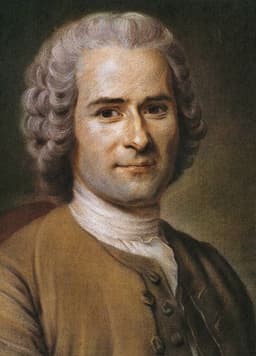
Jean-Jacques Rousseau
Philosopher · Modern
43.5Total

Voltaire
Philosopher · Modern
39.9Total
Basic Information
Born
1712
1694
Died
1778
1778
Era
Modern
Modern
Nationality
France
France
Occupation
Philosopher
Philosopher
Civilization
Western
Western
Score Comparison
Military (10%)
9.1
9.0
Political (20%)
33.8
25.0
Influence (20%)
65.0
65.0
Legacy (20%)
40.0
40.0
Leadership (15%)
45.4
30.0
Strategy (15%)
44.4
45.2
TOTAL
43.5
39.9
Jean-Jacques Rousseau — Complete Timeline
1755 AD
Publication of Discourse on the Origin and Basis of Inequality Among MenCultural◆ Major
Rousseau argued that human inequality originated with the establishment of private property and civil society, corrupting natural human goodness. This work challenged Enlightenment optimism about progress and laid the groundwork for Romanticism and critiques of modern civilization.
InequalityPhilosophyRomanticism
Impact: globalconstructive
1762 AD
Publication of The Social ContractCultural
Rousseau published his political treatise arguing that legitimate political authority rests on a social contract formed by the general will of the people. The work's ideas of popular sovereignty and direct democracy influenced the French Revolution and modern democratic theory.
Political PhilosophySocial ContractGeneral Will
Impact: globalconstructive
Publication of Émile, or On EducationCultural◆ Major
Rousseau published a treatise on education advocating for natural development and learning through experience rather than rote instruction. The book was condemned by the Paris Parliament and the Catholic Church for its religious views, and Rousseau fled France to avoid arrest.
EducationPhilosophyCensorship
Impact: globalconstructive
1766 AD
Exile in EnglandPolitical Action
After the condemnation of
ExileEnglandParanoia
Impact: nationaltragic
Voltaire — Complete Timeline
1726 AD
Exile in EnglandPolitical Action
After a quarrel with the nobleman Chevalier de Rohan, Voltaire was imprisoned in the Bastille and then exiled to England. His three-year stay exposed him to English empiricism, constitutional monarchy, and religious toleration, profoundly shaping his philosophical and political views.
ExileEnglandEnlightenment
Impact: national
1734 AD
Publication of Letters on the EnglishCultural◆ Major
Voltaire published letters praising English religious toleration, constitutional monarchy, and scientific progress, implicitly criticizing French absolutism and Catholicism. The book was condemned in France and burned, forcing Voltaire to flee Paris. It helped spread Enlightenment ideas across Europe.
EnlightenmentEnglandCensorship
Impact: regionalconstructive
1759 AD
Publication of CandideCultural◆ Major
Voltaire published his satirical novel Candide, criticizing Leibnizian optimism and organized religion through the misadventures of its protagonist. The work became a landmark of Enlightenment literature, attacking philosophical optimism, religious hypocrisy, and social injustice with wit and irony.
SatirePhilosophyLiterature
Impact: globalconstructive
1762 AD
Defense of Jean CalasPolitical Action◆ Major
Voltaire campaigned to overturn the wrongful execution of Jean Calas, a Protestant merchant tortured and executed for allegedly murdering his son to prevent his conversion to Catholicism. Voltaire's writings, including his Treatise on Tolerance, led to Calas's posthumous exoneration in 1765.
ToleranceJusticeReligious Persecution
Impact: nationalconstructive
Expert Analysis
Origins
Jean-Jacques Rousseau was born on June 28, 1712, in Geneva, Switzerland, to a watchmaker father and a mother who died shortly after his birth. He received little formal education and was apprenticed to an engraver at age 13, but fled Geneva in 1728 after being locked out of the city gates. He wandered through Savoy and France, converting to Catholicism under the influence of Madame de Warens, who became his patron and lover. His early life was marked by instability and self-education through voracious reading.
Voltaire, born François-Marie Arouet on November 21, 1694, in Paris, came from a middle-class family. His father was a notary, and he attended the prestigious Jesuit Collège Louis-le-Grand, where he received a classical education. He showed early talent for writing and wit, but his sharp tongue led to conflicts with authorities. By his early twenties, he was already known in Parisian literary circles, though his satirical verses would land him in the Bastille in 1717.
Rise to Power
Rousseau's rise came relatively late. In 1750, at age 38, he won the Academy of Dijon's essay contest with his "Discourse on the Arts and Sciences," arguing that civilization corrupted natural virtue. This made him instantly famous. He followed with the "Discourse on the Origin of Inequality" (1755) and his major works: "Julie, or the New Heloise" (1761), "Émile" (1762), and "The Social Contract" (1762). These books were widely read but also condemned by French and Genevan authorities, forcing him into exile.
Voltaire rose earlier through literary success. His play "Œdipe" (1718) was a hit, and he became wealthy through investments and patronage. After a quarrel with the Chevalier de Rohan in 1726, he was imprisoned in the Bastille and then exiled to England for three years. There, he absorbed English philosophy and science, leading to his "Letters on the English" (1733), which praised English toleration and criticized French absolutism. He returned to France and became a leading figure of the Enlightenment, though he often had to flee censorship, spending time at the court of Frederick the Great in Prussia (1750-1753) and later settling at Ferney on the French-Swiss border.
Leadership & Governance
Rousseau's political philosophy centered on popular sovereignty and the general will. In "The Social Contract," he argued that legitimate government must be based on a contract where individuals surrender their rights to the community as a whole, creating a sovereign that expresses the general will—the collective interest of all citizens. He advocated for direct democracy and criticized representative government, famously stating that the British people were free only during elections. His ideas influenced the French Revolution, particularly the Jacobins and Robespierre, who invoked the general will to justify the Reign of Terror.
Voltaire was a reformist rather than a revolutionary. He championed enlightened absolutism, believing that a wise monarch could implement reforms more effectively than popular democracy. He corresponded with rulers like Frederick the Great and Catherine the Great, urging them to promote religious toleration, legal reform, and scientific progress. He famously defended victims of religious persecution, such as Jean Calas, a Protestant executed for allegedly murdering his son to prevent his conversion to Catholicism. Voltaire's campaign led to Calas's posthumous exoneration in 1765.
Triumph & Tragedy
Rousseau's greatest triumph was his profound influence on political thought and education. "The Social Contract" became a foundational text of modern democracy, and "Émile" revolutionized educational theory by emphasizing natural development. His ideas inspired the French Revolution and later thinkers like Kant, Hegel, and Marx. However, his personal life was marked by tragedy: he placed his five children in a foundling home, an act he later regretted and tried to justify. His paranoid tendencies led to bitter quarrels with fellow philosophers, including David Hume, who had given him refuge in England. He died in 1778, likely from a stroke, but rumors of suicide circulated.
Voltaire's triumphs include his literary output (over 2,000 books and pamphlets) and his successful campaigns for justice. His novel "Candide" (1759) remains a classic satire that criticizes optimism and religious hypocrisy. He also wrote histories, plays, and philosophical works. His defense of Jean Calas and other victims made him a hero of civil liberties. However, he faced constant censorship and exile, and his relationship with Frederick the Great ended bitterly after a dispute over a scientific paper. He died in 1778, just months before Rousseau, and was denied a Christian burial until his body was secretly moved to an abbey.
Character & Destiny
Rousseau was sensitive, introspective, and prone to paranoia. He believed in the innate goodness of humanity but saw society as corrupting. His personal life was chaotic, and he often felt persecuted, even by his friends. His character led him to reject the trappings of Enlightenment salons, preferring solitude. This isolation fueled his originality but also limited his direct influence during his lifetime.
Voltaire was witty, energetic, and combative. He relished intellectual debate and used satire as a weapon against injustice. He was pragmatic and wealthy, using his resources to support causes and build a network of correspondents across Europe. His character made him a central figure of the Enlightenment, but his sharp tongue and desire for recognition sometimes led to conflicts.
Legacy
Rousseau's legacy is immense in political theory and education. His concept of the general will influenced democratic thought, and his emphasis on natural rights and popular sovereignty shaped the American and French Revolutions. His educational ideas laid groundwork for progressive education. In contrast, Voltaire's legacy is more diffuse but equally significant: he championed civil liberties, freedom of speech, and separation of church and state. His writings on religious toleration and criticism of organized religion helped secularize European thought.
In terms of scores, Rousseau scores slightly higher overall (43.5 vs 39.9), driven by higher political (33.8 vs 25.0) and leadership (45.4 vs 30.0) scores, while Voltaire has a slight edge in strategy (45.2 vs 44.4). Both have identical influence (65.0) and legacy (40.0) scores.
Conclusion
While both Rousseau and Voltaire were giants of the Enlightenment, Rousseau's impact on political theory and education was more revolutionary and enduring. His ideas directly inspired the French Revolution and later democratic movements, whereas Voltaire's influence was more gradual and reformist. Rousseau's "Social Contract" remains a cornerstone of political philosophy, while Voltaire's works are more cultural than political. Therefore, Rousseau had a greater overall impact on the course of history, scoring 43.5 total versus Voltaire's 39.9. His radical vision of popular sovereignty changed the world more profoundly than Voltaire's calls for enlightened reform.
Rankings
🥇
Jean-Jacques RousseauLeader
Mil: 9.1Pol: 33.8Inf: 65.0
43.5
🥈
Voltaire
Mil: 9.0Pol: 25.0Inf: 65.0
39.9
+3.6 behind
How This Comparison Works
Algorithm
Each figure is scored on 6 dimensions (0—100 scale) based on structured historical data: Military (10%), Political (20%), Influence (20%), Legacy (20%), Leadership (15%), Strategy (15%). The weighted total produces the final ranking.
Data Sources
Scores are computed from structured sub-indicators in the database. Scale factors adjust for era (Ancient ×0.85, Modern ×1.0) and civilization size (Eastern ×1.05, Other ×0.80) to account for differences in population and military scale.
Maximum 3 Figures
Comparisons are limited to 2—3 figures to ensure readability and statistical meaningfulness.
Error Margins
±5 points per dimension — Sub-scores are derived from historical records with inherent uncertainty. Two figures within 5 points on a dimension should be considered roughly equivalent in that area.
Total Score Accuracy
±3 points overall — The weighted combination of 6 dimensions produces a total score with approximately ±3 points of uncertainty. Differences of less than 3 points are not statistically significant— the figures are effectively tied.
Known Limitations
- Historical records are incomplete and uneven across civilizations
- Figures from oral-tradition societies may be underrepresented
- Occupation labels can misclassify multi-role figures
- Scores measure capability and impact, not moral character
- Quantitative scoring is a comparison tool, not absolute truth
Capability Radar
Military (10%) — Battles & Warfare
Battles
18
17
Win Rate
21
16
Expansion
19
21
Political (20%) — Governance & Reform
Reform
60
70
Diplomacy
64
60
Economy
67
30
Influence (20%) — Cultural & Global Reach
Cultural
85
85
Global
75
80
Legacy (20%) — Historical Impact
Historical
80
80
Longevity
85
85
Leadership (15%) — Power & Stability
Tenure
53
10
Stability
69
20
Strategy (15%) — Tactics & Innovation
Strategy
24
25
Tactics
25
26
Reform
32
33
Similar Comparisons
Comments & Discussion
No comments yet. Be the first to share your thoughts!