Loading...
This comparison has not been analyzed yet.
One-time AI generation (~1 minute). Scores and timeline are already available below.
Joao Figueiredo vs Rafael Trujillo
Rafael Trujillo leads by 4.9 pts · 2 figures compared
…
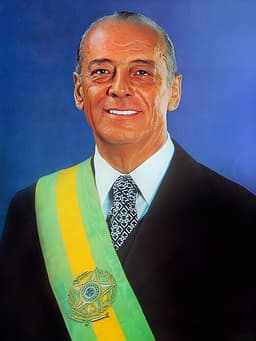
Joao Figueiredo
General · Modern
50.6Total
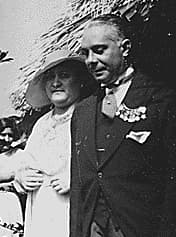
Rafael Trujillo
General · Modern
55.5Total
Basic Information
Born
1918
1891
Died
1999
1961
Era
Modern
Modern
Nationality
Brazil
Dominican Republic
Occupation
General
General
Civilization
Western
Western
Score Comparison
Military (10%)
22.6
50.0
Political (20%)
68.0
45.0
Influence (20%)
51.8
57.2
Legacy (20%)
40.0
45.8
Leadership (15%)
74.0
80.0
Strategy (15%)
41.0
60.0
TOTAL
50.6
55.5
Joao Figueiredo — Complete Timeline
1979 AD
Enacted the Party Reform LawReform◆ Major
Figueiredo's government passed legislation ending the two-party system imposed by the military, allowing the formation of multiple political parties. This reform facilitated the reorganization of opposition forces and the eventual return to multi-party democracy.
Political ReformMulti-party SystemDemocratization
Impact: nationalconstructive
Assumed the Presidency of BrazilPolitical Action◆ Major
Figueiredo became the last military president of Brazil, succeeding Ernesto Geisel. His presidency marked the continuation of the political opening (abertura) process initiated by Geisel, aiming for a gradual transition to democracy.
Military DictatorshipAberturaTransition
Impact: national
Signed the Amnesty LawPolitical Action◆ Major
Figueiredo signed Law No. 6,683, granting amnesty to political exiles and those accused of political crimes during the military regime. The law also covered state agents, preventing prosecution for human rights abuses.
AmnestyHuman RightsTransition
Impact: nationalconstructive
1981 AD
Faced the 1981 Riocentro BombingOther◆ Major
A bomb exploded at a May Day concert at Riocentro, killing a military sergeant and wounding another. Evidence suggested involvement of hardline military factions opposed to abertura. The incident weakened Figueiredo's government and accelerated the democratic transition.
TerrorismMilitary HardlinersAbertura
Impact: nationaltragic
1983 AD
Launched the Economic Adjustment PlanReform◆ Major
Facing a severe debt crisis and inflation, Figueiredo's government implemented an IMF-backed austerity program, including currency devaluation and spending cuts. The plan failed to stabilize the economy, leading to recession and social unrest.
Economic CrisisIMFAusterity
Impact: nationaldestructive
1984 AD
Presided over the Diretas Já CampaignPolitical Action◆ Major
Figueiredo's government faced massive public demonstrations demanding direct presidential elections (Diretas J
Diretas JáDemocracy MovementPolitical Crisis
Impact: national
Rafael Trujillo — Complete Timeline
1930 AD
1930 Dominican Republic coup d'étatPolitical Action
Trujillo, as commander of the National Army, staged a coup against President Horacio V
CoupDictatorshipPower Seizure
Impact: nationaldestructive
1937 AD
Parsley MassacreWar◆ Major
Trujillo ordered the massacre of Haitians living in the Dominican border region. Soldiers killed an estimated 20,000 to 30,000 people using machetes. The event was named for the shibboleth used to distinguish Haitians from Dominicans.
MassacreGenocideEthnic Cleansing
Impact: regionaldestructive
1952 AD
Nationalization of the Dominican sugar industryReform
Trujillo used state power to acquire control over the sugar industry, the country's main economic sector. He and his family became the largest landowners and sugar producers, enriching themselves while the state managed the industry.
Economic ControlCorruptionSugar Industry
Impact: nationaldestructive
1961 AD
Assassination of Rafael TrujilloPolitical Action
Trujillo was ambushed and killed by a group of Dominican dissidents on a highway near Ciudad Trujillo. The assassination was aided by the U.S. Central Intelligence Agency, which provided weapons. His death ended the dictatorship.
AssassinationRegime ChangeCIA Involvement
Impact: national
This comparison has not been analyzed yet.
One-time AI generation (~1 minute). Scores and timeline are already available below.
Rankings
🥇
Rafael TrujilloLeader
Mil: 50.0Pol: 45.0Inf: 57.2
55.5
🥈
Joao Figueiredo
Mil: 22.6Pol: 68.0Inf: 51.8
50.6
+4.9 behind
How This Comparison Works
Algorithm
Each figure is scored on 6 dimensions (0—100 scale) based on structured historical data: Military (10%), Political (20%), Influence (20%), Legacy (20%), Leadership (15%), Strategy (15%). The weighted total produces the final ranking.
Data Sources
Scores are computed from structured sub-indicators in the database. Scale factors adjust for era (Ancient ×0.85, Modern ×1.0) and civilization size (Eastern ×1.05, Other ×0.80) to account for differences in population and military scale.
Maximum 3 Figures
Comparisons are limited to 2—3 figures to ensure readability and statistical meaningfulness.
Error Margins
±5 points per dimension — Sub-scores are derived from historical records with inherent uncertainty. Two figures within 5 points on a dimension should be considered roughly equivalent in that area.
Total Score Accuracy
±3 points overall — The weighted combination of 6 dimensions produces a total score with approximately ±3 points of uncertainty. Differences of less than 3 points are not statistically significant— the figures are effectively tied.
Known Limitations
- Historical records are incomplete and uneven across civilizations
- Figures from oral-tradition societies may be underrepresented
- Occupation labels can misclassify multi-role figures
- Scores measure capability and impact, not moral character
- Quantitative scoring is a comparison tool, not absolute truth
Capability Radar
Military (10%) — Battles & Warfare
Battles
10
15
Win Rate
10
20
Expansion
5
10
Political (20%) — Governance & Reform
Reform
40
60
Diplomacy
45
50
Economy
35
55
Influence (20%) — Cultural & Global Reach
Cultural
20
40
Global
20
35
Legacy (20%) — Historical Impact
Historical
25
45
Longevity
15
30
Leadership (15%) — Power & Stability
Tenure
55
85
Stability
30
70
Strategy (15%) — Tactics & Innovation
Strategy
15
30
Tactics
15
25
Reform
20
40
Similar Comparisons
Comments & Discussion
No comments yet. Be the first to share your thoughts!