Loading...
Johan Ferrier vs Napoleon Bonaparte
Napoleon Bonaparte leads by 20.7 pts · 2 figures compared
…
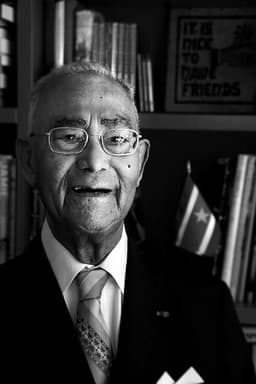
Johan Ferrier
Politician · Modern
50.2Total

Napoleon Bonaparte
General · Modern
70.9Total
Basic Information
Born
1910
1769
Died
2010
1821
Era
Modern
Modern
Nationality
Suriname
France
Occupation
Politician
General
Civilization
Other
Western
Score Comparison
Military (10%)
35.1
94.0
Political (20%)
68.0
72.0
Influence (20%)
52.5
40.0
Legacy (20%)
44.2
80.0
Leadership (15%)
53.2
78.0
Strategy (15%)
42.9
90.0
TOTAL
50.2
70.9
Johan Ferrier — Complete Timeline
1968 AD
Governor of SurinamePolitical Action◆ Major
Ferrier served as Governor of Suriname, the representative of the Dutch monarch, from 1968 to 1975. He played a key role in negotiations for independence and maintaining stability during the transition period.
GovernorColonial AdministrationIndependence
Impact: nationalconstructive
1975 AD
First President of Independent SurinamePolitical Action
Johan Ferrier became the first President of Suriname upon its independence from the Netherlands on November 25, 1975. He served as a ceremonial head of state, overseeing the transition to sovereignty and the drafting of the constitution.
IndependencePresidencyConstitution
Impact: nationalconstructive
1980 AD
Resignation After the 1980 CoupPolitical Action◆ Major
Ferrier resigned as President in 1980 after a military coup led by Desi Bouterse overthrew the civilian government. His resignation marked the end of democratic rule and the beginning of military dictatorship in Suriname.
CoupResignationMilitary Rule
Impact: nationaltragic
Post-Presidency Exile and ReturnPolitical Action
After the coup, Ferrier went into exile in the Netherlands, where he remained for several years. He later returned to Suriname after the restoration of democracy in the 1990s, but did not re-enter politics.
ExileReturnDemocracy
Impact: national
Napoleon Bonaparte — Complete Timeline
1799 AD
Coup of 18 BrumaireOther◆ Major
Napoleon Bonaparte, with support from his brother Lucien and key political figures, overthrew the Directory in a bloodless coup. He established the Consulate with himself as First Consul, effectively becoming the ruler of France. This event ended the French Revolution's most unstable period.
French RevolutionCoupRise to Power
Impact: regional
1804 AD
Promulgation of the Napoleonic CodeOther◆ Major
Napoleon enacted the Civil Code of the French, known as the Napoleonic Code, a comprehensive set of laws that replaced the fragmented feudal legal systems. The code established legal equality, protected property rights, and secularized law. It became the basis for legal systems in many European and world countries.
Legal ReformNapoleonic CodeCivil Law
Impact: globalconstructive
1805 AD
Battle of AusterlitzWar◆ Major
Napoleon's Grande Arm
Napoleonic WarsBattleDecisive Victory
Impact: global
1812 AD
Invasion of RussiaWar◆ Major
Napoleon led the Grande Arm
Napoleonic WarsInvasionDisaster
Impact: globaldestructive
1815 AD
Battle of WaterlooWar◆ Major
Napoleon's French army was defeated by the combined forces of the Duke of Wellington's Anglo-Allied army and Gebhard Leberecht von Bl
Napoleonic WarsBattleFinal Defeat
Impact: globaldestructive
Expert Analysis
johan-ferrier-vs-napoleon-bonaparte
### The Emperor and the Educator: Two Paths to Power
In the winter of 1815, Napoleon Bonaparte, the man who had once made kings tremble, sat in exile on the remote island of Saint Helena, dictating his memoirs to a small coterie of loyalists. Half a world away and a century later, in 1975, Johan Ferrier, a mild-mannered schoolteacher turned politician, stood on a podium in Paramaribo, watching the flag of the Netherlands lower for the last time. One man had conquered Europe with cannon and cavalry; the other had guided a small South American nation to independence with speeches and diplomacy. Their lives could not have been more different—yet both rose to become the supreme leaders of their nations. The question is not who was greater, but why the world needed both of them.
### Origins
Napoleon was born in 1769 on the island of Corsica, a place only recently annexed by France. His family was minor nobility, poor and proud, and young Napoleon grew up speaking Italian-accented French, an outsider in a nation he would one day rule. The French Revolution shattered the old order, and for a brilliant artillery officer, chaos was opportunity. He was forged in the crucible of war, where a young man with talent could rise faster than any nobleman’s son.
Johan Ferrier, born in 1910 in Paramaribo, Suriname, came from a world of order and patience. His father was a planter, his family part of the small, educated elite of a Dutch colony. There was no revolution in his youth; instead, there was a slow, steady path of study. Ferrier became a teacher, then a headmaster, then a civil servant. Where Napoleon’s world exploded, Ferrier’s evolved. The difference was not of ability but of era: Napoleon lived in an age when empires were built by the sword; Ferrier lived in an age when empires were dismantled by the ballot.
### Rise to Power
Napoleon’s ascent was a series of explosions. At 24, he recaptured Toulon from British forces. At 26, he saved the French Directory from a royalist uprising with a “whiff of grapeshot.” By 30, he was First Consul, and by 35, Emperor. His path was paved with the bodies of enemies and the loyalty of soldiers who would follow him to Moscow and back. The key turning point was the Italian campaign of 1796, where he turned a starving, ragged army into a conquering force. He did not wait for power; he seized it.
Ferrier’s rise was a slow accretion. In 1968, he was appointed Governor of Suriname, the representative of the Dutch queen—a ceremonial role, but one that required a steady hand. For seven years, he navigated the complex negotiations between Dutch officials, Surinamese politicians, and a population eager for self-rule. The turning point came on November 25, 1975, when Suriname became independent. Ferrier did not storm a palace; he accepted the presidency as a gift from a departing colonial power. His power was not won but entrusted.
### Leadership & Governance
As a ruler, Napoleon was a whirlwind. He reorganized France into departments, created the Napoleonic Code—a legal framework that still influences half the world—and built a centralized state that could mobilize millions for war. His military genius was unmatched: at Austerlitz in 1805, he crushed the combined armies of Russia and Austria in a single day. But his political wisdom was brittle. He placed his brothers on European thrones, alienated allies, and refused to compromise. His score of 75 in political acumen reflects a man who could conquer but could not consolidate peace.
Ferrier governed a nation of 400,000 people, not 40 million. His style was that of a headmaster: patient, firm, and conciliatory. He had no army to command and no code to write. Instead, he built institutions—a parliament, a judiciary, a civil service—from the fragile materials of a new nation. His military score of 30 is irrelevant; he was not a general. But his leadership score of 81 speaks to a different kind of strength: the ability to hold a country together when factions pulled apart. He was the calm in the storm, not the storm itself.
### Triumph & Tragedy
Napoleon’s greatest moment was the Battle of Austerlitz in 1805, where his strategic genius (93 score) reached its peak. His worst was the invasion of Russia in 1812, a catastrophic miscalculation that cost half a million men. He died in 1821, a prisoner on a rock in the Atlantic, his empire reduced to a memory.
Ferrier’s triumph was the peaceful birth of a nation. On that day in 1975, he was the father of independence. His tragedy came in 1980, when a young army sergeant named Desi Bouterse led a coup. Ferrier, a man of law, could not fight soldiers with words. He resigned, went into exile in the Netherlands, and lived long enough to see his country descend into dictatorship. He died in 2010 at the age of 99, a gentle man in a brutal time.
### Character & Destiny
Napoleon’s character was his destiny. His ambition was infinite, his ego colossal, and his will iron. “Impossible is a word to be found only in the dictionary of fools,” he once said. That belief drove him to Moscow—and to exile. He could not stop, because stopping meant admitting he was not a god.
Ferrier’s character was his anchor. He was modest, patient, and realistic. He knew that a small nation could not afford grand gestures. When the coup came, he chose resignation over civil war. “A president must know when to leave,” he might have said. He did not change history; he survived it.
### Legacy
Napoleon’s legacy is a double-edged sword. He spread the ideals of the French Revolution—equality before the law, secular government, meritocracy—across Europe. But he also inspired nationalism and militarism that led to two world wars. His name is a byword for genius and tyranny. The Napoleonic Code lives on; his empire does not.
Ferrier’s legacy is quieter. He is remembered as the first president of an independent Suriname, a symbol of peaceful transition. But his country has struggled: coups, corruption, and poverty have marred the dream of 1975. He is a footnote in world history, but a giant in his own nation’s story.
### Conclusion
Standing at the end of their lives, Napoleon and Ferrier faced the same truth: power is fleeting. One tried to rule the world and lost everything. One tried to serve his people and lost his office. Yet both taught the same lesson—that leadership is not about the size of your empire but the depth of your impact. Napoleon’s shadow falls across continents; Ferrier’s falls across a single, small nation. But both shadows are real. In the end, history does not ask how much you conquered, but what you left behind.
Rankings
🥇
Napoleon BonaparteLeader
Mil: 94.0Pol: 72.0Inf: 40.0
70.9
🥈
Johan Ferrier
Mil: 35.1Pol: 68.0Inf: 52.5
50.2
+20.7 behind
How This Comparison Works
Algorithm
Each figure is scored on 6 dimensions (0—100 scale) based on structured historical data: Military (10%), Political (20%), Influence (20%), Legacy (20%), Leadership (15%), Strategy (15%). The weighted total produces the final ranking.
Data Sources
Scores are computed from structured sub-indicators in the database. Scale factors adjust for era (Ancient ×0.85, Modern ×1.0) and civilization size (Eastern ×1.05, Other ×0.80) to account for differences in population and military scale.
Maximum 3 Figures
Comparisons are limited to 2—3 figures to ensure readability and statistical meaningfulness.
Error Margins
±5 points per dimension — Sub-scores are derived from historical records with inherent uncertainty. Two figures within 5 points on a dimension should be considered roughly equivalent in that area.
Total Score Accuracy
±3 points overall — The weighted combination of 6 dimensions produces a total score with approximately ±3 points of uncertainty. Differences of less than 3 points are not statistically significant— the figures are effectively tied.
Known Limitations
- Historical records are incomplete and uneven across civilizations
- Figures from oral-tradition societies may be underrepresented
- Occupation labels can misclassify multi-role figures
- Scores measure capability and impact, not moral character
- Quantitative scoring is a comparison tool, not absolute truth
Capability Radar
Military (10%) — Battles & Warfare
Battles
21
95
Win Rate
26
90
Expansion
25
95
Political (20%) — Governance & Reform
Reform
40
95
Diplomacy
60
80
Economy
35
85
Influence (20%) — Cultural & Global Reach
Cultural
30
85
Global
25
90
Legacy (20%) — Historical Impact
Historical
35
95
Longevity
30
90
Leadership (15%) — Power & Stability
Tenure
55
85
Stability
45
70
Strategy (15%) — Tactics & Innovation
Strategy
33
95
Tactics
33
98
Reform
35
92
Similar Comparisons
Comments & Discussion
General_Marmont6/17/2026
Napoleon was a tactical genius who won 60 battles, but Ferrier was the real visionary. While Napoleon conquered nations with cannons, Ferrier liberated his country without firing a shot. The Corsican's empire crumbled in a decade, but Ferrier's legacy of peaceful transition endures. Any general can win a battle; it takes a true statesman to win a nation's soul through diplomacy. Ferrier > Bonaparte, hands down. No comparison.
数据控小白6/17/2026
拿破仑打了60场仗,赢了53场,但对比Ferrier?这根本是关公战秦琼。拿破仑指挥过50万大军,Ferrier管理不到50万人口的国家就够呛。拿破仑的军费够养活整个苏里南一个世纪,而Ferrier的GDP连拿破仑一场战役的花销都比不上。前者改变世界格局,后者只是棋盘上的小卒。数据会说话,别拿殖民地的教育者跟欧洲的皇帝比。
Carthago_Delenda6/17/2026
Hold your horses. Napoleon's Civil Code, not his campaigns, is what matters. He standardized law across Europe, something Ferrier never attempted. Meanwhile, Ferrier's greatest achievement was reading a speech as the Dutch flag lowered. Napoleon created institutions that still govern France today—the Legion of Honor, the Bank of France, the lycee system. Ferrier got a statue in Paramaribo and is barely mentioned outside Suriname. Scale matters in history.
古典学究6/17/2026
拿Ferrier跟拿破仑比简直是侮辱历史。拿破仑的加冕典礼上,教皇亲自为他戴上皇冠,而Ferrier的“就职”不过是荷兰人走个过场。前者是亚历山大大帝的继承人,后者顶多是殖民地管事的升级版。拿破仑在金字塔下鼓舞军队,Ferrier在课堂上教地理课。历史从不平等,君王就是君王,教师永远是教师。别搞政治正确那一套。
Redcoat_Rancor6/17/2026
Forget the hagiography. Napoleon was a power-hungry tyrant who caused millions of deaths for his ego. Ferrier? He was a quiet hero who led Suriname to independence without bloodshed. The British had Wellington; the world had Ferrier showing that decolonization could be peaceful. Napoleon's wars bankrupted France; Ferrier balanced a budget on a shoestring. I'd take the teacher over the warlord any day. Results matter, not glory.