Loading...
John I of Portugal vs Li Bian
John I of Portugal leads by 6.2 pts · 2 figures compared
…
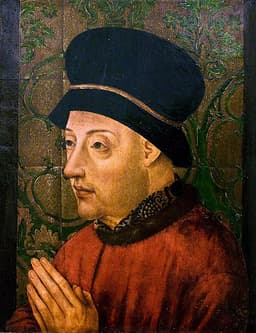
John I of Portugal
Emperor · Medieval
60.3Total
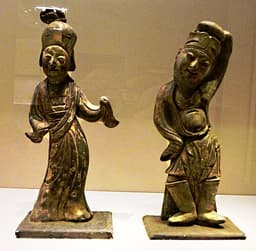
Li Bian
Emperor · Medieval
54.1Total
Basic Information
Born
1357
889
Died
1433
943
Era
Medieval
Medieval
Nationality
Portugal
China
Occupation
Emperor
Emperor
Civilization
Western
Eastern
Score Comparison
Military (10%)
65.0
55.0
Political (20%)
55.0
68.0
Influence (20%)
56.7
58.0
Legacy (20%)
58.0
47.5
Leadership (15%)
72.0
40.0
Strategy (15%)
60.7
60.0
TOTAL
60.3
54.1
John I of Portugal — Complete Timeline
1385 AD
Battle of AljubarrotaWar
John I led Portuguese forces to a decisive victory over the Castilian army at Aljubarrota. This battle secured Portuguese independence and solidified John's claim to the throne.
BattleIndependenceCastile
Impact: regionalconstructive
Accession to the thronePolitical Action
John I became King of Portugal after the 1383-1385 Crisis, being elected by the Cortes of Coimbra. His accession ended the Burgundian dynasty and founded the House of Aviz.
SuccessionDynastyAviz
Impact: nationalconstructive
1386 AD
Treaty of WindsorPolitical Action◆ Major
John I signed the Treaty of Windsor with England, establishing a perpetual alliance between Portugal and England. This alliance, the oldest in the world, has endured to the present day.
TreatyAllianceEngland
Impact: globalconstructive
1415 AD
Conquest of CeutaWar◆ Major
John I led the conquest of Ceuta in North Africa, marking the beginning of Portuguese overseas expansion. The capture of the city opened the era of European colonialism.
ConquestColonialismNorth Africa
Impact: global
Li Bian — Complete Timeline
937 AD
Founded the Southern Tang DynastyPolitical Action
Li Bian, originally Xu Zhigao, usurped the throne from the Yang family of the Wu kingdom and proclaimed himself emperor of the Southern Tang dynasty. He established his capital at Jinling (Nanjing) and initiated a period of cultural and economic prosperity.
Dynasty FoundingSouthern TangUsurpation
Impact: regional
938 AD
Implemented Peaceful and Prosperous PoliciesReform◆ Major
Li Bian reduced taxes, promoted agriculture, and encouraged trade. He also patronized literature and the arts, attracting scholars to his court. His reign brought stability and relative peace to the Yangtze River region during the turbulent Five Dynasties period.
ReformsProsperityCultural Patronage
Impact: regionalconstructive
Expert Analysis
Origins
John I of Portugal (born 1357) was the illegitimate son of King Peter I and Teresa Lourenço. He was raised as a knight and became Master of the Order of Aviz, a military order. His early life was marked by the absence of royal favor due to his illegitimacy, but he gained military experience fighting against Castile. Li Bian (born 889), originally named Xu Zhigao, was a foundling adopted by Yang Xingmi, a warlord of the Wu kingdom. He rose through the ranks as an able administrator, eventually becoming regent for the Wu emperor. His background was humble but he leveraged his adoptive family's power.
Rise to Power
John I's rise came during the 1383-1385 Crisis, a succession war after the death of King Ferdinand I. The Portuguese nobility, fearing absorption by Castile, elected John as king at the Cortes of Coimbra in April 1385. His decisive victory at the Battle of Aljubarrota on August 14, 1385, against a larger Castilian army secured his throne and Portuguese independence. This battle, fought with English longbowmen, was a turning point that cemented his legitimacy. Li Bian, as regent of Wu (since 927), consolidated power by eliminating rivals and reforming the administration. In 937, he forced the last Wu emperor to abdicate and proclaimed himself emperor of the Southern Tang dynasty, changing his name to Li Bian. His usurpation was smooth, relying on bureaucratic maneuvering rather than military conquest.
Leadership & Governance
John I was a military-focused monarch who prioritized defense and expansion. He established the House of Aviz, a new dynasty, and strengthened the monarchy by aligning with the bourgeoisie and nobility. His signing of the Treaty of Windsor in 1386 created a perpetual alliance with England, providing diplomatic and military support. He also promoted trade and navigation, laying groundwork for exploration. Li Bian, in contrast, was a peace-oriented ruler. He reduced taxes, promoted agriculture, and encouraged commerce, leading to economic prosperity. He also patronized literature and arts, attracting scholars to his court. His governance was marked by stability and cultural flourishing, but he avoided military expansion, scoring lower in military (55.0) compared to John I (65.0). John I's leadership score of 72.0 reflects his decisive command, while Li Bian's 40.0 indicates a more passive style.
Triumph & Tragedy
John I's greatest triumph was the victory at Aljubarrota, which secured Portugal's independence and his dynasty. The conquest of Ceuta in 1415 initiated Portuguese overseas expansion, a major achievement. However, his later years saw overextension in North Africa, with costly campaigns that strained resources. Li Bian's triumph was founding the Southern Tang dynasty and establishing a peaceful, prosperous state. His cultural patronage left a legacy of poetry and scholarship. Yet his tragedy was the fragility of his state: after his death, Southern Tang was conquered by the Song dynasty in 975, ending his lineage. Li Bian's total score of 54.1 is lower than John I's 60.3, reflecting his weaker long-term impact.
Character & Destiny
John I was pragmatic, ambitious, and militarily astute. He used his illegitimacy as motivation, forging alliances with the common people and the English. His character drove him to take risks, like the Ceuta expedition, which paid off. Li Bian was cautious, scholarly, and administrative. He avoided war, focusing on internal development. His destiny was to create a cultural golden age, but his pacifism left his state vulnerable. Historians often view John I as a national hero in Portugal, while Li Bian is remembered as a capable but ultimately unsuccessful founder.
Legacy
John I's legacy is profound: the House of Aviz ruled Portugal for two centuries, the Anglo-Portuguese Alliance remains active, and the Age of Discovery began with his conquest of Ceuta. His military and political scores of 65.0 and 55.0 reflect his enduring impact on Portuguese identity. Li Bian's legacy is more localized: Southern Tang literature and arts influenced Chinese culture, but his dynasty fell quickly. His influence score of 58.0 is comparable to John I's 56.7, but his legacy score of 47.5 is lower than John I's 58.0, indicating less lasting effect.
Conclusion
Between John I of Portugal and Li Bian, John I had greater historical impact. His total score of 60.3 versus Li Bian's 54.1 underscores his stronger leadership and strategic achievements. John I's actions shaped Portuguese independence, global exploration, and a centuries-old alliance, while Li Bian's peaceful reign, though culturally rich, was ephemeral. John I's legacy is foundational for Portugal and Europe's expansion, whereas Li Bian's influence remained confined to a short-lived dynasty. Thus, John I emerges as the more consequential figure.
Rankings
🥇
John I of PortugalLeader
Mil: 65.0Pol: 55.0Inf: 56.7
60.3
🥈
Li Bian
Mil: 55.0Pol: 68.0Inf: 58.0
54.1
+6.2 behind
How This Comparison Works
Algorithm
Each figure is scored on 6 dimensions (0—100 scale) based on structured historical data: Military (10%), Political (20%), Influence (20%), Legacy (20%), Leadership (15%), Strategy (15%). The weighted total produces the final ranking.
Data Sources
Scores are computed from structured sub-indicators in the database. Scale factors adjust for era (Ancient ×0.85, Modern ×1.0) and civilization size (Eastern ×1.05, Other ×0.80) to account for differences in population and military scale.
Maximum 3 Figures
Comparisons are limited to 2—3 figures to ensure readability and statistical meaningfulness.
Error Margins
±5 points per dimension — Sub-scores are derived from historical records with inherent uncertainty. Two figures within 5 points on a dimension should be considered roughly equivalent in that area.
Total Score Accuracy
±3 points overall — The weighted combination of 6 dimensions produces a total score with approximately ±3 points of uncertainty. Differences of less than 3 points are not statistically significant— the figures are effectively tied.
Known Limitations
- Historical records are incomplete and uneven across civilizations
- Figures from oral-tradition societies may be underrepresented
- Occupation labels can misclassify multi-role figures
- Scores measure capability and impact, not moral character
- Quantitative scoring is a comparison tool, not absolute truth
Capability Radar
Military (10%) — Battles & Warfare
Battles
65
30
Win Rate
70
35
Expansion
60
40
Political (20%) — Governance & Reform
Reform
70
65
Diplomacy
75
55
Economy
70
60
Influence (20%) — Cultural & Global Reach
Cultural
60
50
Global
55
30
Legacy (20%) — Historical Impact
Historical
65
45
Longevity
60
40
Leadership (15%) — Power & Stability
Tenure
75
60
Stability
65
55
Strategy (15%) — Tactics & Innovation
Strategy
65
45
Tactics
60
40
Reform
55
50
Similar Comparisons
Comments & Discussion
No comments yet. Be the first to share your thoughts!