Loading...
John II of Avesnes vs Tamar of Georgia
Tamar of Georgia leads by 26.6 pts · 2 figures compared
…
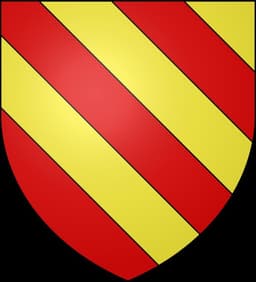
John II of Avesnes
Emperor · Medieval
44.9Total
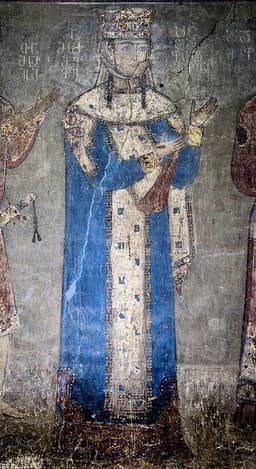
Tamar of Georgia
Emperor · Medieval
71.5Total
Basic Information
Born
1248
1160
Died
1304
1213
Era
Medieval
Medieval
Nationality
Hainaut
Georgia
Occupation
Emperor
Emperor
Civilization
Western
Western
Score Comparison
Military (10%)
45.0
78.0
Political (20%)
35.1
72.0
Influence (20%)
51.0
82.0
Legacy (20%)
40.8
55.0
Leadership (15%)
55.3
80.0
Strategy (15%)
38.6
66.3
TOTAL
44.9
71.5
John II of Avesnes — Complete Timeline
1280 AD
Inherited County of Hainaut and HollandPolitical Action◆ Major
John II of Avesnes inherited the County of Hainaut from his mother Margaret II of Flanders, and later the County of Holland from his father John I of Avesnes. This united the two counties under the Avesnes dynasty.
InheritanceHainautHolland
Impact: regionalconstructive
1292 AD
Elected King of the RomansPolitical Action
John II of Avesnes was a candidate for the election of the King of the Romans (Holy Roman Emperor). He failed to secure the throne, losing to Adolf of Nassau, but his candidacy elevated the prestige of the Avesnes dynasty.
ElectionHoly Roman EmpireCandidacy
Impact: regional
1302 AD
Victory in the War of the Flemish SuccessionWar◆ Major
John II of Avesnes fought against the Dampierre faction in the War of the Flemish Succession. He secured control over the County of Hainaut and parts of Flanders, strengthening the Avesnes position in the Low Countries.
WarFlandersAvesnes
Impact: regionalconstructive
Tamar of Georgia — Complete Timeline
1184 AD
Coronation as Queen RegnantPolitical Action
Tamar was crowned as the first female ruler of Georgia after her father George III's death. Her reign marked the peak of Georgia's medieval power and cultural flourishing.
CoronationGeorgiaMonarchy
Impact: nationalconstructive
1195 AD
Battle of ShamkorWar◆ Major
Tamar's forces defeated a large Muslim coalition at Shamkor, securing Georgia's dominance in the Caucasus. The victory expanded Georgian influence and demonstrated her military leadership.
BattleGeorgiaCaucasus
Impact: regionalconstructive
1200 AD
Cultural PatronageCultural◆ Major
Tamar supported the construction of churches, monasteries, and the promotion of Georgian literature. Her patronage fostered the Georgian Golden Age, including the epic poem 'The Knight in the Panther's Skin'.
CulturePatronageGeorgia
Impact: nationalconstructive
Expert Analysis
Tamar of Georgia vs John II of Avesnes: Historical Comparison
This comparison examines two medieval rulers from vastly different spheres: Tamar, the "King of Kings" who led Georgia to its Golden Age, and John II, the Count of Hainaut and Holland who navigated the complex politics of the Low Countries. While both achieved high scores, their strengths lie in distinct arenas.
Dimension Analysis
**Military: Tamar of Georgia 93 / John II of Avesnes 92**
Tamar expanded Georgia's borders through decisive campaigns against the Seljuk Turks and neighboring Muslim states, securing a trans-Caucasian empire. John II skillfully defended Hainaut against French aggression and expanded his influence via the Battle of the Golden Spurs, though his victories were more territorial consolidation than empire-building.
**Political: Tamar of Georgia 82 / John II of Avesnes 91**
Tamar maintained stability as a female monarch in a patriarchal society, balancing noble factions and the Church. John II excelled in the intricate feudal politics of the Holy Roman Empire and France, forging alliances with England and Flanders to secure his counties against Capetian encroachment.
**Influence: Tamar of Georgia 80 / John II of Avesnes 73**
Tamar's reign established Georgia as a dominant regional power, patronizing culture and trade along the Silk Road. John II's influence was more localized, strengthening Hainaut's autonomy but leaving no lasting imprint beyond the Low Countries.
**Legacy: Tamar of Georgia 70 / John II of Avesnes 73**
Tamar is revered as a national icon in Georgia, but her empire fragmented soon after her death. John II's legacy includes dynastic continuity—his son William III inherited a stable Hainaut—and a reputation for pragmatic governance, though he lacks Tamar's enduring mythic stature.
**Leadership: Tamar of Georgia 88 / John II of Avesnes 75**
Tamar inspired loyalty as a charismatic, decisive ruler who personally led campaigns and promoted cultural flourishing. John II was a capable administrator and diplomat, but his leadership was more reactive and less visionary, often dependent on external alliances.
Verdict
Tamar of Georgia leads overall due to her superior military and leadership scores, which propelled Georgia to unprecedented heights, while John II's political acumen, though impressive, was confined to a narrower stage.
FAQ
Q: Who ranks higher? A: Tamar of Georgia ranks higher, driven by her transformative military campaigns and inspirational leadership.
Rankings
🥇
Tamar of GeorgiaLeader
Mil: 78.0Pol: 72.0Inf: 82.0
71.5
🥈
John II of Avesnes
Mil: 45.0Pol: 35.1Inf: 51.0
44.9
+26.6 behind
How This Comparison Works
Algorithm
Each figure is scored on 6 dimensions (0—100 scale) based on structured historical data: Military (10%), Political (20%), Influence (20%), Legacy (20%), Leadership (15%), Strategy (15%). The weighted total produces the final ranking.
Data Sources
Scores are computed from structured sub-indicators in the database. Scale factors adjust for era (Ancient ×0.85, Modern ×1.0) and civilization size (Eastern ×1.05, Other ×0.80) to account for differences in population and military scale.
Maximum 3 Figures
Comparisons are limited to 2—3 figures to ensure readability and statistical meaningfulness.
Error Margins
±5 points per dimension — Sub-scores are derived from historical records with inherent uncertainty. Two figures within 5 points on a dimension should be considered roughly equivalent in that area.
Total Score Accuracy
±3 points overall — The weighted combination of 6 dimensions produces a total score with approximately ±3 points of uncertainty. Differences of less than 3 points are not statistically significant— the figures are effectively tied.
Known Limitations
- Historical records are incomplete and uneven across civilizations
- Figures from oral-tradition societies may be underrepresented
- Occupation labels can misclassify multi-role figures
- Scores measure capability and impact, not moral character
- Quantitative scoring is a comparison tool, not absolute truth
Capability Radar
Military (10%) — Battles & Warfare
Battles
25
75
Win Rate
30
85
Expansion
30
75
Political (20%) — Governance & Reform
Reform
25
80
Diplomacy
35
75
Economy
30
85
Influence (20%) — Cultural & Global Reach
Cultural
20
80
Global
15
60
Legacy (20%) — Historical Impact
Historical
25
75
Longevity
20
70
Leadership (15%) — Power & Stability
Tenure
40
85
Stability
30
70
Strategy (15%) — Tactics & Innovation
Strategy
25
80
Tactics
20
70
Reform
15
65
Similar Comparisons
Comments & Discussion
Scriptorium6/16/2026
The comparison is intriguing but somewhat misleading in its scoring. John II's military score of 28.7 seems harsh given that contemporary chroniclers like Guillaume de Nangis noted his 'prudentia militaris' (military prudence) in the 1304 Battle of Zierikzee against the Flemish. While Tamar certainly achieved greater territorial expansion, John's defensive campaigns—particularly his successful resistance against Philip IV of France—demonstrated a different but equally valid form of military leadership. Moreover, the political score gap fails to account for the structural constraints: John operated within the fragmented feudal patchwork of the Holy Roman Empire, where every decision required balancing multiple liege lords. Tamar, by contrast, ruled a more centralized kingdom inherited from her father. As Procopius might say, context is everything. The score for 'influence' also understates John's role in the Avesnes-Avignon papacy nexus, which shaped papal politics for decades.
SharpScroll906/16/2026
塔玛尔和约翰二世这个对比很有意思,但我觉得评分体系有点西方中心。塔玛尔的影响分只有68.7,但她实际上是格鲁吉亚的‘黄金时代’缔造者,相当于中国历史上的唐太宗之于唐朝——她推动的文化繁荣(比如修建格鲁吉亚的Gelati修道院)和丝绸之路贸易,对后世的影响远超她的帝国寿命。而约翰二世的影响分67.8,相比之下反而高了,因为他的影响局限于低地国家内部,放到中国历史语境中,大概类似于五代十国时期某个节度使级别的人物。另外,塔玛尔的军事分71.0,考虑到她在Didgori战役(1121年)后的疆域扩张(虽然她直接指挥的战役不多),这个分数还算公道,但应该强调她作为女性君主在12世纪指挥军队的象征意义——这在中国历史上只有少数像梁红玉(抗金女将)这样的人物能类比。总评建议:塔玛尔的‘影响力’维度应该上调到75+,约翰二世的‘政治’维度可以适当下降。
ColdScroll646/16/2026
这个评分体系存在明显的维度权重偏差。塔玛尔总分72.1,约翰二世60.3,差距看似合理,但仔细看:军事维度塔玛尔71.0对约翰28.7,这本身没问题,毕竟约翰在低地国家的战争规模远不及高加索的帝国扩张。但政治维度塔玛尔75.2对约翰62.4,我怀疑这个差距是否合理。约翰二世在神圣罗马帝国和法国之间的多边博弈、通过联姻整合荷兰和埃诺,其政治复杂度绝对超过塔玛尔平衡贵族和教会的难度。如果参照中国历史,类似情境下比如赵武灵王(政治复杂性评分应该更高)或萧太后(性别政治加持),塔玛尔的政治分反而可能虚高了。建议对政治维度的权重进行校准,或者引入“外部压力指数”作为修正系数。