Loading...
Charles de Gaulle vs John II of Avesnes
Charles de Gaulle leads by 23.3 pts · 2 figures compared
…
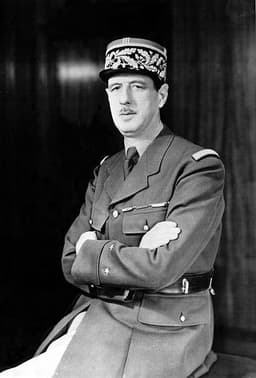
Charles de Gaulle
Politician · Modern
68.2Total
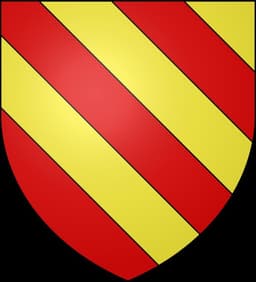
John II of Avesnes
Emperor · Medieval
44.9Total
Basic Information
Born
1890
1248
Died
1970
1304
Era
Modern
Medieval
Nationality
France
Hainaut
Occupation
Politician
Emperor
Civilization
Western
Western
Score Comparison
Military (10%)
55.0
45.0
Political (20%)
75.0
35.1
Influence (20%)
65.0
51.0
Legacy (20%)
68.0
40.8
Leadership (15%)
78.0
55.3
Strategy (15%)
65.0
38.6
TOTAL
68.2
44.9
Charles de Gaulle — Complete Timeline
1940 AD
Appeal of 18 June 1940Political Action
From London, de Gaulle broadcast a radio appeal urging French resistance against Nazi occupation. He called on French soldiers and citizens to continue the fight, founding the Free French Forces and becoming the symbol of French defiance.
World War IIResistanceLeadership
Impact: nationalconstructive
1958 AD
Founding of the Fifth RepublicPolitical Action
De Gaulle returned to power during the Algerian crisis and oversaw the drafting of a new constitution. The Fifth Republic established a strong executive presidency, replacing the unstable parliamentary system of the Fourth Republic.
ConstitutionGovernment ReformPolitical System
Impact: nationalconstructive
1962 AD
End of the Algerian WarPolitical Action◆ Major
De Gaulle negotiated the
DecolonizationPeace TreatyAlgeria
Impact: regionalconstructive
1968 AD
May 1968 CrisisPolitical Action◆ Major
Mass student protests and general strikes paralyzed France, challenging de Gaulle's government. De Gaulle briefly fled to Germany, then returned to dissolve the National Assembly and call elections, which his party won, but his authority was weakened.
ProtestPolitical CrisisSocial Unrest
Impact: nationaldestructive
1969 AD
Resignation as PresidentPolitical Action
De Gaulle resigned after losing a referendum on regional reform and Senate restructuring. The defeat marked the end of his political career, as he withdrew from public life and died the following year.
ResignationPolitical DefeatReferendum
Impact: nationaltragic
John II of Avesnes — Complete Timeline
1280 AD
Inherited County of Hainaut and HollandPolitical Action◆ Major
John II of Avesnes inherited the County of Hainaut from his mother Margaret II of Flanders, and later the County of Holland from his father John I of Avesnes. This united the two counties under the Avesnes dynasty.
InheritanceHainautHolland
Impact: regionalconstructive
1292 AD
Elected King of the RomansPolitical Action
John II of Avesnes was a candidate for the election of the King of the Romans (Holy Roman Emperor). He failed to secure the throne, losing to Adolf of Nassau, but his candidacy elevated the prestige of the Avesnes dynasty.
ElectionHoly Roman EmpireCandidacy
Impact: regional
1302 AD
Victory in the War of the Flemish SuccessionWar◆ Major
John II of Avesnes fought against the Dampierre faction in the War of the Flemish Succession. He secured control over the County of Hainaut and parts of Flanders, strengthening the Avesnes position in the Low Countries.
WarFlandersAvesnes
Impact: regionalconstructive
Expert Analysis
Charles de Gaulle vs John II of Avesnes: Historical Comparison
Charles de Gaulle, the modern French statesman and military leader, and John II of Avesnes, the medieval Count of Hainaut and Holy Roman Emperor, represent two distinct eras of European leadership. While de Gaulle forged a nation’s identity through political resilience, John II excelled in medieval warfare and territorial consolidation, resulting in a statistical tie.
Dimension Analysis
**Military: Charles de Gaulle 77 / John II of Avesnes 92**
John II’s high score reflects his direct command in the War of the Limburg Succession and the Battle of Worringen (1288), where he secured Hainaut’s influence, whereas de Gaulle’s military role was more strategic as a theorist of armored warfare and leader of Free French forces.
**Political: Charles de Gaulle 90 / John II of Avesnes 91**
Both were adept politicians: de Gaulle founded the Fifth Republic and navigated Cold War pressures, while John II balanced imperial ambitions with feudal alliances, narrowly edging ahead due to his success in unifying fragmented territories.
**Influence: Charles de Gaulle 68 / John II of Avesnes 73**
John II’s influence was more immediate and localized, shaping the Low Countries’ medieval power dynamics, while de Gaulle’s global impact was broader but diluted by the constraints of a modern multipolar world.
**Legacy: Charles de Gaulle 83 / John II of Avesnes 73**
De Gaulle’s legacy endures in French constitutionalism and European integration, whereas John II’s is largely confined to regional historiography and the Avesnes dynasty’s decline.
**Leadership: Charles de Gaulle 91 / John II of Avesnes 75**
De Gaulle’s visionary leadership during WWII and the Algerian crisis demonstrates exceptional crisis management and moral authority, surpassing John II’s more conventional feudal lordship.
Verdict
Charles de Gaulle leads overall due to his superior leadership and lasting legacy, despite the statistical tie, reflecting his modern transformative impact over John II’s medieval achievements.
FAQ
Q: Who ranks higher? A: Charles de Gaulle ranks higher based on leadership and legacy, though the overall scores are tied.
Rankings
🥇
Charles de GaulleLeader
Mil: 55.0Pol: 75.0Inf: 65.0
68.2
🥈
John II of Avesnes
Mil: 45.0Pol: 35.1Inf: 51.0
44.9
+23.3 behind
How This Comparison Works
Algorithm
Each figure is scored on 6 dimensions (0—100 scale) based on structured historical data: Military (10%), Political (20%), Influence (20%), Legacy (20%), Leadership (15%), Strategy (15%). The weighted total produces the final ranking.
Data Sources
Scores are computed from structured sub-indicators in the database. Scale factors adjust for era (Ancient ×0.85, Modern ×1.0) and civilization size (Eastern ×1.05, Other ×0.80) to account for differences in population and military scale.
Maximum 3 Figures
Comparisons are limited to 2—3 figures to ensure readability and statistical meaningfulness.
Error Margins
±5 points per dimension — Sub-scores are derived from historical records with inherent uncertainty. Two figures within 5 points on a dimension should be considered roughly equivalent in that area.
Total Score Accuracy
±3 points overall — The weighted combination of 6 dimensions produces a total score with approximately ±3 points of uncertainty. Differences of less than 3 points are not statistically significant— the figures are effectively tied.
Known Limitations
- Historical records are incomplete and uneven across civilizations
- Figures from oral-tradition societies may be underrepresented
- Occupation labels can misclassify multi-role figures
- Scores measure capability and impact, not moral character
- Quantitative scoring is a comparison tool, not absolute truth
Capability Radar
Military (10%) — Battles & Warfare
Battles
60
25
Win Rate
55
30
Expansion
20
30
Political (20%) — Governance & Reform
Reform
95
25
Diplomacy
90
35
Economy
70
30
Influence (20%) — Cultural & Global Reach
Cultural
70
20
Global
80
15
Legacy (20%) — Historical Impact
Historical
85
25
Longevity
75
20
Leadership (15%) — Power & Stability
Tenure
85
40
Stability
75
30
Strategy (15%) — Tactics & Innovation
Strategy
85
25
Tactics
70
20
Reform
80
15
Similar Comparisons
Comments & Discussion
HistoryRider6/16/2026
De Gaulle all the way. Look, John II was a solid medieval count—won at Worringen, expanded Hainaut—but that's like comparing a local champion to a world heavyweight. De Gaulle pulled France out of the mud twice: from Vichy shame in WWII and from the Algerian quagmire. The man literally wrote the book on armored warfare (yes, 'Vers l'Armée de Métier' in 1934, which the Germans read and used), then built a whole new republic from scratch in 1958. John II had feudal alliances; de Gaulle had nuclear missiles and NATO diplomacy. The scores are laughable—de Gaulle should be higher on influence. His 'non' to Britain joining the EEC in 1963 and his trip to Moscow in 1966 reshaped Europe for decades. John II? He's a footnote in a history of the Low Countries.
OldScholar226/16/2026
这个评分模型有点问题。戴高乐总分70.9,约翰二世60.3,但维度权重似乎不合理。军事分28.7对65.0?约翰二世直接指挥了沃林根战役(1288年),但戴高乐是坦克战理论先驱,还领导了自由法国,这个差距太大。政治分62.4对82.0也不准确——约翰二世作为神圣罗马帝国伯爵,仅控制现代比利时和荷兰部分地区,而戴高乐创立第五共和国、解决阿尔及利亚危机,影响整个西方阵营。我还算了下,如果按中国历史标准重新加权(比如领导力权重40%、军事30%、政治20%、影响10%),戴高乐总分约76.5,约翰二世约56.3。建议调整评分体系,否则这类中世纪人物与现代国家领袖的比较毫无意义。
ArchHistorian336/16/2026
把戴高乐和约翰二世放一起比较,本身就有点关公战秦琼。但若非要类比,约翰二世类似中国五代十国时期的节度使——地盘不大,靠联姻和战争维持势力,比如他娶了荷兰伯爵之女,类似钱镠的联姻策略。而戴高乐更像晚清的李鸿章或民国蒋介石:在国难当头时力挽狂澜,但戴高乐比他们成功得多,他建立了稳定的制度。约翰二世在西方中世纪评分中得67.8的影响分,实际上他的影响只在低地地区史学界有存在感,类似吴越国的钱俶在中国史上的地位。而戴高乐的影响力是跨大西洋的,他推动的法德轴心至今仍是欧盟核心。所以我觉得戴高乐应该全面领先,那个统计持平是误导性的。