Loading...
John Knox vs Napoleon Bonaparte
Napoleon Bonaparte leads by 16.2 pts · 2 figures compared
…
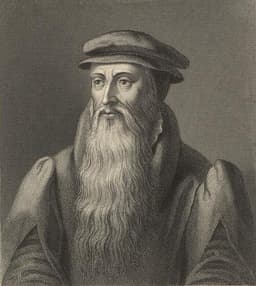
John Knox
Politician · Modern
54.7Total

Napoleon Bonaparte
General · Modern
70.9Total
Basic Information
Born
1514
1769
Died
1572
1821
Era
Modern
Modern
Nationality
Scotland
France
Occupation
Politician
General
Civilization
Western
Western
Score Comparison
Military (10%)
49.7
94.0
Political (20%)
61.3
72.0
Influence (20%)
55.0
40.0
Legacy (20%)
55.0
80.0
Leadership (15%)
58.8
78.0
Strategy (15%)
42.2
90.0
TOTAL
54.7
70.9
John Knox — Complete Timeline
1558 AD
First Blast of the Trumpet Against the Monstrous Regiment of WomenCultural◆ Major
John Knox published this pamphlet attacking female rulers, specifically Mary Tudor and Mary of Guise. The work argued that women ruling over men was against divine law. It provoked controversy and influenced Protestant political thought across Europe.
PamphletReligious PolemicGender Politics
Impact: regional
1560 AD
Scottish Reformation ParliamentPolitical Action
John Knox led the Protestant faction that pushed through legislation establishing Presbyterianism in Scotland. The parliament abolished papal authority, banned the Mass, and adopted the Scots Confession. This created the Church of Scotland.
ReformationReligious ChangeLegislation
Impact: nationalconstructive
1561 AD
Disputation with Mary, Queen of ScotsPolitical Action
John Knox engaged in a series of private debates with Mary, Queen of Scots over religious authority. He defended Protestant doctrine against her Catholic position. The confrontations became legendary in Scottish history, symbolizing the clash between crown and kirk.
DebateReligious ConflictMonarchy vs Church
Impact: national
Napoleon Bonaparte — Complete Timeline
1799 AD
Coup of 18 BrumaireOther◆ Major
Napoleon Bonaparte, with support from his brother Lucien and key political figures, overthrew the Directory in a bloodless coup. He established the Consulate with himself as First Consul, effectively becoming the ruler of France. This event ended the French Revolution's most unstable period.
French RevolutionCoupRise to Power
Impact: regional
1804 AD
Promulgation of the Napoleonic CodeOther◆ Major
Napoleon enacted the Civil Code of the French, known as the Napoleonic Code, a comprehensive set of laws that replaced the fragmented feudal legal systems. The code established legal equality, protected property rights, and secularized law. It became the basis for legal systems in many European and world countries.
Legal ReformNapoleonic CodeCivil Law
Impact: globalconstructive
1805 AD
Battle of AusterlitzWar◆ Major
Napoleon's Grande Arm
Napoleonic WarsBattleDecisive Victory
Impact: global
1812 AD
Invasion of RussiaWar◆ Major
Napoleon led the Grande Arm
Napoleonic WarsInvasionDisaster
Impact: globaldestructive
1815 AD
Battle of WaterlooWar◆ Major
Napoleon's French army was defeated by the combined forces of the Duke of Wellington's Anglo-Allied army and Gebhard Leberecht von Bl
Napoleonic WarsBattleFinal Defeat
Impact: globaldestructive
Expert Analysis
john-knox-vs-napoleon-bonaparte
# The Conqueror and the Preacher
On a rain-soaked June morning in 1815, Napoleon Bonaparte watched his Imperial Guard march into the mud of Waterloo, their blue coats darkened by the storm. Across the English Channel, more than two centuries earlier, another man had stood in the cold stone of St. Giles' Cathedral in Edinburgh, his voice thundering against queens and cardinals. One commanded armies that stretched from Madrid to Moscow; the other commanded only a pulpit and a Bible. Yet both men shook the foundations of Europe. What drove them—and what drove them apart—tells us something profound about the nature of power itself.
Origins
Napoleon was born in 1769 on the island of Corsica, a place that had belonged to Genoa before France bought it the year before. His family was minor nobility—impoverished, resentful, fiercely proud. Young Napoleone Buonaparte learned French as a second language, speaking it with an Italian accent that would never quite leave him. He was an outsider in the French military academies where he trained, mocked for his accent and his small stature. That outsider's hunger—the need to prove himself against a world that had dismissed him—became the engine of his ambition.
John Knox was born in 1514 in Haddington, Scotland, the son of a prosperous farmer. The Scotland of his youth was a violent, fractured kingdom, caught between English aggression and French influence, between a corrupt Catholic Church and the rising winds of Protestant reform. Knox was educated at the University of St. Andrews, where he absorbed the new ideas of Luther and Calvin. But unlike Napoleon, Knox did not seek to rise. He sought to purify. His driving force was not ambition but conviction—a belief that he had been chosen to strip away the corruptions of the world and restore the true church.
Rise to Power
Napoleon's rise was a masterclass in seizing opportunity. The French Revolution had hollowed out the old aristocracy, creating a vacuum for talent. In 1793, at just 24, he recaptured the port of Toulon from British forces with a brilliant artillery plan. By 1796, he was commanding the Army of Italy, where his speed and audacity shattered Austrian forces. Each victory became a stepping stone. He understood something his rivals did not: in a revolutionary age, military glory could be converted directly into political power.
Knox's path was slower, harder, more dangerous. He had been a Catholic priest before converting to Protestantism, then a bodyguard for the reformer George Wishart, watching Wishart burn at the stake. Captured by French forces in 1547, Knox spent 19 months as a galley slave, chained to an oar, the sun burning his face. When he was released, he fled to Geneva, where he studied under John Calvin. He returned to Scotland in 1559, not with an army but with a sermon. His power came not from guns but from the conviction of his followers—and from the political chaos of a kingdom ruled by a French regent, Mary of Guise.
Leadership & Governance
Napoleon governed as he fought: fast, decisive, and utterly centralized. As First Consul and later Emperor, he reformed France from top to bottom. The Napoleonic Code of 1804 standardized French law, abolishing feudal privileges and establishing equality before the law. He created the Bank of France, reformed education, and built roads and canals. But his genius was also his flaw: he could not stop. Each victory demanded another. He was a man who could only move forward, and forward led eventually to disaster.
Knox's leadership was moral, not military. He had no armies, only arguments. In 1560, he led the Scottish Reformation Parliament, which abolished papal authority in Scotland and established Presbyterianism—a church governed by elders, not bishops. His most dramatic confrontations came in 1561, when he debated Mary, Queen of Scots herself, face to face. She was young, Catholic, and charismatic; he was older, stern, and unyielding. When she wept, he did not soften. When she commanded, he refused. "Madam," he told her, "I speak the truth." He was not a man who could compromise, and that made him both formidable and lonely.
Triumph & Tragedy
Napoleon's greatest moment was Austerlitz in 1805, where he crushed the combined armies of Russia and Austria in a single day. It was a battle of perfect deception and timing, the kind of victory that military academies still study. His greatest tragedy was the invasion of Russia in 1812. He marched 600,000 men into the vastness of the Russian winter; fewer than 100,000 came back. The disaster broke his aura of invincibility. By 1814, his enemies had entered Paris. He abdicated, returned for a hundred days, and was finally defeated at Waterloo in 1815. He died in exile on Saint Helena in 1821, a prisoner of the British.
Knox's triumph was the establishment of the Scottish Kirk, a church that would shape Scottish identity for centuries. His tragedy was that he never saw the Scotland he wanted. Mary, Queen of Scots was forced to abdicate in 1567, but the Protestant settlement that followed was never as pure as Knox demanded. He died in 1572, disappointed, still preaching against the sins of the world. His last sermon was on the death of the righteous.
Character & Destiny
Napoleon believed he was the master of events. "I am the revolution," he once said, and he meant it. He saw history as a force to be bent to his will. Knox believed he was the servant of God. "I have been a messenger of God," he said on his deathbed, "and I have discharged my duty." One man's hubris was the other's humility—but both were equally immovable. Napoleon could not stop conquering; Knox could not stop condemning. Their greatness and their ruin came from the same source: an absolute certainty that they were right.
Legacy
Napoleon left a continent transformed. He spread the ideals of the French Revolution—equality before the law, secular government, meritocracy—across Europe, even as he crowned himself emperor. The Napoleonic Code remains the basis of law in much of Europe and the world. But he also left a legacy of war that killed millions, and a model of dictatorship that later tyrants would study.
Knox left a nation. The Presbyterian Church of Scotland, born from his preaching, became a pillar of Scottish identity, valuing education, democracy, and individual conscience. His ideas influenced the Puritans in England and the Covenanters who would later resist monarchy itself. In a strange way, the thunderous preacher who raged against queens helped lay the groundwork for modern democracy.
Conclusion
Napoleon and Knox never met. They belonged to different centuries, different worlds. But they were both men who looked at the established order and said: *This must change*. One did it with cannon fire, the other with the Word of God. One built an empire that crumbled in a generation; the other built a church that still stands. Perhaps that is the deepest difference between them. Napoleon conquered men's bodies; Knox conquered their souls. And souls, it turns out, last longer than empires.
Rankings
🥇
Napoleon BonaparteLeader
Mil: 94.0Pol: 72.0Inf: 40.0
70.9
🥈
John Knox
Mil: 49.7Pol: 61.3Inf: 55.0
54.7
+16.2 behind
How This Comparison Works
Algorithm
Each figure is scored on 6 dimensions (0—100 scale) based on structured historical data: Military (10%), Political (20%), Influence (20%), Legacy (20%), Leadership (15%), Strategy (15%). The weighted total produces the final ranking.
Data Sources
Scores are computed from structured sub-indicators in the database. Scale factors adjust for era (Ancient ×0.85, Modern ×1.0) and civilization size (Eastern ×1.05, Other ×0.80) to account for differences in population and military scale.
Maximum 3 Figures
Comparisons are limited to 2—3 figures to ensure readability and statistical meaningfulness.
Error Margins
±5 points per dimension — Sub-scores are derived from historical records with inherent uncertainty. Two figures within 5 points on a dimension should be considered roughly equivalent in that area.
Total Score Accuracy
±3 points overall — The weighted combination of 6 dimensions produces a total score with approximately ±3 points of uncertainty. Differences of less than 3 points are not statistically significant— the figures are effectively tied.
Known Limitations
- Historical records are incomplete and uneven across civilizations
- Figures from oral-tradition societies may be underrepresented
- Occupation labels can misclassify multi-role figures
- Scores measure capability and impact, not moral character
- Quantitative scoring is a comparison tool, not absolute truth
Capability Radar
Military (10%) — Battles & Warfare
Battles
27
95
Win Rate
34
90
Expansion
35
95
Political (20%) — Governance & Reform
Reform
70
95
Diplomacy
40
80
Economy
20
85
Influence (20%) — Cultural & Global Reach
Cultural
65
85
Global
55
90
Legacy (20%) — Historical Impact
Historical
70
95
Longevity
60
90
Leadership (15%) — Power & Stability
Tenure
30
85
Stability
25
70
Strategy (15%) — Tactics & Innovation
Strategy
40
95
Tactics
40
98
Reform
42
92
Similar Comparisons
Comments & Discussion
No comments yet. Be the first to share your thoughts!