Loading...
John of Brienne vs Napoleon Bonaparte
Napoleon Bonaparte leads by 21.0 pts · 2 figures compared
…
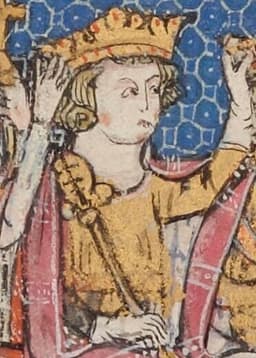
John of Brienne
Emperor · Medieval
49.9Total

Napoleon Bonaparte
General · Modern
70.9Total
Basic Information
Born
1170
1769
Died
1237
1821
Era
Medieval
Modern
Nationality
Jerusalem
France
Occupation
Emperor
General
Civilization
Western
Western
Score Comparison
Military (10%)
50.0
94.0
Political (20%)
43.7
72.0
Influence (20%)
51.8
40.0
Legacy (20%)
44.2
80.0
Leadership (15%)
67.0
78.0
Strategy (15%)
43.3
90.0
TOTAL
49.9
70.9
John of Brienne — Complete Timeline
1210 AD
Election as King of JerusalemPolitical Action◆ Major
John of Brienne was elected King of Jerusalem by the Haute Cour, marrying Maria of Montferrat, the heiress. He became king at a time when the kingdom was reduced to the coastal city of Acre and faced threats from the Ayyubids.
SuccessionCrusader States
Impact: regional
1218 AD
Siege of Damietta (Fifth Crusade)War◆ Major
John of Brienne led the crusader forces in the Fifth Crusade, besieging the Egyptian city of Damietta. After a long siege, the city fell in 1219, but the crusaders failed to capitalize on the victory due to internal divisions.
CrusadeEgyptFifth Crusade
Impact: regional
1219 AD
Failed negotiations with al-KamilPolitical Action◆ Major
John of Brienne negotiated with Ayyubid Sultan al-Kamil, who offered to return Jerusalem in exchange for the crusaders leaving Egypt. John refused, influenced by the papal legate Pelagius, leading to the eventual failure of the Fifth Crusade.
DiplomacyFifth CrusadeJerusalem
Impact: regionaldestructive
1229 AD
Election as Latin Emperor of ConstantinoplePolitical Action◆ Major
John of Brienne was elected Latin Emperor of Constantinople, ruling as regent for the young Baldwin II. He brought military experience to the beleaguered empire, which was threatened by the Byzantine Empire of Nicaea and the Second Bulgarian Empire.
SuccessionLatin EmpireByzantine
Impact: regional
1235 AD
Defense of Constantinople against John III VatatzesWar◆ Major
John of Brienne successfully defended Constantinople against a siege by John III Vatatzes of Nicaea and Ivan Asen II of Bulgaria. His leadership preserved the Latin Empire for another generation.
SiegeDefenseLatin Empire
Impact: regionalconstructive
Napoleon Bonaparte — Complete Timeline
1799 AD
Coup of 18 BrumaireOther◆ Major
Napoleon Bonaparte, with support from his brother Lucien and key political figures, overthrew the Directory in a bloodless coup. He established the Consulate with himself as First Consul, effectively becoming the ruler of France. This event ended the French Revolution's most unstable period.
French RevolutionCoupRise to Power
Impact: regional
1804 AD
Promulgation of the Napoleonic CodeOther◆ Major
Napoleon enacted the Civil Code of the French, known as the Napoleonic Code, a comprehensive set of laws that replaced the fragmented feudal legal systems. The code established legal equality, protected property rights, and secularized law. It became the basis for legal systems in many European and world countries.
Legal ReformNapoleonic CodeCivil Law
Impact: globalconstructive
1805 AD
Battle of AusterlitzWar◆ Major
Napoleon's Grande Arm
Napoleonic WarsBattleDecisive Victory
Impact: global
1812 AD
Invasion of RussiaWar◆ Major
Napoleon led the Grande Arm
Napoleonic WarsInvasionDisaster
Impact: globaldestructive
1815 AD
Battle of WaterlooWar◆ Major
Napoleon's French army was defeated by the combined forces of the Duke of Wellington's Anglo-Allied army and Gebhard Leberecht von Bl
Napoleonic WarsBattleFinal Defeat
Impact: globaldestructive
Expert Analysis
john-of-brienne-vs-napoleon-bonaparte
# The Emperor and the King Who Never Was
On a June morning in 1815, Napoleon Bonaparte watched his imperial guard march into the murderous crossfire at Waterloo, knowing that the fate of Europe hung on a single charge. Two centuries earlier, in the spring of 1235, another aging warrior stood atop the walls of Constantinople, watching a vast army of Bulgarians and Nicaeans encircle the city he had sworn to defend. Both men faced annihilation. One would fall into legend; the other would fade into obscurity. What separated them was not merely talent, but the peculiar alchemy of time, place, and the cruel arithmetic of opportunity.
Origins
Napoleon Bonaparte was born in 1769 on Corsica, a Mediterranean island that had passed from Italian to French control just months before his birth. The son of minor nobility, he grew up speaking Italian, not French—an outsider in the country he would one day rule. The French Revolution, erupting when he was twenty, shattered the old order and created a vacuum that a man of ambition could fill. His era was one of gunpowder, mass armies, and nationalist fervor.
John of Brienne, born around 1170, came from the opposite end of the social scale. He was the youngest son of a minor French count, with no inheritance, no land, and no prospects. In the medieval world, such men either joined the Church or sought fortune through the sword. John chose the latter, becoming a knight of modest renown in the wars of northern France. His era was one of feudal loyalty, siege warfare, and crusading zeal—a world where personal valor mattered more than revolutionary ideology.
The difference in their origins explains everything that followed. Napoleon was born into a world in flux, where merit could overcome birth. John was born into a world of rigid hierarchy, where a man without a title was nothing—unless fortune smiled.
Rise to Power
Napoleon’s ascent was meteoric. At twenty-four, he captured Toulon from the British and was promoted to brigadier general. By twenty-six, he was commanding the Army of Italy, where his lightning campaigns forced Austria to sue for peace. In 1799, at thirty, he seized power in a coup and became First Consul. By 1804, he crowned himself Emperor. His path was one of relentless self-promotion, military genius, and political calculation.
John of Brienne’s rise was slower and more contingent. In 1210, at roughly forty years old, he was elected King of Jerusalem by the Haute Cour—the feudal council of the crusader kingdom. He married Maria of Montferrat, the heiress, and became king by marriage, not conquest. His path was one of luck, timing, and the willingness of others to accept a capable outsider.
Napoleon forged his own destiny. John’s destiny was handed to him by a desperate kingdom.
Leadership & Governance
Napoleon was a revolutionary ruler. He centralized the French state, reformed the legal system with the Napoleonic Code, established the Bank of France, and created a system of public education. His military campaigns were masterpieces of strategy: he destroyed armies at Austerlitz in 1805, Jena in 1806, and Wagram in 1809. He ruled an empire that stretched from Spain to Poland. But his governance was autocratic, his ambition boundless, and his appetite for war insatiable.
John of Brienne ruled a kingdom that was already a shadow. Jerusalem had been lost to Saladin in 1187; the crusader kingdom was now a coastal strip centered on Acre. John’s military achievements were modest: he led the Fifth Crusade to capture Damietta in 1218 after a long siege, but the campaign collapsed when he failed to accept Sultan al-Kamil’s offer to return Jerusalem in exchange for withdrawal. His political score of 72.0 reflects a man who could negotiate but lacked the strategic vision to seize the moment.
Napoleon transformed the world; John struggled to preserve a fragment of a dream.
Triumph & Tragedy
Napoleon’s greatest triumph was Austerlitz, where he crushed the combined armies of Russia and Austria. His greatest tragedy was the invasion of Russia in 1812, where he lost half a million men to winter, disease, and guerrilla warfare. He was exiled to Elba, returned for the Hundred Days, and finally defeated at Waterloo in 1815. He died in exile on Saint Helena in 1821.
John of Brienne’s greatest triumph was the defense of Constantinople in 1235, when he led the city’s meager forces against the siege of John III Vatatzes of Nicaea and Ivan Asen II of Bulgaria. At sixty-five, he personally led sorties and inspired the garrison. His greatest tragedy was that his kingdom was already doomed. He died in 1237, leaving behind a Latin Empire that would fall to the Byzantines in 1261.
Napoleon’s tragedy was self-inflicted. John’s tragedy was inherited.
Character & Destiny
Napoleon was a man of boundless energy, ruthless ambition, and cold calculation. He once said, “I am the state.” He believed in his own destiny, and he was right—until he was wrong. His personality drove him to conquer, but also to overreach. He could not stop.
John of Brienne was a man of duty, honor, and resilience. His leadership score of 83.7 is remarkable for a man of his era—higher than Napoleon’s 80.0. He was the kind of king who fought alongside his men, who defended a lost cause with dignity, who accepted the role of regent for a child emperor when he could have claimed the throne himself. His personality was one of service, not ambition.
Napoleon shaped his destiny. John accepted his.
Legacy
Napoleon’s legacy is immense. The Napoleonic Code influenced civil law across Europe and the world. His military campaigns are studied in every war college. He reshaped the map of Europe and inspired nationalism from Germany to Italy. His total score of 82.4 reflects a man who changed history.
John of Brienne’s legacy is obscure. He appears in history books only as a footnote—a king of a lost kingdom, an emperor of a dying empire. His total score of 64.1 reflects a man who was competent but not transformative.
Yet there is something admirable in John’s story. He was a man who rose from nothing, who did his duty, who defended what he could. He was not a genius, but he was a man of character. Perhaps that is enough.
Conclusion
Napoleon and John of Brienne represent two poles of human ambition. One tried to remake the world in his image; the other tried to hold together what was falling apart. Napoleon’s story is one of genius and hubris. John’s story is one of duty and resignation.
Both died far from home, their dreams shattered. But Napoleon’s fall was spectacular, while John’s was quiet. In the end, the difference between them was not talent or courage, but the age in which they lived. Napoleon’s world rewarded ambition; John’s world rewarded patience. And history, as always, remembers the ambitious.
Rankings
🥇
Napoleon BonaparteLeader
Mil: 94.0Pol: 72.0Inf: 40.0
70.9
🥈
John of Brienne
Mil: 50.0Pol: 43.7Inf: 51.8
49.9
+21.0 behind
How This Comparison Works
Algorithm
Each figure is scored on 6 dimensions (0—100 scale) based on structured historical data: Military (10%), Political (20%), Influence (20%), Legacy (20%), Leadership (15%), Strategy (15%). The weighted total produces the final ranking.
Data Sources
Scores are computed from structured sub-indicators in the database. Scale factors adjust for era (Ancient ×0.85, Modern ×1.0) and civilization size (Eastern ×1.05, Other ×0.80) to account for differences in population and military scale.
Maximum 3 Figures
Comparisons are limited to 2—3 figures to ensure readability and statistical meaningfulness.
Error Margins
±5 points per dimension — Sub-scores are derived from historical records with inherent uncertainty. Two figures within 5 points on a dimension should be considered roughly equivalent in that area.
Total Score Accuracy
±3 points overall — The weighted combination of 6 dimensions produces a total score with approximately ±3 points of uncertainty. Differences of less than 3 points are not statistically significant— the figures are effectively tied.
Known Limitations
- Historical records are incomplete and uneven across civilizations
- Figures from oral-tradition societies may be underrepresented
- Occupation labels can misclassify multi-role figures
- Scores measure capability and impact, not moral character
- Quantitative scoring is a comparison tool, not absolute truth
Capability Radar
Military (10%) — Battles & Warfare
Battles
55
95
Win Rate
50
90
Expansion
35
95
Political (20%) — Governance & Reform
Reform
30
95
Diplomacy
65
80
Economy
25
85
Influence (20%) — Cultural & Global Reach
Cultural
30
85
Global
20
90
Legacy (20%) — Historical Impact
Historical
40
95
Longevity
25
90
Leadership (15%) — Power & Stability
Tenure
60
85
Stability
30
70
Strategy (15%) — Tactics & Innovation
Strategy
40
95
Tactics
45
98
Reform
20
92
Similar Comparisons
Comments & Discussion
AethelredTheUnready6/17/2026
John of Brienne's career shows Napoleon's myth depends on scale. Both inherited nothing, but Napoleon had 300,000 men under arms and a continent in chaos. John won a crusade, married an empress, and held Jerusalem with maybe 4,000 knights. That's managing by orders of magnitude more against the odds. Napoleon's genius is real, but he played on a table where every piece was gold. John won with pawns. Give me the king who made a silk purse from a sow's ear every time.