Loading...
John Shore vs Napoleon Bonaparte
Napoleon Bonaparte leads by 14.7 pts · 2 figures compared
…
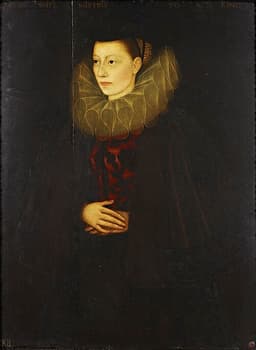
John Shore
Politician · Modern
56.2Total

Napoleon Bonaparte
General · Modern
70.9Total
Basic Information
Born
1751
1769
Died
1834
1821
Era
Modern
Modern
Nationality
Great Britain
France
Occupation
Politician
General
Civilization
Western
Western
Score Comparison
Military (10%)
45.0
94.0
Political (20%)
59.3
72.0
Influence (20%)
56.4
40.0
Legacy (20%)
50.0
80.0
Leadership (15%)
72.0
78.0
Strategy (15%)
54.3
90.0
TOTAL
56.2
70.9
John Shore — Complete Timeline
1793 AD
Permanent Settlement of BengalReform◆ Major
Shore implemented the Permanent Settlement of Bengal, a land revenue system that fixed land taxes in perpetuity. This system created a class of zamindars but led to peasant exploitation and economic stagnation.
Land RevenueZamindariEconomic Policy
Impact: regional
Appointed Governor-General of IndiaPolitical Action◆ Major
John Shore was appointed Governor-General of India. His tenure was marked by a policy of non-intervention in Indian states, contrasting with his predecessor Lord Cornwallis.
British IndiaGovernor-General
Impact: regional
1795 AD
War with the Maratha ConfederacyWar
Shore's policy of non-intervention was challenged by the Maratha Confederacy's internal conflicts. He avoided direct British involvement, but the situation led to the eventual Anglo-Maratha Wars under his successors.
MarathaNon-Intervention
Impact: regional
Napoleon Bonaparte — Complete Timeline
1799 AD
Coup of 18 BrumaireOther◆ Major
Napoleon Bonaparte, with support from his brother Lucien and key political figures, overthrew the Directory in a bloodless coup. He established the Consulate with himself as First Consul, effectively becoming the ruler of France. This event ended the French Revolution's most unstable period.
French RevolutionCoupRise to Power
Impact: regional
1804 AD
Promulgation of the Napoleonic CodeOther◆ Major
Napoleon enacted the Civil Code of the French, known as the Napoleonic Code, a comprehensive set of laws that replaced the fragmented feudal legal systems. The code established legal equality, protected property rights, and secularized law. It became the basis for legal systems in many European and world countries.
Legal ReformNapoleonic CodeCivil Law
Impact: globalconstructive
1805 AD
Battle of AusterlitzWar◆ Major
Napoleon's Grande Arm
Napoleonic WarsBattleDecisive Victory
Impact: global
1812 AD
Invasion of RussiaWar◆ Major
Napoleon led the Grande Arm
Napoleonic WarsInvasionDisaster
Impact: globaldestructive
1815 AD
Battle of WaterlooWar◆ Major
Napoleon's French army was defeated by the combined forces of the Duke of Wellington's Anglo-Allied army and Gebhard Leberecht von Bl
Napoleonic WarsBattleFinal Defeat
Impact: globaldestructive
Expert Analysis
john-shore-vs-napoleon-bonaparte
# The Conqueror and The Accountant
On a June morning in 1815, Napoleon Bonaparte watched his imperial guard march toward the smoking fields of Waterloo, their eagle standards catching the grey light. Half a world away and two decades earlier, John Shore sat in Calcutta, dipping his pen into ink to sign a land revenue settlement that would touch more lives than any cannonade. One man commanded armies that reshaped continents; the other commanded ledgers that reshaped economies. Both were products of the same restless European century, yet their paths could not have diverged more dramatically. What drove these two men—one the embodiment of martial glory, the other the architect of administrative permanence—to such different destinies?
Origins
Napoleon Bonaparte was born in 1769 on the island of Corsica, a place that had only recently become French. His family was minor nobility, struggling and proud. Young Napoleon devoured histories of Alexander and Caesar, but he also absorbed the bitter grievances of a conquered island. This dual inheritance—the ambition of empire and the anger of the outsider—would define him. He entered the military academy at Brienne at age nine, a small, intense boy mocked for his accent and poverty. The humiliation forged something hard inside him.
John Shore was born in 1751 in London, the son of a merchant who died early. His family had no great name, but they had connections to the East India Company, that peculiar hybrid of trading corporation and sovereign power. Young Shore was sent to India at seventeen, a clerk in a world of ledgers and monsoon rains. Where Napoleon learned to command men in battle, Shore learned to command numbers on paper. Both were outsiders climbing through rigid hierarchies, but one climbed through glory, the other through competence.
Rise to Power
Napoleon’s rise was a series of explosions. At twenty-four, he drove the British out of Toulon with a brilliant artillery plan. At twenty-six, he saved the French revolutionary government from a royalist uprising with a “whiff of grapeshot”—cannon fire into a Parisian crowd. Then came Italy, where his lightning campaigns humbled the Austrian Empire. Each victory made him more indispensable, more celebrated. By 1799, when he seized power in a coup d’état, he had already become a legend.
John Shore’s rise was a slow accretion. He spent decades in the Bengal civil service, learning the intricacies of Indian revenue systems, the customs of zamindars (landlords), the rhythms of harvest and taxation. He was appointed to the Supreme Council of Bengal in 1787, and when Lord Cornwallis departed India in 1793, Shore inherited the Governor-General’s chair. There was no coup, no dramatic seizure—just the steady accumulation of experience and the quiet trust of his superiors.
Leadership & Governance
Napoleon governed as he conquered: with speed, audacity, and total centralization. His Napoleonic Code swept away feudal privileges, established equality before the law, and standardized French administration across a fractured continent. He built roads, founded banks, reformed education. But he also demanded absolute loyalty, crowned himself emperor in 1804, and treated Europe as a chessboard where kings were pawns. His military genius—rated 94 in strategy—was inseparable from his political ambition. He believed that will alone could reshape reality.
John Shore governed with restraint. His defining act was the Permanent Settlement of Bengal, implemented in 1793, which fixed land taxes in perpetuity. This was not a dramatic reform; it was an attempt to create stability, to make revenue predictable for both the Company and the landlords. Shore believed that Indian society should be disturbed as little as possible—a policy of non-intervention that frustrated his more aggressive colleagues. When the Maratha Confederacy descended into internal conflict in 1795, Shore refused to commit British troops. “We must not,” he wrote, “become the arbiters of India.” His political score of 83 reflects a man who understood the limits of power, even as his military score of 60 reveals his reluctance to use force.
Triumph & Tragedy
Napoleon’s triumph was Austerlitz in 1805, where he destroyed a combined Russian and Austrian army in a single day. His tragedy was Russia in 1812—the disastrous invasion that cost half a million men and shattered his aura of invincibility. He was exiled to Elba, escaped, rallied France one last time, and then met final defeat at Waterloo in 1815. The man who had conquered from Madrid to Moscow ended his days on a remote Atlantic island, dictating memoirs to a handful of loyalists.
John Shore’s triumph was quieter: the Permanent Settlement survived him by generations, shaping Indian agriculture and taxation until independence. His tragedy was that he was forgotten. He returned to England, served in Parliament, and died in 1834 at age eighty-three—respected, unremarkable, his name known only to historians and bureaucrats. Where Napoleon’s fall was spectacular, Shore’s fade was gentle.
Character & Destiny
Napoleon was restless, brilliant, and incapable of stillness. “Impossible,” he once said, “is a word to be found only in the dictionary of fools.” His character drove him to attempt the impossible repeatedly—and to fail spectacularly at last. He could not stop conquering because he could not imagine a world where he was not conquering. His personality was his engine and his trap.
John Shore was cautious, methodical, and deeply aware of consequences. He wrote that “the happiness of millions depends on the moderation of the few.” His character made him effective but not memorable. He built systems, not legends. Where Napoleon trusted his own genius, Shore trusted procedure and precedent.
Legacy
Napoleon’s legacy is a paradox. He spread revolutionary ideals of equality and nationalism across Europe, yet died a tyrant. His military campaigns are still studied in war colleges; his legal code still shapes European law. His influence score of 82 reflects a man who changed how the world thinks about power.
John Shore’s legacy is equally paradoxical. The Permanent Settlement created a class of landlords who exploited peasants for generations, yet it also provided stability that allowed Bengal to avoid the worst famines of the nineteenth century. His non-intervention policy preserved Indian states that might otherwise have been destroyed. His influence score of 73 is lower than Napoleon’s, but his impact on millions of ordinary lives was arguably more direct.
Conclusion
Standing at Waterloo, Napoleon watched his dreams dissolve into mud and blood. Sitting in Calcutta, John Shore watched his settlement become the foundation of an empire’s finances. One man’s life was a symphony of victories and defeats; the other’s was a steady hum of administration. Both were products of their time—the age of revolution and the age of consolidation—and both left marks that time has not erased. Perhaps the deepest difference lies in this: Napoleon sought to change the world through will, Shore through order. The world, in its stubborn way, accepted both and forgot neither.
Rankings
🥇
Napoleon BonaparteLeader
Mil: 94.0Pol: 72.0Inf: 40.0
70.9
🥈
John Shore
Mil: 45.0Pol: 59.3Inf: 56.4
56.2
+14.7 behind
How This Comparison Works
Algorithm
Each figure is scored on 6 dimensions (0—100 scale) based on structured historical data: Military (10%), Political (20%), Influence (20%), Legacy (20%), Leadership (15%), Strategy (15%). The weighted total produces the final ranking.
Data Sources
Scores are computed from structured sub-indicators in the database. Scale factors adjust for era (Ancient ×0.85, Modern ×1.0) and civilization size (Eastern ×1.05, Other ×0.80) to account for differences in population and military scale.
Maximum 3 Figures
Comparisons are limited to 2—3 figures to ensure readability and statistical meaningfulness.
Error Margins
±5 points per dimension — Sub-scores are derived from historical records with inherent uncertainty. Two figures within 5 points on a dimension should be considered roughly equivalent in that area.
Total Score Accuracy
±3 points overall — The weighted combination of 6 dimensions produces a total score with approximately ±3 points of uncertainty. Differences of less than 3 points are not statistically significant— the figures are effectively tied.
Known Limitations
- Historical records are incomplete and uneven across civilizations
- Figures from oral-tradition societies may be underrepresented
- Occupation labels can misclassify multi-role figures
- Scores measure capability and impact, not moral character
- Quantitative scoring is a comparison tool, not absolute truth
Capability Radar
Military (10%) — Battles & Warfare
Battles
10
95
Win Rate
10
90
Expansion
20
95
Political (20%) — Governance & Reform
Reform
70
95
Diplomacy
60
80
Economy
80
85
Influence (20%) — Cultural & Global Reach
Cultural
30
85
Global
40
90
Legacy (20%) — Historical Impact
Historical
50
95
Longevity
40
90
Leadership (15%) — Power & Stability
Tenure
60
85
Stability
50
70
Strategy (15%) — Tactics & Innovation
Strategy
10
95
Tactics
10
98
Reform
10
92
Similar Comparisons
Comments & Discussion
Waterloo's Bookkeeper6/17/2026
As a data skeptic, I'd argue John Shore's PITT'S INDIA Act land settlements directly affected more lives than Napoleon's entire imperial campaign—roughly 200 million Indians versus Napoleon's 70 million Europeans. Shore didn't need grand battles; he just needed clerks with quills. His permanent settlement created a revenue system that persisted until Indian independence, while Bonaparte's entire legacy dissolved by 1815. Who truly reshaped history: the emperor with his Grande Armée, or the accou
大炮会计员6/17/2026
作为一个军事史迷,我坚持拿破仑才是硬核变革者。肖尔用三年时间在纸上划界——搞定土地税;而拿破仑在1805年奥斯特里茨战役中只用九小时就彻底瓦解了第三次反法同盟。肖尔创造的是殖民官僚体系,拿破仑创造了现代战争艺术。一个管账本,一个管大炮,差距比滑铁卢到加尔各答还大。
Classics with Clarity6/17/2026
Comparing Napoleon to John Shore is like comparing Zeus to a tax collector. Bonaparte modeled himself on Caesar and Alexander, conquering from Egypt to Moscow. Shore modeled himself on company ledgers. One wrote the civil code that governs half of Europe; the other wrote revenue regulations for Bengal. Napoleon's legacy is measured in law codes and battle plans; Shore's is measured in rupees and rent rolls. I know which I'd rather study.
体制观察家6/17/2026
作为一个殖民制度研究者,我认为这比较太表面。肖尔看似平庸,但他的永久地税制把印度农民锁在封建枷锁里两百年——比拿破仑任何战役都持久。拿破仑解散了神圣罗马帝国,肖尔却巩固了东印度公司对印度的控制。一个改变了欧洲边界线,一个改变了亚洲社会结构。到底谁的遗产更黑暗?答案没那么简单。
统计之外6/17/2026
单看数字会骗人。拿破仑时代欧洲人口约1.8亿,他直接影响了其中近一半。肖尔治理的印度人口约2亿,但大多是通过当地中介间接统治。拿破仑的征服是直接的、暴力的、变革性的;肖尔的治理是间接的、渐进的、延续性的。不是谁影响更大,而是影响方式完全不同。一个用剑,一个用笔。但历史记住的是剑,而非笔。