Loading...
Joscelin II of Edessa vs Napoleon Bonaparte
Napoleon Bonaparte leads by 29.7 pts · 2 figures compared
…
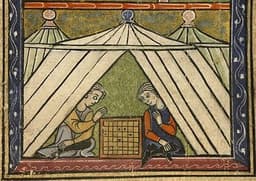
Joscelin II of Edessa
Emperor · Medieval
41.2Total

Napoleon Bonaparte
General · Modern
70.9Total
Basic Information
Born
1113
1769
Died
1159
1821
Era
Medieval
Modern
Nationality
County of Edessa
France
Occupation
Emperor
General
Civilization
Western
Western
Score Comparison
Military (10%)
50.0
94.0
Political (20%)
32.1
72.0
Influence (20%)
45.5
40.0
Legacy (20%)
36.7
80.0
Leadership (15%)
39.0
78.0
Strategy (15%)
50.0
90.0
TOTAL
41.2
70.9
Joscelin II of Edessa — Complete Timeline
1144 AD
Loss of EdessaWar
Joscelin II was absent from Edessa when Zengi besieged the city. The city fell after a short siege, marking the first major Crusader territory loss and triggering the Second Crusade.
CrusadesSiegeEdessaZengi
Impact: regionaltragic
1148 AD
Second Crusade CampaignWar◆ Major
Joscelin II participated in the Second Crusade's failed siege of Damascus. The campaign's failure further weakened the Crusader states and left Edessa's remnants vulnerable to Muslim reconquest.
CrusadesSecond CrusadeDamascus
Impact: regionaltragic
1150 AD
Capture and BlindingWar◆ Major
Joscelin II was captured by Nur ad-Din's forces while traveling in disguise. He was imprisoned in Aleppo and blinded, ending his effective rule and leading to the final loss of the County of Edessa's remaining territories.
CrusadesCaptureNur ad-DinEdessa
Impact: regionaltragic
1159 AD
Death in PrisonOther
Joscelin II died in captivity in Aleppo after nine years of imprisonment. His death marked the end of the County of Edessa as a Crusader state, with its lands absorbed by Nur ad-Din's expanding realm.
CrusadesDeathEdessa
Impact: regionaltragic
Napoleon Bonaparte — Complete Timeline
1799 AD
Coup of 18 BrumaireOther◆ Major
Napoleon Bonaparte, with support from his brother Lucien and key political figures, overthrew the Directory in a bloodless coup. He established the Consulate with himself as First Consul, effectively becoming the ruler of France. This event ended the French Revolution's most unstable period.
French RevolutionCoupRise to Power
Impact: regional
1804 AD
Promulgation of the Napoleonic CodeOther◆ Major
Napoleon enacted the Civil Code of the French, known as the Napoleonic Code, a comprehensive set of laws that replaced the fragmented feudal legal systems. The code established legal equality, protected property rights, and secularized law. It became the basis for legal systems in many European and world countries.
Legal ReformNapoleonic CodeCivil Law
Impact: globalconstructive
1805 AD
Battle of AusterlitzWar◆ Major
Napoleon's Grande Arm
Napoleonic WarsBattleDecisive Victory
Impact: global
1812 AD
Invasion of RussiaWar◆ Major
Napoleon led the Grande Arm
Napoleonic WarsInvasionDisaster
Impact: globaldestructive
1815 AD
Battle of WaterlooWar◆ Major
Napoleon's French army was defeated by the combined forces of the Duke of Wellington's Anglo-Allied army and Gebhard Leberecht von Bl
Napoleonic WarsBattleFinal Defeat
Impact: globaldestructive
Expert Analysis
joscelin-ii-of-edessa-vs-napoleon-bonaparte
# The Emperor and the Count: Two Faces of Crusader Leadership
On a June morning in 1815, Napoleon Bonaparte stood before the muddy fields of Waterloo, his Grand Army arrayed for what would be his final battle. Less than seven centuries earlier, in the winter of 1144, Count Joscelin II of Edessa had ridden away from his capital city, trusting its walls would hold. One man would reshape Europe; the other would lose a kingdom. Their stories, separated by time and scale, reveal how character, circumstance, and sheer audacity determine who becomes a legend and who becomes a footnote.
Origins
Napoleon was born in 1769 on the island of Corsica, a place that had only become French the year before. His family was minor nobility, poor enough that his father’s death forced him to finish military academy early. The French Revolution, which erupted when he was twenty, shattered the old order and opened paths that birth alone could never have granted. He absorbed Enlightenment ideas, studied artillery, and watched as a continent convulsed.
Joscelin II, born in 1113, inherited a different world. He was the son of Count Joscelin I of Edessa, a warrior who had carved out a Crusader state in the chaotic borderlands between Christian Antioch and Muslim Aleppo. The County of Edessa was a frontier outpost, surrounded by enemies and dependent on the fragile unity of Latin Christendom. Young Joscelin grew up learning the politics of survival, not conquest.
Their eras shaped them: Napoleon’s France was a rising power with centralized resources and revolutionary zeal; Joscelin’s Edessa was a decaying relic of the First Crusade, its glory fading with each passing decade.
Rise to Power
Napoleon rose through talent and timing. At twenty-four, he cleared the streets of royalist rebels with a "whiff of grapeshot." At twenty-six, he commanded the Army of Italy, winning battles that astonished Europe. The Directory needed a hero; he gave them victories. By 1799, he had engineered a coup and crowned himself First Consul. Five years later, he crowned himself Emperor. Every step was calculated, every risk measured against ambition.
Joscelin II inherited his title in 1131, at age eighteen, after his father died in battle. There was no coup, no grand strategy—just a young man handed a precarious throne. He spent his early years trying to hold together a county that was already fracturing. His father had fought neighboring Crusader states as often as Muslims; Joscelin continued this pattern of petty squabbles. He lacked the vision to see that the real threat was gathering to the east, under the ambitious Atabeg Zengi of Mosul.
Leadership & Governance
Napoleon governed with the precision of a mathematician and the ruthlessness of a conqueror. He reformed French law into the Napoleonic Code, standardized education, and built a centralized bureaucracy that outlasted his empire. His military genius was unmatched: he used speed, concentration of force, and the loyalty of his marshals to win battles like Austerlitz in 1805, where he destroyed a larger Austro-Russian army. He understood that war was politics by other means, and politics was war.
Joscelin II governed as a medieval lord, relying on personal loyalty and feudal obligations. He participated in the Second Crusade’s disastrous siege of Damascus in 1148, a campaign that alienated local allies and wasted resources. His political score of 39.3 reflects a man who could not unite his own barons, let alone coordinate with fellow Crusader states. When Zengi marched on Edessa in 1144, Joscelin was absent, seeking help from Antioch. The city fell after a short siege—a catastrophic loss that shocked Christendom and triggered the Second Crusade.
Triumph & Tragedy
Napoleon’s triumph was absolute: he conquered most of Europe, placed his brothers on thrones, and forced the Holy Roman Empire to dissolve. His tragedy was equally immense: the invasion of Russia in 1812, the loss of his Grand Army, and the final defeat at Waterloo. He died in exile on Saint Helena in 1821, a prisoner of the British who had once ruled the continent.
Joscelin II’s triumph was survival itself—he kept Edessa independent for thirteen years after inheriting a crumbling state. His tragedy was total: captured in 1150 while traveling in disguise, he was imprisoned in Aleppo and blinded by Nur ad-Din, Zengi’s successor. He died in his cell in 1159, after nine years of darkness. The County of Edessa never recovered; it was the first Crusader state to fall, and its loss foreshadowed the eventual collapse of Outremer.
Character & Destiny
Napoleon was driven by an insatiable will. “Impossible is a word to be found only in the dictionary of fools,” he said. He believed that destiny could be bent by force of mind and audacity. This confidence built an empire—and also destroyed it, because he could not stop. His character was his fate.
Joscelin II was cautious, perhaps even passive. He did not lack courage—he fought in the Second Crusade—but he lacked the strategic imagination to see beyond his immediate horizons. When the crisis came, he was not present. His leadership score of 34.8 reflects a man who could inspire loyalty but not action. Destiny did not bend for him; it crushed him.
Legacy
Napoleon’s legacy is written across Europe: the Napoleonic Code, the metric system, the reshaping of national borders, the myth of the self-made emperor. His military innovations influenced warfare for a century. He is remembered as both liberator and tyrant, genius and cautionary tale.
Joscelin II is remembered, if at all, as a footnote—the last count of a lost county. His legacy score of 48.2 is a reminder that history forgets those who fail. Yet his story matters because it shows the fragility of Crusader states, the human cost of poor leadership, and the way a single bad decision can end a dynasty.
Conclusion
Napoleon and Joscelin II lived in different centuries, commanded different resources, and faced different enemies. Yet both reveal the same truth: leadership is not merely about being in the right place at the right time. It is about seeing the storm before it arrives, and having the will to meet it. Napoleon saw storms everywhere and charged into them. Joscelin looked away, and the storm consumed him. In the end, history remembers both—one as the man who changed the world, the other as the man who lost it.
Rankings
🥇
Napoleon BonaparteLeader
Mil: 94.0Pol: 72.0Inf: 40.0
70.9
🥈
Joscelin II of Edessa
Mil: 50.0Pol: 32.1Inf: 45.5
41.2
+29.7 behind
How This Comparison Works
Algorithm
Each figure is scored on 6 dimensions (0—100 scale) based on structured historical data: Military (10%), Political (20%), Influence (20%), Legacy (20%), Leadership (15%), Strategy (15%). The weighted total produces the final ranking.
Data Sources
Scores are computed from structured sub-indicators in the database. Scale factors adjust for era (Ancient ×0.85, Modern ×1.0) and civilization size (Eastern ×1.05, Other ×0.80) to account for differences in population and military scale.
Maximum 3 Figures
Comparisons are limited to 2—3 figures to ensure readability and statistical meaningfulness.
Error Margins
±5 points per dimension — Sub-scores are derived from historical records with inherent uncertainty. Two figures within 5 points on a dimension should be considered roughly equivalent in that area.
Total Score Accuracy
±3 points overall — The weighted combination of 6 dimensions produces a total score with approximately ±3 points of uncertainty. Differences of less than 3 points are not statistically significant— the figures are effectively tied.
Known Limitations
- Historical records are incomplete and uneven across civilizations
- Figures from oral-tradition societies may be underrepresented
- Occupation labels can misclassify multi-role figures
- Scores measure capability and impact, not moral character
- Quantitative scoring is a comparison tool, not absolute truth
Capability Radar
Military (10%) — Battles & Warfare
Battles
10
95
Win Rate
5
90
Expansion
0
95
Political (20%) — Governance & Reform
Reform
5
95
Diplomacy
15
80
Economy
10
85
Influence (20%) — Cultural & Global Reach
Cultural
5
85
Global
5
90
Legacy (20%) — Historical Impact
Historical
15
95
Longevity
5
90
Leadership (15%) — Power & Stability
Tenure
20
85
Stability
5
70
Strategy (15%) — Tactics & Innovation
Strategy
10
95
Tactics
10
98
Reform
0
92
Similar Comparisons
Comments & Discussion
Boney-Hater6/17/2026
Comparing Joscelin II to Napoleon is like comparing a broken cart to a war chariot. Joscelin was handed a functioning Crusader state and fumbled it through sheer incompetence—he alienated allies, neglected defenses, and trusted treachery. Meanwhile, Napoleon, starting from Corsican obscurity, conquered Italy, rewired Europe’s legal systems, and defined modern warfare. Joscelin’s failure was personal; Napoleon’s fall was against a continent. One man lost a county; the other lost an empire—but at
数字刺客6/17/2026
拿拿破仑跟乔斯林比?根本是拿火箭炮比弹弓。乔斯林二世1134年继承埃德萨时,这片土地还是抵御赞吉的堡垒,他倒好,跑去跟塞尔柱人玩联姻,结果1144年被围城时盟友全跑光。拿破仑在莫斯科冻不死,在滑铁卢还能重组军队,差距不是大小,是脑子。乔斯林就是中世纪版的富二代败家子,别拿皇帝给他贴金。
Carolean_Ghost6/17/2026
As a military historian, I see the difference in operational tempo: Napoleon averaged a major battle every 18 months; Joscelin’s notable military action was losing his capital without a fight. In 1144, Joscelin abandoned Edessa to negotiate in Turbessel and never mustered a relief force. Napoleon at Austerlitz in 1805 destroyed a Russo-Austrian army in one day. Both faced coalitions, but Joscelin’s passivity contrasted with Napoleonic speed. One defines generalship; the other illustrates its abs
拜占庭看客6/17/2026
别太苛责乔斯林,他生错了年代。1144年时十字军国家正陷入继承危机,赞吉已经把阿勒颇统一了,而乔斯林手上只有3,000骑兵。拿破仑1796年意大利战役靠的是分裂的敌国和革命热情,乔斯林面对的是统一的穆斯林反攻。但差距在领导力:拿破仑用科西嘉口音忽悠整个法国,乔斯林连亚美尼亚盟友都留不住。不是英雄和废物的区别,是时代和性格的双重碾压。