Loading...
This comparison has not been analyzed yet.
One-time AI generation (~1 minute). Scores and timeline are already available below.
Jose Manuel Balmaceda vs Marwan Barghouti
Jose Manuel Balmaceda leads by 7.1 pts · 2 figures compared
…
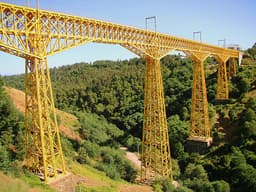
Jose Manuel Balmaceda
Politician · Modern
53.3Total
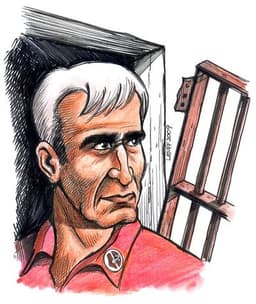
Marwan Barghouti
Politician · Modern
46.2Total
Basic Information
Born
1840
1959
Died
1891
—
Era
Modern
Modern
Nationality
Chile
Palestine
Occupation
Politician
Politician
Civilization
Western
Middle Eastern
Score Comparison
Military (10%)
50.0
36.6
Political (20%)
68.0
32.2
Influence (20%)
51.8
57.2
Legacy (20%)
45.0
47.5
Leadership (15%)
64.0
41.5
Strategy (15%)
42.7
53.0
TOTAL
53.3
46.2
Jose Manuel Balmaceda — Complete Timeline
1886 AD
Elected President of ChilePolitical Action◆ Major
Balmaceda won the presidential election as a liberal reformer. His presidency aimed to reduce the power of the conservative oligarchy and expand state control over resources.
PresidencyChileLiberalism
Impact: nationalconstructive
1891 AD
Initiated the Chilean Civil War of 1891War
Balmaceda's conflict with Congress over budget control escalated into a civil war. The Congressional forces, backed by the navy, defeated the presidential army. Balmaceda's defeat ended his presidency and led to a parliamentary system.
Civil WarChilePolitical Crisis
Impact: nationaldestructive
Committed suicidePolitical Action◆ Major
After the civil war defeat, Balmaceda took refuge in the Argentine embassy. He shot himself on September 19, 1891, leaving a letter defending his actions. His death marked the end of the presidentialist era.
SuicideChilePolitical Crisis
Impact: nationaltragic
Marwan Barghouti — Complete Timeline
2000 AD
Leadership in the Second IntifadaWar◆ Major
Barghouti was a key leader of the Second Intifada, organizing protests and armed resistance against Israeli occupation. He founded the Tanzim, a Fatah-linked militia, and was accused of orchestrating attacks that killed Israelis.
Second IntifadaFatahTanzim
Impact: regional
2002 AD
Arrest and Trial by IsraelPolitical Action
Barghouti was arrested by Israeli forces in April 2002 and later convicted of murder for his role in attacks during the Second Intifada. He was sentenced to five life terms in 2004, becoming a symbol of Palestinian resistance.
ArrestTrialImprisonment
Impact: regionaltragic
2006 AD
Elected to Palestinian Legislative CouncilPolitical Action◆ Major
Barghouti was elected to the Palestinian Legislative Council in 2006 while in prison, running as a candidate for Fatah. His election highlighted his continued political influence and popularity among Palestinians.
ElectionFatahPalestinian Authority
Impact: national
2009 AD
Proposed as Palestinian MandelaPolitical Action◆ Major
Barghouti became a central figure in Palestinian calls for a prisoner exchange, with many comparing him to Nelson Mandela. He was proposed as a unifying leader who could bridge Fatah and Hamas, though he remained in prison.
Prisoner ExchangeUnificationSymbol
Impact: regional
This comparison has not been analyzed yet.
One-time AI generation (~1 minute). Scores and timeline are already available below.
Rankings
🥇
Jose Manuel BalmacedaLeader
Mil: 50.0Pol: 68.0Inf: 51.8
53.3
🥈
Marwan Barghouti
Mil: 36.6Pol: 32.2Inf: 57.2
46.2
+7.1 behind
How This Comparison Works
Algorithm
Each figure is scored on 6 dimensions (0—100 scale) based on structured historical data: Military (10%), Political (20%), Influence (20%), Legacy (20%), Leadership (15%), Strategy (15%). The weighted total produces the final ranking.
Data Sources
Scores are computed from structured sub-indicators in the database. Scale factors adjust for era (Ancient ×0.85, Modern ×1.0) and civilization size (Eastern ×1.05, Other ×0.80) to account for differences in population and military scale.
Maximum 3 Figures
Comparisons are limited to 2—3 figures to ensure readability and statistical meaningfulness.
Error Margins
±5 points per dimension — Sub-scores are derived from historical records with inherent uncertainty. Two figures within 5 points on a dimension should be considered roughly equivalent in that area.
Total Score Accuracy
±3 points overall — The weighted combination of 6 dimensions produces a total score with approximately ±3 points of uncertainty. Differences of less than 3 points are not statistically significant— the figures are effectively tied.
Known Limitations
- Historical records are incomplete and uneven across civilizations
- Figures from oral-tradition societies may be underrepresented
- Occupation labels can misclassify multi-role figures
- Scores measure capability and impact, not moral character
- Quantitative scoring is a comparison tool, not absolute truth
Capability Radar
Military (10%) — Battles & Warfare
Battles
28
5
Win Rate
33
5
Expansion
34
5
Political (20%) — Governance & Reform
Reform
65
30
Diplomacy
40
25
Economy
55
10
Influence (20%) — Cultural & Global Reach
Cultural
30
40
Global
20
35
Legacy (20%) — Historical Impact
Historical
40
45
Longevity
30
40
Leadership (15%) — Power & Stability
Tenure
55
20
Stability
20
10
Strategy (15%) — Tactics & Innovation
Strategy
37
5
Tactics
43
10
Reform
43
5
Similar Comparisons
Comments & Discussion
No comments yet. Be the first to share your thoughts!