Loading...
Marwan Barghouti vs Napoleon Bonaparte
Napoleon Bonaparte leads by 24.7 pts · 2 figures compared
…
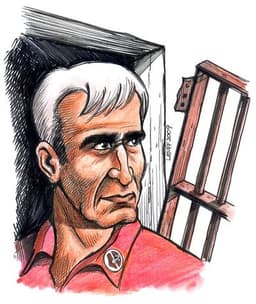
Marwan Barghouti
Politician · Modern
46.2Total

Napoleon Bonaparte
General · Modern
70.9Total
Basic Information
Born
1959
1769
Died
—
1821
Era
Modern
Modern
Nationality
Palestine
France
Occupation
Politician
General
Civilization
Middle Eastern
Western
Score Comparison
Military (10%)
36.6
94.0
Political (20%)
32.2
72.0
Influence (20%)
57.2
40.0
Legacy (20%)
47.5
80.0
Leadership (15%)
41.5
78.0
Strategy (15%)
53.0
90.0
TOTAL
46.2
70.9
Marwan Barghouti — Complete Timeline
2000 AD
Leadership in the Second IntifadaWar◆ Major
Barghouti was a key leader of the Second Intifada, organizing protests and armed resistance against Israeli occupation. He founded the Tanzim, a Fatah-linked militia, and was accused of orchestrating attacks that killed Israelis.
Second IntifadaFatahTanzim
Impact: regional
2002 AD
Arrest and Trial by IsraelPolitical Action
Barghouti was arrested by Israeli forces in April 2002 and later convicted of murder for his role in attacks during the Second Intifada. He was sentenced to five life terms in 2004, becoming a symbol of Palestinian resistance.
ArrestTrialImprisonment
Impact: regionaltragic
2006 AD
Elected to Palestinian Legislative CouncilPolitical Action◆ Major
Barghouti was elected to the Palestinian Legislative Council in 2006 while in prison, running as a candidate for Fatah. His election highlighted his continued political influence and popularity among Palestinians.
ElectionFatahPalestinian Authority
Impact: national
2009 AD
Proposed as Palestinian MandelaPolitical Action◆ Major
Barghouti became a central figure in Palestinian calls for a prisoner exchange, with many comparing him to Nelson Mandela. He was proposed as a unifying leader who could bridge Fatah and Hamas, though he remained in prison.
Prisoner ExchangeUnificationSymbol
Impact: regional
Napoleon Bonaparte — Complete Timeline
1799 AD
Coup of 18 BrumaireOther◆ Major
Napoleon Bonaparte, with support from his brother Lucien and key political figures, overthrew the Directory in a bloodless coup. He established the Consulate with himself as First Consul, effectively becoming the ruler of France. This event ended the French Revolution's most unstable period.
French RevolutionCoupRise to Power
Impact: regional
1804 AD
Promulgation of the Napoleonic CodeOther◆ Major
Napoleon enacted the Civil Code of the French, known as the Napoleonic Code, a comprehensive set of laws that replaced the fragmented feudal legal systems. The code established legal equality, protected property rights, and secularized law. It became the basis for legal systems in many European and world countries.
Legal ReformNapoleonic CodeCivil Law
Impact: globalconstructive
1805 AD
Battle of AusterlitzWar◆ Major
Napoleon's Grande Arm
Napoleonic WarsBattleDecisive Victory
Impact: global
1812 AD
Invasion of RussiaWar◆ Major
Napoleon led the Grande Arm
Napoleonic WarsInvasionDisaster
Impact: globaldestructive
1815 AD
Battle of WaterlooWar◆ Major
Napoleon's French army was defeated by the combined forces of the Duke of Wellington's Anglo-Allied army and Gebhard Leberecht von Bl
Napoleonic WarsBattleFinal Defeat
Impact: globaldestructive
Expert Analysis
marwan-barghouti-vs-napoleon-bonaparte
### The Corsican and the Prisoner: Two Paths to Power
In the spring of 1815, Napoleon Bonaparte, fresh from exile on the island of Elba, landed on the French coast with a thousand men. Within weeks, he had reclaimed an empire. In the spring of 2002, Marwan Barghouti, a Palestinian leader in the West Bank, was dragged into an Israeli military jeep, blindfolded and handcuffed. He would never again walk free. Both men sought to liberate a people and reshape a nation. Yet one died a defeated emperor on a remote Atlantic rock, while the other lives on as a symbol of resistance from a prison cell. The difference lies not merely in their fortunes, but in the nature of the world they inhabited—and the weapons they chose.
### Origins
Napoleon Bonaparte was born in 1769 on Corsica, a Mediterranean island that France had acquired only a year earlier. His family were minor nobles, but he grew up speaking Italian, not French, and nursed a lifelong resentment of the French mainlanders who looked down on him. This outsider’s fury became the engine of his ambition. He attended military school in Brienne, where he was mocked for his accent and small stature, and then the École Militaire in Paris. The French Revolution, erupting when he was twenty, shattered the old order and created a vacuum into which a gifted artillery officer could climb.
Marwan Barghouti was born in 1959 in the village of Kobar, near Ramallah, in the West Bank. His family were farmers, and his childhood unfolded under the shadow of Israeli occupation following the 1967 war. Like Napoleon, he was shaped by a sense of national humiliation. But where Napoleon’s revolution was a French affair, Barghouti’s was a colonial struggle. He joined Fatah, the secular nationalist movement of Yasser Arafat, as a teenager, and was arrested by Israel for the first time at age eighteen. Prison, not military school, became his university.
### Rise to Power
Napoleon’s ascent was meteoric. In 1793, at the age of twenty-four, he drove British forces from the port of Toulon, earning promotion to brigadier general. In 1796, he was given command of the ragtag Army of Italy and, against all odds, crushed the Austrian and Sardinian armies in a lightning campaign. By 1799, he had staged a coup and installed himself as First Consul of France. By 1804, he was Emperor. His rise was a product of revolutionary chaos, personal brilliance, and the willingness of a war-weary nation to trade liberty for order.
Barghouti’s path was slower and harder. He rose through the ranks of Fatah during the First Intifada (1987–1993), the mass uprising of Palestinians against Israeli rule. He was deported by Israel in 1994 but returned after the Oslo Accords. In 2000, after the collapse of peace talks, the Second Intifada erupted. Barghouti became a key leader, organizing both peaceful protests and armed attacks. His role in this uprising, which claimed the lives of hundreds of Israelis and thousands of Palestinians, made him a hero to many and a terrorist to others. In 2002, Israeli forces arrested him, and a 2004 trial sentenced him to five life terms.
### Leadership & Governance
Napoleon governed with a mix of iron discipline and visionary reform. He centralized the French state, created the Bank of France, and—most enduringly—codified the Napoleonic Code, which enshrined legal equality, property rights, and secular administration. His military genius was unmatched: he won sixty battles, from Austerlitz in 1805 to Jena in 1806, by combining speed, deception, and devastating artillery. But he also made fatal errors. His 1812 invasion of Russia destroyed his Grande Armée, and his refusal to accept compromise led to his first abdication in 1814.
Barghouti has never governed. He has been in Israeli prisons since 2002, yet his influence has only grown. From his cell, he was elected to the Palestinian Legislative Council in 2006 as a Fatah candidate. He became the central figure in Palestinian calls for a prisoner exchange, with many comparing him to Nelson Mandela. In 2009, a poll found him to be the most popular Palestinian leader. His leadership is symbolic rather than administrative, but symbols matter deeply in a stateless nation.
### Triumph & Tragedy
Napoleon’s greatest triumph was Austerlitz, where he lured the combined armies of Russia and Austria into a trap and annihilated them. His greatest tragedy was Waterloo in 1815, where he was defeated by the Duke of Wellington and the Prussian army. He died in 1821 on Saint Helena, a prisoner of the British.
Barghouti’s triumph is his survival as a political force despite two decades of imprisonment. His tragedy is that he has never seen his people achieve statehood. The Oslo process collapsed, the Second Intifada ended in devastation, and Gaza fell under Hamas control. Barghouti remains the most plausible figure to unite Palestinians, but he cannot act.
### Character & Destiny
Napoleon was driven by an insatiable hunger for glory. “Impossible is not French,” he once said. His personality combined strategic genius with colossal vanity. He believed in his own star, and for a time, the star did not fail him. But his refusal to share power or accept limits ultimately destroyed him.
Barghouti is a different breed. He is patient, pragmatic, and willing to negotiate. He has called for a two-state solution and has condemned attacks on civilians. His imprisonment has given him moral authority that no leader in the West Bank or Gaza possesses. He is, in many ways, the anti-Napoleon: a man who achieves power not by conquering, but by enduring.
### Legacy
Napoleon’s legacy is inscribed on the map of Europe. His legal codes, administrative systems, and military tactics shaped the modern world. He is remembered as both a liberator and a tyrant, a genius and a warmonger.
Barghouti’s legacy is still being written. He is a prisoner, but he may yet become a president. If a Palestinian state ever emerges, he will likely be its first leader. If not, he will remain a symbol of resistance, a name chanted in protests and sung in prison yards.
### Conclusion
Napoleon and Barghouti never met, but they share a common thread: both were men who tried to forge a nation from the crucible of war. Napoleon succeeded, then lost everything. Barghouti has lost everything, yet may still succeed. The difference is not in their courage or intelligence, but in the age they lived in. Napoleon’s world was one of empires and armies, where a man with a sword could reshape continents. Barghouti’s world is one of occupation and diplomacy, where a man with a voice—even from a cage—can reshape a people. The Corsican conquered Europe; the prisoner from Kobar may yet conquer peace.
Rankings
🥇
Napoleon BonaparteLeader
Mil: 94.0Pol: 72.0Inf: 40.0
70.9
🥈
Marwan Barghouti
Mil: 36.6Pol: 32.2Inf: 57.2
46.2
+24.7 behind
How This Comparison Works
Algorithm
Each figure is scored on 6 dimensions (0—100 scale) based on structured historical data: Military (10%), Political (20%), Influence (20%), Legacy (20%), Leadership (15%), Strategy (15%). The weighted total produces the final ranking.
Data Sources
Scores are computed from structured sub-indicators in the database. Scale factors adjust for era (Ancient ×0.85, Modern ×1.0) and civilization size (Eastern ×1.05, Other ×0.80) to account for differences in population and military scale.
Maximum 3 Figures
Comparisons are limited to 2—3 figures to ensure readability and statistical meaningfulness.
Error Margins
±5 points per dimension — Sub-scores are derived from historical records with inherent uncertainty. Two figures within 5 points on a dimension should be considered roughly equivalent in that area.
Total Score Accuracy
±3 points overall — The weighted combination of 6 dimensions produces a total score with approximately ±3 points of uncertainty. Differences of less than 3 points are not statistically significant— the figures are effectively tied.
Known Limitations
- Historical records are incomplete and uneven across civilizations
- Figures from oral-tradition societies may be underrepresented
- Occupation labels can misclassify multi-role figures
- Scores measure capability and impact, not moral character
- Quantitative scoring is a comparison tool, not absolute truth
Capability Radar
Military (10%) — Battles & Warfare
Battles
5
95
Win Rate
5
90
Expansion
5
95
Political (20%) — Governance & Reform
Reform
30
95
Diplomacy
25
80
Economy
10
85
Influence (20%) — Cultural & Global Reach
Cultural
40
85
Global
35
90
Legacy (20%) — Historical Impact
Historical
45
95
Longevity
40
90
Leadership (15%) — Power & Stability
Tenure
20
85
Stability
10
70
Strategy (15%) — Tactics & Innovation
Strategy
5
95
Tactics
10
98
Reform
5
92
Similar Comparisons
Comments & Discussion
CORSICAN_SHREW6/17/2026
There is something almost comical about this comparison. You take a man who redrew the map of Europe, defeated coalitions of empires, and created a legal code that influences half the world's nations, and put him next to a local Fatah operative who got caught throwing rocks. Napoleon was exiled and escaped to raise another army. Barghouti got caught in 2002 and will die in jail. The scale difference isn't just big—it's a galaxy. Napoleon is the sun. Barghouti is a falling star that burned up in
韬略纵横6/17/2026
战略史研究者之见:二人的核心差异在权力根基。拿破仑依靠制度化的军事组织与帝国官僚体系,从炮兵少尉到皇帝,每一步都踩着欧洲旧秩序的血肉。巴尔古提则困于非对称冲突的底层逻辑——他没有建制化的军队和官僚机器,只能以个人抗争姿态充当民族象征。一个构建了流动的帝国,一个被囚禁成了活着的纪念碑,背后是截然不同的权力生产机制。