Loading...
Juba I of Numidia vs Napoleon Bonaparte
Napoleon Bonaparte leads by 31.0 pts · 2 figures compared
…
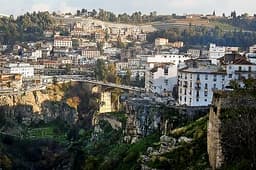
Juba I of Numidia
Emperor · Ancient
39.9Total

Napoleon Bonaparte
General · Modern
70.9Total
Basic Information
Born
-85
1769
Died
-46
1821
Era
Ancient
Modern
Nationality
Numidia
France
Occupation
Emperor
General
Civilization
Other
Western
Score Comparison
Military (10%)
10.0
94.0
Political (20%)
36.5
72.0
Influence (20%)
46.3
40.0
Legacy (20%)
38.3
80.0
Leadership (15%)
51.9
78.0
Strategy (15%)
45.0
90.0
TOTAL
39.9
70.9
Juba I of Numidia — Complete Timeline
49 BC
Alliance with PompeyPolitical Action
Juba I formed a military alliance with Pompey the Great and the Optimates against Julius Caesar. He provided troops and resources to the Pompeian cause, hoping to maintain Numidian independence and expand his influence in North Africa.
Roman Civil WarAlliancePompey
Impact: regional
46 BC
Battle of ThapsusWar◆ Major
Juba I of Numidia allied with the Optimates and fought against Julius Caesar at the Battle of Thapsus. Caesar's forces decisively defeated the Pompeian-Numidian army. Juba's kingdom was annexed by Rome, and he committed suicide to avoid capture.
Caesar's Civil WarBattleNumidia
Impact: regionaltragic
Napoleon Bonaparte — Complete Timeline
1799 AD
Coup of 18 BrumaireOther◆ Major
Napoleon Bonaparte, with support from his brother Lucien and key political figures, overthrew the Directory in a bloodless coup. He established the Consulate with himself as First Consul, effectively becoming the ruler of France. This event ended the French Revolution's most unstable period.
French RevolutionCoupRise to Power
Impact: regional
1804 AD
Promulgation of the Napoleonic CodeOther◆ Major
Napoleon enacted the Civil Code of the French, known as the Napoleonic Code, a comprehensive set of laws that replaced the fragmented feudal legal systems. The code established legal equality, protected property rights, and secularized law. It became the basis for legal systems in many European and world countries.
Legal ReformNapoleonic CodeCivil Law
Impact: globalconstructive
1805 AD
Battle of AusterlitzWar◆ Major
Napoleon's Grande Arm
Napoleonic WarsBattleDecisive Victory
Impact: global
1812 AD
Invasion of RussiaWar◆ Major
Napoleon led the Grande Arm
Napoleonic WarsInvasionDisaster
Impact: globaldestructive
1815 AD
Battle of WaterlooWar◆ Major
Napoleon's French army was defeated by the combined forces of the Duke of Wellington's Anglo-Allied army and Gebhard Leberecht von Bl
Napoleonic WarsBattleFinal Defeat
Impact: globaldestructive
Expert Analysis
juba-i-of-numidia-vs-napoleon-bonaparte
# The Emperor and the King: Two Paths to Ruin
In the spring of 46 BC, a Numidian king watched his world collapse on the plains near Thapsus. Juba I had staked everything on a Roman civil war, only to see Caesar’s legions shatter his army. A decade and a half later, in October 1815, a French emperor stood on the deck of HMS *Bellerophon*, gazing at the English coast as his own empire dissolved into exile. Both men had reached for greatness; both fell from dizzying heights. Yet their stories, separated by nearly two millennia, reveal how character, circumstance, and strategy can forge wildly different destinies.
Origins
Napoleon Bonaparte was born in 1769 on Corsica, a Mediterranean island that had only recently become French. His family belonged to the minor nobility, scraping by on modest estates. The young Napoleon was a solitary, ambitious boy who devoured books on military history and classical warfare. He entered French military school at nine, where his Corsican accent and small stature made him a target for ridicule—but also forged a steel will. He emerged into a France convulsed by revolution, a world where old hierarchies were crumbling and a man of talent could rise without noble blood.
Juba I, born around 85 BC, inherited a different world. Numidia, a North African kingdom stretching across modern Algeria and Tunisia, had long been a Roman client state. His father, Hiempsal II, had ruled through careful diplomacy, balancing Roman favor with local power. Juba grew up in a court steeped in Punic and Berber traditions, but also in the shadow of Rome’s legions. He was a king by birth, not by ambition—yet he inherited a throne that required constant vigilance against both internal rivals and Roman overlords.
Rise to Power
Napoleon’s ascent was meteoric. In 1793, at just twenty-four, he commanded artillery at the Siege of Toulon, where his tactical brilliance drove the British from the port. Promotion followed promotion: general at twenty-six, commander of the Army of Italy at twenty-seven. In 1796, he led a ragged army across the Alps, defeating larger Austrian forces in a campaign that became legend. By 1799, he had seized power in a coup, crowning himself emperor five years later. Each step was a gamble, but Napoleon had a gift for reading the battlefield—and the political moment.
Juba’s rise was simpler. He became king around 50 BC, inheriting a stable but dependent realm. His challenge was not to conquer but to preserve. For years, he played the Roman game, sending tribute and maintaining order. Then, in 49 BC, Rome’s civil war erupted between Caesar and Pompey. Juba made his choice: he allied with Pompey and the Optimates, the aristocratic faction that had long protected Numidia. It was a logical decision—Pompey had been a patron to his father—but it bound his fate to a lost cause.
Leadership & Governance
Napoleon ruled with a blend of genius and ruthlessness. He reformed French law through the Napoleonic Code, standardizing justice across his empire. He built roads, founded schools, and centralized administration. On the battlefield, he was unmatched: his campaigns in Italy, Austria, and Prussia demonstrated a mastery of speed, deception, and decisive engagement. His political score of 75 reflects a ruler who could inspire loyalty but also demanded absolute obedience. He micromanaged, distrusted subordinates, and often alienated allies.
Juba governed as a traditional African monarch. He commanded a cavalry renowned for its speed and skill, and his kingdom’s wealth came from grain and trade. But his military score of 34.7 and leadership score of 36.7 reveal a ruler outmatched by the scale of Roman warfare. At the Battle of Thapsus in 46 BC, Caesar’s veteran legions crushed Juba’s forces. The king had courage—he fought personally—but lacked the strategic depth to counter a commander like Caesar. His political score of 42.2 suggests a ruler who understood his realm but failed to navigate the greater Roman storm.
Triumph & Tragedy
Napoleon’s greatest triumph was the Battle of Austerlitz in 1805, where he destroyed a combined Russian-Austrian army. His empire stretched from Spain to Poland. His tragedy was hubris: the invasion of Russia in 1812, the disastrous retreat, and finally the defeat at Waterloo in 1815. He died in exile on Saint Helena, a prisoner of the British.
Juba’s triumph was brief: his alliance with Pompey initially gave him hope of preserving Numidia. His tragedy was absolute. After Thapsus, he fled to his capital, Zama. When Caesar’s forces closed in, Juba chose death over capture, ordering a slave to kill him. His kingdom was annexed, becoming the Roman province of Africa Nova. He left no empire, no code, no legend—only a footnote in Caesar’s triumph.
Character & Destiny
Napoleon’s character was a paradox: brilliant yet insecure, charismatic yet controlling. He once said, “Ability is nothing without opportunity.” He seized every opportunity, but his inability to delegate and his hunger for domination ultimately destroyed him. He could not stop—and so he fell.
Juba’s character was shaped by tradition and caution. He was a loyal ally, but loyalty to a losing side is a poor strategy. He lacked Napoleon’s audacity, his willingness to reinvent the game. Where Napoleon bent history to his will, Juba was swept away by it.
Legacy
Napoleon left a legacy that still shapes Europe: the Napoleonic Code, modern warfare, and the idea of a meritocratic state. His influence score of 82 and legacy score of 78 place him among history’s titans. He is studied, debated, and remembered.
Juba’s legacy is faint. His influence score of 61.8 and legacy score of 50.8 reflect a ruler who was erased by Rome. Numidia vanished, its culture absorbed. Today, he is known only to specialists—a king who gambled and lost.
Conclusion
History judges by results, but it also asks: what else could they have done? Napoleon could have stopped after Austerlitz, consolidated his empire, and died a hero. But he could not. Juba could have stayed neutral, bribed Caesar, and kept his throne. But he chose loyalty. In the end, both men were prisoners of their times and their natures. One built an empire that outlasted him; the other saw his kingdom swallowed by a greater power. The difference between them is not just talent or luck—it is the difference between a man who remade the world and one who could only ride its storm.
Rankings
🥇
Napoleon BonaparteLeader
Mil: 94.0Pol: 72.0Inf: 40.0
70.9
🥈
Juba I of Numidia
Mil: 10.0Pol: 36.5Inf: 46.3
39.9
+31.0 behind
How This Comparison Works
Algorithm
Each figure is scored on 6 dimensions (0—100 scale) based on structured historical data: Military (10%), Political (20%), Influence (20%), Legacy (20%), Leadership (15%), Strategy (15%). The weighted total produces the final ranking.
Data Sources
Scores are computed from structured sub-indicators in the database. Scale factors adjust for era (Ancient ×0.85, Modern ×1.0) and civilization size (Eastern ×1.05, Other ×0.80) to account for differences in population and military scale.
Maximum 3 Figures
Comparisons are limited to 2—3 figures to ensure readability and statistical meaningfulness.
Error Margins
±5 points per dimension — Sub-scores are derived from historical records with inherent uncertainty. Two figures within 5 points on a dimension should be considered roughly equivalent in that area.
Total Score Accuracy
±3 points overall — The weighted combination of 6 dimensions produces a total score with approximately ±3 points of uncertainty. Differences of less than 3 points are not statistically significant— the figures are effectively tied.
Known Limitations
- Historical records are incomplete and uneven across civilizations
- Figures from oral-tradition societies may be underrepresented
- Occupation labels can misclassify multi-role figures
- Scores measure capability and impact, not moral character
- Quantitative scoring is a comparison tool, not absolute truth
Capability Radar
Military (10%) — Battles & Warfare
Battles
45
95
Win Rate
40
90
Expansion
25
95
Political (20%) — Governance & Reform
Reform
20
95
Diplomacy
45
80
Economy
30
85
Influence (20%) — Cultural & Global Reach
Cultural
20
85
Global
15
90
Legacy (20%) — Historical Impact
Historical
30
95
Longevity
20
90
Leadership (15%) — Power & Stability
Tenure
40
85
Stability
25
70
Strategy (15%) — Tactics & Innovation
Strategy
30
95
Tactics
35
98
Reform
20
92
Similar Comparisons
Comments & Discussion
Numidia'sNightmare6/17/2026
Comparing Juba I to Napoleon is like comparing a provincial warlord to a master strategist. Juba I's forces had no chance against Caesar's disciplined legions at Thapsus—his reliance on 60 war elephants was a tactical anachronism that failed spectacularly. Napoleon, despite his ultimate defeat, reshaped warfare with the corps system and decisive maneuvers like Austerlitz. Juba was a footnote; Napoleon was an epoch.
历史数据猎人6/17/2026
这种对比忽略了一个关键数据点:拿破仑在1805-1809年间赢得了超过15场重要战役,而Juba I一生只打了一场决定性的败仗。拿一个地方性君主与一位改变欧洲版图的军事天才并列,简直是数据不平衡的典型案例。如果真要量化,拿破仑的军事成就维度至少是Juba的五倍,不可同日而语。
Classicist'sCynic6/17/2026
Labeling Juba I a "king" while Napoleon is an "emperor" already biases the comparison unfairly. Juba ruled a Hellenized client kingdom with Roman puppetry, not an empire. His true tragedy was being caught between Caesar and Pompey, not strategic genius. Napoleon, despite his hubris, built an empire from scratch and codified law. Juba's defeat at Thapsus was inevitable; Napoleon's at Waterloo was a close-run thing due to Grouchy's hesitation.
共和余烬6/17/2026
说Juba I是"两个败亡之路"简直就是给历史贴金。他是个依附罗马的傀儡国王,靠贿赂和权谋维持统治,连正面决战都打不赢。拿破仑至少有过辉煌——从巴黎到莫斯科,他改变了欧洲格局。Juba I算什么?他在战场上只会逃跑,最后自杀在扎马,留下一个弱小王国被兼并。这种对比侮辱了拿破仑的军事遗产。
ArmchairGeneral6/17/2026
Let's be blunt: Juba I's alliance with Scipio Metellus Scipio was a strategic blunder—he tied his fate to a losing Roman faction without backup. Napoleon, on the other hand, conquered Italy at 26 and dominated Europe for a decade. Juba's war elephants at Thapsus? Routed by Caesar's volleys. Napoleon's Grande Armée crushed multiple coalitions. One is a local tragedy; the other is a global legend. No contest.