Loading...
Juba II vs Mahapadma Nanda
Mahapadma Nanda leads by 8.5 pts · 2 figures compared
…
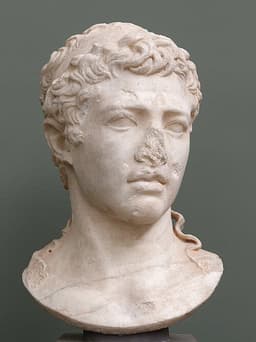
Juba II
Emperor · Ancient
49.9Total

Mahapadma Nanda
Emperor · Ancient
58.4Total
Basic Information
Born
-48
-400
Died
23
-329
Era
Ancient
Ancient
Nationality
Mauretania
India
Occupation
Emperor
Emperor
Civilization
Other
Indian
Score Comparison
Military (10%)
50.0
67.3
Political (20%)
46.6
72.0
Influence (20%)
52.5
55.7
Legacy (20%)
42.5
45.0
Leadership (15%)
74.0
68.0
Strategy (15%)
30.3
55.0
TOTAL
49.9
58.4
Juba II — Complete Timeline
25 BC
Marriage to Cleopatra Selene IIPolitical Action◆ Major
Juba II married Cleopatra Selene II, daughter of Cleopatra VII and Mark Antony. The marriage was arranged by Augustus to unite the client kingdoms of Mauretania and Numidia under a loyal couple, consolidating Roman influence in North Africa.
Marriage AllianceRoman Client KingdomNorth Africa
Impact: regionalconstructive
Reign as King of MauretaniaPolitical Action◆ Major
Augustus appointed Juba II as king of Mauretania, a Roman client kingdom. Juba ruled for nearly 50 years, promoting Romanization, urban development, and trade. He established the capital at Caesarea (modern Cherchell) and fostered cultural exchange.
KingshipRomanizationUrban Development
Impact: regionalconstructive
20 BC
Publication of Scholarly WorksCultural◆ Major
Juba II wrote numerous scholarly works in Greek on history, geography, natural history, and art. His writings, though mostly lost, were cited by later authors like Pliny the Elder and Plutarch. He was considered one of the most learned kings of antiquity.
ScholarshipGreek LiteratureNatural History
Impact: regionalconstructive
10 BC
Expedition to the Canary IslandsOther
Juba II sent an expedition to the Canary Islands, which he named after the large dogs (canes) found there. He described the islands in his writings, providing one of the earliest known accounts of the archipelago. This expedition expanded geographical knowledge.
ExplorationGeographyCanary Islands
Impact: regionalconstructive
Mahapadma Nanda — Complete Timeline
345 BC
Founded the Nanda DynastyPolitical Action
Mahapadma Nanda overthrew the Shishunaga dynasty to establish the Nanda Empire. He is described in Puranic texts as the first emperor of a unified northern India, conquering many kingdoms and creating the first large-scale imperial state in the region.
Dynasty FoundationImperial Unification
Impact: regional
340 BC
Conquered the Kalinga KingdomWar◆ Major
Mahapadma Nanda led a military campaign against Kalinga (modern Odisha), annexing it into the Nanda Empire. This conquest extended Nanda control to the eastern coast and gave access to maritime trade routes.
ConquestKalinga
Impact: regional
335 BC
Amassed Vast WealthOther
Mahapadma Nanda accumulated enormous wealth through conquest and taxation, becoming known as the richest ruler of his time. The Nanda treasury was legendary, containing vast amounts of gold and silver, which later funded Alexander's invasion of India.
WealthEconomy
Impact: regional
330 BC
Maintained a Large ArmyWar◆ Major
Mahapadma Nanda commanded a massive army reportedly consisting of 200,000 infantry, 20,000 cavalry, 2,000 chariots, and 3,000 elephants. This military force was the largest in India at the time and deterred Alexander the Great from advancing further east.
MilitaryArmy Size
Impact: regional
Expert Analysis
Origins
Juba II was born in 48 BCE in Numidia, the son of King Juba I. After his father's defeat by Julius Caesar, he was taken as a captive to Rome, where he was raised in the household of Augustus. There, he received an exceptional education in Greek and Latin, studying under prominent scholars. His early life was marked by displacement but also by immersion in the intellectual heart of the Roman world.
Mahapadma Nanda's origins are obscure. He is believed to have been born in the 5th century BCE in the Magadha region of India, possibly of low birth, as some texts suggest he was the son of a Shudra mother. He rose from humble beginnings to become a formidable warrior and leader, overthrowing the Shishunaga dynasty to found the Nanda Empire.
Rise to Power
Juba II's rise was orchestrated by Augustus. After serving as a client king in Numidia, he was appointed king of Mauretania in 25 BCE, a strategic Roman client kingdom. His marriage to Cleopatra Selene II, daughter of Cleopatra VII and Mark Antony, further solidified his position. He ruled for nearly 50 years, maintaining stability and loyalty to Rome.
Mahapadma Nanda seized power by overthrowing the Shishunaga king Mahanandin around 345 BCE. He systematically conquered neighboring kingdoms, including the Kalinga region, and expanded his empire across northern India. His military prowess and political acumen allowed him to unify a vast territory under a single rule, a first in Indian history.
Leadership & Governance
Juba II's leadership was characterized by Romanization and cultural patronage. He built the capital Caesarea (modern Cherchell) in Roman style, with forums, temples, and theaters. He promoted trade and urbanization, and his court was a center of learning. He wrote extensively on history, geography, and natural history, though his works are lost. His governance was indirect, under Roman suzerainty, and he focused on peaceful development rather than military expansion.
Mahapadma Nanda was a centralizing conqueror. He maintained a massive army, reportedly 200,000 infantry, 20,000 cavalry, 2,000 chariots, and 3,000 elephants. He imposed heavy taxes and accumulated immense wealth, becoming the richest ruler of his time. His governance was autocratic, with a focus on military strength and resource extraction. He established the first empire in northern India, setting a precedent for later dynasties.
Triumph & Tragedy
Juba II's greatest success was his long, stable reign and his contributions to scholarship. His writings, cited by later authors like Pliny the Elder, preserved knowledge of Africa and the Canary Islands. His expedition to the Canaries added geographical knowledge. His tragedy was the loss of his works and his ultimate subordination to Rome; his kingdom was annexed after his death.
Mahapadma Nanda's triumph was the unification of northern India and the creation of a powerful empire. His wealth was legendary, and his military might was unmatched. His tragedy was the ephemeral nature of his dynasty; his son Dhana Nanda was overthrown by Chandragupta Maurya, and the Nanda legacy was overshadowed by the Mauryan Empire.
Character & Destiny
Juba II was a scholar-king, more interested in learning than conquest. His Roman upbringing shaped his outlook, and he remained a loyal client. His character led to a peaceful reign but limited his independent power. He scored 74.0 in leadership for his effective administration but only 30.3 in strategy due to his lack of military ambition.
Mahapadma Nanda was a ruthless conqueror and builder. His low birth drove his ambition, and his military campaigns reflected a strategic mind. He scored 67.3 in military and 72.0 in political, but his legacy was diminished by his dynasty's fall. His character was that of a unifier, but his heavy-handed rule may have sown the seeds of rebellion.
Legacy
Juba II's legacy is as a patron of learning and a Roman client king. His influence on Roman Africa was significant, but his works are lost. He scored 52.5 in influence and 42.5 in legacy. His name survives in the natural world (the Juba river in Somalia) and in historical texts.
Mahapadma Nanda's legacy is foundational: he was the first emperor of a unified northern India, inspiring the Mauryan Empire. His administrative and military systems were adopted by later empires. He scored 55.7 in influence and 45.0 in legacy. His wealth and power were legendary, but his dynasty's short duration limits his long-term impact.
Conclusion
Mahapadma Nanda had a greater impact on history, with a total score of 58.4 compared to Juba II's 49.9. While Juba II was a remarkable scholar and administrator, his power was constrained by Rome. Mahapadma Nanda transformed India's political landscape, creating the first empire and setting the stage for the Mauryan unification. His military and political achievements were more consequential, and his legacy, though overshadowed, was more far-reaching. Therefore, Mahapadma Nanda emerges as the more influential figure.
Rankings
🥇
Mahapadma NandaLeader
Mil: 67.3Pol: 72.0Inf: 55.7
58.4
🥈
Juba II
Mil: 50.0Pol: 46.6Inf: 52.5
49.9
+8.5 behind
How This Comparison Works
Algorithm
Each figure is scored on 6 dimensions (0—100 scale) based on structured historical data: Military (10%), Political (20%), Influence (20%), Legacy (20%), Leadership (15%), Strategy (15%). The weighted total produces the final ranking.
Data Sources
Scores are computed from structured sub-indicators in the database. Scale factors adjust for era (Ancient ×0.85, Modern ×1.0) and civilization size (Eastern ×1.05, Other ×0.80) to account for differences in population and military scale.
Maximum 3 Figures
Comparisons are limited to 2—3 figures to ensure readability and statistical meaningfulness.
Error Margins
±5 points per dimension — Sub-scores are derived from historical records with inherent uncertainty. Two figures within 5 points on a dimension should be considered roughly equivalent in that area.
Total Score Accuracy
±3 points overall — The weighted combination of 6 dimensions produces a total score with approximately ±3 points of uncertainty. Differences of less than 3 points are not statistically significant— the figures are effectively tied.
Known Limitations
- Historical records are incomplete and uneven across civilizations
- Figures from oral-tradition societies may be underrepresented
- Occupation labels can misclassify multi-role figures
- Scores measure capability and impact, not moral character
- Quantitative scoring is a comparison tool, not absolute truth
Capability Radar
Military (10%) — Battles & Warfare
Battles
15
60
Win Rate
10
65
Expansion
10
80
Political (20%) — Governance & Reform
Reform
30
70
Diplomacy
60
55
Economy
40
65
Influence (20%) — Cultural & Global Reach
Cultural
45
40
Global
30
35
Legacy (20%) — Historical Impact
Historical
40
50
Longevity
35
30
Leadership (15%) — Power & Stability
Tenure
55
60
Stability
50
60
Strategy (15%) — Tactics & Innovation
Strategy
15
70
Tactics
20
55
Reform
5
75
Similar Comparisons
Comments & Discussion
No comments yet. Be the first to share your thoughts!