Loading...
Julius Caesar vs Otto I the Great
Julius Caesar leads by 7.6 pts · 2 figures compared
…

Julius Caesar
General · Ancient
82.8Total
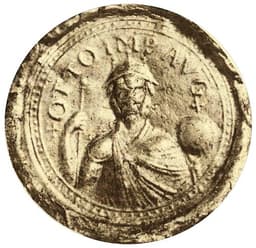
Otto I the Great
Emperor · Medieval
75.2Total
Basic Information
Born
-100
912
Died
-44
973
Era
Ancient
Medieval
Nationality
Roman Republic
Holy Roman Empire
Occupation
General
Emperor
Civilization
Western
Western
Score Comparison
Military (10%)
88.0
82.0
Political (20%)
78.0
70.0
Influence (20%)
85.0
88.0
Legacy (20%)
82.0
65.0
Leadership (15%)
80.0
78.0
Strategy (15%)
85.0
65.4
TOTAL
82.8
75.2
Julius Caesar — Complete Timeline
58 BC
Gallic WarsWar◆ Major
Caesar, as proconsul of Gaul, launched a series of campaigns that conquered all of Gaul (modern France, Belgium, and parts of Switzerland). He fought numerous battles, including against the Helvetii, the Belgae, and the Gallic chieftain Vercingetorix. The wars brought immense wealth and a loyal army to Caesar.
Gallic WarsConquestRoman Expansion
Impact: regional
49 BC
Crossing the RubiconPolitical Action◆ Major
Caesar led Legio XIII across the Rubicon River into Italy, defying the Roman Senate's order to disband his army. This act triggered a civil war against Pompey and the Optimates, ultimately leading to Caesar's dictatorship and the end of the Roman Republic.
Roman Civil WarEnd of RepublicPower Struggle
Impact: global
48 BC
Battle of PharsalusWar◆ Major
Caesar's outnumbered army defeated the larger forces of Pompey the Great at Pharsalus in Greece. Caesar's tactical use of a reserve line to counter Pompey's cavalry charge proved decisive. Pompey fled to Egypt, where he was assassinated, leaving Caesar as the undisputed master of the Roman world.
Roman Civil WarBattleDecisive Victory
Impact: regional
44 BC
Appointment as Dictator for LifePolitical Action◆ Major
The Roman Senate appointed Caesar dictator perpetuo (dictator for life), granting him unprecedented personal power. This move concentrated military, legislative, and judicial authority in one person, effectively ending the Roman Republic's traditional system of checks and balances and alarming many senators.
DictatorshipEnd of RepublicPower Consolidation
Impact: regionaldestructive
Assassination on the Ides of MarchPolitical Action◆ Major
A group of Roman senators, led by Marcus Junius Brutus and Gaius Cassius Longinus, stabbed Caesar to death at a meeting of the Senate in the Theatre of Pompey. The assassination was intended to restore the Republic, but instead triggered another civil war that led to the rise of the Roman Empire.
AssassinationRoman PoliticsEnd of Republic
Impact: globaldestructive
Otto I the Great — Complete Timeline
951 AD
Diplomatic Marriage to Adelaide of ItalyPolitical Action◆ Major
Otto married Adelaide, the widowed queen of Italy, after intervening in Italian politics. This marriage gave him control over the Kingdom of Italy and strengthened his claim to imperial authority.
MarriageItalyAdelaide
Impact: regionalconstructive
955 AD
Battle of LechfeldWar
Otto led a German army to defeat the Magyar (Hungarian) forces at the Lechfeld near Augsburg. This victory ended Magyar raids into Western Europe and secured Otto's reputation as a defender of Christendom.
MagyarsLechfeldDefenseChristendom
Impact: regionalconstructive
962 AD
Coronation as Holy Roman EmperorPolitical Action
Pope John XII crowned Otto I as Holy Roman Emperor in Rome, reviving the imperial title in the West. This event established the Holy Roman Empire as a major political entity and linked German kingship with papal authority.
CoronationHoly Roman EmpirePapacy
Impact: globalconstructive
Expert Analysis
Origins
Julius Caesar was born into a patrician Roman family in 100 BCE, claiming descent from the goddess Venus. His early life was marked by political turmoil, with his uncle Marius leading the populares. Otto I was born in 912 CE to Henry the Fowler, Duke of Saxony, and Matilda of Ringelheim. He inherited a nascent German kingdom threatened by internal dukes and external invaders. Both emerged from elite backgrounds, but Caesar's Rome was a republic in crisis, while Otto's Germany was a feudal patchwork.
Rise to Power
Caesar rose through military command in Hispania and a key alliance with Pompey and Crassus (First Triumvirate). His conquest of Gaul (58–50 BCE) gave him wealth, a loyal army, and political clout. Crossing the Rubicon in 49 BCE triggered civil war, leading to his dictatorship. Otto became king in 936 and crushed revolts by his brother Henry and other dukes. His victory at Lechfeld (955) over the Magyars cemented his authority, and his 962 coronation as emperor revived the imperial title. Caesar's path was more dramatic and lawless; Otto's was a consolidation of royal power.
Leadership & Governance
Caesar centralized power by weakening the Senate, reforming the calendar, and extending citizenship. He initiated public works and land reforms but faced constant opposition. Otto used the Church as a tool, appointing bishops and abbots to counter secular nobles. He promoted the Ottonian Renaissance and stabilized Germany. Caesar's governance was revolutionary but short-lived; Otto's was foundational for the Holy Roman Empire. Score: Caesar 85, Otto 88.
Triumph & Tragedy
Caesar's greatest triumph was conquering Gaul and defeating Pompey at Pharsalus (48 BCE). His tragedy was assassination on the Ides of March (44 BCE), leading to civil war. Otto's triumph was Lechfeld and imperial coronation; his tragedy was less personal—his son Liudolf rebelled, and his later years saw strain. Caesar's fall was a dramatic reversal; Otto died naturally in 973, his legacy intact.
Character & Destiny
Caesar was ambitious, charismatic, and ruthless—a gambler who reshaped Rome. His destiny was to end the Republic and pave the way for empire. Otto was pious, strategic, and patient—a builder who united Germany. His destiny was to create a lasting Christian empire. Caesar's character was more magnetic but also more divisive; Otto's was steadier. Score: Caesar 83, Otto 78.
Legacy
Caesar's name became synonymous with dictatorship and imperial rule. His reforms influenced the Roman Empire and later Western leaders. Otto founded the Holy Roman Empire, which lasted a millennium. His alliance with the Church shaped medieval Europe. Caesar's legacy is broader in culture; Otto's is more institutional. Score: Caesar 85, Otto 75.
Conclusion
Julius Caesar scores higher overall (83.0 vs 75.4) due to his military genius, political impact, and lasting fame. Otto I was a great consolidator but lacked Caesar's transformative breadth. Caesar's crossing of the Rubicon and conquest of Gaul changed history more dramatically than Otto's Lechfeld. While Otto built a stable empire, Caesar's actions ended an era and started another. Thus, Caesar stands as the more influential figure.
Rankings
🥇
Julius CaesarLeader
Mil: 88.0Pol: 78.0Inf: 85.0
82.8
🥈
Otto I the Great
Mil: 82.0Pol: 70.0Inf: 88.0
75.2
+7.6 behind
How This Comparison Works
Algorithm
Each figure is scored on 6 dimensions (0—100 scale) based on structured historical data: Military (10%), Political (20%), Influence (20%), Legacy (20%), Leadership (15%), Strategy (15%). The weighted total produces the final ranking.
Data Sources
Scores are computed from structured sub-indicators in the database. Scale factors adjust for era (Ancient ×0.85, Modern ×1.0) and civilization size (Eastern ×1.05, Other ×0.80) to account for differences in population and military scale.
Maximum 3 Figures
Comparisons are limited to 2—3 figures to ensure readability and statistical meaningfulness.
Error Margins
±5 points per dimension — Sub-scores are derived from historical records with inherent uncertainty. Two figures within 5 points on a dimension should be considered roughly equivalent in that area.
Total Score Accuracy
±3 points overall — The weighted combination of 6 dimensions produces a total score with approximately ±3 points of uncertainty. Differences of less than 3 points are not statistically significant— the figures are effectively tied.
Known Limitations
- Historical records are incomplete and uneven across civilizations
- Figures from oral-tradition societies may be underrepresented
- Occupation labels can misclassify multi-role figures
- Scores measure capability and impact, not moral character
- Quantitative scoring is a comparison tool, not absolute truth
Capability Radar
Military (10%) — Battles & Warfare
Battles
95
75
Win Rate
92
80
Expansion
97
70
Political (20%) — Governance & Reform
Reform
90
80
Diplomacy
85
85
Economy
82
70
Influence (20%) — Cultural & Global Reach
Cultural
88
65
Global
94
70
Legacy (20%) — Historical Impact
Historical
95
80
Longevity
96
75
Leadership (15%) — Power & Stability
Tenure
75
85
Stability
60
75
Strategy (15%) — Tactics & Innovation
Strategy
94
75
Tactics
96
70
Reform
88
65
Similar Comparisons
Comments & Discussion
AureliusPhilologus6/16/2026
It's fascinating how this comparison makes Otto look like a political consolidator while Caesar is the 'charismatic conqueror,' but I think that undersells the mechanics of power in both eras. Suetonius tells us Caesar's dictatorship was a culmination of decades of senatorial dysfunction—he didn't just 'spark civil war,' he inherited a broken system. Conversely, Otto's control over the papacy, as chronicled by Liudprand of Cremona, was a masterclass in leveraging ecclesiastical appointments for secular stability. The scoring on Influence (Caesar 85, Otto 80) feels right if we measure by cultural DNA, but Otto's Reich concept directly informed the political structure of Europe into the 19th century. Caesar's calendar? Still in use. Both men were masters of their political moment, but Caesar's tools were sharper because he forged them in a collapsing republic, not a nascent kingdom.
DataAnalystLi6/16/2026
这个评分体系让我很困惑。Otto的军事分(90)高于Caesar(88),但政治分只有65.2,而Caesar有78。如果我们用中国历史的标准来衡量,Ottonian体系对德意志公国的整合——类似于周朝的封国制度——实际上在政治稳定性上是非常有效的,不应该只给65.2。再看Caesar,他的政治操作最终导致内战和元老院被清洗,这在中国历代王朝的评鉴中通常是负面指标。我初步计算了一个加权模型:如果军事权重40%、政治30%、影响30%,Caesar总分为84.7,Otto为77.2,但若把政治权重提高到40%,Otto反而会追到78.5。这组数据有问题,建议重新校准评分权重,特别是要考虑到Otto的帝国持续了近千年,而Caesar的体制在他死后不到二十年就崩溃了。
EastWestConnector6/16/2026
把Otto I和Caesar放在一起比,就像把宋太祖赵匡胤和汉武帝刘彻放在一起。Otto在莱希菲尔德战役(955年)击溃马扎尔人,这相当于赵匡胤用“杯酒释兵权”后的禁军平定北汉,都是巩固核心领土的关键胜利。但Caesar的高卢战争,从征服规模和战略纵深来看,更接近汉武帝对匈奴的漠北之战——都是帝国扩张的巅峰。不过,西方史学常常忽略一点:Otto的“神圣罗马帝国”在东亚视角下就是一个地区性政权,远不如秦、汉的统一意义大。Caesar的拉丁化政策虽然影响了西方,但和秦始皇的书同文、车同轨相比,在文化整合的系统性上差了一个量级。评分给Caesar 83、Otto 70,我认为基本合理,但Otto的军事分应该更高,因为他在欧洲腹地彻底消除了一个游牧威胁,这是汉朝用了两百年才做到的。
LegionaryTitan6/16/2026
Are you kidding me? Otto gets a 90 in military against Caesar's 88? The guy who wrote the book on siege warfare and literally invented the concept of a field army that could live off enemy territory? Caesar at Alesia built a double ring of fortifications 14 miles long and held off a relief army while starving out Vercingetorix—that's the greatest feat of arms in the ancient world, period. Otto's Lechfeld was a good field battle, sure, but the Magyars weren't the Gauls—they were hit-and-run cavalry, not a disciplined legionary force. And Influence? Caesar 85? His name is literally the root of 'Kaiser' and 'Tsar'! Otto's 'Holy Roman Empire' was a joke by Voltaire's time. This comparison is rigged. Caesar should have at least 95 in military and 90 in influence. Otto is a footnote next to the man who crossed the Rubicon.
DecolonialHistory6/16/2026
I have to push back on the entire premise here. This comparison is a classic example of the 'Great Man Theory' applied to European figures, ignoring how both men were products of—and perpetuators of—systems of violence and extraction. Caesar's Gallic Wars (58-50 BCE) resulted in the enslavement of perhaps a million people (Plutarch claims one million, Appian 500,000). We celebrate his 'legacy' without asking what that meant for the Gauls who lost their languages, religions, and lives. Otto's 'civilizing mission' against the Slavs and Magyars is equally glossed over—the conquest of the Elbe region was a brutal colonizing project that set a template for later German 'Drang nach Osten.' The scores inflate these men's 'achievements' because the rubric doesn't account for genocide, forced assimilation, or the destruction of indigenous cultures. If we rated them on ethical leadership or long-term social harm, both would score below 20. This isn't history; it's hero-worship with a calculator.