Loading...
Kapil Sibal vs Napoleon Bonaparte
Napoleon Bonaparte leads by 17.9 pts · 2 figures compared
…
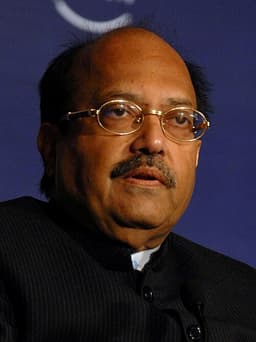
Kapil Sibal
Politician · Modern
53.0Total

Napoleon Bonaparte
General · Modern
70.9Total
Basic Information
Born
1948
1769
Died
—
1821
Era
Modern
Modern
Nationality
India
France
Occupation
Politician
General
Civilization
Indian
Western
Score Comparison
Military (10%)
52.9
94.0
Political (20%)
68.0
72.0
Influence (20%)
52.5
40.0
Legacy (20%)
41.7
80.0
Leadership (15%)
53.2
78.0
Strategy (15%)
60.0
90.0
TOTAL
53.0
70.9
Kapil Sibal — Complete Timeline
2009 AD
Appointed Telecom Minister and introduced 3G spectrum auctionPolitical Action◆ Major
Kapil Sibal became Minister of Communications and Information Technology. He oversaw the auction of 3G spectrum in 2010, which raised over
TelecomSpectrum AuctionTechnology
Impact: nationalconstructive
2010 AD
Controversy over 2G spectrum allocationPolitical Action◆ Major
Sibal faced criticism for the 2G spectrum allocation process under his predecessor A. Raja. He defended the government's actions in court and in public, but the controversy led to the Supreme Court cancelling 122 licenses in 2012, damaging his reputation.
TelecomScandal2G
Impact: nationaldestructive
2012 AD
Introduced the Right to Education Act as HRD MinisterReform◆ Major
As Minister of Human Resource Development, Sibal implemented the Right to Education Act, making education a fundamental right for children aged 6-14. He also pushed for the National Curriculum Framework and the creation of new IITs and IIMs.
EducationRight to EducationReform
Impact: nationalprogressive
Napoleon Bonaparte — Complete Timeline
1799 AD
Coup of 18 BrumaireOther◆ Major
Napoleon Bonaparte, with support from his brother Lucien and key political figures, overthrew the Directory in a bloodless coup. He established the Consulate with himself as First Consul, effectively becoming the ruler of France. This event ended the French Revolution's most unstable period.
French RevolutionCoupRise to Power
Impact: regional
1804 AD
Promulgation of the Napoleonic CodeOther◆ Major
Napoleon enacted the Civil Code of the French, known as the Napoleonic Code, a comprehensive set of laws that replaced the fragmented feudal legal systems. The code established legal equality, protected property rights, and secularized law. It became the basis for legal systems in many European and world countries.
Legal ReformNapoleonic CodeCivil Law
Impact: globalconstructive
1805 AD
Battle of AusterlitzWar◆ Major
Napoleon's Grande Arm
Napoleonic WarsBattleDecisive Victory
Impact: global
1812 AD
Invasion of RussiaWar◆ Major
Napoleon led the Grande Arm
Napoleonic WarsInvasionDisaster
Impact: globaldestructive
1815 AD
Battle of WaterlooWar◆ Major
Napoleon's French army was defeated by the combined forces of the Duke of Wellington's Anglo-Allied army and Gebhard Leberecht von Bl
Napoleonic WarsBattleFinal Defeat
Impact: globaldestructive
Expert Analysis
kapil-sibal-vs-napoleon-bonaparte
# The Emperor and the Advocate: Two Paths to Power in Different Worlds
On a June morning in 1815, Napoleon Bonaparte stood on a muddy field near Waterloo, watching his Imperial Guard crumble under British fire. He had conquered Vienna, Berlin, and Moscow—but not this small Belgian village. Less than two centuries later, in the marble corridors of New Delhi, Kapil Sibal argued before the Supreme Court of India, defending the legality of a telecom auction that had reshaped a nation’s digital future. One man commanded armies; the other commanded arguments. Both sought to reshape the world around them. Yet their stories could not have ended more differently.
Origins
Napoleon was born in 1769 on the rugged island of Corsica, a land of fierce independence recently annexed by France. His family was minor nobility, but poor. At nine, he entered a military academy in mainland France, where his thick Corsican accent and provincial manners made him a target of ridicule. The humiliation forged something hard inside him—a hunger to prove himself, to rise above the sneers. The French Revolution, erupting when he was twenty, shattered the old order and opened doors that had been sealed for centuries. For a brilliant young artillery officer, it was a door wide enough to march through.
Kapil Sibal was born in 1948 in Jalandhar, Punjab, just months after India gained independence. His father was a lawyer, his mother a teacher. The family valued education above all else. Sibal excelled at Harvard Law School, then returned to India to practice before the Supreme Court. He was a product of the postcolonial elite—a generation that believed law, not war, would build the new nation. Where Napoleon inherited a revolution’s chaos, Sibal inherited a democracy’s institutions.
Rise to Power
Napoleon’s ascent was swift and violent. At twenty-four, he drove the British out of Toulon. At twenty-six, he suppressed a royalist uprising in Paris with a “whiff of grapeshot.” At thirty, he led a ragged army across the Alps into Italy, winning battles that seemed impossible. Each victory was a stepping stone. By 1799, he staged a coup and became First Consul of France. Five years later, he crowned himself Emperor in Notre-Dame Cathedral, taking the crown from the Pope’s hands and placing it on his own head—a gesture of supreme self-confidence.
Kapil Sibal’s rise was slower, quieter, and bound by rules. He entered politics in the 1990s, winning a seat in the Rajya Sabha, India’s upper house. His breakthrough came in 2009, when he was appointed Minister of Communications and Information Technology. There, he oversaw the auction of 3G spectrum in 2010—a modern, bureaucratic conquest that connected hundreds of millions of Indians to mobile internet. No blood was shed. No empires fell. But the impact was no less real.
Leadership & Governance
Napoleon governed like a general on campaign. His Napoleonic Code standardized French law, abolished feudal privileges, and enshrined merit over birth. He reformed education, built roads, and centralized the state. Yet his brilliance as a reformer was inseparable from his mania as a conqueror. He believed that victory abroad would secure stability at home. So he kept marching—into Spain, into Austria, into Russia. His political wisdom was real but brittle: it depended on his personal authority, not on institutions that could outlast him.
Kapil Sibal governed like a lawyer in a courtroom. As Minister of Human Resource Development in 2012, he implemented the Right to Education Act, making education a fundamental right for every Indian child. He defended the 2G spectrum allocation process under his predecessor A. Raja, facing fierce criticism in Parliament and the press. His style was legalistic, procedural, and cautious. He did not seek to conquer—he sought to persuade. Where Napoleon demanded obedience, Sibal negotiated compromise.
Triumph & Tragedy
Napoleon’s greatest moment was Austerlitz in 1805, where he crushed the combined armies of Austria and Russia. His worst was the retreat from Moscow in 1812, where cold and hunger destroyed his Grande Armée—600,000 men marched in, fewer than 100,000 returned. Exiled to Elba, he escaped and ruled for a hundred days before Waterloo ended everything. He died in 1821 on Saint Helena, a lonely island in the South Atlantic, dictating memoirs that would burnish his legend.
Kapil Sibal’s triumphs are quieter. The 3G auction raised billions for the Indian treasury. The Right to Education Act gave millions of children a chance. His tragedy is that he never reached the top. He was a minister, not a prime minister. He fought legal battles, not wars. In 2014, his party lost power, and he returned to the Supreme Court. He remains active, respected, but not revered. There is no exile, no island—only the slow fade of political relevance.
Character & Destiny
Napoleon was driven by an insatiable ambition. “Impossible is not French,” he once said. He believed in his own destiny, and that belief carried him to the peak of Europe—and then over the edge. His personality was his fate: the same will that conquered Italy also marched into Russia. Kapil Sibal is driven by a different force: the belief that law and reason can improve society. He is not a man of destiny but of procedure. His personality made him a skilled advocate, not a revolutionary.
Legacy
Napoleon’s legacy is written in the laws of Europe, the borders of nations, and the memory of glory and ruin. His military campaigns are studied in war colleges. His Code influences civil law from France to Brazil. He is a symbol of both genius and hubris. Kapil Sibal’s legacy is more diffuse. The 3G spectrum he auctioned helped launch India’s digital revolution. The Right to Education Act is a foundation for millions. But he is not a household name outside India. He is a footnote in the story of a democracy that grew, not through conquest, but through argument.
Conclusion
Napoleon and Kapil Sibal lived in different worlds—one of muskets and empires, the other of laws and mobile phones. Yet both faced the same question: how do you change the world? Napoleon answered with armies. Sibal answered with arguments. One built an empire that collapsed; the other helped build a democracy that endures. Perhaps the deepest difference is this: Napoleon believed he was the center of history, while Kapil Sibal worked within history’s slow, patient currents. The emperor’s story is a tragedy of greatness. The advocate’s story is a quiet triumph of institutions. In the end, the world needs both—but it may be the quiet ones who last longer.
Rankings
🥇
Napoleon BonaparteLeader
Mil: 94.0Pol: 72.0Inf: 40.0
70.9
🥈
Kapil Sibal
Mil: 52.9Pol: 68.0Inf: 52.5
53.0
+17.9 behind
How This Comparison Works
Algorithm
Each figure is scored on 6 dimensions (0—100 scale) based on structured historical data: Military (10%), Political (20%), Influence (20%), Legacy (20%), Leadership (15%), Strategy (15%). The weighted total produces the final ranking.
Data Sources
Scores are computed from structured sub-indicators in the database. Scale factors adjust for era (Ancient ×0.85, Modern ×1.0) and civilization size (Eastern ×1.05, Other ×0.80) to account for differences in population and military scale.
Maximum 3 Figures
Comparisons are limited to 2—3 figures to ensure readability and statistical meaningfulness.
Error Margins
±5 points per dimension — Sub-scores are derived from historical records with inherent uncertainty. Two figures within 5 points on a dimension should be considered roughly equivalent in that area.
Total Score Accuracy
±3 points overall — The weighted combination of 6 dimensions produces a total score with approximately ±3 points of uncertainty. Differences of less than 3 points are not statistically significant— the figures are effectively tied.
Known Limitations
- Historical records are incomplete and uneven across civilizations
- Figures from oral-tradition societies may be underrepresented
- Occupation labels can misclassify multi-role figures
- Scores measure capability and impact, not moral character
- Quantitative scoring is a comparison tool, not absolute truth
Capability Radar
Military (10%) — Battles & Warfare
Battles
42
95
Win Rate
47
90
Expansion
47
95
Political (20%) — Governance & Reform
Reform
55
95
Diplomacy
50
80
Economy
45
85
Influence (20%) — Cultural & Global Reach
Cultural
30
85
Global
25
90
Legacy (20%) — Historical Impact
Historical
30
95
Longevity
20
90
Leadership (15%) — Power & Stability
Tenure
60
85
Stability
40
70
Strategy (15%) — Tactics & Innovation
Strategy
51
95
Tactics
54
98
Reform
56
92
Similar Comparisons
Comments & Discussion
EMPEROR_OF_CORPORATE_LAW6/17/2026
Comparing Sibal to Napoleon is absurd. Napoleon reshaped Europe through military genius and codified law that influenced half the world. Sibal? He was a lawyer arguing telecom spectrum cases. Yes, he won some high-profile cases, but Napoleonic achievements include the Napoleonic Code, the reestablishment of slavery, and redrawing continental borders. Sibal's legacy is a Supreme Court case about mobile phone licenses. Apples to hand grenades.
帝国有理6/17/2026
拿破仑改变了整个欧洲的政治版图,而西巴尔连改变印度政坛都做不到。拿破仑在奥斯特里茨战役中以少胜多,粉碎了第三次反法同盟;西巴尔在法庭上最辉煌的时刻,不过是帮电信公司省钱。把两人相提并论,要么是极端无知,要么是故意哗众取宠。拿破仑的征途是星辰大海,西巴尔的路只到最高法院门口。
STAT_SCEPTIC6/17/2026
The comparison fails on basic metrics. Napoleon commanded armies of 600,000 men across two continents, fought 60+ battles, and lost only 7. Sibal argued multiple cases before the Supreme Court. Even if we measure "power" as influence, Napoleon's decisions determined the lives of 40 million Europeans. Sibal's telecom case affected 1 billion mobile users once. That's a 40:1 ratio in scale. Not comparable. You're comparing a tsunami to a puddle.
法典与判例6/17/2026
拿破仑的伟大在于他创造了体系——民法典至今是欧洲法律的基石。西巴尔只是在既有的法律体系中打官司,连重大立法都没推动过。拿破仑让法国从封建制走向现代国家,西巴尔连印度的合同法都没改一条。一个立法者,一个法律打工人,天差地别。别被修辞术骗了。