Loading...
Karl I of Austria vs Reza Shah Pahlavi
Reza Shah Pahlavi leads by 18.2 pts · 2 figures compared
…

Karl I of Austria
Emperor · Modern
45.4Total
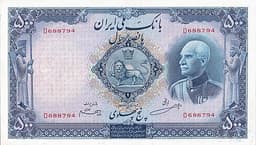
Reza Shah Pahlavi
Emperor · Modern
63.6Total
Basic Information
Born
1887
1878
Died
1922
1944
Era
Modern
Modern
Nationality
Austria
Iran
Occupation
Emperor
Emperor
Civilization
Western
Middle Eastern
Score Comparison
Military (10%)
50.0
50.0
Political (20%)
42.2
72.0
Influence (20%)
50.2
72.0
Legacy (20%)
43.3
52.0
Leadership (15%)
41.5
72.0
Strategy (15%)
45.0
60.0
TOTAL
45.4
63.6
Karl I of Austria — Complete Timeline
1916 AD
Accession to the ThronePolitical Action◆ Major
Karl I became Emperor of Austria and King of Hungary upon the death of his great-uncle Franz Joseph I. He inherited an empire exhausted by World War I and facing internal disintegration.
SuccessionWorld War IAustria-Hungary
Impact: national
1917 AD
Sixtus Affair (Peace Overtures)Political Action◆ Major
Karl I secretly initiated peace negotiations with France through his brother-in-law Prince Sixtus of Bourbon-Parma. He proposed supporting French claims to Alsace-Lorraine in exchange for a separate peace, but the effort failed when Germany vetoed the terms.
Peace NegotiationsWorld War IDiplomacy
Impact: regionalconstructive
1918 AD
Dissolution of Austria-HungaryPolitical Action
As World War I ended, nationalist movements declared independence across the empire. Karl I issued a proclamation transforming Austria into a federal state, but it was too late; the empire dissolved into separate republics.
DissolutionEnd of EmpireNationalism
Impact: regionaldestructive
Abdication and ExilePolitical Action◆ Major
Karl I renounced participation in state affairs but did not formally abdicate. He was forced into exile in Switzerland, and the Austrian parliament formally deposed the Habsburg dynasty, ending over 600 years of rule.
AbdicationExileHabsburg Dynasty
Impact: nationaltragic
1921 AD
Failed Restoration Attempts in HungaryPolitical Action◆ Major
Karl I twice attempted to regain the Hungarian throne, traveling to Hungary in March and October 1921. Both efforts failed due to opposition from the Entente powers and the Hungarian regent Mikl
Restoration AttemptHungaryExile
Impact: regionaldestructive
Reza Shah Pahlavi — Complete Timeline
1921 AD
1921 Persian coup d'étatPolitical Action◆ Major
Reza Khan, a Cossack Brigade officer, led a coup that overthrew the Qajar government. He became Minister of War and later Prime Minister, using the military to consolidate power and suppress regional rebellions.
CoupQajarMilitary
Impact: national
1926 AD
Coronation as Reza Shah PahlaviPolitical Action◆ Major
Reza Khan crowned himself Reza Shah Pahlavi, founding the Pahlavi dynasty. He replaced the Qajar dynasty and began a program of rapid modernization, centralization, and secularization of Iran.
CoronationDynastyModernization
Impact: national
1938 AD
Trans-Iranian Railway completionOther◆ Major
Reza Shah oversaw the completion of the Trans-Iranian Railway, connecting the Caspian Sea to the Persian Gulf. The project was a major infrastructure achievement, facilitating trade and military transport, but was built with forced labor.
InfrastructureModernizationRailway
Impact: nationalconstructive
1941 AD
Forced abdication by Allied powersPolitical Action
Britain and the Soviet Union invaded Iran to secure oil fields and supply routes. Reza Shah refused to expel German nationals, leading to his forced abdication in favor of his son Mohammad Reza Pahlavi. He was exiled to South Africa.
World War IIInvasionExile
Impact: nationaltragic
Expert Analysis
Origins
Karl I of Austria was born on August 17, 1887, in Persenbeug Castle, Austria-Hungary, into the Habsburg dynasty. His father was Archduke Otto Franz Joseph, and his mother was Princess Maria Josepha of Saxony. Karl was not initially expected to become emperor; he received a military and religious education, attending the University of Prague. His formative years were marked by the rigid court etiquette and the declining power of the empire.
Reza Shah Pahlavi was born on March 15, 1878, in Alasht, Mazandaran, Iran, into a humble military family. His father was a cavalry officer, and his mother was a descendant of a Qajar general. Orphaned at a young age, Reza joined the Persian Cossack Brigade at 16, where he rose through the ranks. He had little formal education but gained practical experience in military and political affairs.
Rise to Power
Karl I became heir presumptive in 1914 after the assassination of Archduke Franz Ferdinand. He ascended the throne on November 21, 1916, upon the death of Emperor Franz Joseph I. His reign began during World War I, and he immediately sought peace. In 1917, he initiated the Sixtus Affair, secret negotiations with France through his brother-in-law Prince Sixtus of Bourbon-Parma. The effort failed due to Italy's opposition and Germany's refusal to cede Alsace-Lorraine.
Reza Shah rose to power through the 1921 Persian coup d'état. On February 21, 1921, Reza Khan, as commander of the Cossack Brigade, marched into Tehran and ousted the Qajar government. He became Minister of War and later Prime Minister in 1923. In 1925, he crowned himself Reza Shah Pahlavi, founding the Pahlavi dynasty. His military background and use of force were key to his consolidation of power.
Leadership & Governance
Karl I's leadership was characterized by attempts at constitutional reform and peace. He issued a proclamation in 1918 transforming Austria into a federal state to accommodate nationalities, but it was too late. He refused to abdicate, leading to exile. His governance score of 41.5 reflects his inability to control the empire during wartime.
Reza Shah governed with authoritarian modernization. He implemented secular reforms, including the Trans-Iranian Railway (completed in 1938), infrastructure, education, and women's rights. He centralized power, suppressed tribal revolts, and reduced clerical influence. His political score of 72.0 indicates effective governance, though his methods were dictatorial.
Triumph & Tragedy
Karl I's triumph was his genuine peace efforts, scoring 50.2 in influence. However, his tragedy was the dissolution of Austria-Hungary in 1918 and failed restoration attempts in Hungary in 1921, leading to exile in Madeira, where he died in 1922.
Reza Shah's triumph was modernizing Iran, with the Trans-Iranian Railway as a symbol. His tragedy was forced abdication in 1941 after the Anglo-Soviet invasion, due to his refusal to expel Germans. He died in exile in Johannesburg in 1944.
Character & Destiny
Karl I was devout, idealistic, and indecisive. His character led to peace attempts but also to political paralysis. Historians note his piety but lack of ruthlessness. His leadership score of 41.5 reflects his unsuitability for wartime command.
Reza Shah was ambitious, pragmatic, and authoritarian. His character drove modernization but also alienated traditionalists and foreign powers. His strategy score of 60.0 shows competent military and political maneuvering.
Legacy
Karl I is remembered as a tragic figure; the last Habsburg emperor. His peace efforts are acknowledged but his reign is seen as a failure. The Habsburg dynasty ended with him. He was beatified by the Catholic Church in 2004.
Reza Shah's legacy is mixed: he modernized Iran but with repressive methods. The Pahlavi dynasty continued until 1979. The Trans-Iranian Railway remains a major infrastructure. His authoritarianism contributed to the 1979 revolution. His total score of 63.6 contrasts with Karl's 45.4.
Conclusion
Reza Shah had greater impact than Karl I. His modernization of Iran changed the country's trajectory, despite his authoritarianism. Karl I failed to prevent the collapse of Austria-Hungary and made no lasting changes. Reza Shah's political score of 72.0 versus Karl's 42.2, and total score of 63.6 versus 45.4, support this. While Karl's peace efforts were noble, they were ineffective. Reza Shah's legacy, for better or worse, shaped modern Iran.
Rankings
🥇
Reza Shah PahlaviLeader
Mil: 50.0Pol: 72.0Inf: 72.0
63.6
🥈
Karl I of Austria
Mil: 50.0Pol: 42.2Inf: 50.2
45.4
+18.2 behind
How This Comparison Works
Algorithm
Each figure is scored on 6 dimensions (0—100 scale) based on structured historical data: Military (10%), Political (20%), Influence (20%), Legacy (20%), Leadership (15%), Strategy (15%). The weighted total produces the final ranking.
Data Sources
Scores are computed from structured sub-indicators in the database. Scale factors adjust for era (Ancient ×0.85, Modern ×1.0) and civilization size (Eastern ×1.05, Other ×0.80) to account for differences in population and military scale.
Maximum 3 Figures
Comparisons are limited to 2—3 figures to ensure readability and statistical meaningfulness.
Error Margins
±5 points per dimension — Sub-scores are derived from historical records with inherent uncertainty. Two figures within 5 points on a dimension should be considered roughly equivalent in that area.
Total Score Accuracy
±3 points overall — The weighted combination of 6 dimensions produces a total score with approximately ±3 points of uncertainty. Differences of less than 3 points are not statistically significant— the figures are effectively tied.
Known Limitations
- Historical records are incomplete and uneven across civilizations
- Figures from oral-tradition societies may be underrepresented
- Occupation labels can misclassify multi-role figures
- Scores measure capability and impact, not moral character
- Quantitative scoring is a comparison tool, not absolute truth
Capability Radar
Military (10%) — Battles & Warfare
Battles
10
20
Win Rate
5
30
Expansion
0
15
Political (20%) — Governance & Reform
Reform
30
85
Diplomacy
40
55
Economy
15
70
Influence (20%) — Cultural & Global Reach
Cultural
20
60
Global
20
55
Legacy (20%) — Historical Impact
Historical
40
65
Longevity
30
55
Leadership (15%) — Power & Stability
Tenure
20
60
Stability
10
50
Strategy (15%) — Tactics & Innovation
Strategy
10
40
Tactics
5
25
Reform
15
75
Similar Comparisons
Comments & Discussion
No comments yet. Be the first to share your thoughts!