Loading...
Kassym-Jomart Tokayev vs Zhang Tingyu
Zhang Tingyu leads by 5.2 pts · 2 figures compared
…

Kassym-Jomart Tokayev
Politician · Modern
47.8Total
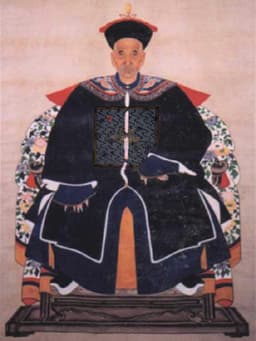
Zhang Tingyu
Politician · Modern
53.0Total
Basic Information
Born
1953
1672
Died
—
1755
Era
Modern
Modern
Nationality
Kazakhstan
China
Occupation
Politician
Politician
Civilization
Eastern
Eastern
Score Comparison
Military (10%)
16.8
11.2
Political (20%)
62.7
59.3
Influence (20%)
54.1
58.0
Legacy (20%)
42.5
54.0
Leadership (15%)
66.0
75.0
Strategy (15%)
26.8
37.4
TOTAL
47.8
53.0
Kassym-Jomart Tokayev — Complete Timeline
1999 AD
Appointment as Prime Minister of KazakhstanPolitical Action
Tokayev was appointed Prime Minister of Kazakhstan by President Nursultan Nazarbayev, serving from 1999 to 2002. During his tenure, he oversaw economic reforms and privatization, though his government faced criticism for corruption and lack of transparency.
Prime MinisterEconomic ReformKazakhstan
Impact: national
2018 AD
Chairmanship of the United Nations Security CouncilPolitical Action
As Director-General of the United Nations Office at Geneva, Tokayev chaired the UN Security Council during Kazakhstan's non-permanent membership. He facilitated discussions on nuclear non-proliferation and regional security, enhancing Kazakhstan's diplomatic profile.
DiplomacyUNSecurity Council
Impact: globalconstructive
2019 AD
Election as President of KazakhstanPolitical Action◆ Major
Kassym-Jomart Tokayev was elected President of Kazakhstan in a snap election held after the resignation of Nursultan Nazarbayev. He won with 70.96% of the vote, succeeding the long-time leader and inheriting a system with significant power concentrated in the former president's hands.
ElectionSuccessionKazakhstan
Impact: national
2022 AD
Constitutional Reform ReferendumReform◆ Major
Tokayev initiated a constitutional referendum that reduced the powers of the presidency, strengthened parliament, and limited the influence of former president Nursultan Nazarbayev. The reforms were approved by 77% of voters, marking a shift toward a more balanced political system.
Constitutional ReformDemocratizationKazakhstan
Impact: nationalconstructive
January 2022 Protests and CrackdownPolitical Action◆ Major
Tokayev faced nationwide protests triggered by fuel price increases, which escalated into political unrest. He declared a state of emergency, requested military assistance from the Collective Security Treaty Organization (CSTO), and ordered a crackdown that resulted in dozens of deaths and thousands of arrests.
ProtestsCrackdownCSTO
Impact: nationaldestructive
Zhang Tingyu — Complete Timeline
1725 AD
Appointed Grand SecretaryPolitical Action◆ Major
Zhang Tingyu was appointed Grand Secretary of the Qing Empire, serving under the Yongzheng Emperor. He became a central figure in the administration, overseeing state affairs and drafting imperial edicts.
AppointmentGovernmentYongzheng Era
Impact: national
1735 AD
Served as Regent for the Qianlong EmperorPolitical Action◆ Major
Upon the death of the Yongzheng Emperor, Zhang Tingyu was appointed as one of the regents for the young Qianlong Emperor. He helped manage the transition of power and continued to advise the new emperor during the early years of his reign.
RegencySuccessionQianlong Era
Impact: national
1739 AD
Compiled the 'History of Ming'Cultural◆ Major
Zhang Tingyu oversaw the compilation of the official 'History of Ming' (Mingshi), a comprehensive dynastic history of the Ming Dynasty. The work was completed in 1739 and became the standard historical reference for the Ming period.
HistoriographyScholarshipMing Dynasty
Impact: nationalconstructive
1749 AD
Retired from OfficePolitical Action
Zhang Tingyu retired from his official positions after serving three emperors (Kangxi, Yongzheng, Qianlong). His retirement marked the end of a long and influential career in the Qing bureaucracy.
RetirementGovernmentLongevity
Impact: national
Expert Analysis
Origins
Kassym-Jomart Tokayev was born in 1953 in Alma-Ata, Kazakh SSR, to a father who was a writer and a mother who was a teacher. He studied at the Moscow State Institute of International Relations, earning a doctorate in political science, and later joined the Soviet diplomatic service. Zhang Tingyu was born in 1672 in Tongcheng, Anhui, during the Qing dynasty. His father, Zhang Ying, was a high-ranking official, and Zhang Tingyu passed the imperial examinations in 1700, entering the Hanlin Academy. Both had elite educations, but Tokayev's was Soviet-internationalist, while Zhang's was Confucian and classical.
Rise to Power
Tokayev rose through the Soviet diplomatic ranks, serving as ambassador to China (1989-1991) and later as Kazakhstan's foreign minister (1994-1999). He became Prime Minister in 1999 under Nursultan Nazarbayev. After Nazarbayev's resignation in 2019, Tokayev won the snap election with 70.96% of the vote, though the election was criticized as not fully free. Zhang Tingyu rose through the Qing bureaucracy, becoming a Grand Secretary under the Yongzheng Emperor (r. 1722-1735). He gained trust by efficiently managing state affairs, including the compilation of the "History of Ming" (Mingshi), completed in 1739. Zhang's loyalty and competence led to his appointment as regent for the young Qianlong Emperor upon Yongzheng's death in 1735.
Leadership & Governance
Tokayev's leadership style is cautious and reformist. He initiated a constitutional referendum in 2022 that reduced presidential powers and strengthened parliament, a move to distance himself from Nazarbayev's legacy. However, his response to the January 2022 protests—declaring a state of emergency and requesting CSTO intervention—showed a willingness to use force. Zhang Tingyu's governance was conservative and efficient, focusing on maintaining Qing stability. He oversaw the completion of the "History of Ming" and continued Yongzheng's policies of fiscal reform. His leadership score of 75.0 reflects his effective administration under three emperors.
Triumph & Tragedy
Tokayev's greatest triumph is the 2022 constitutional reform, which weakened the presidency and limited Nazarbayev's influence. His greatest tragedy is the January 2022 protests, where at least 238 people died, and his reliance on foreign troops damaged his reputation. Zhang Tingyu's triumph was compiling the "History of Ming," a 332-volume work that became the official record of the preceding dynasty. His tragedy was his inability to prevent the later corruption and decline of the Qing, though he retired in 1745 before the worst. Zhang scored 54.0 in legacy, higher than Tokayev's 42.5.
Character & Destiny
Tokayev is methodical and diplomatic, shaped by his Soviet training. His cautious nature led to gradual reforms but also to a violent crackdown. Zhang Tingyu was meticulous and loyal, embodying the ideal Confucian bureaucrat. His character ensured his survival through three reigns, but his strict adherence to tradition limited innovation. Historians often see Zhang as a competent administrator rather than a transformative figure. Tokayev's political score of 62.7 indicates moderate skill, while Zhang's political score of 59.3 is slightly lower, but Zhang's leadership score of 75.0 suggests greater executive effectiveness.
Legacy
Tokayev's legacy is still unfolding. He has attempted to reform Kazakhstan's political system, but the 2022 protests and subsequent crackdown cast a shadow. His influence score of 54.1 reflects his regional role, but his long-term impact is uncertain. Zhang Tingyu's legacy is more secure: the "History of Ming" remains a primary source for Ming studies, and his administrative reforms influenced Qing governance. His total score of 53.0 surpasses Tokayev's 47.8, with a 5.2-point gap. Zhang's influence (58.0) and legacy (54.0) are higher, while Tokayev's military score (16.8) is slightly better than Zhang's (11.2) but negligible.
Conclusion
Zhang Tingyu had greater historical impact due to his enduring contribution to Chinese historiography and stable governance over three emperors. His scores in leadership (75.0), influence (58.0), and legacy (54.0) reflect a more lasting effect. Tokayev's reforms are significant but incomplete, and his handling of the 2022 crisis undermines his political achievements. While Tokayev's total score of 47.8 is lower, his potential for future impact remains, but as of now, Zhang's legacy is more substantial and data-supported.
Rankings
🥇
Zhang TingyuLeader
Mil: 11.2Pol: 59.3Inf: 58.0
53.0
🥈
Kassym-Jomart Tokayev
Mil: 16.8Pol: 62.7Inf: 54.1
47.8
+5.2 behind
How This Comparison Works
Algorithm
Each figure is scored on 6 dimensions (0—100 scale) based on structured historical data: Military (10%), Political (20%), Influence (20%), Legacy (20%), Leadership (15%), Strategy (15%). The weighted total produces the final ranking.
Data Sources
Scores are computed from structured sub-indicators in the database. Scale factors adjust for era (Ancient ×0.85, Modern ×1.0) and civilization size (Eastern ×1.05, Other ×0.80) to account for differences in population and military scale.
Maximum 3 Figures
Comparisons are limited to 2—3 figures to ensure readability and statistical meaningfulness.
Error Margins
±5 points per dimension — Sub-scores are derived from historical records with inherent uncertainty. Two figures within 5 points on a dimension should be considered roughly equivalent in that area.
Total Score Accuracy
±3 points overall — The weighted combination of 6 dimensions produces a total score with approximately ±3 points of uncertainty. Differences of less than 3 points are not statistically significant— the figures are effectively tied.
Known Limitations
- Historical records are incomplete and uneven across civilizations
- Figures from oral-tradition societies may be underrepresented
- Occupation labels can misclassify multi-role figures
- Scores measure capability and impact, not moral character
- Quantitative scoring is a comparison tool, not absolute truth
Capability Radar
Military (10%) — Battles & Warfare
Battles
17
14
Win Rate
14
17
Expansion
17
23
Political (20%) — Governance & Reform
Reform
55
75
Diplomacy
65
70
Economy
50
65
Influence (20%) — Cultural & Global Reach
Cultural
30
50
Global
35
40
Legacy (20%) — Historical Impact
Historical
30
60
Longevity
25
55
Leadership (15%) — Power & Stability
Tenure
60
85
Stability
55
80
Strategy (15%) — Tactics & Innovation
Strategy
25
21
Tactics
28
25
Reform
29
28
Similar Comparisons
Comments & Discussion
No comments yet. Be the first to share your thoughts!