Loading...
S. Rajaratnam vs Zhang Tingyu
S. Rajaratnam leads by 0.7 pts · 2 figures compared
…
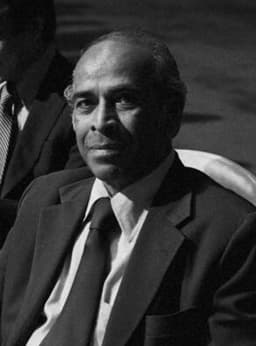
S. Rajaratnam
Politician · Modern
53.7Total
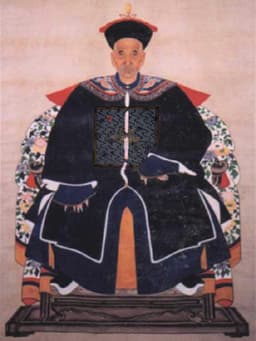
Zhang Tingyu
Politician · Modern
53.0Total
Basic Information
Born
1915
1672
Died
2006
1755
Era
Modern
Modern
Nationality
Singapore
China
Occupation
Politician
Politician
Civilization
Eastern
Eastern
Score Comparison
Military (10%)
15.5
11.2
Political (20%)
70.0
59.3
Influence (20%)
55.0
58.0
Legacy (20%)
50.0
54.0
Leadership (15%)
78.0
75.0
Strategy (15%)
37.4
37.4
TOTAL
53.7
53.0
S. Rajaratnam — Complete Timeline
1965 AD
Became Singapore's First Foreign MinisterPolitical Action◆ Major
S. Rajaratnam was appointed Singapore's first Minister for Foreign Affairs after independence. He established diplomatic relations with over 50 countries and articulated Singapore's policy of non-alignment and regional cooperation.
Foreign PolicyDiplomacyIndependence
Impact: globalconstructive
1966 AD
Drafted the Singapore National PledgeCultural◆ Major
S. Rajaratnam authored the Singapore National Pledge, which emphasizes unity, democracy, and equality. The pledge is recited daily in schools and at national events, becoming a foundational text of Singaporean identity.
National IdentityEducationCivic Values
Impact: nationalconstructive
1967 AD
Co-founded the Association of Southeast Asian Nations (ASEAN)Political Action◆ Major
S. Rajaratnam was a founding signatory of the ASEAN Declaration in Bangkok. He played a key role in shaping the organization's principles of non-interference and regional stability, which became central to Southeast Asian diplomacy.
ASEANRegional CooperationDiplomacy
Impact: regionalconstructive
1968 AD
Served as Minister for LabourReform◆ Major
S. Rajaratnam served as Minister for Labour, implementing policies to improve industrial relations and worker welfare. He helped establish the National Wages Council and promoted tripartite cooperation between unions, employers, and government.
Labour PolicyIndustrial RelationsTripartism
Impact: nationalconstructive
1987 AD
Published 'The Prophetic and the Political'Cultural
S. Rajaratnam published a collection of his speeches and writings. The book articulated his vision of a multiracial, meritocratic Singapore and his critique of Western liberal democracy in the Asian context.
Political ThoughtPublicationAsian Values
Impact: nationalconstructive
Zhang Tingyu — Complete Timeline
1725 AD
Appointed Grand SecretaryPolitical Action◆ Major
Zhang Tingyu was appointed Grand Secretary of the Qing Empire, serving under the Yongzheng Emperor. He became a central figure in the administration, overseeing state affairs and drafting imperial edicts.
AppointmentGovernmentYongzheng Era
Impact: national
1735 AD
Served as Regent for the Qianlong EmperorPolitical Action◆ Major
Upon the death of the Yongzheng Emperor, Zhang Tingyu was appointed as one of the regents for the young Qianlong Emperor. He helped manage the transition of power and continued to advise the new emperor during the early years of his reign.
RegencySuccessionQianlong Era
Impact: national
1739 AD
Compiled the 'History of Ming'Cultural◆ Major
Zhang Tingyu oversaw the compilation of the official 'History of Ming' (Mingshi), a comprehensive dynastic history of the Ming Dynasty. The work was completed in 1739 and became the standard historical reference for the Ming period.
HistoriographyScholarshipMing Dynasty
Impact: nationalconstructive
1749 AD
Retired from OfficePolitical Action
Zhang Tingyu retired from his official positions after serving three emperors (Kangxi, Yongzheng, Qianlong). His retirement marked the end of a long and influential career in the Qing bureaucracy.
RetirementGovernmentLongevity
Impact: national
Expert Analysis
Origins
S. Rajaratnam was born in 1915 in Ceylon (now Sri Lanka) to a Tamil family. He moved to Singapore in 1934 and studied law at King's College London, where he was influenced by socialist ideas. His early career included journalism, writing for the *Malayan Tribune* and later editing *The Singapore Standard*. Zhang Tingyu was born in 1672 in Anhui, China, into a scholarly family. He passed the imperial examinations in 1700, entering the Hanlin Academy. His father, Zhang Ying, also served as a high official, providing a strong bureaucratic lineage.
Rise to Power
Rajaratnam entered politics in 1954 as a founding member of the People's Action Party (PAP). He was elected to the Legislative Assembly in 1959 and became Minister for Culture, where he crafted the Singapore National Pledge in 1966. His rise was tied to the PAP's dominance and his role in shaping national identity. Zhang Tingyu rose through the Qing civil service, gaining favor under the Kangxi Emperor. He was appointed Grand Secretary in 1726 under the Yongzheng Emperor, becoming a key advisor. Upon Yongzheng's death in 1735, Zhang was named a regent for the young Qianlong Emperor, solidifying his power.
Leadership & Governance
Rajaratnam served as Singapore's first Foreign Minister from 1965 to 1980, establishing diplomatic relations with over 50 countries. He co-founded ASEAN in 1967, advocating for non-interference and regional stability. As Minister for Labour (1968-1971), he implemented policies that improved industrial relations, including the National Wages Council. His leadership style was pragmatic and visionary, focusing on multiracialism and meritocracy. Zhang Tingyu governed as a traditional Confucian bureaucrat, overseeing the compilation of the *History of Ming* (completed 1739), which set the standard for dynastic histories. He also managed state finances and personnel, but his strict adherence to ritual and hierarchy limited innovation. Rajaratnam's political score of 70.0 reflects his role in nation-building, while Zhang's 59.3 reflects his administrative efficiency within a rigid system.
Triumph & Tragedy
Rajaratnam's greatest success was drafting the National Pledge, which remains a daily recitation in Singapore schools, fostering unity. His involvement in ASEAN's founding created a lasting regional framework. However, his failure to fully integrate Singapore's labor movement into the PAP's agenda led to tensions with unions. Zhang's triumph was completing the *History of Ming*, a monumental scholarly work that preserved Ming records. His tragedy came after Qianlong assumed full power: Zhang was forced into retirement in 1749 and later criticized for corruption, though he died in office. His influence waned as the emperor consolidated control.
Character & Destiny
Rajaratnam was known for his intellectual rigor and eloquence, often writing speeches that articulated Singapore's values. His character shaped his destiny as a key architect of Singapore's foreign policy. Zhang was cautious and loyal, embodying Confucian virtues, which allowed him to serve three emperors but also made him vulnerable to palace intrigue. Rajaratnam's leadership score of 78.0 and Zhang's 75.0 reflect their effectiveness, but Rajaratnam's adaptability in a new nation contrasted with Zhang's reliance on tradition.
Legacy
Rajaratnam's legacy endures through the National Pledge and ASEAN, which remains a central pillar of Southeast Asian diplomacy. His vision of multiracialism influences Singapore's policies today. Zhang's legacy is the *History of Ming*, still used by historians, but his political impact faded with the Qing dynasty. Rajaratnam's total score of 53.7 narrowly edges Zhang's 53.0, but his influence on modern governance is more direct.
Conclusion
S. Rajaratnam had a greater impact due to his foundational role in Singapore's nationhood and ASEAN, which shape contemporary geopolitics. Zhang Tingyu was a competent administrator but his achievements were confined to a fading imperial system. Rajaratnam's ideas of unity and regional cooperation continue to resonate, making him the more significant figure.
Rankings
🥇
S. RajaratnamLeader
Mil: 15.5Pol: 70.0Inf: 55.0
53.7
🥈
Zhang Tingyu
Mil: 11.2Pol: 59.3Inf: 58.0
53.0
+0.7 behind
How This Comparison Works
Algorithm
Each figure is scored on 6 dimensions (0—100 scale) based on structured historical data: Military (10%), Political (20%), Influence (20%), Legacy (20%), Leadership (15%), Strategy (15%). The weighted total produces the final ranking.
Data Sources
Scores are computed from structured sub-indicators in the database. Scale factors adjust for era (Ancient ×0.85, Modern ×1.0) and civilization size (Eastern ×1.05, Other ×0.80) to account for differences in population and military scale.
Maximum 3 Figures
Comparisons are limited to 2—3 figures to ensure readability and statistical meaningfulness.
Error Margins
±5 points per dimension — Sub-scores are derived from historical records with inherent uncertainty. Two figures within 5 points on a dimension should be considered roughly equivalent in that area.
Total Score Accuracy
±3 points overall — The weighted combination of 6 dimensions produces a total score with approximately ±3 points of uncertainty. Differences of less than 3 points are not statistically significant— the figures are effectively tied.
Known Limitations
- Historical records are incomplete and uneven across civilizations
- Figures from oral-tradition societies may be underrepresented
- Occupation labels can misclassify multi-role figures
- Scores measure capability and impact, not moral character
- Quantitative scoring is a comparison tool, not absolute truth
Capability Radar
Military (10%) — Battles & Warfare
Battles
12
14
Win Rate
15
17
Expansion
22
23
Political (20%) — Governance & Reform
Reform
70
75
Diplomacy
85
70
Economy
60
65
Influence (20%) — Cultural & Global Reach
Cultural
60
50
Global
55
40
Legacy (20%) — Historical Impact
Historical
55
60
Longevity
50
55
Leadership (15%) — Power & Stability
Tenure
65
85
Stability
75
80
Strategy (15%) — Tactics & Innovation
Strategy
22
21
Tactics
26
25
Reform
26
28
Similar Comparisons
Comments & Discussion
No comments yet. Be the first to share your thoughts!