Loading...
Khaled Mashal vs Menachem Begin
Menachem Begin leads by 9.0 pts · 2 figures compared
…

Khaled Mashal
Politician · Modern
52.5Total
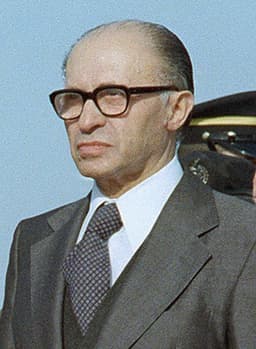
Menachem Begin
Politician · Modern
61.5Total
Basic Information
Born
1956
1913
Died
—
1992
Era
Modern
Modern
Nationality
Palestine
Israel
Occupation
Politician
Politician
Civilization
Middle Eastern
Middle Eastern
Score Comparison
Military (10%)
40.8
21.2
Political (20%)
43.7
70.0
Influence (20%)
58.0
82.0
Legacy (20%)
47.5
55.0
Leadership (15%)
74.0
72.0
Strategy (15%)
43.6
38.6
TOTAL
52.5
61.5
Khaled Mashal — Complete Timeline
1996 AD
Became Hamas Political Bureau ChiefPolitical Action◆ Major
Mashal was elected head of Hamas's political bureau in 1996, based in Jordan. He became the movement's top political leader, overseeing diplomacy, fundraising, and strategy from exile.
HamasPolitical BureauExile
Impact: global
1997 AD
Assassination Attempt by MossadPolitical Action
Mashal survived a Mossad assassination attempt in Amman, Jordan, in September 1997. Israeli agents injected him with poison, but Jordanian authorities captured the agents. In exchange for their release, Israel provided an antidote and released Ahmed Yassin from prison.
Assassination AttemptMossadJordan
Impact: regional
2012 AD
Relocation to QatarPolitical Action◆ Major
Mashal moved Hamas's political bureau to Qatar in 2012, after leaving Syria due to the civil war. From Doha, he continued to lead Hamas's diplomatic efforts, securing financial and political support from Gulf states.
HamasQatarExile
Impact: regional
2017 AD
Stepped Down as Political Bureau ChiefPolitical Action◆ Major
Mashal stepped down as Hamas political bureau chief in 2017, succeeded by Ismail Haniyeh. He remained a senior figure in the movement, focusing on reconciliation efforts with Fatah and maintaining Hamas's international relations.
HamasLeadership ChangeReconciliation
Impact: regional
Menachem Begin — Complete Timeline
1946 AD
Irgun Command of the King David Hotel BombingPolitical Action◆ Major
As commander of the Irgun, Begin ordered the bombing of the King David Hotel in Jerusalem, which housed British Mandate offices. The attack killed 91 people and was condemned internationally, but it intensified pressure on Britain to end the Mandate.
IrgunBritish MandateTerrorism
Impact: regionaldestructive
1978 AD
Signing of the Camp David AccordsPolitical Action
As prime minister, Begin signed the Camp David Accords with Egyptian President Anwar Sadat at the White House, brokered by US President Jimmy Carter. The framework led to the 1979 Egypt-Israel Peace Treaty, the first between Israel and an Arab state.
Peace TreatyEgyptCamp David
Impact: globalconstructive
1981 AD
Operation Opera (Iraqi Nuclear Reactor Strike)War◆ Major
Begin authorized the Israeli Air Force to bomb the Osirak nuclear reactor near Baghdad, Iraq. The strike destroyed the reactor, preventing Iraq from developing nuclear weapons, but was widely condemned internationally as a violation of sovereignty.
Nuclear ProliferationIraqPreemptive Strike
Impact: regional
Expert Analysis
Origins
Khaled Mashal was born in 1956 in Silwad, a village near Ramallah in the West Bank. His family fled to Kuwait after the 1967 Six-Day War. He studied physics at Kuwait University, where he became involved in Islamist politics. His formative experiences were shaped by the Palestinian refugee experience and the rise of political Islam in the 1970s.
Menachem Begin was born in 1913 in Brest-Litovsk, then part of the Russian Empire (now Belarus). He studied law at the University of Warsaw. His early life was marked by Zionism and anti-Semitism; his father was a community leader. Begin became a disciple of Vladimir Jabotinsky, the founder of Revisionist Zionism, and led Betar, the youth movement.
Rise to Power
Mashal rose through the ranks of the Muslim Brotherhood in Kuwait, then co-founded Hamas in 1987. He became the head of its political bureau in 1996, based in Jordan. His rise was due to his organizational skills and ability to navigate exile politics. A key turning point was surviving a Mossad assassination attempt in 1997, which boosted his stature.
Begin became commander of the Irgun, a Jewish paramilitary group, in 1943. He led the revolt against British rule in Palestine, including the 1946 King David Hotel bombing. After Israel's independence, he transformed the Irgun into the Herut party. He spent decades in opposition before becoming prime minister in 1977, leading the Likud party to victory.
Leadership & Governance
Mashal led Hamas's political wing from exile, focusing on diplomacy, fundraising, and maintaining unity. He prioritized armed resistance against Israel while engaging in political maneuvers. His leadership score of 74.0 reflects his ability to keep Hamas cohesive despite internal and external pressures. However, his political score of 43.7 shows limited success in achieving Palestinian statehood.
Begin governed Israel with a strong hand, prioritizing security and territorial expansion. He signed the Camp David Accords with Egypt in 1979, returning the Sinai Peninsula for peace. He authorized the bombing of Iraq's Osirak nuclear reactor in 1981. His leadership score of 72.0 is comparable to Mashal's, but his political score of 70.0 is significantly higher, reflecting his success in advancing Israeli interests.
Triumph & Tragedy
Mashal's greatest triumph was surviving the Mossad assassination attempt and turning it into a propaganda victory. He also oversaw Hamas's rise as a major political force in Gaza after its 2006 election win. His greatest failure was the 2014 Gaza War, which resulted in heavy Palestinian casualties and destruction, and his inability to achieve a lasting ceasefire or statehood.
Begin's greatest triumph was the Camp David Accords, which brought peace with Egypt and won him the Nobel Peace Prize. He also destroyed Iraq's nuclear program. His greatest failure was the 1982 Lebanon War, which led to high casualties and the Sabra and Shatila massacre, tarnishing his legacy. He resigned in 1983, partly due to the war's toll.
Character & Destiny
Mashal is seen as pragmatic and cautious, able to adapt to shifting alliances. His survival of assassination attempts made him resilient. However, his reliance on armed resistance and refusal to recognize Israel limited political gains. His strategy score of 43.6 indicates a lack of long-term strategic success.
Begin was known for his stubbornness and ideological rigidity, but also his willingness to make peace for security. His decision to give up Sinai showed pragmatism. However, his role in the Irgun's bombing and the Lebanon War contributed to a controversial legacy. His military score of 21.2 is low, but his influence score of 82.0 reflects his impact on Israeli politics.
Legacy
Mashal's legacy is tied to Hamas's evolution as both a resistance movement and a political entity. He helped sustain the Palestinian cause but did not achieve statehood. His influence score of 58.0 shows moderate impact. He remains a symbol of Palestinian defiance.
Begin's legacy is profound: he transformed Israel's political landscape, made peace with Egypt, and expanded settlements. His influence score of 82.0 is high. He is remembered as a founding father of Likud and a key figure in Israeli history.
Conclusion
Menachem Begin had a greater impact than Khaled Mashal. Begin scored 61.5 total versus Mashal's 52.5. Begin's political achievements, including the Camp David Accords and the Osirak strike, reshaped the Middle East. Mashal, while resilient, failed to secure Palestinian statehood and his armed strategy brought destruction. Begin's legacy of peace and security outweighs Mashal's resistance narrative.
Rankings
🥇
Menachem BeginLeader
Mil: 21.2Pol: 70.0Inf: 82.0
61.5
🥈
Khaled Mashal
Mil: 40.8Pol: 43.7Inf: 58.0
52.5
+9.0 behind
How This Comparison Works
Algorithm
Each figure is scored on 6 dimensions (0—100 scale) based on structured historical data: Military (10%), Political (20%), Influence (20%), Legacy (20%), Leadership (15%), Strategy (15%). The weighted total produces the final ranking.
Data Sources
Scores are computed from structured sub-indicators in the database. Scale factors adjust for era (Ancient ×0.85, Modern ×1.0) and civilization size (Eastern ×1.05, Other ×0.80) to account for differences in population and military scale.
Maximum 3 Figures
Comparisons are limited to 2—3 figures to ensure readability and statistical meaningfulness.
Error Margins
±5 points per dimension — Sub-scores are derived from historical records with inherent uncertainty. Two figures within 5 points on a dimension should be considered roughly equivalent in that area.
Total Score Accuracy
±3 points overall — The weighted combination of 6 dimensions produces a total score with approximately ±3 points of uncertainty. Differences of less than 3 points are not statistically significant— the figures are effectively tied.
Known Limitations
- Historical records are incomplete and uneven across civilizations
- Figures from oral-tradition societies may be underrepresented
- Occupation labels can misclassify multi-role figures
- Scores measure capability and impact, not moral character
- Quantitative scoring is a comparison tool, not absolute truth
Capability Radar
Military (10%) — Battles & Warfare
Battles
21
20
Win Rate
27
25
Expansion
25
15
Political (20%) — Governance & Reform
Reform
30
65
Diplomacy
55
85
Economy
20
55
Influence (20%) — Cultural & Global Reach
Cultural
40
60
Global
50
70
Legacy (20%) — Historical Impact
Historical
45
75
Longevity
40
65
Leadership (15%) — Power & Stability
Tenure
60
70
Stability
25
50
Strategy (15%) — Tactics & Innovation
Strategy
29
35
Tactics
32
30
Reform
36
40
Similar Comparisons
Comments & Discussion
No comments yet. Be the first to share your thoughts!