Loading...
Leonardo da Vinci vs Qin Shi Huang
Qin Shi Huang leads by 23.1 pts · 2 figures compared
…

Leonardo da Vinci
Artist · Medieval
62.1Total
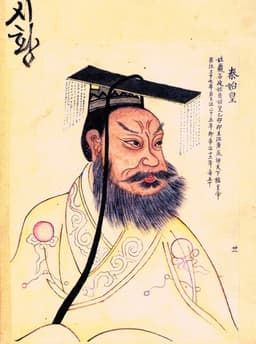
Qin Shi Huang
Emperor · Ancient
85.2Total
Basic Information
Born
1452
-259
Died
1519
-210
Era
Medieval
Ancient
Nationality
Italy
China
Occupation
Artist
Emperor
Civilization
Western
Eastern
Score Comparison
Military (10%)
34.9
80.0
Political (20%)
20.0
90.0
Influence (20%)
80.0
85.0
Legacy (20%)
90.0
90.0
Leadership (15%)
62.6
78.0
Strategy (15%)
37.0
82.0
TOTAL
62.1
85.2
Leonardo da Vinci — Complete Timeline
1482 AD
Commission for the Sforza HorseCultural
Leonardo was commissioned by Ludovico Sforza to create a colossal bronze equestrian statue, the Sforza Horse. He spent years on designs and a full-scale clay model, but the bronze was used for cannons, and the statue was never cast. The clay model was destroyed in 1499.
SculptureCommissionUnfinished
1488 AD
Design of Flying MachinesInvention
Leonardo designed several flying machines, including an ornithopter with flapping wings inspired by birds. He studied aerodynamics and bird flight, creating detailed sketches. While none were built or flown, his designs demonstrated advanced engineering concepts.
EngineeringFlightDesign
Impact: globalprogressive
1489 AD
Anatomical StudiesInvention◆ Major
Leonardo da Vinci conducted detailed anatomical dissections of human corpses, producing over 200 drawings of muscles, bones, and organs. His studies of the heart, brain, and fetus were centuries ahead of their time, though not published during his lifetime.
ScienceAnatomyDrawing
Impact: globalprogressive
1495 AD
Painting of The Last SupperCultural◆ Major
Leonardo painted The Last Supper on the wall of the refectory of the Convent of Santa Maria delle Grazie in Milan. The mural depicts the moment Jesus announces his betrayal. Its innovative composition and emotional depth made it a seminal work of Renaissance art.
ArtMuralReligious
Impact: globalconstructive
1503 AD
Painting of the Mona LisaCultural
Leonardo da Vinci began painting the Mona Lisa, a portrait of Lisa Gherardini. He used sfumato technique to create a subtle, enigmatic smile. The painting became the most famous artwork in the world, renowned for its composition and technical mastery.
ArtPortraitRenaissance
Impact: globalconstructive
Qin Shi Huang — Complete Timeline
246 BC
Construction of the Mausoleum and Terracotta ArmyOther◆ Major
Qin Shi Huang commissioned a vast mausoleum complex near Xi'an, guarded by thousands of life-sized terracotta soldiers, horses, and chariots. The project employed hundreds of thousands of workers and reflected his obsession with immortality and imperial power.
Impact: global
230 BC
Conquest of the Six Warring StatesWar
From 230 to 221 BCE, Ying Zheng led the Qin state in a series of campaigns that conquered the Han, Zhao, Wei, Chu, Yan, and Qi states. This unified China under a single ruler for the first time, ending the Warring States period.
Impact: global
221 BC
Standardization of Writing, Currency, and MeasurementsReform◆ Major
Qin Shi Huang ordered the standardization of Chinese script, currency, and weights and measures across the unified empire. This facilitated administration, trade, and cultural integration, laying a foundation for future dynasties.
Impact: globalconstructive
Proclamation of the Qin DynastyPolitical Action
After conquering the last independent state, Ying Zheng declared himself Shi Huangdi (First Emperor), founding the Qin Dynasty. He adopted a new title to signify his supreme authority and initiated centralized imperial rule.
Impact: global
214 BC
Initiation of the Great Wall ConstructionOther◆ Major
Qin Shi Huang ordered the connection and extension of existing northern fortifications to create a unified defensive wall against nomadic Xiongnu raids. This project involved massive conscripted labor and became the precursor to the later Great Wall.
Impact: regional
213 BC
Burning of Books and Burying of ScholarsPolitical Action◆ Major
On the advice of Li Si, Qin Shi Huang ordered the burning of historical records and philosophical texts not aligned with Legalist doctrine. He also had 460 Confucian scholars buried alive to suppress dissent and consolidate ideological control.
Impact: nationaldestructive
Expert Analysis
leonardo-da-vinci-vs-qin-shi-huang
# The Emperor and the Artist: Two Visions of Immortality
In the winter of 1519, an old man lay dying in a French château, his hand resting on a notebook filled with anatomical sketches of the human heart. Across the world, six centuries earlier, another man had ordered the construction of a subterranean army of seven thousand terracotta soldiers, each face unique, each weapon real. Both men sought to cheat death. One built an empire of clay and law. The other painted a smile that would outlast every dynasty. What drove these two figures—one a conqueror, one a creator—to such different paths, and why does one haunt our nightmares while the other graces our museums?
Origins
Qin Shi Huang was born in 259 BC, a prince of the Qin state during the chaotic Warring States period. His childhood was not one of ease but of survival: his father was a hostage in a rival state, and young Ying Zheng grew up surrounded by intrigue, assassination plots, and the brutal logic of constant warfare. The China of his youth was a patchwork of seven kingdoms locked in a centuries-long death struggle. He learned early that power was the only currency that mattered, and that trust was a luxury for the weak.
Leonardo da Vinci, born in 1452 in the Tuscan hill town of Vinci, was the illegitimate son of a notary and a peasant woman. Denied a formal education in Latin and the classics, he was apprenticed to the Florentine painter Andrea del Verrocchio. Renaissance Italy was itself a patchwork of warring city-states, but its wars were fought with mercenaries and its culture fueled by commerce and patronage. Leonardo grew up not in a palace but a workshop, learning to mix pigments, dissect cadavers in secret, and observe the flight of birds with a patience that bordered on obsession.
Rise to Power
Qin Shi Huang ascended the throne of Qin at thirteen, but for eight years he was a figurehead while his mother's lover, Lü Buwei, ruled as regent. In 238 BC, at twenty-one, the young king staged a coup, executing Lü Buwei and banishing his mother. He then turned his gaze outward. From 230 to 221 BC, he unleashed a series of lightning campaigns that swallowed the six rival states one by one—Han, Zhao, Wei, Chu, Yan, and finally Qi. Each conquest was methodical, brutal, and final. When the last king surrendered, Ying Zheng renamed himself *Shi Huangdi*—the First Emperor—and declared a new age.
Leonardo's rise was quieter. He never commanded armies or founded dynasties. Instead, he wrote letters. In 1482, he composed a famous job application to Ludovico Sforza, the Duke of Milan, listing his skills: he could build portable bridges, design cannons, construct armored vehicles, and—almost as an afterthought—paint. He got the job. For seventeen years, Leonardo worked for Sforza, designing everything from festival decorations to a colossal bronze horse that was never cast. His power was not political but cultural; he shaped how people saw the world.
Leadership & Governance
The First Emperor governed through total control. He standardized writing, currency, and measurements across his empire, forcing a unity that had never existed. He built roads, dug canals, and linked the northern fortifications into what would become the Great Wall. But his methods were draconian. In 213 BC, on the advice of his chancellor Li Si, he ordered the burning of all historical records and philosophical texts not aligned with Legalist doctrine—and the burying alive of scholars who protested. His reign was an empire of order purchased at the price of freedom.
Leonardo governed nothing but his own workshop. His "leadership" was the management of assistants and the negotiation of commissions. Yet his governance of knowledge was revolutionary. He filled thousands of pages with anatomical studies that corrected ancient errors, designs for flying machines that would not be built for four centuries, and notes on hydraulics, optics, and geology. He was a one-man intellectual empire, but he finished few projects. The *Mona Lisa* took years; the *Last Supper* began flaking from the wall within decades. His genius was in the asking, not the finishing.
Triumph & Tragedy
The First Emperor's greatest triumph was the unification of China—a feat that had eluded every predecessor. His tragedy was the fragility of his achievement. He died in 210 BC during an eastern inspection tour, and his successors were so incompetent that the Qin Dynasty collapsed within three years of his death. His mausoleum, guarded by the Terracotta Army, was meant to protect him for eternity; instead, it became a monument to the brevity of power.
Leonardo's triumph was the *Mona Lisa*, begun in 1503, a portrait whose subject's enigmatic smile has become the most recognized image in Western art. His tragedy was a different kind of incompletion: the Sforza Horse never cast, the flying machines never flown, the *Adoration of the Magi* left unfinished. He died in 1519 in the arms of King Francis I of France, having spent his final years as a court curiosity, his notebooks scattered, his great projects unrealized.
Character & Destiny
Qin Shi Huang was paranoid, ruthless, and obsessed with immortality. He sent expeditions to find the elixir of life, and when his alchemists failed him, he had them executed. His destiny was to create a template for imperial China that would last two millennia, but his personality ensured that his own dynasty would not survive him. He could build an empire but not a family.
Leonardo was curious, restless, and indifferent to fame. He wrote his notes in mirror script, as if to hide them even from himself. His destiny was to embody the Renaissance ideal of boundless human potential, but his personality meant he left behind a trail of unfinished masterpieces and scattered insights. He could imagine everything but finish nothing.
Legacy
The First Emperor's legacy is the Chinese state itself—unified, standardized, and administratively centralized. The Great Wall, the writing system, the very concept of a single China all trace back to him. He is remembered as both a founding father and a tyrant, a figure of awe and horror. The Terracotta Army, unearthed in 1974, has made him a global icon of ancient power.
Leonardo's legacy is the opposite: not a system but a symbol. His *Mona Lisa* hangs behind bulletproof glass in the Louvre, drawing millions. His notebooks are studied as the blueprint of a mind that saw connections no one else saw. He is remembered not for what he built but for what he imagined—the possibility of a human being who could be artist, scientist, engineer, and philosopher all at once.
Conclusion
One man unified a civilization through iron and law. The other dissolved the boundaries between art and science through ink and observation. Qin Shi Huang built a tomb that would survive two thousand years; Leonardo da Vinci painted a smile that would never fade. The emperor wanted to be remembered as a god; the artist wanted to understand what it meant to be human. In the end, both achieved a kind of immortality—but of very different kinds. The First Emperor's empire crumbled; the *Mona Lisa* still smiles. Perhaps the lesson is that power, no matter how absolute, is always temporary, while a question, beautifully asked, can last forever.
Rankings
🥇
Qin Shi HuangLeader
Mil: 80.0Pol: 90.0Inf: 85.0
85.2
🥈
Leonardo da Vinci
Mil: 34.9Pol: 20.0Inf: 80.0
62.1
+23.1 behind
How This Comparison Works
Algorithm
Each figure is scored on 6 dimensions (0—100 scale) based on structured historical data: Military (10%), Political (20%), Influence (20%), Legacy (20%), Leadership (15%), Strategy (15%). The weighted total produces the final ranking.
Data Sources
Scores are computed from structured sub-indicators in the database. Scale factors adjust for era (Ancient ×0.85, Modern ×1.0) and civilization size (Eastern ×1.05, Other ×0.80) to account for differences in population and military scale.
Maximum 3 Figures
Comparisons are limited to 2—3 figures to ensure readability and statistical meaningfulness.
Error Margins
±5 points per dimension — Sub-scores are derived from historical records with inherent uncertainty. Two figures within 5 points on a dimension should be considered roughly equivalent in that area.
Total Score Accuracy
±3 points overall — The weighted combination of 6 dimensions produces a total score with approximately ±3 points of uncertainty. Differences of less than 3 points are not statistically significant— the figures are effectively tied.
Known Limitations
- Historical records are incomplete and uneven across civilizations
- Figures from oral-tradition societies may be underrepresented
- Occupation labels can misclassify multi-role figures
- Scores measure capability and impact, not moral character
- Quantitative scoring is a comparison tool, not absolute truth
Capability Radar
Military (10%) — Battles & Warfare
Battles
0
85
Win Rate
0
90
Expansion
0
90
Political (20%) — Governance & Reform
Reform
10
95
Diplomacy
20
75
Economy
10
90
Influence (20%) — Cultural & Global Reach
Cultural
95
95
Global
95
85
Legacy (20%) — Historical Impact
Historical
95
95
Longevity
95
95
Leadership (15%) — Power & Stability
Tenure
0
70
Stability
0
65
Strategy (15%) — Tactics & Innovation
Strategy
20
85
Tactics
25
80
Reform
15
95
Similar Comparisons
Comments & Discussion
SkepticSage6/17/2026
数据打脸:秦始皇修长城死了百万民工,而达芬奇少画了《蒙娜丽莎》就饿不死。工程死亡率和艺术完成率对比,一算便知谁更“致命”。吹皇帝丰功伟绩时不提骨山血海?少来这套。画家或许自恋,但独裁者是统计数据的噩梦。
QinSlayer6/17/2026
Terracotta beats *Mona Lisa*. Qin Shi Huang unified writing, currency, and 7 warring states into China—that's nation-building impact. Leo sketched flying machines that never flew. Art moves hearts, but laws move history. Qin’s legal codes still shape East Asian governance. Leo’s heirs? Instagram influencers. Sovereignty wins. Deal with it.
MonaMarble6/17/2026
Classicist here. Leonardo anatomized 30+ cadavers, mapping the heart's valves centuries before Harvey. Qin ordered scholars buried alive for dissent. One pursued knowledge at personal risk; the other buried it in dirt. That’s not a comparison—it’s a civilization-choice between inquiry and control. Give me Da Vinci’s notebooks over any emperor's decree.
武侯嘲讽6/17/2026
说大帝统一六国?别逗了。他焚书坑儒是文明大倒退,而达芬奇用笔记传承千年智慧。比功德?一个杀人如麻,一个画作温柔。现在孩子们去博物馆看那个微笑,谁去兵马俑坑看恐怖片?历史不看谁凶,看谁留下来的是宝。
DustEternal6/17/2026
They both craved immortality, but Qin’s was totalitarian—bury an army, build a wall, crush dissent. Leonardo’s was generous—share curiosity, leave puzzles for future minds. One ruled by fear; the other by wonder. I know which world I’d rather live in. Qin’s legacy is a mausoleum. Leo’s is a museum. Give me the sketchbook every time.