Loading...
King Jeongjong of Joseon vs Napoleon Bonaparte
Napoleon Bonaparte leads by 34.5 pts · 2 figures compared
…
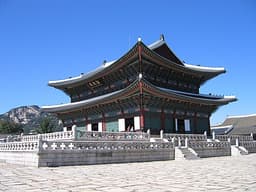
King Jeongjong of Joseon
Emperor · Medieval
36.4Total

Napoleon Bonaparte
General · Modern
70.9Total
Basic Information
Born
1357
1769
Died
1419
1821
Era
Medieval
Modern
Nationality
Korea
France
Occupation
Emperor
General
Civilization
Eastern
Western
Score Comparison
Military (10%)
20.0
94.0
Political (20%)
26.4
72.0
Influence (20%)
46.3
40.0
Legacy (20%)
37.5
80.0
Leadership (15%)
33.6
78.0
Strategy (15%)
45.0
90.0
TOTAL
36.4
70.9
King Jeongjong of Joseon — Complete Timeline
1398 AD
Participated in Prince's RebellionWar◆ Major
King Jeongjong (then Prince Yi Bang-gwa) supported his father Yi Seong-gye in suppressing the First Prince's Rebellion, a conflict among Yi's sons over succession. The rebellion resulted in the deaths of several princes and weakened the early Joseon court.
RebellionSuccession ConflictJoseon
Impact: nationaldestructive
Ascended Throne as Second Joseon KingPolitical Action◆ Major
King Jeongjong became the second king of Joseon after his father Yi Seong-gye abdicated following the First Prince's Rebellion. His reign was marked by instability and ongoing power struggles among the royal princes.
SuccessionJoseon DynastyAbdication
Impact: national
1399 AD
Moved Capital to GaegyeongPolitical Action
King Jeongjong moved the Joseon capital from Hanyang (Seoul) back to Gaegyeong (Kaesong), the former Goryeo capital, in an attempt to reduce factional tensions. This move was unpopular and was reversed by his successor.
Capital MovePolitical StrategyJoseon
Impact: national
1400 AD
Abdicated in Favor of Yi Bang-wonPolitical Action◆ Major
King Jeongjong abdicated after only two years on the throne, following the Second Prince's Rebellion. He ceded power to his younger brother Yi Bang-won (later King Taejong), who had emerged victorious in the succession struggle.
AbdicationSuccessionPower Struggle
Impact: national
Napoleon Bonaparte — Complete Timeline
1799 AD
Coup of 18 BrumaireOther◆ Major
Napoleon Bonaparte, with support from his brother Lucien and key political figures, overthrew the Directory in a bloodless coup. He established the Consulate with himself as First Consul, effectively becoming the ruler of France. This event ended the French Revolution's most unstable period.
French RevolutionCoupRise to Power
Impact: regional
1804 AD
Promulgation of the Napoleonic CodeOther◆ Major
Napoleon enacted the Civil Code of the French, known as the Napoleonic Code, a comprehensive set of laws that replaced the fragmented feudal legal systems. The code established legal equality, protected property rights, and secularized law. It became the basis for legal systems in many European and world countries.
Legal ReformNapoleonic CodeCivil Law
Impact: globalconstructive
1805 AD
Battle of AusterlitzWar◆ Major
Napoleon's Grande Arm
Napoleonic WarsBattleDecisive Victory
Impact: global
1812 AD
Invasion of RussiaWar◆ Major
Napoleon led the Grande Arm
Napoleonic WarsInvasionDisaster
Impact: globaldestructive
1815 AD
Battle of WaterlooWar◆ Major
Napoleon's French army was defeated by the combined forces of the Duke of Wellington's Anglo-Allied army and Gebhard Leberecht von Bl
Napoleonic WarsBattleFinal Defeat
Impact: globaldestructive
Expert Analysis
king-jeongjong-of-joseon-vs-napoleon-bonaparte
# The Unlikely Pair: Napoleon and King Jeongjong — Ambition, Abdication, and the Weight of Destiny
On a June morning in 1815, Napoleon Bonaparte watched the muddy fields of Waterloo turn into a graveyard for his empire. His Grande Armée, once the terror of Europe, was shattered. Across the centuries and half a world away, in 1400, King Jeongjong of Joseon sat on a throne he had barely warmed, surrounded by the blood of his own brothers. He chose to walk away. Two rulers, two outcomes, two utterly different definitions of power. What drives a man to conquer continents, and what drives another to surrender a crown? The answer lies not in the accidents of history, but in the marrow of their characters and the worlds that forged them.
Origins
Napoleon was born in 1769 on the rugged island of Corsica, a place that had only recently become French. His family was minor nobility, but they were poor, proud, and resentful of French domination. Young Napoleon read voraciously—Caesar, Alexander, the military treatises of the Enlightenment. He was an outsider in French society, mocked for his accent and his height, but he burned with a cold, calculating ambition. The French Revolution shattered the old order, and for a man of talent without pedigree, it was a door flung open.
King Jeongjong, born Yi Bang-gwa in 1357, came from a different universe. His father, Yi Seong-gye, was a brilliant general who would overthrow the Goryeo dynasty and found Joseon. Jeongjong grew up in a world of Confucian hierarchy, where filial piety and loyalty to the clan were the highest virtues. But he also grew up in the shadow of his father’s ambition and his younger brother Yi Bang-won’s ruthless cunning. The Joseon court was a nest of vipers, and Jeongjong was the eldest son—but not the sharpest sword.
Rise to Power
Napoleon’s rise was a rocket. In 1796, at just twenty-six, he was given command of the French army in Italy. He transformed a starving, demoralized force into a machine that shattered the Austrian Empire. His victory at the Battle of Arcola in November 1796 made him a national hero. By 1799, he staged a coup and made himself First Consul. In 1804, he crowned himself Emperor in Notre-Dame, snatching the crown from the Pope’s hands—a gesture that said everything about his belief in his own destiny.
Jeongjong’s rise was an inheritance, not a conquest. In 1398, his father Yi Seong-gye abdicated after the bloody First Prince’s Rebellion, a conflict between his sons over succession. Jeongjong was the eldest surviving son, so the throne fell to him. But he did not seize it; he received it like a fragile vase everyone expected him to drop. He became the second king of Joseon not because he wanted power, but because he was the least dangerous choice in a family of killers.
Leadership & Governance
Napoleon governed with the energy of a hurricane. He centralized the French state, created the Bank of France, and most famously, codified the Napoleonic Code—a legal system that enshrined equality before the law, property rights, and secular authority. It was a masterpiece of Enlightenment rationalism, and it spread across Europe wherever his armies marched. On the battlefield, he was a genius of maneuver, speed, and psychological warfare. His victory at Austerlitz in December 1805 is still studied as a perfect battle.
Jeongjong ruled for barely two years, and his governance was defined by retreat. In 1399, he moved the capital from Hanyang (modern Seoul) back to Gaegyeong (Kaesong), the old Goryeo capital—a symbolic step backward. He tried to balance the factions in his court, but his real power evaporated when his brother Yi Bang-won began consolidating military control. Jeongjong was not a reformer or a conqueror; he was a caretaker who knew he was only keeping the seat warm.
Triumph & Tragedy
Napoleon’s greatest triumph was not a single battle but the sheer scale of his ambition. By 1810, he controlled most of Europe, from Spain to Poland. He married an Austrian princess, Marie Louise, and fathered a son. The tragedy came from the same ambition. The invasion of Russia in 1812 was a catastrophe: 600,000 men marched in; fewer than 100,000 returned. He was exiled to Elba in 1814, escaped, and then met his final defeat at Waterloo in June 1815. He died in 1821 on the remote island of Saint Helena, a prisoner of the British.
Jeongjong’s triumph was survival. In 1400, the Second Prince’s Rebellion erupted, and his brother Yi Bang-won crushed his rivals. Jeongjong saw the blood on the palace floors and understood the arithmetic of power. He abdicated in favor of Yi Bang-won, who became King Taejong—one of Joseon’s most effective and ruthless rulers. Jeongjong lived another nineteen years in quiet retirement, dying in 1419. His tragedy was not defeat but irrelevance. He was a king who never truly ruled.
Character & Destiny
Napoleon was a man of iron will and boundless self-belief. “Impossible is a word to be found only in the dictionary of fools,” he once said. He trusted no one fully and demanded absolute loyalty. His character was his destiny: he could not stop, could not compromise, could not share the stage. That drive built an empire and then destroyed it.
Jeongjong was a man of caution and resignation. He saw the world as it was, not as he wished it to be. He knew his brother was more capable, more ruthless, and more ambitious. Rather than fight a war he would lose, he chose peace—for himself and for the kingdom. His character was also his destiny: he abdicated because he understood that power is not always worth the price.
Legacy
Napoleon’s legacy is written across the modern world. The Napoleonic Code influenced legal systems from Europe to Latin America. He redefined warfare, nationalism, and the relationship between state and citizen. He is remembered as both a liberator and a tyrant, a genius and a cautionary tale.
King Jeongjong is a footnote in Korean history. His reign was so brief and so passive that most Koreans barely remember him. His brother Taejong and his nephew Sejong the Great overshadow him completely. But his legacy is not nothing: by stepping aside, he prevented a civil war that could have destroyed the young Joseon dynasty. He chose the kingdom over his own ambition.
Conclusion
We remember Napoleon because he reached for everything and lost it all. We forget Jeongjong because he reached for nothing and kept his life. But perhaps the quieter story holds a different kind of wisdom. Napoleon’s drive changed the world; Jeongjong’s restraint saved one. In the end, both men faced the same question: What is power worth? Napoleon answered with a continent of graves. Jeongjong answered with an empty throne. History praises the conqueror, but it is the peacemaker who sleeps without ghosts.
Rankings
🥇
Napoleon BonaparteLeader
Mil: 94.0Pol: 72.0Inf: 40.0
70.9
🥈
King Jeongjong of Joseon
Mil: 20.0Pol: 26.4Inf: 46.3
36.4
+34.5 behind
How This Comparison Works
Algorithm
Each figure is scored on 6 dimensions (0—100 scale) based on structured historical data: Military (10%), Political (20%), Influence (20%), Legacy (20%), Leadership (15%), Strategy (15%). The weighted total produces the final ranking.
Data Sources
Scores are computed from structured sub-indicators in the database. Scale factors adjust for era (Ancient ×0.85, Modern ×1.0) and civilization size (Eastern ×1.05, Other ×0.80) to account for differences in population and military scale.
Maximum 3 Figures
Comparisons are limited to 2—3 figures to ensure readability and statistical meaningfulness.
Error Margins
±5 points per dimension — Sub-scores are derived from historical records with inherent uncertainty. Two figures within 5 points on a dimension should be considered roughly equivalent in that area.
Total Score Accuracy
±3 points overall — The weighted combination of 6 dimensions produces a total score with approximately ±3 points of uncertainty. Differences of less than 3 points are not statistically significant— the figures are effectively tied.
Known Limitations
- Historical records are incomplete and uneven across civilizations
- Figures from oral-tradition societies may be underrepresented
- Occupation labels can misclassify multi-role figures
- Scores measure capability and impact, not moral character
- Quantitative scoring is a comparison tool, not absolute truth
Capability Radar
Military (10%) — Battles & Warfare
Battles
5
95
Win Rate
5
90
Expansion
5
95
Political (20%) — Governance & Reform
Reform
15
95
Diplomacy
20
80
Economy
15
85
Influence (20%) — Cultural & Global Reach
Cultural
10
85
Global
5
90
Legacy (20%) — Historical Impact
Historical
15
95
Longevity
10
90
Leadership (15%) — Power & Stability
Tenure
20
85
Stability
10
70
Strategy (15%) — Tactics & Innovation
Strategy
5
95
Tactics
5
98
Reform
5
92
Similar Comparisons
Comments & Discussion
史海沉钩6/17/2026
拿江山的重量和兄弟的血比?拿破仑的对手是欧洲联军,郑宗的对手是亲弟弟李芳远。郑宗选择退位是清醒的务实,不是懦弱——他保全了百姓免于内战,功德无量。拿破仑带着法国人往火坑里跳,滑铁卢死三万,莫斯科冻死几十万。谁更“在乎人命”?历史不是只看赢家大小。
MetalOrders6/17/2026
As a military historian, this is apples and oranges. Napoleon was an operational genius who invented corps organization and leveraged mass conscription. Jeongjong's "military accomplishment" was essentially fading into obscurity while his brother consolidated power. One shaped modern European warfare; the other was a placeholder king who got out of the way. Scale matters. Give me Napoleon any day for actual impact on how wars are fought.
墨客春秋6/17/2026
两个都是封建秩序的产物,但郑宗的选择更显东方智慧。他读过兄弟相残的前朝旧史,知道权力游戏的血腥结局。退位不是认输,是看清了“无为之治”的哲学。拿破仑非要赢到最后一刻,结果圣赫勒拿岛孤独终老。郑宗活到50岁善终,百姓免遭李朝版“百日王朝”的折腾。谁的人生更精算?历史从不只奖赏战场声音最大的人。
EagleEyeStats6/17/2026
Let's look at cold data. Napoleon fought over 60 battles, lost only 7–8, conquered most of Europe. Jeongjong reigned 2 years, 3 months, and left no major laws, reforms, or monuments. Napoleon's Civil Code is still the basis for many legal systems. Jeongjong's legacy is... being the brother who stepped aside. If we rank rulers by tangible output, this isn't even a debate. Napoleon is top-tier world-historical; Jeongjong is a footnote.
Historian5966/17/2026
Comparing these two is like comparing a supernova to a candle. Napoleon rewrote the map of Europe, codified laws, and shaped modern warfare. Jeongjong abdicated after barely two years because his brother was too scary. The sheer scale of ambition and impact is incomparable. Give me one single "Peace of Westphalia" moment from Joseon that still shapes international law today. Exactly.拿破仑 wins on every metric of historical significance.