Loading...
King Seongjong vs Wenceslaus I of Bohemia
King Seongjong leads by 3.9 pts · 2 figures compared
…

King Seongjong
Emperor · Medieval
60.6Total
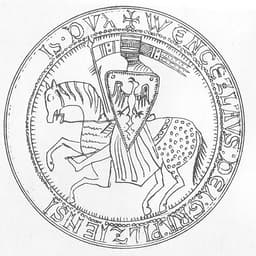
Wenceslaus I of Bohemia
Emperor · Medieval
56.7Total
Basic Information
Born
960
907
Died
997
935
Era
Medieval
Medieval
Nationality
Korea
Bohemia
Occupation
Emperor
Emperor
Civilization
Eastern
Western
Score Comparison
Military (10%)
50.0
50.0
Political (20%)
70.0
40.8
Influence (20%)
60.0
68.0
Legacy (20%)
58.0
65.0
Leadership (15%)
80.0
62.2
Strategy (15%)
35.7
30.3
TOTAL
60.6
56.7
King Seongjong — Complete Timeline
982 AD
Establishment of Confucian State StructureReform◆ Major
King Seongjong implemented a comprehensive Confucian administrative system, reorganizing the central government into three departments and six ministries. He adopted Chinese-style bureaucratic institutions and promoted Confucian scholarship as the state ideology.
Confucian ReformBureaucracyState Building
Impact: nationalconstructive
986 AD
Promulgation of the Gyeongje YukjeonReform◆ Major
Seongjong issued the Gyeongje Yukjeon, a comprehensive legal code that systematized administrative, penal, and land laws. This code provided a legal foundation for the Confucian state and remained influential for centuries.
Legal CodeConfucian ReformGovernance
Impact: nationalconstructive
992 AD
Establishment of Local Government SchoolsReform
Seongjong ordered the establishment of Confucian schools in each province and county. These hyanggyo schools provided education in Confucian classics and trained candidates for the civil service examinations, spreading Confucian values throughout the kingdom.
EducationConfucian ReformLocal Administration
Impact: nationalconstructive
993 AD
Military Campaign Against Jurchen TribesWar
Seongjong launched a military campaign against Jurchen tribes in the northeast, expanding Goryeo's territory. The campaign secured the border region and established Goryeo's authority over the area, though it faced logistical challenges.
Territorial ExpansionBorder SecurityJurchen
Impact: regional
Wenceslaus I of Bohemia — Complete Timeline
921 AD
Conversion to ChristianityCultural◆ Major
Wenceslaus I was raised and educated as a Christian by his grandmother, Saint Ludmila. He promoted Christianity in Bohemia, building churches and supporting missionaries, which strengthened the Christian identity of the Czech state.
ChristianizationReligious ReformCultural Change
Impact: nationalconstructive
929 AD
Submission to Henry the FowlerPolitical Action◆ Major
Wenceslaus I accepted the overlordship of King Henry I of East Francia to avoid invasion. This act secured peace for Bohemia but made it a tributary state of the Holy Roman Empire, a status that lasted for centuries.
TributeHoly Roman EmpireDiplomacy
Impact: regional
935 AD
Assassination of Wenceslaus IPolitical Action
Wenceslaus I was murdered by his brother Boleslaus I and other conspirators at the gates of a church in Star
AssassinationMartyrdomDynastic Conflict
Impact: nationaltragic
Expert Analysis
Origins
King Seongjong of Goryeo (born 961, reigned 981-997) was the son of King Gwangjong and Queen Daemok. He grew up in a period of centralization following his father's reforms, receiving a thorough Confucian education that shaped his vision for a bureaucratic state. In contrast, Wenceslaus I of Bohemia (born c. 907, reigned 921-935) was raised by his grandmother Saint Ludmila, who instilled Christian values. His father Vratislaus I died when Wenceslaus was young, leaving him under the regency of his mother Drahomíra, a pagan. This background set the stage for a religious and political struggle.
Rise to Power
Seongjong ascended the throne at age 20 after his father Gwangjong's death. He quickly consolidated power by sidelining powerful aristocratic families and promoting scholars from the Confucian examination system. In 982, he established the Three Departments and Six Ministries, centralizing governance. Wenceslaus became duke at 14 after his father's death, but his mother Drahomíra seized regency, persecuting Christians. With support from nobles loyal to his grandmother, Wenceslaus assumed control around 924, exiling his mother and promoting Christianity. He submitted to King Henry I of East Francia in 929 to avoid invasion, securing peace but ceding tributary status.
Leadership & Governance
Seongjong's leadership scored 80.0, reflecting his systematic reform. He promulgated the Gyeongje Yukjeon (Economic and Administrative Code) in 983, a comprehensive legal code that standardized land taxes, penal law, and administrative procedures. He established hyanggyo (local Confucian schools) in every province, promoting education based on Confucian classics. His political score of 70.0 reflects his ability to balance aristocratic power with central authority. Wenceslaus, with a leadership score of 62.2, governed more as a pious ruler. He built churches, such as St. Vitus Rotunda in Prague, and supported the spread of Christianity. His submission to Henry the Fowler was a pragmatic act to protect Bohemia, but it weakened his political autonomy. Seongjong's governance was more structural and long-lasting, while Wenceslaus focused on religious consolidation.
Triumph & Tragedy
Seongjong's greatest triumph was establishing a Confucian state structure that lasted centuries. His legal code and school system laid the foundation for Goryeo's stability. However, his military campaign against Jurchen tribes (c. 993) was limited in success, scoring only 50.0 in military. The campaign expanded territory but strained resources. Wenceslaus's triumph was his successful conversion of Bohemia to Christianity, which became central to Czech identity. His tragedy was his assassination in 935 by his brother Boleslaus I and other conspirators at the gates of a church. This murder made him a martyr and later a saint, but it cut short his rule and led to a period of instability under Boleslaus, who initially persecuted Christians.
Character & Destiny
Seongjong was a methodical reformer, driven by Confucian ideals of order and meritocracy. His decision to implement a centralized bureaucracy reduced aristocratic power but created a stable administrative system. His character shaped a destiny of peaceful transformation rather than conquest. Wenceslaus was devout and diplomatic, choosing submission over war. His piety led to his death, as his brother saw him as weak. Historians assess Wenceslaus as a saintly figure whose martyrdom elevated his influence beyond his reign, while Seongjong is remembered as a wise administrator.
Legacy
Seongjong's legacy is profound: his Confucian state structure influenced Goryeo and later Joseon dynasties. The Gyeongje Yukjeon served as a model for legal codes, and the hyanggyo system promoted literacy. His total score of 60.6 reflects enduring impact. Wenceslaus, with a legacy score of 65.0, became the patron saint of the Czech Republic, celebrated in the Christmas carol "Good King Wenceslas." His Christianization of Bohemia had lasting cultural and religious influence. However, his political legacy was overshadowed by his brother Boleslaus I, who expanded Bohemian power.
Conclusion
While Wenceslaus I achieved sainthood and cultural immortality, King Seongjong's systematic reforms had a deeper structural impact on Korean governance. Seongjong's political score of 70.0 and leadership of 80.0 surpass Wenceslaus's 40.8 and 62.2. Seongjong's legal and educational institutions endured for centuries, shaping a civilization, whereas Wenceslaus's influence is more symbolic. Therefore, King Seongjong had greater impact as a ruler who transformed the state apparatus, despite Wenceslaus's spiritual legacy.
Rankings
🥇
King SeongjongLeader
Mil: 50.0Pol: 70.0Inf: 60.0
60.6
🥈
Wenceslaus I of Bohemia
Mil: 50.0Pol: 40.8Inf: 68.0
56.7
+3.9 behind
How This Comparison Works
Algorithm
Each figure is scored on 6 dimensions (0—100 scale) based on structured historical data: Military (10%), Political (20%), Influence (20%), Legacy (20%), Leadership (15%), Strategy (15%). The weighted total produces the final ranking.
Data Sources
Scores are computed from structured sub-indicators in the database. Scale factors adjust for era (Ancient ×0.85, Modern ×1.0) and civilization size (Eastern ×1.05, Other ×0.80) to account for differences in population and military scale.
Maximum 3 Figures
Comparisons are limited to 2—3 figures to ensure readability and statistical meaningfulness.
Error Margins
±5 points per dimension — Sub-scores are derived from historical records with inherent uncertainty. Two figures within 5 points on a dimension should be considered roughly equivalent in that area.
Total Score Accuracy
±3 points overall — The weighted combination of 6 dimensions produces a total score with approximately ±3 points of uncertainty. Differences of less than 3 points are not statistically significant— the figures are effectively tied.
Known Limitations
- Historical records are incomplete and uneven across civilizations
- Figures from oral-tradition societies may be underrepresented
- Occupation labels can misclassify multi-role figures
- Scores measure capability and impact, not moral character
- Quantitative scoring is a comparison tool, not absolute truth
Capability Radar
Military (10%) — Battles & Warfare
Battles
15
15
Win Rate
20
20
Expansion
10
10
Political (20%) — Governance & Reform
Reform
85
35
Diplomacy
70
40
Economy
75
35
Influence (20%) — Cultural & Global Reach
Cultural
70
75
Global
30
70
Legacy (20%) — Historical Impact
Historical
65
80
Longevity
60
85
Leadership (15%) — Power & Stability
Tenure
75
40
Stability
80
40
Strategy (15%) — Tactics & Innovation
Strategy
15
15
Tactics
10
15
Reform
20
10
Similar Comparisons
Comments & Discussion
No comments yet. Be the first to share your thoughts!