Loading...
Olaf II of Norway vs Wenceslaus I of Bohemia
Wenceslaus I of Bohemia leads by 10.2 pts · 2 figures compared
…
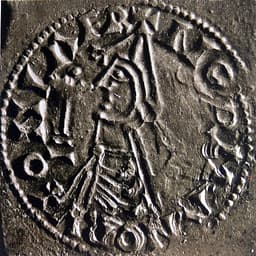
Olaf II of Norway
Emperor · Medieval
46.5Total
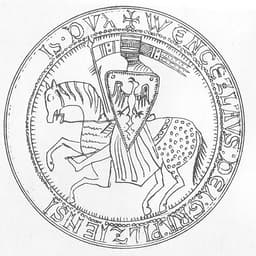
Wenceslaus I of Bohemia
Emperor · Medieval
56.7Total
Basic Information
Born
995
907
Died
1030
935
Era
Medieval
Medieval
Nationality
Norway
Bohemia
Occupation
Emperor
Emperor
Civilization
Western
Western
Score Comparison
Military (10%)
40.0
50.0
Political (20%)
45.1
40.8
Influence (20%)
56.7
68.0
Legacy (20%)
40.0
65.0
Leadership (15%)
48.4
62.2
Strategy (15%)
43.3
30.3
TOTAL
46.5
56.7
Olaf II of Norway — Complete Timeline
1015 AD
Became King of NorwayPolitical Action◆ Major
Olaf II became King of Norway after returning from Viking expeditions abroad. He claimed the throne with support from local chieftains and began consolidating power, aiming to unify Norway under a single monarchy and reduce the influence of regional lords.
CoronationNorwayUnification
Impact: regionalconstructive
Introduced Christianity to NorwayCultural◆ Major
Olaf II enforced the Christianization of Norway, using missionaries and laws to replace pagan practices. He built churches, appointed bishops, and suppressed resistance, making Christianity the official religion. This transformation aligned Norway with Christian Europe.
ChristianizationReligionNorway
Impact: regionalconstructive
1030 AD
Defeated at the Battle of StiklestadWar
Olaf II was killed at the Battle of Stiklestad while fighting against a coalition of Norwegian nobles and Danish forces led by Cnut the Great. His defeat was due to betrayal and superior enemy numbers, but his death soon led to his canonization as a saint.
BattleMartyrdomNorway
Impact: regionaltragic
1031 AD
Canonized as Saint OlafCultural◆ Major
Within a year of his death, Olaf II was declared a saint by Bishop Grimkell, with popular veneration spreading rapidly. His canonization was confirmed by the Pope in 1164. Saint Olaf became the patron saint of Norway and a symbol of Norwegian independence.
CanonizationSaintNorway
Impact: regionalconstructive
Wenceslaus I of Bohemia — Complete Timeline
921 AD
Conversion to ChristianityCultural◆ Major
Wenceslaus I was raised and educated as a Christian by his grandmother, Saint Ludmila. He promoted Christianity in Bohemia, building churches and supporting missionaries, which strengthened the Christian identity of the Czech state.
ChristianizationReligious ReformCultural Change
Impact: nationalconstructive
929 AD
Submission to Henry the FowlerPolitical Action◆ Major
Wenceslaus I accepted the overlordship of King Henry I of East Francia to avoid invasion. This act secured peace for Bohemia but made it a tributary state of the Holy Roman Empire, a status that lasted for centuries.
TributeHoly Roman EmpireDiplomacy
Impact: regional
935 AD
Assassination of Wenceslaus IPolitical Action
Wenceslaus I was murdered by his brother Boleslaus I and other conspirators at the gates of a church in Star
AssassinationMartyrdomDynastic Conflict
Impact: nationaltragic
Expert Analysis
Origins
Olaf II Haraldsson was born in 995 in Ringerike, Norway, to a minor king, Harald Grenske, and Åsta Gudbrandsdatter. After his father's death, Olaf was raised by his stepfather, Sigurd Syr. He embarked on Viking expeditions at a young age, raiding in the Baltic, Frisia, and England. His exposure to Christianity during these voyages shaped his later religious zeal. In contrast, Wenceslaus I was born around 907 in Prague, Bohemia, to Duke Vratislaus I and Drahomíra. His grandmother, Saint Ludmila, raised him in the Christian faith, while his mother remained pagan. Wenceslaus received a Latin education, learning to read and write, which was rare for rulers of his time.
Rise to Power
Olaf II returned to Norway in 1015 and claimed the throne, which was then under Danish influence. He quickly gained support from petty kings and chieftains, defeating Earl Håkon Eiriksson at the Battle of Nesjar in 1016. By 1017, he controlled most of Norway. His rise was marked by ruthless consolidation, including blinding and mutilating opponents. Wenceslaus became Duke of Bohemia upon his father's death in 921, but his mother Drahomíra acted as regent. In 924, Wenceslaus assumed full power after his mother's coup against Ludmila, who was strangled. He immediately sought peace with East Francia, submitting to Henry the Fowler in 929, which secured Bohemia's borders but made it a tributary state.
Leadership & Governance
Olaf II ruled with an iron fist, enforcing Christianization through laws and violence. He introduced the Gulating law code, which mandated church building and baptism, and executed or exiled pagan leaders. His governance alienated many nobles, who allied with Cnut the Great. Wenceslaus focused on internal stability and Christian consolidation. He built churches, including the rotunda of St. Vitus in Prague, and supported the Latin liturgy. His submission to Henry the Fowler was a pragmatic move to avoid war, but it reduced Bohemian sovereignty. Olaf's political score of 45.1 reflects his divisive methods, while Wenceslaus's political score of 40.8 shows his cautious but limited authority.
Triumph & Tragedy
Olaf's greatest triumph was the Christianization of Norway, which he achieved within a decade. His legacy as a saint and national unifier endured. However, his tyranny led to his downfall: in 1030, at the Battle of Stiklestad, he was killed by a coalition of nobles and Danish forces. His defeat marked a temporary Danish takeover. Wenceslaus's triumph was the peaceful conversion of Bohemia and the establishment of a Christian state. His tragedy came on September 28, 935, when he was murdered by his brother Boleslaus and other conspirators at a church gate. This assassination made him a martyr. Olaf's military score of 40.0 reflects his defeat, while Wenceslaus's military score of 50.0 indicates his avoidance of major battles.
Character & Destiny
Olaf was stubborn and uncompromising, driven by religious zeal and a desire for centralized power. His character alienated allies and provoked rebellion. His death at Stiklestad was a direct result of his refusal to compromise with pagan nobles. Wenceslaus was pious and diplomatic, prioritizing peace over conquest. His submission to Henry the Fowler was seen as cowardly by some, but it preserved Bohemia. His assassination by his brother stemmed from Boleslaus's ambition and resentment of Wenceslaus's pro-German policies. Olaf's leadership score of 48.4 and Wenceslaus's 62.2 highlight the latter's more effective governance.
Legacy
Olaf II became Saint Olaf, the patron saint of Norway, and his canonization within a year of his death was unprecedented. His cult spread across Scandinavia, and his remains were enshrined at Nidaros Cathedral. He is remembered as the eternal king of Norway, and his efforts cemented Christianity in the region. Wenceslaus I became the patron saint of the Czech people, known as "Good King Wenceslaus" in the Christmas carol. His legacy is one of piety and martyrdom, but his submission to Henry the Fowler set a precedent for Bohemian subordination to German rulers. Olaf's influence score of 56.7 is lower than Wenceslaus's 68.0, but Olaf's impact on Norwegian identity is profound. Wenceslaus's legacy score of 65.0 reflects his enduring religious significance.
Conclusion
Wenceslaus I of Bohemia scored higher overall (56.7 vs. 46.5), but Olaf II's impact on Norway's Christianization and national identity was more transformative. Wenceslaus's submission to East Francia ensured peace but diminished Bohemian independence, while Olaf's aggressive policies, though divisive, created a lasting Christian kingdom. In terms of historical influence, Olaf's legacy as a saint and unifier outweighs Wenceslaus's more cautious but less revolutionary reign. Therefore, Olaf II of Norway had a greater impact on the course of history.
Rankings
🥇
Wenceslaus I of BohemiaLeader
Mil: 50.0Pol: 40.8Inf: 68.0
56.7
🥈
Olaf II of Norway
Mil: 40.0Pol: 45.1Inf: 56.7
46.5
+10.2 behind
How This Comparison Works
Algorithm
Each figure is scored on 6 dimensions (0—100 scale) based on structured historical data: Military (10%), Political (20%), Influence (20%), Legacy (20%), Leadership (15%), Strategy (15%). The weighted total produces the final ranking.
Data Sources
Scores are computed from structured sub-indicators in the database. Scale factors adjust for era (Ancient ×0.85, Modern ×1.0) and civilization size (Eastern ×1.05, Other ×0.80) to account for differences in population and military scale.
Maximum 3 Figures
Comparisons are limited to 2—3 figures to ensure readability and statistical meaningfulness.
Error Margins
±5 points per dimension — Sub-scores are derived from historical records with inherent uncertainty. Two figures within 5 points on a dimension should be considered roughly equivalent in that area.
Total Score Accuracy
±3 points overall — The weighted combination of 6 dimensions produces a total score with approximately ±3 points of uncertainty. Differences of less than 3 points are not statistically significant— the figures are effectively tied.
Known Limitations
- Historical records are incomplete and uneven across civilizations
- Figures from oral-tradition societies may be underrepresented
- Occupation labels can misclassify multi-role figures
- Scores measure capability and impact, not moral character
- Quantitative scoring is a comparison tool, not absolute truth
Capability Radar
Military (10%) — Battles & Warfare
Battles
45
15
Win Rate
50
20
Expansion
40
10
Political (20%) — Governance & Reform
Reform
55
35
Diplomacy
40
40
Economy
30
35
Influence (20%) — Cultural & Global Reach
Cultural
70
75
Global
55
70
Legacy (20%) — Historical Impact
Historical
75
80
Longevity
80
85
Leadership (15%) — Power & Stability
Tenure
35
40
Stability
25
40
Strategy (15%) — Tactics & Innovation
Strategy
35
15
Tactics
40
15
Reform
30
10
Similar Comparisons
Comments & Discussion
No comments yet. Be the first to share your thoughts!