Loading...
This comparison has not been analyzed yet.
One-time AI generation (~1 minute). Scores and timeline are already available below.
King Taejo of Goryeo vs Vytautas the Great
Vytautas the Great leads by 2.8 pts · 2 figures compared
…
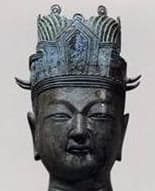
King Taejo of Goryeo
Emperor · Medieval
70.1Total
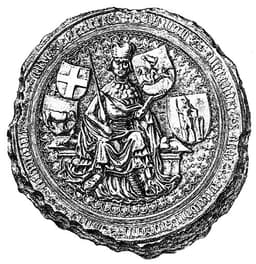
Vytautas the Great
Emperor · Medieval
72.9Total
Basic Information
Born
877
1350
Died
943
1430
Era
Medieval
Medieval
Nationality
Korea
Lithuania
Occupation
Emperor
Emperor
Civilization
Eastern
Western
Score Comparison
Military (10%)
78.0
72.0
Political (20%)
72.0
70.0
Influence (20%)
65.0
72.0
Legacy (20%)
65.0
72.0
Leadership (15%)
82.0
79.8
Strategy (15%)
67.2
72.0
TOTAL
70.1
72.9
King Taejo of Goryeo — Complete Timeline
918 AD
Founded the Goryeo DynastyPolitical Action
Wang Geon (Taejo) overthrew the Later Goguryeo state and established the Goryeo dynasty, with its capital at Songak (Kaesong). This marked the beginning of a new era in Korean history.
Dynasty FoundingGoryeoKorea
Impact: regionalconstructive
920 AD
Adopted a Policy of Marrying Local ElitesPolitical Action◆ Major
Taejo married women from powerful local clans to secure their loyalty and integrate regional powers into the Goryeo state. This policy helped stabilize the new dynasty.
Marriage PolicyGoryeoUnification
Impact: regionalconstructive
936 AD
Unified the Later Three KingdomsWar
Taejo completed the unification of the Later Three Kingdoms (Later Goguryeo, Later Baekje, and Silla) under Goryeo rule. This ended the period of division and established a unified Korean state.
UnificationLater Three KingdomsGoryeo
Impact: regionalconstructive
943 AD
Implemented Ten InjunctionsPolitical Action◆ Major
Taejo issued the Ten Injunctions, a set of political guidelines for his successors. These stressed the importance of Buddhism, diplomacy with China, and avoiding internal conflict.
GovernanceGoryeoPolicy
Impact: regionalconstructive
Vytautas the Great — Complete Timeline
1398 AD
Treaty of SalynasPolitical Action◆ Major
Vytautas signed the Treaty of Salynas with the Teutonic Knights, ceding Samogitia to the Order. This was a temporary concession to gain support for his eastern campaigns, but it later led to conflict.
TreatySamogitia
Impact: regionaldestructive
1399 AD
Battle of the Vorskla RiverWar◆ Major
Vytautas led a crusade against the Golden Horde but was defeated at the Battle of the Vorskla River. The defeat halted Lithuanian expansion into the steppes and weakened Vytautas's position.
Golden HordeDefeat
Impact: regionaltragic
1410 AD
Battle of GrunwaldWar
Vytautas commanded the Polish-Lithuanian army at the Battle of Grunwald, defeating the Teutonic Knights. This was one of the largest battles of medieval Europe, breaking the Knights' power and securing Lithuanian independence.
Teutonic KnightsBattle
Impact: regionalconstructive
1429 AD
Coronation AttemptPolitical Action◆ Major
Vytautas attempted to be crowned King of Lithuania, supported by Holy Roman Emperor Sigismund. The coronation was blocked by Polish nobles who feared Lithuanian independence, and Vytautas died before it could occur.
CoronationLithuania
Impact: regionaltragic
This comparison has not been analyzed yet.
One-time AI generation (~1 minute). Scores and timeline are already available below.
Rankings
🥇
Vytautas the GreatLeader
Mil: 72.0Pol: 70.0Inf: 72.0
72.9
🥈
King Taejo of Goryeo
Mil: 78.0Pol: 72.0Inf: 65.0
70.1
+2.8 behind
How This Comparison Works
Algorithm
Each figure is scored on 6 dimensions (0—100 scale) based on structured historical data: Military (10%), Political (20%), Influence (20%), Legacy (20%), Leadership (15%), Strategy (15%). The weighted total produces the final ranking.
Data Sources
Scores are computed from structured sub-indicators in the database. Scale factors adjust for era (Ancient ×0.85, Modern ×1.0) and civilization size (Eastern ×1.05, Other ×0.80) to account for differences in population and military scale.
Maximum 3 Figures
Comparisons are limited to 2—3 figures to ensure readability and statistical meaningfulness.
Error Margins
±5 points per dimension — Sub-scores are derived from historical records with inherent uncertainty. Two figures within 5 points on a dimension should be considered roughly equivalent in that area.
Total Score Accuracy
±3 points overall — The weighted combination of 6 dimensions produces a total score with approximately ±3 points of uncertainty. Differences of less than 3 points are not statistically significant— the figures are effectively tied.
Known Limitations
- Historical records are incomplete and uneven across civilizations
- Figures from oral-tradition societies may be underrepresented
- Occupation labels can misclassify multi-role figures
- Scores measure capability and impact, not moral character
- Quantitative scoring is a comparison tool, not absolute truth
Capability Radar
Military (10%) — Battles & Warfare
Battles
75
85
Win Rate
80
80
Expansion
80
85
Political (20%) — Governance & Reform
Reform
80
75
Diplomacy
75
85
Economy
70
70
Influence (20%) — Cultural & Global Reach
Cultural
70
70
Global
60
65
Legacy (20%) — Historical Impact
Historical
80
80
Longevity
75
70
Leadership (15%) — Power & Stability
Tenure
85
80
Stability
75
70
Strategy (15%) — Tactics & Innovation
Strategy
85
90
Tactics
70
85
Reform
65
75
Similar Comparisons
Comments & Discussion
No comments yet. Be the first to share your thoughts!