Loading...
King Wonjong of Goryeo vs Lothair III
Lothair III leads by 1.8 pts · 2 figures compared
…

King Wonjong of Goryeo
Emperor · Medieval
44.8Total
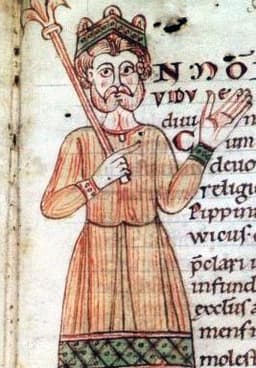
Lothair III
Emperor · Medieval
46.6Total
Basic Information
Born
1219
1075
Died
1274
1137
Era
Medieval
Medieval
Nationality
Korea
Holy Roman Empire
Occupation
Emperor
Emperor
Civilization
Eastern
Western
Score Comparison
Military (10%)
21.2
25.0
Political (20%)
40.8
37.9
Influence (20%)
53.3
48.6
Legacy (20%)
45.0
41.7
Leadership (15%)
55.3
65.7
Strategy (15%)
36.8
60.0
TOTAL
44.8
46.6
King Wonjong of Goryeo — Complete Timeline
1259 AD
Accepted Mongol SuzeraintyPolitical Action
King Wonjong sent his son (future King Chungnyeol) as a hostage to the Mongol court and agreed to Goryeo becoming a vassal state of the Mongol Empire. This ended decades of military resistance and established a tributary relationship that lasted for nearly a century.
Mongol InvasionDiplomacyVassalage
Impact: national
Returned to Goryeo as KingPolitical Action◆ Major
After the death of King Gojong, Wonjong returned from the Mongol court where he had been held as a hostage. He was installed as king with Mongol approval, marking the beginning of direct Mongol influence over Goryeo's throne.
SuccessionMongol Influence
Impact: national
1270 AD
Suppressed Military RebellionWar◆ Major
King Wonjong ordered the dissolution of the Sambyeolcho, a elite military unit that resisted Mongol domination. The Sambyeolcho rebelled and held out on Jeju Island until 1273, when Mongol-Goryeo forces crushed them, ending organized military opposition to Mongol rule.
RebellionMongol CooperationMilitary
Impact: nationaldestructive
Lothair III — Complete Timeline
1125 AD
Election as King of GermanyPolitical Action◆ Major
Lothair III was elected King of Germany in 1125 after the death of Henry V, ending the Salian dynasty. His election was contested by the Hohenstaufen family, leading to a prolonged civil war.
SuccessionCivil War
Impact: regional
1129 AD
Battle of the UnstrutWar
Lothair III defeated the Hohenstaufen forces at the Battle of the Unstrut in 1129, a key victory in the civil war against Conrad III. This battle weakened Hohenstaufen resistance and consolidated Lothair's rule.
Civil WarHohenstaufen Conflict
Impact: regional
1133 AD
Coronation as Holy Roman EmperorPolitical Action◆ Major
Pope Innocent II crowned Lothair III Holy Roman Emperor in Rome on June 4, 1133. In return, Lothair supported Innocent II against the rival Pope Anacletus II, strengthening the papal alliance.
CoronationPapal Alliance
Impact: regionalconstructive
1136 AD
Second Italian CampaignWar
Lothair III led a second campaign to Italy in 1136-1137 to support Pope Innocent II against Roger II of Sicily. He captured parts of southern Italy but failed to dislodge Roger, and the campaign ended inconclusively.
Italian CampaignSicily Conflict
Impact: regional
Expert Analysis
Origins
King Wonjong of Goryeo (born 1219) was the eldest son of King Gojong. His early life was shaped by the Mongol invasions that began in 1231, which devastated the Korean peninsula. He spent years as a hostage at the Mongol court, learning their language and customs. This experience deeply influenced his later policies. In contrast, Lothair III (born 1075) was a Saxon noble from the House of Supplinburg. His father was killed in battle, and he inherited lands in Saxony. Lothair rose through military service, becoming Duke of Saxony in 1106. He was a key opponent of Emperor Henry V, which set the stage for his later election.
Rise to Power
Wonjong became king in 1259 after his father's death, but his authority was severely limited. He had already been sent as a hostage to the Mongol court in 1254, and his return was only possible after agreeing to Goryeo's vassalage. His rise was not through conquest but through submission. Lothair III, by contrast, was elected King of Germany in 1125 after the death of Henry V, ending the Salian dynasty. His election was contested by the Hohenstaufen, who supported Conrad III. Lothair secured his position through military victories, notably the Battle of the Unstrut in 1129, where he defeated Hohenstaufen forces. He was crowned Holy Roman Emperor by Pope Innocent II in 1133, solidifying his authority.
Leadership & Governance
Wonjong's leadership was defined by pragmatism under Mongol domination. He ordered the dissolution of the Sambyeolcho, an elite military unit that resisted Mongol rule, leading to their rebellion and eventual suppression. His governance focused on preserving Goryeo's identity while accepting Mongol overlordship. He sent his son as a hostage and paid tribute. Lothair III, on the other hand, actively fought to centralize imperial authority. He supported Pope Innocent II against the antipope Anacletus II, leading to his coronation. He also campaigned in Italy against Roger II of Sicily, capturing parts of southern Italy. His political score of 37.9 reflects his ability to navigate complex feudal politics, while Wonjong's political score of 40.8 is slightly higher, perhaps due to his success in maintaining Goryeo's institutions.
Triumph & Tragedy
Wonjong's greatest success was securing his dynasty's survival under Mongol suzerainty. He managed to keep Goryeo intact, albeit as a vassal. His greatest failure was the loss of sovereignty, which led to centuries of Mongol influence. The Sambyeolcho rebellion, which he suppressed, was a tragic episode of Korean resistance crushed by their own king. Lothair III's triumph was his election as emperor and his victory over the Hohenstaufens. His tragedy was that his Italian campaigns were ultimately unsuccessful; he failed to permanently subdue Roger II, and his death in 1137 left his gains to be reversed by his successors. Lothair scored 65.7 in leadership, higher than Wonjong's 55.3, reflecting his more active role in military campaigns.
Character & Destiny
Wonjong was a realist who chose submission over annihilation. His character was cautious and diplomatic, shaped by his years as a hostage. This destiny was to be a puppet king, but he preserved his line. Lothair III was ambitious and warlike, constantly striving to expand his authority. His destiny was to be a transitional figure, bridging the Salian and Hohenstaufen eras. Historians note his determination but also his inability to build a lasting dynasty. Lothair's strategy score of 60.0 is nearly double Wonjong's 36.8, highlighting his tactical acumen.
Legacy
Wonjong's legacy is mixed: he is remembered as the king who submitted to the Mongols, but this act allowed Goryeo to survive as a distinct entity for another century. His decision set the stage for the Yuan dynasty's influence in Korea. Lothair III's legacy is as a counterweight to the Hohenstaufens, but his empire did not outlast him. The Hohenstaufens regained power after his death. Wonjong's influence score of 53.3 slightly edges Lothair's 48.6, reflecting the long-term impact of Mongol suzerainty on Korean history.
Conclusion
While Lothair III scored higher overall (46.6 vs. 44.8), Wonjong's impact on Korea was more enduring. Lothair's military and political achievements were significant but temporary. Wonjong's decision to accept Mongol rule fundamentally altered the trajectory of Goryeo, leading to a century of vassalage that shaped Korean identity. Therefore, Wonjong had a greater historical impact, despite his lower scores in military and strategy. His leadership preserved his kingdom, while Lothair's ambitions failed to secure a lasting legacy.
Rankings
🥇
Lothair IIILeader
Mil: 25.0Pol: 37.9Inf: 48.6
46.6
🥈
King Wonjong of Goryeo
Mil: 21.2Pol: 40.8Inf: 53.3
44.8
+1.8 behind
How This Comparison Works
Algorithm
Each figure is scored on 6 dimensions (0—100 scale) based on structured historical data: Military (10%), Political (20%), Influence (20%), Legacy (20%), Leadership (15%), Strategy (15%). The weighted total produces the final ranking.
Data Sources
Scores are computed from structured sub-indicators in the database. Scale factors adjust for era (Ancient ×0.85, Modern ×1.0) and civilization size (Eastern ×1.05, Other ×0.80) to account for differences in population and military scale.
Maximum 3 Figures
Comparisons are limited to 2—3 figures to ensure readability and statistical meaningfulness.
Error Margins
±5 points per dimension — Sub-scores are derived from historical records with inherent uncertainty. Two figures within 5 points on a dimension should be considered roughly equivalent in that area.
Total Score Accuracy
±3 points overall — The weighted combination of 6 dimensions produces a total score with approximately ±3 points of uncertainty. Differences of less than 3 points are not statistically significant— the figures are effectively tied.
Known Limitations
- Historical records are incomplete and uneven across civilizations
- Figures from oral-tradition societies may be underrepresented
- Occupation labels can misclassify multi-role figures
- Scores measure capability and impact, not moral character
- Quantitative scoring is a comparison tool, not absolute truth
Capability Radar
Military (10%) — Battles & Warfare
Battles
10
45
Win Rate
10
40
Expansion
10
30
Political (20%) — Governance & Reform
Reform
30
30
Diplomacy
50
45
Economy
30
25
Influence (20%) — Cultural & Global Reach
Cultural
20
20
Global
30
10
Legacy (20%) — Historical Impact
Historical
40
35
Longevity
30
15
Leadership (15%) — Power & Stability
Tenure
40
50
Stability
30
35
Strategy (15%) — Tactics & Innovation
Strategy
10
40
Tactics
10
35
Reform
10
20
Similar Comparisons
Comments & Discussion
No comments yet. Be the first to share your thoughts!