Loading...
Kirtivarman II vs Taejo of Joseon
Taejo of Joseon leads by 34.0 pts · 2 figures compared
…
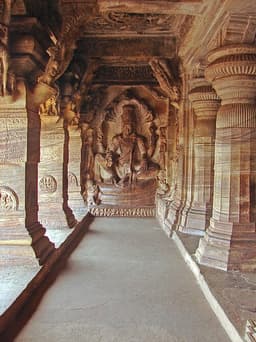
Kirtivarman II
Emperor · Medieval
36.4Total
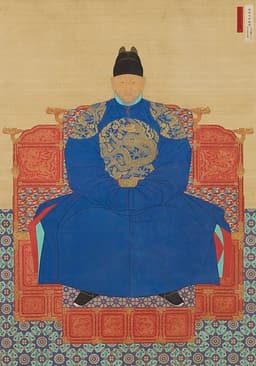
Taejo of Joseon
Emperor · Medieval
70.4Total
Basic Information
Born
746
1335
Died
757
1408
Era
Medieval
Medieval
Nationality
India
Korea
Occupation
Emperor
Emperor
Civilization
Indian
Eastern
Score Comparison
Military (10%)
21.2
74.7
Political (20%)
30.7
65.0
Influence (20%)
46.3
65.0
Legacy (20%)
37.5
80.0
Leadership (15%)
33.6
72.0
Strategy (15%)
36.8
61.2
TOTAL
36.4
70.4
Kirtivarman II — Complete Timeline
753 AD
Defeat by DantidurgaWar◆ Major
Kirtivarman II, the last Badami Chalukya king, was defeated by the Rashtrakuta chief Dantidurga. This battle ended the Badami Chalukya dynasty and established Rashtrakuta rule over the Deccan region.
Impact: regionaldestructive
Taejo of Joseon — Complete Timeline
1380 AD
Battle of HwangsanWar
General Yi Seong-gye defeated a Japanese pirate (wokou) force at Hwangsan. This victory enhanced his military reputation and demonstrated his capability as a commander.
WokouGoryeo Military
1388 AD
Wihwado RetreatPolitical Action
General Yi Seong-gye, ordered to invade the Ming dynasty's Liaodong region, turned his army back at Wihwado Island. This act of defiance against the Goryeo court led to a coup that eventually brought him to power.
CoupGoryeo-Ming RelationsPower Shift
Impact: national
1391 AD
Land Reform and the Gwajeon LawReform◆ Major
Taejo implemented the Gwajeon Law, a land reform that redistributed land from the old Goryeo aristocracy to his supporters and the state. This weakened the old elite and strengthened the new Joseon ruling class.
Land ReformSocial ChangeJoseon
Impact: nationalconstructive
1392 AD
Founding of the Joseon DynastyPolitical Action
Yi Seong-gye deposed the last Goryeo king and founded the Joseon dynasty, with its capital at Hanyang (modern Seoul). He established a new ruling class based on Confucian ideology, replacing the Buddhist-influenced Goryeo system.
Joseon DynastyConfucianismKorean History
Impact: regionalconstructive
1394 AD
Promulgation of the Gyeongguk DaejeonReform◆ Major
Taejo of Joseon ordered the compilation of the Gyeongguk Daejeon, a comprehensive legal code that established the administrative and social structure of the Joseon dynasty. This code remained in effect for centuries.
Legal CodeGovernanceConfucianism
Impact: nationalconstructive
Expert Analysis
Taejo of Joseon vs Kirtivarman II
# The Founder and the Fallen: Why Yi Seong-gye Built an Empire While Kirtivarman II Lost One
In the summer of 1388, a Korean general stood on a riverbank at Wihwado Island, facing an impossible choice. His king had ordered him to invade China’s Ming dynasty—a suicidal campaign that would bleed his army dry. Behind him lay the Goryeo court, corrupt and clinging to power. In that moment, Yi Seong-gye turned his army around, choosing treason over obedience. Three centuries later and thousands of miles away, another man faced a different kind of finality. Kirtivarman II, the last Chalukya king of Badami, watched his world collapse as the Rashtrakuta chief Dantidurga crushed his forces in battle. One man founded a dynasty that would rule for five centuries; the other became a footnote in history’s margins. What separated them was not luck alone—it was the interplay of character, circumstance, and the brutal arithmetic of power.
Origins
Yi Seong-gye was born in 1335 into a world of chaos. The Goryeo dynasty, which had ruled Korea for nearly five centuries, was rotting from within—its aristocracy hoarded land, its borders bled from Japanese pirate raids, and its kings vacillated between Mongol and Ming Chinese influence. Yi’s father, a minor military official, raised him in the northern frontier, where survival depended on skill, not lineage. This upbringing forged a pragmatist who understood that power flowed from the sword and the plow, not from ancient bloodlines.
Kirtivarman II inherited a throne already trembling. By the time he became the Badami Chalukya king in 746, his dynasty had ruled the Deccan for over two centuries, but its foundations had cracked. The Chalukyas had exhausted themselves through endless wars with the Pallavas and internal rebellions. Kirtivarman was born into a gilded cage—a court where ritual mattered more than reform, where poets praised the king’s ancestors while his enemies sharpened their blades. He had no frontier to harden him, no crisis to teach him urgency. His world was a museum of past glories, and he was its curator, not its conqueror.
Rise to Power
Yi Seong-gye’s climb was a ladder of victories. In 1380, at the Battle of Hwangsan, he annihilated a Japanese pirate force that had terrorized the coast for years. The victory was not just military—it was political theater. He proved that a man from the north could do what the Goryeo court could not: protect the people. When the king ordered the Liaodong invasion in 1388, Yi’s Wihwado Retreat was not cowardice but calculation. He saw that the dynasty was a corpse, and he refused to die for it. By turning back, he positioned himself as the only man who could save Korea from itself.
Kirtivarman II’s rise was an accident of birth. He became king because his father died, not because he earned the crown. He inherited a court where ambitious vassals like Dantidurga, the Rashtrakuta chief, had already begun carving out independent domains. Where Yi saw a crisis as an opportunity, Kirtivarman saw it as an inconvenience. The Chalukya king spent his short reign—barely a decade—trying to hold together a crumbling mosaic while his rivals cemented alliances. He did not choose his battles; his battles chose him.
Leadership & Governance
Taejo of Joseon—as Yi Seong-gye became in 1392—governed like a man building for centuries. His Gwajeon Law of 1391 was a masterstroke: it confiscated land from the old Goryeo aristocracy and redistributed it to his supporters, creating a new class of scholar-officials loyal to the throne. He moved the capital to Hanyang (modern Seoul), a site chosen for its geomantic harmony and defensibility. The Gyeongguk Daejeon, a comprehensive legal code he commissioned, systematized administration, taxation, and justice. Every reform was a brick in a wall meant to outlast him.
Kirtivarman II governed like a man defending a fortress already breached. He had no land reforms—the Chalukya system of feudal grants had already fragmented authority. He built no new capital, issued no lasting legal code. His military strategy was reactive: when Dantidurga attacked in 753, Kirtivarman met him in open battle and lost decisively. There was no Wihwado Retreat for the Chalukya king—no moment of cunning, no pivot to survival. He fought the war his ancestors had fought, and he lost it the way they never had.
Triumph & Tragedy
Taejo’s greatest triumph was not a single battle but the creation of a state. The Joseon dynasty would endure from 1392 to 1910—over five centuries of cultural flowering, including the invention of the Korean alphabet, Hangul, under King Sejong. But Taejo’s tragedy was personal: he was haunted by the sons he killed to secure the succession, and by the old Goryeo loyalists he purged. Power came at the cost of his soul.
Kirtivarman II’s tragedy was that he had no triumph. His defeat in 753 ended not just his reign but his dynasty’s entire legacy. The Chalukyas of Badami vanished, their temples looted, their inscriptions shattered. Kirtivarman died around 757, probably in obscurity. His only victory was survival—and he failed even at that.
Character & Destiny
Yi Seong-gye was a pragmatist with a vision. He understood that to rule, one must first survive; to survive, one must adapt. He was ruthless—he deposed a king, executed rivals, and spilled blood—but his ruthlessness served a purpose beyond personal ambition. He built a system that could outlast him.
Kirtivarman II was a traditionalist in a world that had moved on. He seems to have believed that the throne itself would protect him, that the rituals of kingship were a shield. They were not. His character was not weak—it was irrelevant. He was a man born too late, defending a past that had already crumbled.
Legacy
Taejo of Joseon is remembered as a founding father. His dynasty shaped Korean identity, language, and governance for half a millennium. Modern Seoul stands where he placed it. His legal code influenced Korean law until the 20th century. He is a name every Korean schoolchild knows.
Kirtivarman II is a name known only to specialists. The Rashtrakutas who defeated him built their own empire, but even that is now a footnote. His legacy is negative: he represents the end of something, not the beginning. He is a cautionary tale about what happens when a ruler inherits a crisis and offers only inertia.
Conclusion
The difference between these two men is not a matter of intelligence or courage. Yi Seong-gye was not braver than Kirtivarman II; he was more adaptive. He saw the world as it was—a place of flux, where dynasties die and new ones rise—and he acted accordingly. Kirtivarman II saw the world as it had been, and he waited for it to save him. History does not reward waiting. It rewards those who, standing on the riverbank of their own Wihwado, have the nerve to turn around.
Rankings
🥇
Taejo of JoseonLeader
Mil: 74.7Pol: 65.0Inf: 65.0
70.4
🥈
Kirtivarman II
Mil: 21.2Pol: 30.7Inf: 46.3
36.4
+34.0 behind
How This Comparison Works
Algorithm
Each figure is scored on 6 dimensions (0—100 scale) based on structured historical data: Military (10%), Political (20%), Influence (20%), Legacy (20%), Leadership (15%), Strategy (15%). The weighted total produces the final ranking.
Data Sources
Scores are computed from structured sub-indicators in the database. Scale factors adjust for era (Ancient ×0.85, Modern ×1.0) and civilization size (Eastern ×1.05, Other ×0.80) to account for differences in population and military scale.
Maximum 3 Figures
Comparisons are limited to 2—3 figures to ensure readability and statistical meaningfulness.
Error Margins
±5 points per dimension — Sub-scores are derived from historical records with inherent uncertainty. Two figures within 5 points on a dimension should be considered roughly equivalent in that area.
Total Score Accuracy
±3 points overall — The weighted combination of 6 dimensions produces a total score with approximately ±3 points of uncertainty. Differences of less than 3 points are not statistically significant— the figures are effectively tied.
Known Limitations
- Historical records are incomplete and uneven across civilizations
- Figures from oral-tradition societies may be underrepresented
- Occupation labels can misclassify multi-role figures
- Scores measure capability and impact, not moral character
- Quantitative scoring is a comparison tool, not absolute truth
Capability Radar
Military (10%) — Battles & Warfare
Battles
15
75
Win Rate
10
80
Expansion
5
65
Political (20%) — Governance & Reform
Reform
10
85
Diplomacy
10
70
Economy
15
65
Influence (20%) — Cultural & Global Reach
Cultural
10
80
Global
5
60
Legacy (20%) — Historical Impact
Historical
15
85
Longevity
10
80
Leadership (15%) — Power & Stability
Tenure
20
70
Stability
10
75
Strategy (15%) — Tactics & Innovation
Strategy
10
75
Tactics
15
70
Reform
5
60
Similar Comparisons
Comments & Discussion
BattleAxe Historian6/16/2026
Taejo was a ruthless pragmatist who knew when to break rules; Kirtivarman was a tragic victim of geography. Yi saw chaos as opportunity—when Goryeo king U ordered that suicidal Ming invasion, he mutinied and seized power. That’s founder’s instinct. Kirtivarman inherited a declining dynasty and tried to fight Dantidurga on open field. Different choices, different outcomes: Yi built Joseon’s 500-year rule; Kirtivarman died forgotten. Luck helps, but guts decide.
南国剑客6/16/2026
别被表面骗了!李成桂搞兵变占领都城后学宋太祖搞了场禅让大典,就是图个合法性。可吉尔提跋摩呢?他在756年跟丹蒂杜尔伽对决时搬出了拉什特拉库塔的伽拉萨诸神来撑腰,想靠神权压制。结果?被打得灰飞烟灭。历史证明:想活命就得玩诡计不是迷信。李成桂赢了是靠自己手腕,不是靠什么天意。
Chronicle Keeper6/16/2026
Yi Seong-gye’s decisive act at Wihwado in 1388 is legendary—turning back 50,000 troops. But Kirtivarman’s loss at the Battle of Vatapi in 757 was just as strategic. He fought Dantidurga with a smaller army on terrain that favored the enemy. Yi adapted, Kirtivarman didn’t. Both were cornered, but Yi had that edge of military cunning, while Kirtivarman trusted old codes of honor. History’s judgment is harsh: adaptability wins empires.
都城遗民6/16/2026
李成桂能赢不是他多伟大,是金氏高丽自己烂透了。他改革土地制度设科举,稳住民心没错。可吉尔提跋摩二世是死在贵族内斗上:公元750年左右弟弟叛变投靠拉什塔库塔,直接撕开防线。李成桂身边却没有这种反骨仔吗?有!他杀了很多,只是杀得干净。成败关键在这儿:清场能力。谁干净谁上位。不然高句丽为啥不一直统治?历史是清洗者的叙事。