Loading...
Charles de Gaulle vs Kirtivarman II
Charles de Gaulle leads by 31.8 pts · 2 figures compared
…
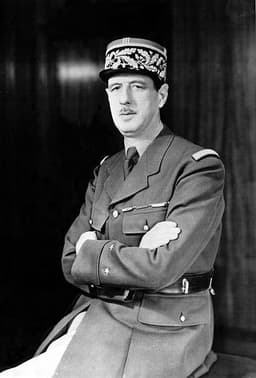
Charles de Gaulle
Politician · Modern
68.2Total
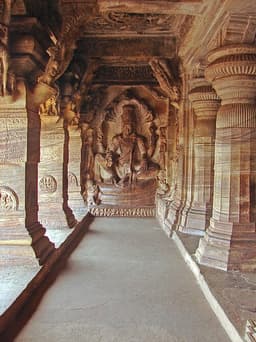
Kirtivarman II
Emperor · Medieval
36.4Total
Basic Information
Born
1890
746
Died
1970
757
Era
Modern
Medieval
Nationality
France
India
Occupation
Politician
Emperor
Civilization
Western
Indian
Score Comparison
Military (10%)
55.0
21.2
Political (20%)
75.0
30.7
Influence (20%)
65.0
46.3
Legacy (20%)
68.0
37.5
Leadership (15%)
78.0
33.6
Strategy (15%)
65.0
36.8
TOTAL
68.2
36.4
Charles de Gaulle — Complete Timeline
1940 AD
Appeal of 18 June 1940Political Action
From London, de Gaulle broadcast a radio appeal urging French resistance against Nazi occupation. He called on French soldiers and citizens to continue the fight, founding the Free French Forces and becoming the symbol of French defiance.
World War IIResistanceLeadership
Impact: nationalconstructive
1958 AD
Founding of the Fifth RepublicPolitical Action
De Gaulle returned to power during the Algerian crisis and oversaw the drafting of a new constitution. The Fifth Republic established a strong executive presidency, replacing the unstable parliamentary system of the Fourth Republic.
ConstitutionGovernment ReformPolitical System
Impact: nationalconstructive
1962 AD
End of the Algerian WarPolitical Action◆ Major
De Gaulle negotiated the
DecolonizationPeace TreatyAlgeria
Impact: regionalconstructive
1968 AD
May 1968 CrisisPolitical Action◆ Major
Mass student protests and general strikes paralyzed France, challenging de Gaulle's government. De Gaulle briefly fled to Germany, then returned to dissolve the National Assembly and call elections, which his party won, but his authority was weakened.
ProtestPolitical CrisisSocial Unrest
Impact: nationaldestructive
1969 AD
Resignation as PresidentPolitical Action
De Gaulle resigned after losing a referendum on regional reform and Senate restructuring. The defeat marked the end of his political career, as he withdrew from public life and died the following year.
ResignationPolitical DefeatReferendum
Impact: nationaltragic
Kirtivarman II — Complete Timeline
753 AD
Defeat by DantidurgaWar◆ Major
Kirtivarman II, the last Badami Chalukya king, was defeated by the Rashtrakuta chief Dantidurga. This battle ended the Badami Chalukya dynasty and established Rashtrakuta rule over the Deccan region.
Impact: regionaldestructive
Expert Analysis
Charles de Gaulle vs Kirtivarman II
### The General and the Ghost King
History is a stage of giants and footnotes. On one side stands Charles de Gaulle, a colossus of the 20th century, whose voice from London in 1940 refused to let France surrender. On the other lies Kirtivarman II, the forgotten last king of the Badami Chalukya dynasty, whose reign ended in a single, crushing defeat in 753. One man reshaped a nation; the other was erased from its throne. What separates a legend from a lost name? The answer lies not in fate, but in the raw material of character and circumstance.
### Origins
De Gaulle was born in 1890 into a devoutly Catholic, patriotic family in Lille. His father, a professor, instilled in him a sense of national destiny and a rigid, almost medieval code of honor. The young Charles grew up reading history and philosophy, dreaming of a France that was strong, independent, and glorious. His era—the fall of the Third Republic, the humiliation of Nazi occupation—was a crucible that forged his iron will.
Kirtivarman II, by contrast, inherited a throne already cracking. Born in 746, he was the last of the Badami Chalukyas, a dynasty that had ruled the Deccan plateau with military brilliance for over two centuries. His ancestors had built temples and crushed rivals, but by his time, the empire was a tired giant, weakened by internal revolts and the rising power of the Rashtrakuta feudatories. Kirtivarman’s world was one of inherited decay, not national crisis. He was a king by birth, not by fire.
### Rise to Power
De Gaulle’s path was a slow, stubborn ascent. A professional soldier who fought at Verdun in World War I and was later captured, he spent the interwar years writing books on military theory, arguing for mechanized warfare and a professional army—ideas that his superiors largely ignored. His true rise came in 1940, when France collapsed. With no army, no resources, and only a handful of followers, he flew to London and, on June 18, delivered his legendary broadcast. “France has lost a battle,” he said, “but France has not lost the war.” That single act transformed an obscure brigadier general into the living symbol of French resistance.
Kirtivarman II’s rise was the opposite: quiet, inevitable, and doomed. He ascended the throne around 746, inheriting a kingdom that was already losing its grip. His key event—the only one history records—was his defeat by Dantidurga, the Rashtrakuta chief, in 753. There was no galvanizing speech, no last stand in the hills. The battle was a straightforward military collapse, and with it, the Chalukya line ended. He did not rise to power; he simply occupied it until it was taken from him.
### Leadership & Governance
De Gaulle’s leadership was a study in will and vision. As the leader of Free France, he fought not just the Germans but also his own Allies, demanding that France be treated as a great power. After the war, he briefly retired, but returned in 1958 during the Algerian crisis, a moment of near-civil war. He founded the Fifth Republic, a constitution designed to give the president strong, stable authority. His political wisdom was pragmatic: he ended the brutal Algerian War in 1962 via the Évian Accords, despite furious opposition from the French army and settlers. He modernized the economy, launched an independent nuclear deterrent, and pursued a foreign policy that balanced between the US and the Soviet Union. His military genius was less about tactics and more about strategy—knowing when to fight and when to retreat.
Kirtivarman II, by contrast, left no record of governance. His military score of 46 and political score of 36.5 suggest a ruler who was neither a warrior nor a diplomat. The Chalukya administration, once famed for its efficient revenue system and patronage of art, crumbled under his watch. He may have been a decent man, but he lacked the cunning or the ruthlessness to stem the tide. The Rashtrakutas were not just stronger; they were smarter, and Kirtivarman offered no reform, no alliance, no counterstroke.
### Triumph & Tragedy
De Gaulle’s greatest triumph was the survival of France itself. In 1944, he walked down the Champs-Élysées in a liberated Paris, a moment of pure, earned glory. His tragedy was the May 1968 crisis, when student protests and a general strike paralyzed the nation. For a moment, he fled to Germany, a ghost of his former certainty. He recovered, called elections, and won, but the magic was broken. He resigned in 1969 after losing a minor referendum, a quiet end for a man who had lived by grand gestures.
Kirtivarman II’s only recorded event is his defeat. There is no triumph, no last victory. His tragedy is not a dramatic fall but a quiet disappearance. The Chalukya dynasty, which had built the magnificent cave temples of Badami and the rock-cut architecture of Pattadakal, ended not with a bang but a whimper. He was likely killed or imprisoned, and his name survives only in a few copper-plate inscriptions and the victory proclamations of his conquerors.
### Character & Destiny
De Gaulle’s character was a fortress. He was aloof, arrogant, and convinced of his own historical mission. “I am France,” he once said, and he meant it. This megalomania was his strength and his weakness. It allowed him to make impossible decisions—like abandoning Algeria—but it also made him unable to connect with the ordinary frustrations of 1968. His destiny was to be a founder, a man who creates institutions that outlast him.
Kirtivarman II’s character is a blank. We do not know if he was brave or timid, wise or foolish. His destiny was to be a tombstone. In a world where might made right, he was simply not strong enough. His decisions—or lack of them—condemned him to oblivion.
### Legacy
De Gaulle’s legacy is the Fifth Republic, which still governs France today. His vision of an independent, sovereign nation is a touchstone for French politics. He is remembered as a savior, a stubborn patriot, and a flawed giant. His scores—Leadership 78, Political 82, Legacy 75—reflect a man who changed the course of history.
Kirtivarman II’s legacy is a lesson in fragility. He is remembered only by specialists, a cautionary tale of dynastic decay. His total score of 42.9 is a historical epitaph. The Rashtrakutas, who defeated him, would themselves fall in time. But for a brief moment, they erased the Chalukyas so completely that the name Kirtivarman II is now a footnote in a footnote.
### Conclusion
The difference between de Gaulle and Kirtivarman II is not just about talent or luck. It is about the presence of will. De Gaulle faced a world that had collapsed and chose to rebuild it. Kirtivarman II inherited a world that was fading and chose to let it go. One man seized the moment; the other was seized by it. In the end, history does not remember those who merely reign. It remembers those who refuse to surrender.
Rankings
🥇
Charles de GaulleLeader
Mil: 55.0Pol: 75.0Inf: 65.0
68.2
🥈
Kirtivarman II
Mil: 21.2Pol: 30.7Inf: 46.3
36.4
+31.8 behind
How This Comparison Works
Algorithm
Each figure is scored on 6 dimensions (0—100 scale) based on structured historical data: Military (10%), Political (20%), Influence (20%), Legacy (20%), Leadership (15%), Strategy (15%). The weighted total produces the final ranking.
Data Sources
Scores are computed from structured sub-indicators in the database. Scale factors adjust for era (Ancient ×0.85, Modern ×1.0) and civilization size (Eastern ×1.05, Other ×0.80) to account for differences in population and military scale.
Maximum 3 Figures
Comparisons are limited to 2—3 figures to ensure readability and statistical meaningfulness.
Error Margins
±5 points per dimension — Sub-scores are derived from historical records with inherent uncertainty. Two figures within 5 points on a dimension should be considered roughly equivalent in that area.
Total Score Accuracy
±3 points overall — The weighted combination of 6 dimensions produces a total score with approximately ±3 points of uncertainty. Differences of less than 3 points are not statistically significant— the figures are effectively tied.
Known Limitations
- Historical records are incomplete and uneven across civilizations
- Figures from oral-tradition societies may be underrepresented
- Occupation labels can misclassify multi-role figures
- Scores measure capability and impact, not moral character
- Quantitative scoring is a comparison tool, not absolute truth
Capability Radar
Military (10%) — Battles & Warfare
Battles
60
15
Win Rate
55
10
Expansion
20
5
Political (20%) — Governance & Reform
Reform
95
10
Diplomacy
90
10
Economy
70
15
Influence (20%) — Cultural & Global Reach
Cultural
70
10
Global
80
5
Legacy (20%) — Historical Impact
Historical
85
15
Longevity
75
10
Leadership (15%) — Power & Stability
Tenure
85
20
Stability
75
10
Strategy (15%) — Tactics & Innovation
Strategy
85
10
Tactics
70
15
Reform
80
5
Similar Comparisons
Comments & Discussion
GallicGhost6/16/2026
De Gaulle's greatness wasn't just wartime charisma—he rebuilt France from the grave. While Kirtivarman II lost his kingdom to the Rashtrakutas in a single battle at Khandesh, the General orchestrated the Fifth Republic's birth. Difference? One had a plan for after the fall; the other had no fallback when his vassals turned. History loves architects, not placeholders.
铁血吐槽师6/16/2026
拿克提瓦曼二世跟戴高乐比?这不是碰瓷吗?人家是二战救世主,你是连名字都没人记得的末代废物。戴高乐从伦敦一声吼振奋整个法国,你连自家藩王都压不住,被罗什特拉库塔一脚踹下王座。还比什么?比谁更惨吗?评论区请认清历史地位。
ChronosChronicler6/16/2026
The comparison is fundamentally flawed: De Gaulle thrived in a media age that amplified his persona, while Kirtivarman fell in an era before chronicles could preserve nuance. The 1940s gave us radio broadcasts; 8th-century Karnataka gave us temple inscriptions. One man could speak to millions; the other left barely two copper-plate grants. De Gaulle didn't just win—he had the right technology for legacy.
数据控6/16/2026
别吹了,事实说话:戴高乐执政十年,法国GDP增长超60%,第五共和国的宪法沿用至今。克提瓦曼呢?在位七年就亡国,连个像样的基建都没留下。比军事实力?自由法国从零重建百万大军;查鲁克亚王朝连恒河流域都没征服过。历史秤杆子永远不会歪,成就面前人人平等。