Loading...
Kiso Yoshinaka vs Napoleon Bonaparte
Napoleon Bonaparte leads by 28.5 pts · 2 figures compared
…
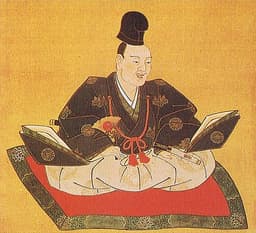
Kiso Yoshinaka
General · Medieval
42.4Total

Napoleon Bonaparte
General · Modern
70.9Total
Basic Information
Born
1154
1769
Died
1184
1821
Era
Medieval
Modern
Nationality
Japan
France
Occupation
General
General
Civilization
Eastern
Western
Score Comparison
Military (10%)
45.0
94.0
Political (20%)
35.0
72.0
Influence (20%)
45.5
40.0
Legacy (20%)
36.7
80.0
Leadership (15%)
40.9
78.0
Strategy (15%)
60.0
90.0
TOTAL
42.4
70.9
Kiso Yoshinaka — Complete Timeline
1183 AD
Capture of KyotoWar◆ Major
Kiso Yoshinaka led his forces into Kyoto, capturing the capital from the Taira clan. He was welcomed by the cloistered Emperor Go-Shirakawa, but his undisciplined troops caused chaos, leading to a breakdown in relations with the court.
CaptureGenpei WarKyoto
Impact: national
Battle of KurikaraWar◆ Major
Yoshinaka defeated a large Taira army at the Battle of Kurikara in the Tonamiyama mountains. Using a clever tactic of stampeding oxen and flanking attacks, he routed the Taira forces, opening the path to Kyoto.
BattleVictoryGenpei War
Impact: regional
1184 AD
Conflict with Minamoto no YoritomoWar◆ Major
Yoshinaka turned against his cousin Minamoto no Yoritomo, leading to open conflict. He was defeated by Yoritomo's forces led by Minamoto no Yoshitsune at the Battle of Awazu, where he was killed in combat.
ConflictDefeatDeath
Impact: nationaltragic
Napoleon Bonaparte — Complete Timeline
1799 AD
Coup of 18 BrumaireOther◆ Major
Napoleon Bonaparte, with support from his brother Lucien and key political figures, overthrew the Directory in a bloodless coup. He established the Consulate with himself as First Consul, effectively becoming the ruler of France. This event ended the French Revolution's most unstable period.
French RevolutionCoupRise to Power
Impact: regional
1804 AD
Promulgation of the Napoleonic CodeOther◆ Major
Napoleon enacted the Civil Code of the French, known as the Napoleonic Code, a comprehensive set of laws that replaced the fragmented feudal legal systems. The code established legal equality, protected property rights, and secularized law. It became the basis for legal systems in many European and world countries.
Legal ReformNapoleonic CodeCivil Law
Impact: globalconstructive
1805 AD
Battle of AusterlitzWar◆ Major
Napoleon's Grande Arm
Napoleonic WarsBattleDecisive Victory
Impact: global
1812 AD
Invasion of RussiaWar◆ Major
Napoleon led the Grande Arm
Napoleonic WarsInvasionDisaster
Impact: globaldestructive
1815 AD
Battle of WaterlooWar◆ Major
Napoleon's French army was defeated by the combined forces of the Duke of Wellington's Anglo-Allied army and Gebhard Leberecht von Bl
Napoleonic WarsBattleFinal Defeat
Impact: globaldestructive
Expert Analysis
kiso-yoshinaka-vs-napoleon-bonaparte
# The Conqueror and the Cousin
On a spring morning in 1815, Napoleon Bonaparte stood before his Grande Armée for the last time, a man who had remade Europe only to see it slip through his fingers. Just over six centuries earlier, in the winter of 1184, another warrior—Kiso Yoshinaka—fled across the frozen fields of Japan, hunted by the very family he had once fought to elevate. Both were generals. Both seized capitals. Both were undone by ambition. But their stories could not have diverged more sharply—one leaving an empire’s worth of laws and legends, the other fading into a footnote of a civil war. Why did Napoleon rise to shape an entire age, while Yoshinaka burned out in a single bitter season?
Origins
Napoleon was born in 1769 on the island of Corsica, a Mediterranean outpost only recently annexed by France. His family was minor nobility, poor enough to feel the sting of class but proud enough to resent it. He grew up speaking Italian-accented French, an outsider among the Parisian elite. This tension—the hunger to prove himself, the fury at being underestimated—would drive him for decades. He came of age during the French Revolution, a time when old hierarchies crumbled and a young artillery officer could vault to command through sheer talent and timing.
Kiso Yoshinaka, by contrast, was born in 1154 into the violent chaos of Japan’s late Heian period. His father, a Minamoto samurai, was killed in a clan purge when Yoshinaka was just two years old. He was raised in the mountains of Kiso province by a foster father, far from the courtly intrigues of Kyoto. Where Napoleon’s world was one of ideas—the Enlightenment, civic reform, the dream of a rational state—Yoshinaka’s was one of blood feuds, shifting alliances, and the relentless logic of the sword. His era demanded a warrior’s instincts, not a legislator’s vision.
Rise to Power
Napoleon’s ascent was a masterpiece of opportunity seized. In 1793, at age 24, he drove British forces from the port of Toulon with a brilliant artillery barrage. By 1796, he was commanding the Army of Italy, winning battle after battle against Austria. He didn’t just win—he transformed warfare, using speed, aggression, and the loyalty of soldiers who saw him as one of their own. In 1799, he staged a coup and made himself First Consul. By 1804, he crowned himself Emperor. Each step was calculated, each risk measured against the odds.
Yoshinaka’s rise was narrower, more desperate. In 1180, the Gempei War erupted between the Minamoto and Taira clans. Yoshinaka, a Minamoto cousin, raised an army from his mountain stronghold. His great moment came in 1183 at the Battle of Kurikara, where he lured a massive Taira force into a narrow valley, then drove a herd of stampeding oxen through their ranks before his cavalry struck from the flanks. It was a cunning, brutal victory. Later that year, he captured Kyoto itself, the imperial capital. The cloistered emperor welcomed him—but warily. Yoshinaka was a provincial fighter, not a court politician. He had won the prize, but he had no idea how to hold it.
Leadership & Governance
Here the two men diverge most starkly. Napoleon was not only a military genius—his strategic score of 93 is nearly unmatched—but a political architect. He codified French law in the Napoleonic Code, established a central bank, reformed education, and made peace with the Catholic Church. He understood that conquest without institutions is merely looting. He built a system that outlasted his fall.
Yoshinaka, with a military score of 59 and a political score of 35, was a different creature. He could win battles but not peace. After taking Kyoto, he alienated the court with his rough manners and heavy-handed demands for supplies. Worse, he turned against his cousin Minamoto no Yoritomo, the clan’s true leader, who had been building a stable power base in Kamakura. Yoshinaka’s governance was a series of blunders—arrogance, poor diplomacy, and a failure to see that loyalty must be earned, not demanded. Within months, Yoritomo’s forces had him cornered.
Triumph & Tragedy
Napoleon’s greatest triumph was the Battle of Austerlitz in 1805, where he crushed the combined armies of Russia and Austria. It was a perfect battle—deception, timing, and ruthless execution. His tragedy was the invasion of Russia in 1812, a catastrophic miscalculation that cost him his army and his aura. Even then, he returned to fight another two years before Waterloo ended it all. His fall was slow, grand, and operatic.
Yoshinaka’s triumph was Kurikara, a victory that should have made him a hero of the Minamoto cause. His tragedy came swiftly. In 1184, Yoritomo sent his brothers—including the legendary Minamoto no Yoshitsune—to crush him. At the Battle of Awazu, Yoshinaka fought desperately, but his forces were outnumbered and outmaneuvered. He died in the mud, his horse shot from under him, struck down by an arrow. His head was displayed in Kyoto. He had ruled the capital for less than a year.
Character & Destiny
Napoleon was driven by an insatiable will to order the world around him. He believed in destiny, in his own genius, and in the power of merit over birth. This confidence built an empire—but it also blinded him to limits. He could not stop, could not compromise, and so he fell.
Yoshinaka was driven by grievance and pride. He had been wronged as a child, and he fought to reclaim his family’s honor. But he lacked the patience to build alliances or the vision to see beyond his own glory. His character was that of a lightning strike—bright, violent, and brief.
Legacy
Napoleon’s legacy is vast. The Napoleonic Code influences legal systems from Europe to Latin America. His military tactics are still studied. He reshaped nationalism, warfare, and governance. Even in defeat, he remains a titan.
Yoshinaka’s legacy is quieter. He appears in *The Tale of the Heike*, Japan’s great war epic, as a tragic, flawed figure. His name is known, but his impact is local. He did not found a dynasty, reform a law, or change a nation. He was a samurai who rose too high and fell too fast.
Conclusion
What separates the conqueror from the cousin is not talent—both were brave and cunning. It is the ability to build beyond the battlefield. Napoleon, for all his flaws, understood that power must be institutionalized. Yoshinaka saw victory as an end in itself. In the end, one left a world transformed; the other left a story. And perhaps that is the deepest lesson history offers: glory is fleeting, but the structures we leave behind endure long after the last charge has faded.
Rankings
🥇
Napoleon BonaparteLeader
Mil: 94.0Pol: 72.0Inf: 40.0
70.9
🥈
Kiso Yoshinaka
Mil: 45.0Pol: 35.0Inf: 45.5
42.4
+28.5 behind
How This Comparison Works
Algorithm
Each figure is scored on 6 dimensions (0—100 scale) based on structured historical data: Military (10%), Political (20%), Influence (20%), Legacy (20%), Leadership (15%), Strategy (15%). The weighted total produces the final ranking.
Data Sources
Scores are computed from structured sub-indicators in the database. Scale factors adjust for era (Ancient ×0.85, Modern ×1.0) and civilization size (Eastern ×1.05, Other ×0.80) to account for differences in population and military scale.
Maximum 3 Figures
Comparisons are limited to 2—3 figures to ensure readability and statistical meaningfulness.
Error Margins
±5 points per dimension — Sub-scores are derived from historical records with inherent uncertainty. Two figures within 5 points on a dimension should be considered roughly equivalent in that area.
Total Score Accuracy
±3 points overall — The weighted combination of 6 dimensions produces a total score with approximately ±3 points of uncertainty. Differences of less than 3 points are not statistically significant— the figures are effectively tied.
Known Limitations
- Historical records are incomplete and uneven across civilizations
- Figures from oral-tradition societies may be underrepresented
- Occupation labels can misclassify multi-role figures
- Scores measure capability and impact, not moral character
- Quantitative scoring is a comparison tool, not absolute truth
Capability Radar
Military (10%) — Battles & Warfare
Battles
45
95
Win Rate
40
90
Expansion
35
95
Political (20%) — Governance & Reform
Reform
10
95
Diplomacy
15
80
Economy
10
85
Influence (20%) — Cultural & Global Reach
Cultural
25
85
Global
15
90
Legacy (20%) — Historical Impact
Historical
30
95
Longevity
20
90
Leadership (15%) — Power & Stability
Tenure
20
85
Stability
10
70
Strategy (15%) — Tactics & Innovation
Strategy
40
95
Tactics
55
98
Reform
10
92
Similar Comparisons
Comments & Discussion
草原孤狼6/17/2026
拿破仑就是个营销天才,赢几场会战就被吹成神。吉野义仲才是真硬汉——1182年横田河原之战,他带着三千残兵硬刚平家两万大军,靠暴雨突袭翻盘。拿破仑呢?滑铁卢下雨就躺平等死?义仲死前还在拼命,渡河时中箭坠马还砍倒三个追兵。拿破仑最终被流放小岛喝茶,叫霸气?这分明是输不起的欧洲人给失败者强行贴金。要论血性,法国皇帝给日本猛将提鞋都不配。
QuillAndQuarter6/17/2026
Napoleon "the Code" Bonaparte is overrated. Yoshinaka actually invented guerilla mountain warfare before it had a name—ambushing Taira convoys in the narrow Kiso passes. Sure, Napoleon had Austerlitz. Yoshinaka had Kurikara Pass, where he stampeded oxen with torches tied to their horns into the enemy cavalry. That’s strategy. Bonaparte just had better PR and a bigger map. Napoleon’s legacy is laws and roads? Yoshinaka’s is the first samurai to openly defy the Emperor’s court. He lost because he