Loading...
Kodandera M. Cariappa vs Qin Shi Huang
Qin Shi Huang leads by 28.2 pts · 2 figures compared
…
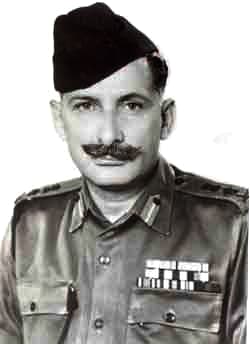
Kodandera M. Cariappa
General · Modern
57.0Total
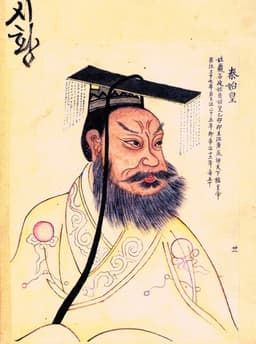
Qin Shi Huang
Emperor · Ancient
85.2Total
Basic Information
Born
1899
-259
Died
1993
-210
Era
Modern
Ancient
Nationality
India
China
Occupation
General
Emperor
Civilization
Indian
Eastern
Score Comparison
Military (10%)
50.0
80.0
Political (20%)
62.7
90.0
Influence (20%)
55.0
85.0
Legacy (20%)
54.0
90.0
Leadership (15%)
62.0
78.0
Strategy (15%)
60.0
82.0
TOTAL
57.0
85.2
Kodandera M. Cariappa — Complete Timeline
1919 AD
Commissioned into Indian ArmyPolitical Action◆ Major
Kodandera M. Cariappa was commissioned as a temporary second lieutenant in the British Indian Army. He served in the 2nd Battalion, 88th Carnatic Infantry, beginning a long military career.
Indian ArmyCommissionMilitary career
Impact: national
1939 AD
Service in World War IIWar◆ Major
Cariappa served in the Middle East and Burma during World War II. He commanded the 7th Indian Infantry Brigade in the Burma Campaign, earning a reputation for leadership and tactical skill.
World War IIBurmaMilitary service
Impact: regional
1947 AD
Command in Indo-Pakistani War of 1947-48War◆ Major
Cariappa commanded Indian forces in the Kashmir operations during the Indo-Pakistani War of 1947-48. He led the successful defense of Srinagar and the capture of key positions in Jammu and Kashmir.
Kashmir1947 warMilitary operations
Impact: regionalconstructive
1949 AD
Appointment as first Indian Commander-in-ChiefPolitical Action
Cariappa was appointed as the first Indian Commander-in-Chief of the Indian Army in January 1949, succeeding General Sir Roy Bucher. He oversaw the Indianization of the army's officer corps.
Indian ArmyCommander-in-ChiefIndianization
Impact: nationalconstructive
1953 AD
Retirement and diplomatic servicePolitical Action
Cariappa retired from the Indian Army in 1953. He later served as High Commissioner to Australia and New Zealand from 1953 to 1956, representing India diplomatically.
RetirementDiplomacyHigh Commissioner
Impact: national
Qin Shi Huang — Complete Timeline
246 BC
Construction of the Mausoleum and Terracotta ArmyOther◆ Major
Qin Shi Huang commissioned a vast mausoleum complex near Xi'an, guarded by thousands of life-sized terracotta soldiers, horses, and chariots. The project employed hundreds of thousands of workers and reflected his obsession with immortality and imperial power.
Impact: global
230 BC
Conquest of the Six Warring StatesWar
From 230 to 221 BCE, Ying Zheng led the Qin state in a series of campaigns that conquered the Han, Zhao, Wei, Chu, Yan, and Qi states. This unified China under a single ruler for the first time, ending the Warring States period.
Impact: global
221 BC
Standardization of Writing, Currency, and MeasurementsReform◆ Major
Qin Shi Huang ordered the standardization of Chinese script, currency, and weights and measures across the unified empire. This facilitated administration, trade, and cultural integration, laying a foundation for future dynasties.
Impact: globalconstructive
Proclamation of the Qin DynastyPolitical Action
After conquering the last independent state, Ying Zheng declared himself Shi Huangdi (First Emperor), founding the Qin Dynasty. He adopted a new title to signify his supreme authority and initiated centralized imperial rule.
Impact: global
214 BC
Initiation of the Great Wall ConstructionOther◆ Major
Qin Shi Huang ordered the connection and extension of existing northern fortifications to create a unified defensive wall against nomadic Xiongnu raids. This project involved massive conscripted labor and became the precursor to the later Great Wall.
Impact: regional
213 BC
Burning of Books and Burying of ScholarsPolitical Action◆ Major
On the advice of Li Si, Qin Shi Huang ordered the burning of historical records and philosophical texts not aligned with Legalist doctrine. He also had 460 Confucian scholars buried alive to suppress dissent and consolidate ideological control.
Impact: nationaldestructive
Expert Analysis
kodandera-m-cariappa-vs-qin-shi-huang
### The Emperor and the General: Two Paths to Unification
In 221 BC, a man who called himself Shi Huangdi—the First Emperor—stood atop the charred remnants of six ancient kingdoms, declaring a new order for all of China. Over two thousand years later, in 1949, another man, Kodandera M. Cariappa, accepted the baton of command from a departing British general, becoming the first Indian to lead his nation’s army. Both were architects of unification. Both faced fractured lands and the weight of history. Yet their methods, their characters, and their legacies could not be more different. One built with fire and iron, the other with discipline and diplomacy. What drove these two men to such divergent outcomes?
### Origins
Qin Shi Huang was born into a world of chaos. The Warring States period had torn China apart for centuries, a brutal chessboard of shifting alliances and endless conflict. His father was a king, but his mother was a concubine, and his early life was a web of court intrigue, hostage-taking, and assassination plots. From the very beginning, Ying Zheng learned that trust was a luxury—and that power was the only safety.
Cariappa, by contrast, was born in 1899 in the quiet hill town of Madikeri, in what is now Karnataka, India. His father was a minor government official in the British Raj. There was no throne, no destiny written in the stars—only the steady rhythms of colonial life. Young Cariappa attended missionary schools and, like many ambitious Indian youth of his time, saw the British Indian Army not as an oppressor but as a ladder. He was a man shaped by systems, not by revolutions.
### Rise to Power
The First Emperor’s ascent was a story of ruthless calculation. At just thirteen, he inherited the throne of Qin, a state already hardened by Legalist philosophy and military efficiency. For years, he was a figurehead while his regent and his mother’s lover, Lao Ai, fought for control. When Ying Zheng finally seized power at twenty-two, he did so with a purge: Lao Ai was torn apart by chariots, his mother was exiled, and his own prime minister was forced to commit suicide. It was a coming-of-age soaked in blood.
From 230 to 221 BC, Ying Zheng unleashed the Qin war machine. Kingdom after kingdom—Han, Zhao, Wei, Chu, Yan, Qi—fell to his armies. He did not conquer with chivalry. He bribed ministers, sowed discord, and when cities resisted, he slaughtered their populations. By 221 BC, the last independent state had crumbled, and Ying Zheng declared himself the First Emperor.
Cariappa’s rise was far quieter, but no less significant. He was commissioned as a temporary second lieutenant in 1919, a time when Indian officers were rare and rarely trusted. He served in the Middle East and Burma during World War II, commanding the 7th Indian Infantry Brigade. He learned the craft of war, but more importantly, he learned the craft of command—how to hold a line, how to inspire loyalty, how to navigate the delicate politics of an empire that was already crumbling. His turning point came not on a battlefield, but in a conference room: in 1949, when India was newly independent and partitioned by blood, he was appointed the first Indian Commander-in-Chief of the Indian Army.
### Leadership & Governance
Qin Shi Huang governed as he had conquered: with an iron fist. He imposed a single system on a diverse land. Writing, currency, weights, and measures were all standardized. The axle lengths of carts were fixed to fit the same ruts. Even legal codes were unified. He built roads and canals, but he also burned books—historical records and philosophical texts that did not align with his Legalist orthodoxy. Scholars who protested were buried alive. The Great Wall, though later celebrated, was built on the backs of millions of forced laborers, many of whom died and were buried within its ramparts.
Cariappa’s leadership was the polar opposite. He commanded an army that was itself a symbol of unity: a force drawn from every religion, language, and region of a fractured subcontinent. In the Kashmir operations of 1947–48, he faced not only Pakistani irregulars but also the chaos of partition, the refugee crisis, and the raw emotions of a newly independent nation. He did not rule by fear. He insisted on discipline, on the rule of law, on the principle that the army served the civilian government, not the other way around. He once famously said, “The army is the servant of the state, not its master.”
### Triumph & Tragedy
The First Emperor’s greatest triumph was also his greatest tragedy. He unified China, but at a terrible cost. He sought immortality, sending expeditions for the elixir of life, and built a mausoleum of staggering ambition—a vast underground city guarded by thousands of life-sized terracotta soldiers, each face unique, as if even in death he could not bear to be alone. But his dynasty did not outlive him by more than a few years. His harsh laws, his crushing taxes, and his relentless conscription ignited revolts. The man who had conquered six kingdoms could not conquer time or rebellion.
Cariappa’s triumph was subtler. He did not conquer a nation; he helped keep one together. The Indo-Pakistani War of 1947–48 was a messy, mountainous conflict, but Indian forces under his command secured Kashmir. His tragedy was perhaps the opposite of the Emperor’s: he was too successful. By building a professional, apolitical army, he ensured that India would not fall to military coups—but he also ensured that his own legacy would be overshadowed by the politicians and generals who came after him.
### Character & Destiny
Qin Shi Huang was paranoid, obsessive, and grand. He believed that his will alone could shape the world. He moved his capital constantly, sleeping in a different palace each night to avoid assassination. He trusted no one, not even his own eldest son, whom he exiled. His personality was a fortress, and it became his prison.
Cariappa was the opposite. He was known for his humility, his sense of duty, and his dry wit. When asked what he thought of the British officers he had once served under, he replied, “They were good soldiers. I learned from them.” He did not seek immortality; he sought stability. He understood that his role was to build an institution, not a monument.
### Legacy
Qin Shi Huang’s legacy is a paradox. He is remembered as a tyrant and a visionary, the man who burned books and the man who gave China its name. The Great Wall, the terracotta army, the standardized script—these endure. But so does the memory of his brutality. In Chinese history, he is both the First Emperor and a cautionary tale.
Cariappa’s legacy is quieter but perhaps more profound. He is remembered as a father of the Indian Army, a symbol of its professionalism and its commitment to democracy. His name is not carved on mountains, but it is spoken with respect in mess halls and military academies. He proved that a nation could be unified not by a single emperor, but by a shared institution and a common code of honor.
### Conclusion
Two men, two unifications, two very different worlds. Qin Shi Huang sought to forge a nation through fire, leaving behind a legacy of awe and terror. Cariappa sought to build a nation through trust, leaving behind an institution that still stands. One believed that power was the answer; the other believed that duty was. Their lives remind us that the same historical task—uniting a fractured land—can be approached in radically different ways. And perhaps, in the end, the question is not which approach was better, but which kind of world we want to live in: one built by an emperor’s will, or one built by a soldier’s discipline.
Rankings
🥇
Qin Shi HuangLeader
Mil: 80.0Pol: 90.0Inf: 85.0
85.2
🥈
Kodandera M. Cariappa
Mil: 50.0Pol: 62.7Inf: 55.0
57.0
+28.2 behind
How This Comparison Works
Algorithm
Each figure is scored on 6 dimensions (0—100 scale) based on structured historical data: Military (10%), Political (20%), Influence (20%), Legacy (20%), Leadership (15%), Strategy (15%). The weighted total produces the final ranking.
Data Sources
Scores are computed from structured sub-indicators in the database. Scale factors adjust for era (Ancient ×0.85, Modern ×1.0) and civilization size (Eastern ×1.05, Other ×0.80) to account for differences in population and military scale.
Maximum 3 Figures
Comparisons are limited to 2—3 figures to ensure readability and statistical meaningfulness.
Error Margins
±5 points per dimension — Sub-scores are derived from historical records with inherent uncertainty. Two figures within 5 points on a dimension should be considered roughly equivalent in that area.
Total Score Accuracy
±3 points overall — The weighted combination of 6 dimensions produces a total score with approximately ±3 points of uncertainty. Differences of less than 3 points are not statistically significant— the figures are effectively tied.
Known Limitations
- Historical records are incomplete and uneven across civilizations
- Figures from oral-tradition societies may be underrepresented
- Occupation labels can misclassify multi-role figures
- Scores measure capability and impact, not moral character
- Quantitative scoring is a comparison tool, not absolute truth
Capability Radar
Military (10%) — Battles & Warfare
Battles
15
85
Win Rate
10
90
Expansion
10
90
Political (20%) — Governance & Reform
Reform
60
95
Diplomacy
65
75
Economy
30
90
Influence (20%) — Cultural & Global Reach
Cultural
40
95
Global
45
85
Legacy (20%) — Historical Impact
Historical
55
95
Longevity
50
95
Leadership (15%) — Power & Stability
Tenure
55
70
Stability
70
65
Strategy (15%) — Tactics & Innovation
Strategy
25
85
Tactics
20
80
Reform
70
95
Similar Comparisons
Comments & Discussion
1. **Legionnaire_Logos**6/17/2026
Let's be real: comparing Cariappa to Qin Shi Huang is like comparing a parade marshal to a tectonic plate. The First Emperor didn't just unify China—he standardized script, axle widths, and weights & measures. Cariappa inherited a force already built; Qin built his from scratch, crushing six kingdoms with crossbow volleys and iron discipline. One used diplomacy; the other used total war.
2. **Chariot_of_Fire**6/17/2026
秦始皇上台时,六国还没死透,他用焚书坑儒把思想也统一了——这种彻底性,卡里亚帕连想都不敢想。印巴分治时,他忙着搞正规军礼仪,而公元前221年的中国是一场血与火的现代化改造。一个治军,一个治国,根本不在一个量级。
3. **TerraCottaTactician**6/17/2026
Sorry, but Cariappa didn't have to deal with assassination attempts from eunuchs, poisoned wine, or a massive bureaucratic overhaul spanning dialects and currencies. Qin Shi Huang was a data-minded reformer who literally standardized the Chinese writing system—the same one we're typing in now. Cariappa was a fine officer for a fragile democracy. Qin was building a civilization machine, complete with terracotta backups for the afterlife.
4. **历史显微镜**6/17/2026
拿一个现代将军跟古代独裁者比,本质就是对历史数据的误读。卡里亚帕的“统一”是说军队效忠共和国而非殖民者;秦始皇帝的“统一”是消灭六国文字和货币的多样性。一个是政治整合,一个是文化灭绝。前者值得尊敬,后者值得警惕。别把职业军人和暴君混为一谈。