Loading...
This comparison has not been analyzed yet.
One-time AI generation (~1 minute). Scores and timeline are already available below.
Le Duan vs Taro Aso
Le Duan leads by 16.5 pts · 2 figures compared
…
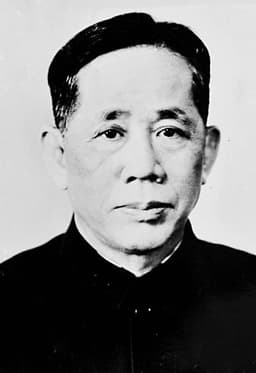
Le Duan
Politician · Modern
54.8Total

Taro Aso
Politician · Modern
38.3Total
Basic Information
Born
1907
1940
Died
1986
—
Era
Modern
Modern
Nationality
Vietnam
Japan
Occupation
Politician
Politician
Civilization
Eastern
Eastern
Score Comparison
Military (10%)
25.9
12.4
Political (20%)
65.0
32.2
Influence (20%)
58.3
48.6
Legacy (20%)
52.0
35.8
Leadership (15%)
72.0
51.9
Strategy (15%)
41.0
33.7
TOTAL
54.8
38.3
Le Duan — Complete Timeline
1960 AD
Elected to PolitburoPolitical Action◆ Major
Le Duan was elected to the Politburo of the Communist Party of Vietnam, becoming a top leader. He was a key figure in directing the Vietnam War against the United States and South Vietnam.
PolitburoCommunist PartyVietnam War
Impact: national
General Secretary of the Communist PartyPolitical Action◆ Major
Le Duan became General Secretary of the Communist Party of Vietnam, succeeding Ho Chi Minh as the top leader. He oversaw the unification of Vietnam after the war and implemented socialist policies.
General SecretaryLeadershipUnification
Impact: nationalconstructive
1968 AD
Tet Offensive planningWar◆ Major
Le Duan was a key architect of the Tet Offensive, a massive military campaign against South Vietnam and US forces. Although a tactical defeat, the offensive shifted US public opinion against the war.
Tet OffensiveVietnam WarMilitary strategy
Impact: global
1976 AD
Reunification of VietnamPolitical Action◆ Major
Le Duan oversaw the formal reunification of North and South Vietnam into the Socialist Republic of Vietnam. He implemented a Soviet-style command economy and collectivization in the south.
ReunificationSocialist RepublicCollectivization
Impact: nationalconstructive
1978 AD
Invasion of CambodiaWar◆ Major
Le Duan ordered the Vietnamese invasion of Cambodia, overthrowing the Khmer Rouge regime. The invasion led to a decade-long occupation and international isolation for Vietnam.
CambodiaInvasionKhmer Rouge
Impact: regionaldestructive
Taro Aso — Complete Timeline
2008 AD
Prime Ministership During Global Financial CrisisPolitical Action◆ Major
Aso became Prime Minister in September 2008 amid the global financial crisis. His government implemented a series of economic stimulus packages, but the recession deepened, and his approval ratings plummeted due to perceived ineffective leadership.
Financial CrisisEconomic PolicyStimulus
Impact: national
2009 AD
Resignation as LDP PresidentPolitical Action◆ Major
Aso resigned as LDP president after the party suffered a historic defeat in the 2009 general election, losing power to the DPJ. The LDP won only 119 seats, its worst result since 1955, ending over 50 years of near-continuous rule.
Election DefeatLDP LossPolitical Change
Impact: nationaldestructive
2012 AD
Finance Minister Under AbePolitical Action◆ Major
Aso served as Deputy Prime Minister and Finance Minister in Shinzo Abe's cabinet from 2012 to 2021. He was a key architect of Abenomics, implementing aggressive monetary easing and fiscal stimulus, and overseeing the consumption tax hike.
AbenomicsEconomic PolicyFinance Minister
Impact: national
2013 AD
Controversial Historical StatementsCultural
Aso made repeated controversial statements about Japan's wartime history, including questioning the fairness of the Tokyo Trials and suggesting Japan should learn from Nazi Germany's constitutional changes. These remarks drew international condemnation.
Historical RevisionismControversyDiplomatic Tensions
Impact: regional
This comparison has not been analyzed yet.
One-time AI generation (~1 minute). Scores and timeline are already available below.
Rankings
🥇
Le DuanLeader
Mil: 25.9Pol: 65.0Inf: 58.3
54.8
🥈
Taro Aso
Mil: 12.4Pol: 32.2Inf: 48.6
38.3
+16.5 behind
How This Comparison Works
Algorithm
Each figure is scored on 6 dimensions (0—100 scale) based on structured historical data: Military (10%), Political (20%), Influence (20%), Legacy (20%), Leadership (15%), Strategy (15%). The weighted total produces the final ranking.
Data Sources
Scores are computed from structured sub-indicators in the database. Scale factors adjust for era (Ancient ×0.85, Modern ×1.0) and civilization size (Eastern ×1.05, Other ×0.80) to account for differences in population and military scale.
Maximum 3 Figures
Comparisons are limited to 2—3 figures to ensure readability and statistical meaningfulness.
Error Margins
±5 points per dimension — Sub-scores are derived from historical records with inherent uncertainty. Two figures within 5 points on a dimension should be considered roughly equivalent in that area.
Total Score Accuracy
±3 points overall — The weighted combination of 6 dimensions produces a total score with approximately ±3 points of uncertainty. Differences of less than 3 points are not statistically significant— the figures are effectively tied.
Known Limitations
- Historical records are incomplete and uneven across civilizations
- Figures from oral-tradition societies may be underrepresented
- Occupation labels can misclassify multi-role figures
- Scores measure capability and impact, not moral character
- Quantitative scoring is a comparison tool, not absolute truth
Capability Radar
Military (10%) — Battles & Warfare
Battles
20
17
Win Rate
20
17
Expansion
30
19
Political (20%) — Governance & Reform
Reform
70
20
Diplomacy
75
25
Economy
60
20
Influence (20%) — Cultural & Global Reach
Cultural
50
10
Global
60
10
Legacy (20%) — Historical Impact
Historical
70
10
Longevity
60
5
Leadership (15%) — Power & Stability
Tenure
85
30
Stability
65
15
Strategy (15%) — Tactics & Innovation
Strategy
30
26
Tactics
20
26
Reform
30
27
Similar Comparisons
Comments & Discussion
No comments yet. Be the first to share your thoughts!