Loading...
This comparison has not been analyzed yet.
One-time AI generation (~1 minute). Scores and timeline are already available below.
Le Loi vs Ngo Quyen
Le Loi leads by 13.8 pts · 2 figures compared
…
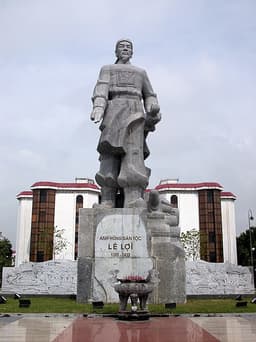
Le Loi
Emperor · Medieval
68.2Total
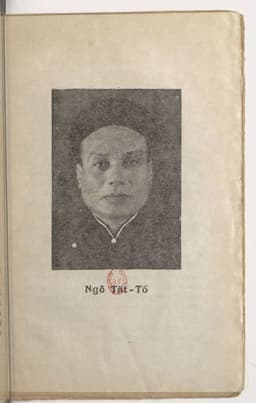
Ngo Quyen
Emperor · Medieval
54.4Total
Basic Information
Born
1385
897
Died
1433
944
Era
Medieval
Medieval
Nationality
Vietnam
Vietnam
Occupation
Emperor
Emperor
Civilization
Eastern
Eastern
Score Comparison
Military (10%)
74.7
50.0
Political (20%)
60.0
42.3
Influence (20%)
68.0
56.7
Legacy (20%)
68.0
55.0
Leadership (15%)
72.0
65.7
Strategy (15%)
69.1
52.5
TOTAL
68.2
54.4
Le Loi — Complete Timeline
1418 AD
Lam Son Uprising BeginsWar
Le Loi launched the Lam Son uprising against Ming Chinese occupation of Dai Viet. He gathered a small force in the Lam Son region of Thanh Hoa province, beginning a decade-long guerrilla war.
Ming OccupationVietnamese IndependenceGuerrilla War
Impact: national
1426 AD
Siege of Dong QuanWar◆ Major
Le Loi's forces besieged the Ming-held citadel of Dong Quan (Hanoi). The siege cut off Ming supply lines and forced the Chinese to negotiate, leading to the eventual withdrawal of Ming forces.
SiegeMing OccupationDai Viet
Impact: national
1427 AD
Battle of Chi Lang PassWar◆ Major
Le Loi's forces ambushed and defeated a large Ming relief army at Chi Lang Pass. This decisive victory forced the Ming court to recognize Dai Viet's independence and withdraw its remaining troops.
BattleMing OccupationIndependence
Impact: regional
1428 AD
Founding of the Later Le DynastyPolitical Action
Le Loi ascended the throne as Emperor Le Thai To, founding the Later Le dynasty. He established a new capital at Dong Kinh (Hanoi) and implemented policies to rebuild the war-torn country.
Later Le DynastyVietnamese HistoryReconstruction
Impact: regionalconstructive
Ngo Quyen — Complete Timeline
938 AD
Battle of Bach Dang RiverWar
Ngo Quyen defeated the Southern Han Chinese fleet at the Battle of Bach Dang River. He used a tactic of placing iron-tipped stakes in the riverbed, which impaled enemy ships at high tide. This victory ended over 1,000 years of Chinese rule in Vietnam.
BattleIndependenceChina
Impact: regionalconstructive
939 AD
Proclaimed King of VietnamPolitical Action
After his victory, Ngo Quyen proclaimed himself king and established the Ngo Dynasty, ruling from Co Loa. He established an independent Vietnamese state, breaking away from Chinese suzerainty.
IndependenceNgo DynastyKing
Impact: regionalconstructive
This comparison has not been analyzed yet.
One-time AI generation (~1 minute). Scores and timeline are already available below.
Rankings
🥇
Le LoiLeader
Mil: 74.7Pol: 60.0Inf: 68.0
68.2
🥈
Ngo Quyen
Mil: 50.0Pol: 42.3Inf: 56.7
54.4
+13.8 behind
How This Comparison Works
Algorithm
Each figure is scored on 6 dimensions (0—100 scale) based on structured historical data: Military (10%), Political (20%), Influence (20%), Legacy (20%), Leadership (15%), Strategy (15%). The weighted total produces the final ranking.
Data Sources
Scores are computed from structured sub-indicators in the database. Scale factors adjust for era (Ancient ×0.85, Modern ×1.0) and civilization size (Eastern ×1.05, Other ×0.80) to account for differences in population and military scale.
Maximum 3 Figures
Comparisons are limited to 2—3 figures to ensure readability and statistical meaningfulness.
Error Margins
±5 points per dimension — Sub-scores are derived from historical records with inherent uncertainty. Two figures within 5 points on a dimension should be considered roughly equivalent in that area.
Total Score Accuracy
±3 points overall — The weighted combination of 6 dimensions produces a total score with approximately ±3 points of uncertainty. Differences of less than 3 points are not statistically significant— the figures are effectively tied.
Known Limitations
- Historical records are incomplete and uneven across civilizations
- Figures from oral-tradition societies may be underrepresented
- Occupation labels can misclassify multi-role figures
- Scores measure capability and impact, not moral character
- Quantitative scoring is a comparison tool, not absolute truth
Capability Radar
Military (10%) — Battles & Warfare
Battles
75
45
Win Rate
80
70
Expansion
65
25
Political (20%) — Governance & Reform
Reform
70
35
Diplomacy
75
50
Economy
65
30
Influence (20%) — Cultural & Global Reach
Cultural
80
60
Global
55
55
Legacy (20%) — Historical Impact
Historical
85
75
Longevity
75
70
Leadership (15%) — Power & Stability
Tenure
60
40
Stability
70
45
Strategy (15%) — Tactics & Innovation
Strategy
82
60
Tactics
78
65
Reform
70
30
Similar Comparisons
Comments & Discussion
No comments yet. Be the first to share your thoughts!