Loading...
Leo III the Isaurian vs Napoleon Bonaparte
Leo III the Isaurian leads by 1.4 pts · 2 figures compared
…
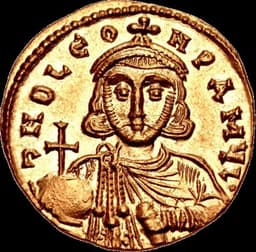
Leo III the Isaurian
Emperor · Medieval
72.3Total

Napoleon Bonaparte
General · Modern
70.9Total
Basic Information
Born
685
1769
Died
741
1821
Era
Medieval
Modern
Nationality
Byzantine Empire
France
Occupation
Emperor
General
Civilization
Western
Western
Score Comparison
Military (10%)
67.3
94.0
Political (20%)
65.0
72.0
Influence (20%)
82.0
40.0
Legacy (20%)
72.0
80.0
Leadership (15%)
69.6
78.0
Strategy (15%)
69.1
90.0
TOTAL
72.3
70.9
Leo III the Isaurian — Complete Timeline
717 AD
Defense of Constantinople (Second Arab Siege)War
Leo III successfully defended Constantinople from a massive Arab siege by the Umayyad Caliphate. The siege lasted from 717 to 718. Leo used Greek fire and a harsh winter to defeat the Arab fleet and army, saving the Byzantine Empire from conquest and halting Arab expansion into Europe.
Arab SiegeDefenseConstantinople
Impact: globalconstructive
720 AD
Administrative and Military ReformsReform◆ Major
Leo III reorganized the Byzantine military and administrative system, strengthening the theme system. He created new themes and improved the defense of the empire. These reforms increased the empire's military effectiveness and administrative efficiency.
Military ReformTheme SystemAdministration
Impact: nationalconstructive
726 AD
Promulgation of the EclogaReform◆ Major
Leo III issued the Ecloga, a legal code that revised and simplified Roman law. The code was written in Greek and emphasized Christian principles, including greater protection for the poor and women. It influenced later Byzantine and Slavic legal systems.
Legal ReformEclogaLaw
Impact: nationalconstructive
Institution of IconoclasmCultural◆ Major
Leo III issued an edict banning the veneration of icons, initiating the first period of Byzantine Iconoclasm. He ordered the destruction of religious images and persecuted iconodules. This policy caused deep religious divisions within the empire and strained relations with the Papacy.
IconoclasmReligious PolicyControversy
Impact: globaldestructive
740 AD
Battle of AkroinonWar◆ Major
Leo III led the Byzantine army to a decisive victory over the Umayyad Arabs at the Battle of Akroinon. The Byzantine forces destroyed the Arab army, ending the Arab threat to Anatolia for decades. This victory consolidated Byzantine control over Asia Minor.
BattleArab-Byzantine WarsVictory
Impact: regionalconstructive
Napoleon Bonaparte — Complete Timeline
1799 AD
Coup of 18 BrumaireOther◆ Major
Napoleon Bonaparte, with support from his brother Lucien and key political figures, overthrew the Directory in a bloodless coup. He established the Consulate with himself as First Consul, effectively becoming the ruler of France. This event ended the French Revolution's most unstable period.
French RevolutionCoupRise to Power
Impact: regional
1804 AD
Promulgation of the Napoleonic CodeOther◆ Major
Napoleon enacted the Civil Code of the French, known as the Napoleonic Code, a comprehensive set of laws that replaced the fragmented feudal legal systems. The code established legal equality, protected property rights, and secularized law. It became the basis for legal systems in many European and world countries.
Legal ReformNapoleonic CodeCivil Law
Impact: globalconstructive
1805 AD
Battle of AusterlitzWar◆ Major
Napoleon's Grande Arm
Napoleonic WarsBattleDecisive Victory
Impact: global
1812 AD
Invasion of RussiaWar◆ Major
Napoleon led the Grande Arm
Napoleonic WarsInvasionDisaster
Impact: globaldestructive
1815 AD
Battle of WaterlooWar◆ Major
Napoleon's French army was defeated by the combined forces of the Duke of Wellington's Anglo-Allied army and Gebhard Leberecht von Bl
Napoleonic WarsBattleFinal Defeat
Impact: globaldestructive
Expert Analysis
leo-iii-the-isaurian-vs-napoleon-bonaparte
# The Emperor and the Iconoclast
On a September morning in 1812, Napoleon Bonaparte stood atop a hill outside Borodino, watching his Grand Army push toward Moscow through a haze of cannon smoke. He was forty-three years old, master of Europe, and about to take a step that would doom him. A thousand years earlier, another emperor—older, smaller in ambition but perhaps greater in foresight—stood on the walls of Constantinople as Arab warships filled the Sea of Marmara. Leo III the Isaurian watched the Umayyad fleet approach, knowing that if the city fell, the West might never recover. Both men faced sieges that defined their reigns. One chose to advance. The other chose to endure. That difference tells us everything.
Origins
Napoleon was born in 1769 on Corsica, an island of fierce independence newly annexed by France. His family was minor nobility, poor and resentful. He spoke Italian before French, and his schoolmates mocked his accent. He was small, quick-tempered, and driven—a boy who read military history obsessively and believed he was destined for greatness. The French Revolution shattered the old order, and in that chaos, a young artillery officer with talent and ambition could rise faster than in any monarchy.
Leo III came from a different world entirely. Born around 685 in Germanikeia, on the turbulent frontier between Byzantium and the Caliphate, he was a Syrian Christian who grew up speaking Greek and Aramaic. His family were refugees, resettled by the emperor Justinian II into Thrace. Leo learned war young, fighting Arabs on the border. He was practical, tough, and deeply religious—a man who understood that survival required discipline, not glory. The Byzantine Empire he served was ancient, exhausted, and surrounded by enemies. There were no revolutions to exploit, only slow decay to reverse.
Rise to Power
Napoleon’s ascent was meteoric. At twenty-four, he drove the British out of Toulon. At twenty-six, he crushed a royalist uprising in Paris with a “whiff of grapeshot.” At twenty-seven, he took command of a starving army in Italy and turned it into a legend, winning battles at Lodi, Arcole, and Rivoli. He understood propaganda, timing, and the psychology of men. After a disastrous Egyptian campaign, he returned to France in 1799, staged a coup, and made himself First Consul. By 1804, he was Emperor. The path was open because the old system had collapsed.
Leo’s rise was slower and more dangerous. He became a general under Emperor Anastasius II, then served the usurper Theodosius III. When the Arab army invaded Anatolia in 716, Leo was sent to stop them—but instead he negotiated, bought time, and positioned himself. In 717, he marched on Constantinople, deposed Theodosius, and took the throne. He had no revolutionary mandate, only the desperate need of an empire on the edge of extinction. He seized power not to remake the world, but to save what remained.
Leadership & Governance
Napoleon ruled like a storm. He reorganized France into departments, centralized administration, and created the Napoleonic Code—a legal system that enshrined equality before the law, property rights, and secular governance. It was a masterpiece of clarity and logic, and it spread across Europe wherever his armies went. Militarily, he was a genius: he used speed, concentration, and maneuver to destroy larger armies. At Austerlitz in 1805, he crushed the combined forces of Russia and Austria in a single day. He believed that will and audacity could overcome any obstacle.
Leo ruled like a wall. He reformed the Byzantine military by strengthening the theme system—a network of provincial armies loyal to local commanders and tied to land grants. In 717, he defended Constantinople during the Second Arab Siege, using Greek fire, fortifications, and patience. The siege lasted nearly a year; the Arabs starved, froze, and finally withdrew. In 720, he reorganized the administration, cutting corruption and improving tax collection. In 726, he issued the Ecloga, a legal code written in Greek that emphasized justice for the poor and simplified Roman law. It was not revolutionary—it was restorative.
But Leo also made a decision that would define his legacy in the most controversial way. In 726, he banned the veneration of icons—images of Christ, the Virgin, and saints. This was Iconoclasm, and it split the Byzantine world. Leo believed that icons violated the commandment against idolatry, and that the empire’s recent defeats were divine punishment for this sin. He ordered icons removed, destroyed, and whitewashed. Monasteries resisted. The pope in Rome condemned him. The people rioted. Leo enforced his edict with the same iron will he used against Arabs. He was not a reformer who sought popularity; he was a soldier who believed in order, even harsh order.
Triumph & Tragedy
Napoleon’s greatest moment was Austerlitz—perfectly planned, flawlessly executed. His greatest tragedy was the invasion of Russia in 1812. He took 600,000 men into the snow; fewer than 100,000 came back. He refused to listen to advice, refused to adapt, refused to retreat until it was too late. His defeat at Leipzig in 1813 cost him Germany. His exile to Elba was temporary; his return lasted a hundred days. At Waterloo in 1815, he made mistakes—sending his reserves too late, misjudging the Prussian arrival—and lost everything. He died in 1821 on Saint Helena, a prisoner of the British.
Leo’s greatest moment was the defense of Constantinople in 717–718. He saved not just a city, but a civilization. Without Byzantium, the Arab conquest of Europe might have succeeded. His defeat of the Umayyads at the Battle of Akroinon in 740 broke their offensive power permanently. But his tragedy was Iconoclasm. It divided the church, alienated the West, and created a schism that weakened Byzantium for generations. Leo died in 741, still fighting—literally—against Arab raids and internal rebellion. He never saw peace.
Character & Destiny
Napoleon was restless, brilliant, and ultimately self-destructive. He once said, “Glory is fleeting, but obscurity is forever.” He could not stop. Every victory demanded another. He trusted his star, and when it faded, he could not believe it. His character was his destiny: ambition without limit, pride without humility.
Leo was cautious, stubborn, and devout. He once said, “A king who does not govern according to law is no king.” He believed in rules, tradition, and divine order. He was not interested in glory—he wanted stability. His character made him a survivor, but also a divider. He forced his faith on his people, and that cost him their love.
Legacy
Napoleon reshaped Europe. The Napoleonic Code remains the basis of civil law in dozens of countries. He ended feudalism, spread nationalism, and inspired modern warfare. But he also left a trail of destruction—millions dead, borders redrawn by force, and a myth of the “great man” that still haunts politics.
Leo III is remembered less, but his impact was profound. He saved Byzantium from annihilation. The Ecloga influenced later Slavic and Byzantine law. Iconoclasm, though eventually reversed, changed how Christians thought about art, worship, and authority. He proved that an empire could survive by reforming from within—if it was willing to pay the price of division.
Conclusion
Two emperors, a thousand years apart. One conquered the world and lost it. One defended a city and kept it. Napoleon burned like a comet; Leo burned like a lamp. Both were ruthless, both were brilliant, both were flawed. But perhaps the deepest difference is this: Napoleon wanted to change everything, and Leo wanted to preserve what mattered. In the long run, preservation may be the harder task. The comet is remembered; the lamp is still needed.
Rankings
🥇
Leo III the IsaurianLeader
Mil: 67.3Pol: 65.0Inf: 82.0
72.3
🥈
Napoleon Bonaparte
Mil: 94.0Pol: 72.0Inf: 40.0
70.9
+1.4 behind
How This Comparison Works
Algorithm
Each figure is scored on 6 dimensions (0—100 scale) based on structured historical data: Military (10%), Political (20%), Influence (20%), Legacy (20%), Leadership (15%), Strategy (15%). The weighted total produces the final ranking.
Data Sources
Scores are computed from structured sub-indicators in the database. Scale factors adjust for era (Ancient ×0.85, Modern ×1.0) and civilization size (Eastern ×1.05, Other ×0.80) to account for differences in population and military scale.
Maximum 3 Figures
Comparisons are limited to 2—3 figures to ensure readability and statistical meaningfulness.
Error Margins
±5 points per dimension — Sub-scores are derived from historical records with inherent uncertainty. Two figures within 5 points on a dimension should be considered roughly equivalent in that area.
Total Score Accuracy
±3 points overall — The weighted combination of 6 dimensions produces a total score with approximately ±3 points of uncertainty. Differences of less than 3 points are not statistically significant— the figures are effectively tied.
Known Limitations
- Historical records are incomplete and uneven across civilizations
- Figures from oral-tradition societies may be underrepresented
- Occupation labels can misclassify multi-role figures
- Scores measure capability and impact, not moral character
- Quantitative scoring is a comparison tool, not absolute truth
Capability Radar
Military (10%) — Battles & Warfare
Battles
75
95
Win Rate
80
90
Expansion
60
95
Political (20%) — Governance & Reform
Reform
85
95
Diplomacy
65
80
Economy
70
85
Influence (20%) — Cultural & Global Reach
Cultural
75
85
Global
65
90
Legacy (20%) — Historical Impact
Historical
80
95
Longevity
70
90
Leadership (15%) — Power & Stability
Tenure
72
85
Stability
60
70
Strategy (15%) — Tactics & Innovation
Strategy
82
95
Tactics
78
98
Reform
70
92
Similar Comparisons
Comments & Discussion
No comments yet. Be the first to share your thoughts!