Loading...
This comparison has not been analyzed yet.
One-time AI generation (~1 minute). Scores and timeline are already available below.
Leon Gambetta vs Li Dazhao
Leon Gambetta leads by 17.8 pts · 2 figures compared
…
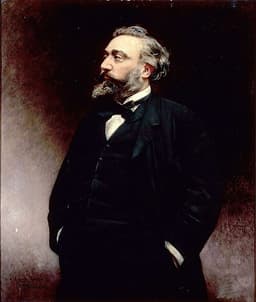
Leon Gambetta
Politician · Modern
61.2Total
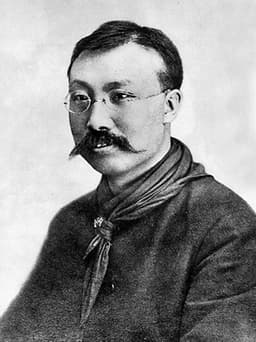
Li Dazhao
Politician · Modern
43.4Total
Basic Information
Born
1838
1889
Died
1882
1927
Era
Modern
Modern
Nationality
France
China
Occupation
Politician
Politician
Civilization
Western
Eastern
Score Comparison
Military (10%)
50.0
10.9
Political (20%)
70.0
39.4
Influence (20%)
62.0
61.0
Legacy (20%)
56.0
52.0
Leadership (15%)
79.8
31.2
Strategy (15%)
42.6
34.4
TOTAL
61.2
43.4
Leon Gambetta — Complete Timeline
1870 AD
Proclamation of the Third Republic (1870)Political Action
After the fall of Napoleon III at Sedan, Gambetta proclaimed the Third Republic from the H
Third RepublicRegime Change
Impact: nationalconstructive
Escape from Paris by Balloon (1870)Political Action◆ Major
During the Siege of Paris, Gambetta escaped the city in a hot air balloon to organize resistance in the provinces. He raised new armies and continued the war effort against Prussia.
Franco-Prussian WarResistance
Impact: nationalconstructive
Minister of the Interior (1870-1871)Political Action◆ Major
Gambetta served as Minister of the Interior in the Government of National Defense. He directed the war effort and attempted to continue fighting after the fall of Paris.
Franco-Prussian WarGovernment
Impact: national
1871 AD
Founding of the Republican Union (1871)Political Action◆ Major
Gambetta founded the Republican Union party, which advocated for a secular, democratic republic. The party became a major force in the National Assembly.
Political PartyRepublicanism
Impact: nationalconstructive
1879 AD
President of the Chamber of Deputies (1879-1882)Political Action◆ Major
Gambetta was elected President of the Chamber of Deputies, a powerful position in the Third Republic. He used it to advance republican reforms.
Third RepublicParliament
Impact: national
1881 AD
Prime Minister of France (1881-1882)Political Action◆ Major
Gambetta became Prime Minister, forming the 'Grand Ministry' of republican unity. His government lasted only 73 days due to opposition to his proposed constitutional reforms.
Third RepublicPrime Minister
Impact: national
Li Dazhao — Complete Timeline
1921 AD
Co-founding of the Chinese Communist PartyPolitical Action
Li Dazhao, a professor at Peking University and early Marxist thinker, was a key founder of the Chinese Communist Party. He recruited many early members and helped establish the party's intellectual foundations through his writings.
Chinese Communist PartyFoundingMarxism
Impact: globalconstructive
1927 AD
Execution by Zhang ZuolinPolitical Action◆ Major
Li Dazhao was arrested by the warlord Zhang Zuolin's forces in Beijing during a raid on the Soviet embassy. He was executed by hanging, becoming a martyr for the Communist cause. His death galvanized opposition to the warlord government.
Chinese Communist PartyExecutionMartyr
Impact: nationaltragic
This comparison has not been analyzed yet.
One-time AI generation (~1 minute). Scores and timeline are already available below.
Rankings
🥇
Leon GambettaLeader
Mil: 50.0Pol: 70.0Inf: 62.0
61.2
🥈
Li Dazhao
Mil: 10.9Pol: 39.4Inf: 61.0
43.4
+17.8 behind
How This Comparison Works
Algorithm
Each figure is scored on 6 dimensions (0—100 scale) based on structured historical data: Military (10%), Political (20%), Influence (20%), Legacy (20%), Leadership (15%), Strategy (15%). The weighted total produces the final ranking.
Data Sources
Scores are computed from structured sub-indicators in the database. Scale factors adjust for era (Ancient ×0.85, Modern ×1.0) and civilization size (Eastern ×1.05, Other ×0.80) to account for differences in population and military scale.
Maximum 3 Figures
Comparisons are limited to 2—3 figures to ensure readability and statistical meaningfulness.
Error Margins
±5 points per dimension — Sub-scores are derived from historical records with inherent uncertainty. Two figures within 5 points on a dimension should be considered roughly equivalent in that area.
Total Score Accuracy
±3 points overall — The weighted combination of 6 dimensions produces a total score with approximately ±3 points of uncertainty. Differences of less than 3 points are not statistically significant— the figures are effectively tied.
Known Limitations
- Historical records are incomplete and uneven across civilizations
- Figures from oral-tradition societies may be underrepresented
- Occupation labels can misclassify multi-role figures
- Scores measure capability and impact, not moral character
- Quantitative scoring is a comparison tool, not absolute truth
Capability Radar
Military (10%) — Battles & Warfare
Battles
28
13
Win Rate
31
18
Expansion
32
23
Political (20%) — Governance & Reform
Reform
70
60
Diplomacy
65
20
Economy
55
10
Influence (20%) — Cultural & Global Reach
Cultural
45
55
Global
55
50
Legacy (20%) — Historical Impact
Historical
60
70
Longevity
50
65
Leadership (15%) — Power & Stability
Tenure
60
10
Stability
50
5
Strategy (15%) — Tactics & Innovation
Strategy
35
21
Tactics
43
26
Reform
46
32
Similar Comparisons
Comments & Discussion
No comments yet. Be the first to share your thoughts!