Loading...
This comparison has not been analyzed yet.
One-time AI generation (~1 minute). Scores and timeline are already available below.
Li Sheng vs Raymond of Toulouse
Raymond of Toulouse leads by 6.1 pts · 2 figures compared
…

Li Sheng
General · Medieval
45.4Total
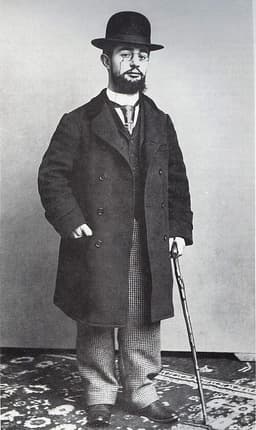
Raymond of Toulouse
General · Medieval
51.5Total
Basic Information
Born
727
1041
Died
793
1105
Era
Medieval
Medieval
Nationality
China
France
Occupation
General
General
Civilization
Eastern
Western
Score Comparison
Military (10%)
70.0
70.0
Political (20%)
27.9
40.8
Influence (20%)
46.3
51.0
Legacy (20%)
40.0
44.2
Leadership (15%)
50.7
62.0
Strategy (15%)
50.0
52.5
TOTAL
45.4
51.5
Li Sheng — Complete Timeline
763 AD
Suppressed An Lushan RebellionWar
Li Sheng fought in the later stages of the An Lushan Rebellion, contributing to the suppression of rebel forces. His early military career established his reputation as a capable commander.
An Lushan RebellionTang DynastyMilitary Campaign
Impact: national
784 AD
Recaptured Chang'an from Zhu CiWar
Li Sheng led Tang loyalist forces to recapture the capital Chang'an from the rebel Zhu Ci. This victory restored the Tang emperor to the throne and ended the Zhu Ci Rebellion, cementing Li Sheng's reputation as a key military figure.
Zhu Ci RebellionChang'an RecaptureTang Restoration
Impact: nationalconstructive
Appointed Grand GeneralPolitical Action◆ Major
Following his recapture of Chang'an, Li Sheng was appointed as Grand General and given high honors by Emperor Dezong. This appointment recognized his crucial role in saving the dynasty.
Tang DynastyMilitary AppointmentHonor
Impact: nationalconstructive
Raymond of Toulouse — Complete Timeline
1096 AD
Leadership of the First CrusadeWar◆ Major
Raymond of Toulouse was a principal leader of the First Crusade, commanding a large army from southern France. He participated in the siege of Nicaea and the Battle of Dorylaeum, and was a key figure in the capture of Antioch in 1098.
CrusadeMilitary Campaign
Impact: regional
1098 AD
Siege of AntiochWar◆ Major
Raymond played a leading role in the siege of Antioch, which lasted from October 1097 to June 1098. After the city's capture, he claimed the citadel but was outmaneuvered by Bohemond, who became Prince of Antioch.
CrusadeSiege
Impact: regional
1099 AD
Refusal of the Crown of JerusalemPolitical Action◆ Major
After the capture of Jerusalem in July 1099, Raymond was offered the crown but refused, reportedly out of piety. Godfrey of Bouillon was elected instead, taking the title 'Advocate of the Holy Sepulchre.'
Crusader StatesPolitics
Impact: regional
1102 AD
Siege of TripoliWar◆ Major
Raymond began the siege of Tripoli in 1102, establishing a fortified camp called Mount Pilgrim. He died in 1105 before the city fell, but his efforts laid the groundwork for the creation of the County of Tripoli under his son.
CrusadeSiegeCrusader States
Impact: regional
This comparison has not been analyzed yet.
One-time AI generation (~1 minute). Scores and timeline are already available below.
Rankings
🥇
Raymond of ToulouseLeader
Mil: 70.0Pol: 40.8Inf: 51.0
51.5
🥈
Li Sheng
Mil: 70.0Pol: 27.9Inf: 46.3
45.4
+6.1 behind
How This Comparison Works
Algorithm
Each figure is scored on 6 dimensions (0—100 scale) based on structured historical data: Military (10%), Political (20%), Influence (20%), Legacy (20%), Leadership (15%), Strategy (15%). The weighted total produces the final ranking.
Data Sources
Scores are computed from structured sub-indicators in the database. Scale factors adjust for era (Ancient ×0.85, Modern ×1.0) and civilization size (Eastern ×1.05, Other ×0.80) to account for differences in population and military scale.
Maximum 3 Figures
Comparisons are limited to 2—3 figures to ensure readability and statistical meaningfulness.
Error Margins
±5 points per dimension — Sub-scores are derived from historical records with inherent uncertainty. Two figures within 5 points on a dimension should be considered roughly equivalent in that area.
Total Score Accuracy
±3 points overall — The weighted combination of 6 dimensions produces a total score with approximately ±3 points of uncertainty. Differences of less than 3 points are not statistically significant— the figures are effectively tied.
Known Limitations
- Historical records are incomplete and uneven across civilizations
- Figures from oral-tradition societies may be underrepresented
- Occupation labels can misclassify multi-role figures
- Scores measure capability and impact, not moral character
- Quantitative scoring is a comparison tool, not absolute truth
Capability Radar
Military (10%) — Battles & Warfare
Battles
60
55
Win Rate
65
50
Expansion
30
50
Political (20%) — Governance & Reform
Reform
20
30
Diplomacy
35
55
Economy
25
40
Influence (20%) — Cultural & Global Reach
Cultural
25
40
Global
20
35
Legacy (20%) — Historical Impact
Historical
40
55
Longevity
30
40
Leadership (15%) — Power & Stability
Tenure
40
60
Stability
30
45
Strategy (15%) — Tactics & Innovation
Strategy
60
60
Tactics
55
45
Reform
20
20
Similar Comparisons
Comments & Discussion
No comments yet. Be the first to share your thoughts!