Loading...
Li Yuan vs Muhan Qaghan
Li Yuan leads by 8.8 pts · 2 figures compared
…
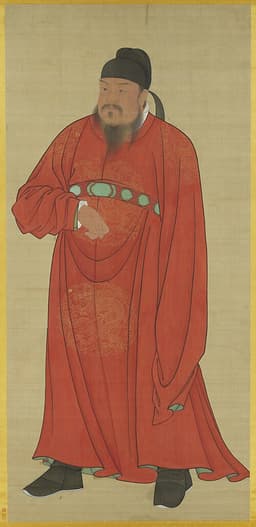
Li Yuan
Emperor · Medieval
73.7Total
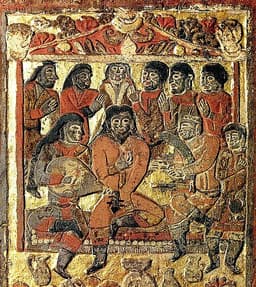
Muhan Qaghan
Emperor · Medieval
64.9Total
Basic Information
Born
566
540
Died
635
572
Era
Medieval
Medieval
Nationality
China
Gokturk Khaganate
Occupation
Emperor
Emperor
Civilization
Eastern
Eastern
Score Comparison
Military (10%)
78.0
74.0
Political (20%)
70.0
72.0
Influence (20%)
80.0
58.3
Legacy (20%)
71.4
54.0
Leadership (15%)
72.0
79.8
Strategy (15%)
67.2
66.3
TOTAL
73.7
64.9
Li Yuan — Complete Timeline
618 AD
Founded the Tang dynastyPolitical Action
Li Yuan, Duke of Tang, rebelled against the Sui dynasty and captured Chang'an. He declared himself Emperor Gaozu, founding the Tang dynasty that would rule China for nearly 300 years.
Tang dynastyFoundingSui-Tang transition
Impact: globalconstructive
621 AD
Battle of Hulao PassWar◆ Major
Li Yuan's son Li Shimin defeated the rival warlord Dou Jiande at Hulao Pass. This victory eliminated a major competitor and secured Tang control over the central plains.
Tang unificationBattleLi Shimin
Impact: national
626 AD
Abdicated in favor of Li ShiminPolitical Action◆ Major
After the Xuanwu Gate Incident where Li Shimin killed his brothers, Li Yuan abdicated the throne to his son. He became Taishang Huang (retired emperor) and lived in retirement.
Tang dynastySuccessionXuanwu Gate
Impact: national
Muhan Qaghan — Complete Timeline
557 AD
Conquest of the Hephthalite EmpireWar◆ Major
Muhan Qaghan allied with the Sassanid Persian Empire to defeat the Hephthalite Empire in Central Asia. The Hephthalites were crushed, and their territory was divided between the Turks and Persians, with the Turks gaining the eastern regions.
ConquestHephthalites
Impact: regionaldestructive
560 AD
Expansion of the Turkic Khaganate to its greatest extentWar◆ Major
Muhan Qaghan led campaigns that expanded the Turkic Khaganate to its maximum territorial extent, stretching from the Caspian Sea to the borders of China. He conquered the Hephthalites in Central Asia and subjugated many tribes, making the khaganate a dominant power.
ExpansionTurkic Empire
Impact: regionalconstructive
565 AD
Suppression of internal revoltsWar
Muhan Qaghan faced revolts from subject tribes, including the Tiele and other steppe peoples. He brutally suppressed these uprisings, executing many leaders and forcibly relocating populations to maintain control over the vast khaganate.
Revolt SuppressionInternal Conflict
Impact: regionaldestructive
568 AD
Diplomatic relations with the Byzantine EmpirePolitical Action◆ Major
Muhan Qaghan sent an embassy to the Byzantine Empire, establishing diplomatic and trade relations. This alliance was aimed against the Sassanid Persians, and it opened the Silk Road to Turkic merchants, increasing the khaganate's wealth and influence.
DiplomacyByzantine-Turkic Alliance
Impact: globalconstructive
Expert Analysis
Origins
Li Yuan was born in 566 in Chang'an, China, into a noble family with military tradition. His father, Li Bing, was a general under the Northern Zhou dynasty, and his mother was from the powerful Dugu clan. Li Yuan inherited the title of Duke of Tang and served as a commander under the Sui dynasty. He was educated in Confucian classics and military strategy, preparing him for leadership.
Muhan Qaghan, born around 520, was the son of Bumin Qaghan, founder of the Gokturk Khaganate. He grew up in the steppes of Central Asia, learning nomadic warfare and tribal politics. His early life was marked by the rapid expansion of the Turkic confederation under his father, who had defeated the Rouran Khaganate. Muhan inherited a powerful but unstable realm.
Rise to Power
Li Yuan rose to prominence during the collapse of the Sui dynasty. In 617, amid widespread rebellions, he launched a revolt from Taiyuan, his military base. He allied with Turkic tribes to secure his northern flank and marched on Chang'an, capturing it in 618. He declared himself Emperor Gaozu of Tang, establishing the Tang dynasty. His son Li Shimin played a crucial role in military campaigns, particularly at the Battle of Hulao Pass in 621, where he defeated the warlord Dou Jiande, securing Tang dominance over northern China.
Muhan Qaghan became khagan after his brother Issik Qaghan died around 553. He immediately faced internal revolts from subject tribes like the Tiele. He suppressed these uprisings with brutality, executing many leaders. His major achievement was the expansion of the khaganate to its greatest extent, stretching from the Caspian Sea to the borders of China. He allied with the Sassanid Persian Empire to conquer the Hephthalite Empire in Central Asia around 557-558, dividing their territory. He also established diplomatic relations with the Byzantine Empire in 568, sending an embassy to Constantinople.
Leadership & Governance
Li Yuan's leadership style was cautious and delegative. He relied heavily on his son Li Shimin for military command and on capable civil officials for administration. He instituted a legal code based on the Sui code, reformed the land distribution system, and restored Confucian education. His governance focused on consolidation, not expansion. He scored 70.0 in political skill, reflecting his ability to manage a transition from chaos to order.
Muhan Qaghan ruled with an iron fist. He maintained control through military force and tribal alliances, scoring 79.8 in leadership. He centralized power by suppressing rebellious tribes and appointing loyal relatives as governors. He promoted trade along the Silk Road, establishing ties with both the Byzantine and Sassanid empires. However, his governance lacked institutional depth; the khaganate remained a loose confederation dependent on personal loyalty.
Triumph & Tragedy
Li Yuan's greatest triumph was founding the Tang dynasty, which would become one of China's golden ages. His military score of 78.0 reflects his success in defeating rivals. However, his tragedy was the Xuanwu Gate Incident in 626, where his son Li Shimin killed his brothers and forced Li Yuan to abdicate. He lived as retired emperor until 635, his authority diminished.
Muhan Qaghan's triumph was expanding the khaganate to its peak, with military score 74.0. He destroyed the Hephthalites and established Turkic dominance in Central Asia. His tragedy was the internal instability he left behind. After his death around 572, the khaganate fractured due to succession disputes and tribal revolts, leading to its decline.
Character & Destiny
Li Yuan was pragmatic and family-oriented, but his indecisiveness led to the Xuanwu Gate crisis. He trusted his sons too much, leading to fratricide. His character scored 72.0 in leadership, showing competence but not brilliance. Historical assessments paint him as a capable founder overshadowed by his son.
Muhan Qaghan was ambitious and ruthless. He expanded the khaganate through warfare and diplomacy, but his harsh rule bred resentment. His character scored 79.8 in leadership, reflecting his ability to command loyalty through fear. However, his failure to establish stable succession doomed his legacy.
Legacy
Li Yuan's legacy is immense: the Tang dynasty lasted nearly 300 years (618-907) and influenced China's culture, law, and governance. His institutional reforms set the stage for the Tang golden age. His influence score of 80.0 and legacy score of 71.4 reflect this enduring impact.
Muhan Qaghan's legacy is more limited. The Gokturk Khaganate declined after his death, and later Turkic states were ephemeral. His influence score of 58.3 and legacy score of 54.0 indicate a ruler who achieved short-term expansion but left no lasting institutions.
Conclusion
Li Yuan had greater impact than Muhan Qaghan. Li Yuan's total score of 73.7 versus Muhan's 64.9 reflects his superior influence and legacy. While Muhan expanded a steppe empire, Li Yuan founded a dynasty that shaped Chinese civilization for centuries. The Tang dynasty's enduring institutions, culture, and territory surpass the ephemeral Turkic conquests. Li Yuan's cautious governance built a stable state; Muhan's military expansion created a fragile empire. In the long view, Li Yuan's contributions to world history are more significant.
Rankings
🥇
Li YuanLeader
Mil: 78.0Pol: 70.0Inf: 80.0
73.7
🥈
Muhan Qaghan
Mil: 74.0Pol: 72.0Inf: 58.3
64.9
+8.8 behind
How This Comparison Works
Algorithm
Each figure is scored on 6 dimensions (0—100 scale) based on structured historical data: Military (10%), Political (20%), Influence (20%), Legacy (20%), Leadership (15%), Strategy (15%). The weighted total produces the final ranking.
Data Sources
Scores are computed from structured sub-indicators in the database. Scale factors adjust for era (Ancient ×0.85, Modern ×1.0) and civilization size (Eastern ×1.05, Other ×0.80) to account for differences in population and military scale.
Maximum 3 Figures
Comparisons are limited to 2—3 figures to ensure readability and statistical meaningfulness.
Error Margins
±5 points per dimension — Sub-scores are derived from historical records with inherent uncertainty. Two figures within 5 points on a dimension should be considered roughly equivalent in that area.
Total Score Accuracy
±3 points overall — The weighted combination of 6 dimensions produces a total score with approximately ±3 points of uncertainty. Differences of less than 3 points are not statistically significant— the figures are effectively tied.
Known Limitations
- Historical records are incomplete and uneven across civilizations
- Figures from oral-tradition societies may be underrepresented
- Occupation labels can misclassify multi-role figures
- Scores measure capability and impact, not moral character
- Quantitative scoring is a comparison tool, not absolute truth
Capability Radar
Military (10%) — Battles & Warfare
Battles
75
75
Win Rate
80
80
Expansion
80
90
Political (20%) — Governance & Reform
Reform
75
65
Diplomacy
80
75
Economy
75
60
Influence (20%) — Cultural & Global Reach
Cultural
85
55
Global
85
55
Legacy (20%) — Historical Impact
Historical
90
65
Longevity
90
50
Leadership (15%) — Power & Stability
Tenure
70
80
Stability
70
70
Strategy (15%) — Tactics & Innovation
Strategy
85
85
Tactics
70
70
Reform
65
60
Similar Comparisons
Comments & Discussion
No comments yet. Be the first to share your thoughts!