Loading...
Lian Po vs Napoleon Bonaparte
Napoleon Bonaparte leads by 18.4 pts · 2 figures compared
…
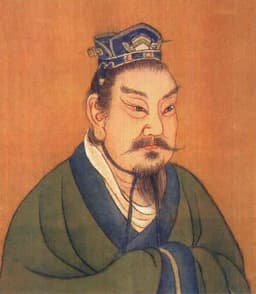
Lian Po
General · Ancient
52.5Total

Napoleon Bonaparte
General · Modern
70.9Total
Basic Information
Born
-327
1769
Died
-243
1821
Era
Ancient
Modern
Nationality
China
France
Occupation
General
General
Civilization
Eastern
Western
Score Comparison
Military (10%)
67.3
94.0
Political (20%)
26.4
72.0
Influence (20%)
57.2
40.0
Legacy (20%)
50.0
80.0
Leadership (15%)
61.1
78.0
Strategy (15%)
58.0
90.0
TOTAL
52.5
70.9
Lian Po — Complete Timeline
283 BC
Defeated Qi ForcesWar
Lian Po led Zhao armies to victory against the state of Qi, capturing several cities. This campaign expanded Zhao's territory and demonstrated his military prowess as a general.
BattleZhaoQi
Impact: regional
279 BC
Reconciled with Lin XiangruCultural◆ Major
Lian Po, a veteran general of Zhao, initially resented Lin Xiangru's promotion above him. After learning of Lin's selfless behavior for the state, Lian Po apologized by carrying a thorny stick to Lin's residence, and the two became close allies.
ReconciliationZhaoFriendship
Impact: nationalconstructive
260 BC
Replaced by Zhao Kuo at ChangpingPolitical Action◆ Major
King Xiaocheng of Zhao replaced Lian Po with Zhao Kuo as commander at the Battle of Changping, against the advice of Zhao She. Lian Po's defensive strategy was abandoned, leading to a disastrous defeat for Zhao.
ReplacementBattle of ChangpingZhao
Impact: regionaltragic
Napoleon Bonaparte — Complete Timeline
1799 AD
Coup of 18 BrumaireOther◆ Major
Napoleon Bonaparte, with support from his brother Lucien and key political figures, overthrew the Directory in a bloodless coup. He established the Consulate with himself as First Consul, effectively becoming the ruler of France. This event ended the French Revolution's most unstable period.
French RevolutionCoupRise to Power
Impact: regional
1804 AD
Promulgation of the Napoleonic CodeOther◆ Major
Napoleon enacted the Civil Code of the French, known as the Napoleonic Code, a comprehensive set of laws that replaced the fragmented feudal legal systems. The code established legal equality, protected property rights, and secularized law. It became the basis for legal systems in many European and world countries.
Legal ReformNapoleonic CodeCivil Law
Impact: globalconstructive
1805 AD
Battle of AusterlitzWar◆ Major
Napoleon's Grande Arm
Napoleonic WarsBattleDecisive Victory
Impact: global
1812 AD
Invasion of RussiaWar◆ Major
Napoleon led the Grande Arm
Napoleonic WarsInvasionDisaster
Impact: globaldestructive
1815 AD
Battle of WaterlooWar◆ Major
Napoleon's French army was defeated by the combined forces of the Duke of Wellington's Anglo-Allied army and Gebhard Leberecht von Bl
Napoleonic WarsBattleFinal Defeat
Impact: globaldestructive
Expert Analysis
lian-po-vs-napoleon-bonaparte
# The General’s Dilemma: Napoleon and Lian Po
On a June morning in 1815, Napoleon Bonaparte stood on a muddy ridge near Waterloo, watching his Imperial Guard march into cannon fire. He was forty-five, a man who had crowned himself emperor and reshaped Europe, yet within hours he would be a fugitive, his empire dissolving like morning mist. Nearly two thousand years earlier and half a world away, another general faced a different kind of defeat. Lian Po, the old warrior of Zhao, had been replaced by a younger man—a politician’s favorite—and sent into exile, his life’s work undone not by enemy steel but by court intrigue. Two generals, two civilizations, two endings. What drove them to such different fates?
Origins
Napoleon was born in 1769 on the island of Corsica, a place of rugged independence and simmering resentment against French rule. His family was minor nobility, poor enough to know hunger but proud enough to dream. He entered a world of revolution. France was tearing itself apart, and the old order—kings, aristocrats, inherited privilege—was collapsing into dust. For a boy with ambition and a mind for mathematics, this chaos was opportunity. The era demanded men who could think fast, act faster, and kill without hesitation.
Lian Po was born around 327 BCE, during the Warring States period of ancient China. Seven kingdoms fought for supremacy, and Zhao was a state of warriors. His world was not one of revolution but of endless, grinding conflict. Loyalty was measured in decades, not battles. A general’s reputation was built slowly, through campaigns that stretched across years, and lost in a single court whisper. Lian Po grew up in a society that valued age, experience, and hierarchy—the opposite of Napoleon’s volatile, meritocratic age.
Rise to Power
Napoleon’s ascent was meteoric. At twenty-four, he crushed a royalist uprising in Paris with a “whiff of grapeshot”—a brutal, efficient act that caught the attention of the revolutionary government. By twenty-six, he was commanding armies in Italy, winning battles against larger forces through speed, deception, and devastating artillery. He did not climb the ladder; he burned it. Each victory made him more indispensable, until he could seize power in a coup in 1799 and crown himself emperor in 1804. His rise was a product of chaos: when institutions crumble, the boldest man wins.
Lian Po rose differently. He earned his reputation over decades. In 283 BCE, he led Zhao’s armies against the state of Qi, capturing cities and expanding his kingdom’s territory. He was not a young prodigy but a seasoned veteran, respected for his reliability. His power came not from dazzling victories but from the trust of his king and the loyalty of his soldiers. In ancient China, a general’s authority was rooted in patience and proven service, not personal ambition.
Leadership & Governance
Napoleon ruled like a force of nature. He reorganized France’s legal system with the Napoleonic Code, a rational, efficient framework that replaced feudal chaos with clear laws. He built roads, schools, and a centralized bureaucracy. But his genius was military. He fought more than sixty battles and lost only seven. He moved armies faster than anyone before him, lived off the land, and struck at enemy weaknesses with surgical precision. His political wisdom, however, was flawed. He could not stop conquering. Peace bored him. He placed his brothers on thrones, ignored the limits of his empire, and provoked enemies into coalitions that eventually crushed him.
Lian Po governed through example. His greatest act was not a battle but a reconciliation. When the diplomat Lin Xiangru was promoted above him, Lian Po initially raged. But upon learning of Lin’s selfless efforts to protect Zhao, he humbled himself, carrying thorns on his back to apologize. This story—"offer a humble apology"—became a Chinese proverb. Lian Po understood that a general’s strength lay not in pride but in unity. His military strategy was cautious, defensive, and methodical. He knew when to fight and when to wait. At the Battle of Changping in 260 BCE, he correctly judged that Zhao could not defeat Qin in open battle and fortified his positions. It was the right decision—but it cost him his command.
Triumph & Tragedy
Napoleon’s triumph was Austerlitz in 1805. He lured the Russian and Austrian armies into a trap, crushed them, and dissolved the Holy Roman Empire. He stood at the peak of Europe, master of a continent. His tragedy was Russia in 1812. He invaded with 600,000 men; fewer than 100,000 returned. The Russian winter, the scorched earth, his own refusal to compromise—these destroyed him. Exiled to Elba, he escaped and tried again, only to meet Wellington at Waterloo. He died alone on Saint Helena, a prisoner of the British.
Lian Po’s triumph was his long career of service, his loyalty to Zhao through decades of war. His tragedy was the Battle of Changping. King Xiaocheng of Zhao replaced him with Zhao Kuo, a brilliant theorist with no practical experience. Zhao Kuo led the army into a trap; 400,000 soldiers were slaughtered. Lian Po lived on, but his state never recovered. He fled into exile, eventually dying in a foreign land, a forgotten old man.
Character & Destiny
Napoleon was driven by an insatiable hunger. “Impossible is a word to be found only in the dictionary of fools,” he said. He believed he could bend history to his will. This made him great—and doomed him. He could not share power, could not stop, could not learn from defeat. His character was his destiny.
Lian Po was driven by duty. He served his king, his state, and his soldiers. When replaced, he did not rebel. He accepted his fate, even as his nation crumbled. His humility saved his reputation but not his kingdom. His character reflected the Confucian ideal: the wise man submits to the greater good.
Legacy
Napoleon is remembered as the man who rode the whirlwind. His legal code survives in much of Europe. His military tactics are still studied. But his legacy is ambiguous: a liberator who became a tyrant, a genius who destroyed himself. He is a warning about the limits of ambition.
Lian Po is remembered as the ideal general—skilled, humble, loyal. The story of his reconciliation with Lin Xiangru is taught to Chinese children as a lesson in putting the nation above personal pride. His legacy is moral, not political. He represents the wisdom of knowing when to yield.
Conclusion
Two generals, two worlds. Napoleon conquered Europe but could not conquer himself. Lian Po lost his command but saved his soul. One burned bright and fast; the other endured, dim but steady. Their stories remind us that greatness is not measured only in victories. Sometimes the most powerful act is the apology, the retreat, the acceptance of fate. Napoleon changed the map; Lian Po changed the heart. Which legacy lasts longer? History, as always, leaves the answer to the reader.
Rankings
🥇
Napoleon BonaparteLeader
Mil: 94.0Pol: 72.0Inf: 40.0
70.9
🥈
Lian Po
Mil: 67.3Pol: 26.4Inf: 57.2
52.5
+18.4 behind
How This Comparison Works
Algorithm
Each figure is scored on 6 dimensions (0—100 scale) based on structured historical data: Military (10%), Political (20%), Influence (20%), Legacy (20%), Leadership (15%), Strategy (15%). The weighted total produces the final ranking.
Data Sources
Scores are computed from structured sub-indicators in the database. Scale factors adjust for era (Ancient ×0.85, Modern ×1.0) and civilization size (Eastern ×1.05, Other ×0.80) to account for differences in population and military scale.
Maximum 3 Figures
Comparisons are limited to 2—3 figures to ensure readability and statistical meaningfulness.
Error Margins
±5 points per dimension — Sub-scores are derived from historical records with inherent uncertainty. Two figures within 5 points on a dimension should be considered roughly equivalent in that area.
Total Score Accuracy
±3 points overall — The weighted combination of 6 dimensions produces a total score with approximately ±3 points of uncertainty. Differences of less than 3 points are not statistically significant— the figures are effectively tied.
Known Limitations
- Historical records are incomplete and uneven across civilizations
- Figures from oral-tradition societies may be underrepresented
- Occupation labels can misclassify multi-role figures
- Scores measure capability and impact, not moral character
- Quantitative scoring is a comparison tool, not absolute truth
Capability Radar
Military (10%) — Battles & Warfare
Battles
65
95
Win Rate
60
90
Expansion
40
95
Political (20%) — Governance & Reform
Reform
20
95
Diplomacy
60
80
Economy
25
85
Influence (20%) — Cultural & Global Reach
Cultural
55
85
Global
40
90
Legacy (20%) — Historical Impact
Historical
60
95
Longevity
55
90
Leadership (15%) — Power & Stability
Tenure
55
85
Stability
50
70
Strategy (15%) — Tactics & Innovation
Strategy
65
95
Tactics
70
98
Reform
30
92
Similar Comparisons
Comments & Discussion
BattleAxeScholar6/17/2026
This comparison misses the fundamental paradox: Napoleon wasn't just a general, he was a state-builder who rewrote Europe's legal codes and administrative systems. Waterloo was one battle. Lian Po's entire legacy crumbled because of a teenage courtier's whispers. The Corsican's decline was military overreach; the Zhao warrior's was systemic rot in a bureaucratic monarchy. Napoleon lost because he gambled one army too many. Lian Po lost because loyalty meant nothing when the emperor's favorite so
权谋刀锋6/17/2026
把拿破仑和廉颇放一起比,简直是历史盲的意淫。拿破仑的滑铁卢是一场大雨和一个猪队友格鲁希没听到炮声的失误,廉颇的失宠是赵国庙堂上郭开一句谗言。一个是战略极限,一个是制度癌症。拿破仑至少败得像个皇帝,被流放时还能写回忆录骂英国。廉颇呢?跑去魏国还得看着赵兵被白起坑杀四十万——他连死在战场上的资格都没拿到。这比较侮辱了真正的悲剧。
ConcreteQuibbler6/17/2026
You're ignoring the math. Napoleon commanded 72,000 at Waterloo against 118,000 coalition troops—that's a 1.6:1 disadvantage. Lian Po held Changping with maybe 400,000 Zhao soldiers against an unknown Qin force. But here's the real difference: Napoleon's logistical system could move 200,000 men across the Alps in winter. Lian Po's supply lines were oxcarts and river barges facing the Yellow River's floods. Comparing their defeats without factoring in Bronze Age vs. Napoleonic logistics is like c
竹简无尘6/17/2026
你这分析避重就轻。廉颇不是输在打仗,是输在战国晚期那套"功高震主必死"的潜规则。他晚年逃魏国、奔楚国,最后客死寿春,临死还喊着"我思用赵人"——这是职业经理人给家族企业当牛做马的终极悲剧。拿破仑至少能带着皇帝头衔去荒岛养老,廉颇连个棺材都是楚人凑的。两种文明对败将的结局:西方给废帝放逐的体面,东方给老将咀嚼的遗恨。
TacticalParchment6/17/2026
Let's settle this: Napoleon was a military genius who outran his supply lines and the Russian winter. Lian Po was a defensive master who outlived his political usefulness. Neither is "greater" in strategy—they solved different problems. Napoleon's Italian campaign of 1796 is a masterclass in maneuver warfare; Lian Po's refusal