Loading...
Lipit-Ishtar vs Napoleon Bonaparte
Napoleon Bonaparte leads by 18.3 pts · 2 figures compared
…
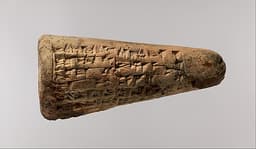
Lipit-Ishtar
Emperor · Ancient
52.6Total

Napoleon Bonaparte
General · Modern
70.9Total
Basic Information
Born
-1870
1769
Died
-1860
1821
Era
Ancient
Modern
Nationality
Isin
France
Occupation
Emperor
General
Civilization
Middle Eastern
Western
Score Comparison
Military (10%)
25.9
94.0
Political (20%)
68.0
72.0
Influence (20%)
53.3
40.0
Legacy (20%)
46.7
80.0
Leadership (15%)
74.0
78.0
Strategy (15%)
36.8
90.0
TOTAL
52.6
70.9
Lipit-Ishtar — Complete Timeline
1865 BC
Issuance of the Code of Lipit-IshtarReform◆ Major
Lipit-Ishtar issued a law code written in Sumerian, one of the earliest known legal codes. It covered family law, property rights, and commercial transactions. The code aimed to establish justice and order in Isin, influencing later legal traditions including the Code of Hammurabi.
Law CodeSumerian LawLegal History
Impact: regionalconstructive
Napoleon Bonaparte — Complete Timeline
1799 AD
Coup of 18 BrumaireOther◆ Major
Napoleon Bonaparte, with support from his brother Lucien and key political figures, overthrew the Directory in a bloodless coup. He established the Consulate with himself as First Consul, effectively becoming the ruler of France. This event ended the French Revolution's most unstable period.
French RevolutionCoupRise to Power
Impact: regional
1804 AD
Promulgation of the Napoleonic CodeOther◆ Major
Napoleon enacted the Civil Code of the French, known as the Napoleonic Code, a comprehensive set of laws that replaced the fragmented feudal legal systems. The code established legal equality, protected property rights, and secularized law. It became the basis for legal systems in many European and world countries.
Legal ReformNapoleonic CodeCivil Law
Impact: globalconstructive
1805 AD
Battle of AusterlitzWar◆ Major
Napoleon's Grande Arm
Napoleonic WarsBattleDecisive Victory
Impact: global
1812 AD
Invasion of RussiaWar◆ Major
Napoleon led the Grande Arm
Napoleonic WarsInvasionDisaster
Impact: globaldestructive
1815 AD
Battle of WaterlooWar◆ Major
Napoleon's French army was defeated by the combined forces of the Duke of Wellington's Anglo-Allied army and Gebhard Leberecht von Bl
Napoleonic WarsBattleFinal Defeat
Impact: globaldestructive
Expert Analysis
lipit-ishtar-vs-napoleon-bonaparte
# The Lawgiver and the Conqueror: Two Visions of Power
On a summer morning in 1815, Napoleon Bonaparte stood on a ridge near Waterloo, watching the Prussian columns approach the flank of his exhausted army. Within hours, his empire would crumble, and he would be on his way to a rocky island in the South Atlantic. Four thousand years earlier, another ruler faced a different kind of reckoning: Lipit-Ishtar, king of Isin, inscribed his name not on battlefields but on clay tablets, hoping that justice would outlast his reign. One man sought to reshape the world through the thunder of cannon; the other through the quiet authority of law. What separates these two figures—and what, if anything, connects them—tells us something profound about the nature of power itself.
Origins
Napoleon was born in 1769 on Corsica, an island that had only recently become French. His family was minor nobility, but they were not wealthy. As a boy, he spoke Italian-accented French and carried the resentments of a conquered people. The French Revolution, which erupted when he was twenty, shattered the old order and opened paths that would have been unthinkable under the monarchy. A young artillery officer with a gift for mathematics and ambition could rise faster than ever before. Napoleon’s world was one of rapid change, where a single battle could rewrite the map of Europe.
Lipit-Ishtar ruled nearly four millennia earlier, around 1870 to 1860 BC, in the ancient city-state of Isin, in what is now southern Iraq. He inherited a throne, but not a stable one. The Sumerian city-states had long competed for dominance, and the dynasty of Isin was already in decline by his reign. His world was one of continuity and tradition, where scribes copied texts that were centuries old, and where the gods were believed to dictate the fate of kings. A ruler’s legitimacy depended not on conquest but on his ability to maintain order, justice, and the favor of the temple.
Rise to Power
Napoleon’s ascent was meteoric. In 1793, at the age of twenty-four, he drove the British from the port of Toulon, earning promotion to brigadier general. By 1796, he commanded the French army in Italy, where he won a series of stunning victories against the Austrians. His political genius matched his military talent: he knew how to present his victories as serving the Revolution while quietly building his own power. The coup of 18 Brumaire in 1799 made him First Consul, and by 1804 he crowned himself Emperor. His rise was a product of war, chaos, and personal brilliance—a man who seized the moment because the moment was there to be seized.
Lipit-Ishtar’s rise is harder to trace. He was a king, likely the son of a king, in a dynasty that had ruled Isin for generations. There is no record of a dramatic coup or military campaign that brought him to power. In the ancient Near East, kingship was inherited, and legitimacy came from the gods and from tradition. His challenge was not to conquer but to govern—to hold together a kingdom that was fraying at the edges. His rise was not a story of ambition but of duty.
Leadership & Governance
Napoleon governed through a combination of military force and administrative reform. His most enduring achievement, the Napoleonic Code of 1804, standardized French law, abolished feudal privileges, and established principles of equality before the law. He built roads, reformed education, and centralized the state. But his rule was also authoritarian: he suppressed dissent, controlled the press, and placed his family on thrones across Europe. His military strategy was revolutionary—using speed, massed artillery, and decisive engagement to shatter his enemies. Yet his political wisdom was flawed: he could not stop conquering. His leadership score of 80 and political score of 75 reflect a man who was brilliant at winning battles but less skilled at building lasting peace.
Lipit-Ishtar ruled a small, struggling kingdom. His political score of 49.9 suggests limited success, but his influence score of 71.5 hints at something deeper. Around 1865 BC, he issued a law code written in Sumerian, one of the earliest known legal codes. It covered family law, property, and contracts—the daily concerns of ordinary people. Unlike Napoleon’s code, it did not impose uniform rules across a vast empire. It was a local document, meant to reassure a kingdom that the king cared about justice. His military score of 60 and strategy of 43.6 suggest he was not a conqueror. He was a lawgiver, trying to hold his world together with words.
Triumph & Tragedy
Napoleon’s greatest triumph was the Battle of Austerlitz in 1805, where he crushed the combined armies of Russia and Austria. His greatest tragedy was the invasion of Russia in 1812, which destroyed his Grand Army and began his fall. He was exiled to Elba in 1814, returned for a hundred days in 1815, and was finally defeated at Waterloo. His life was a drama of rise and fall, ambition and overreach.
Lipit-Ishtar’s triumphs and tragedies are harder to measure. He issued a law code that would influence later traditions, including the famous Code of Hammurabi. But his kingdom continued to decline after his reign. Within a few generations, Isin was eclipsed by more powerful neighbors. His tragedy was not a single defeat but a slow fading—a dynasty that could not hold back the tide of history. He was the last great king of Isin, and he knew it.
Character & Destiny
Napoleon was restless, ambitious, and supremely self-confident. “Impossible,” he once said, “is a word to be found only in the dictionary of fools.” His personality drove him to conquer, but it also drove him to fail. He could not stop, could not compromise, could not share power. His destiny was shaped by his character: a man who believed he could control history, only to be crushed by it.
Lipit-Ishtar was different. He was a conservator, not a revolutionary. He looked to the past for legitimacy, not the future. His personality was likely cautious, pious, and patient. He knew that a king’s duty was to maintain order, not to change the world. His destiny was to be remembered not for battles but for a clay tablet, unearthed by archaeologists, that proved he had tried to be just.
Legacy
Napoleon’s legacy is immense. The Napoleonic Code influenced legal systems across Europe and the world. His military tactics are still studied in war colleges. He reshaped the map of Europe and inspired nationalism that would define the nineteenth century. His total score of 82.4 reflects a figure of global significance.
Lipit-Ishtar’s legacy is smaller but no less real. His law code is one of the earliest examples of written law, a precursor to the legal traditions that would shape Western civilization. His influence score of 71.5 suggests that his ideas outlasted his kingdom. He is remembered not as a conqueror but as a pioneer of justice.
Conclusion
Standing at Waterloo, Napoleon watched his world end. Four thousand years earlier, Lipit-Ishtar watched his world fade. One sought to conquer the world; the other sought to order it. Napoleon’s name is known to every schoolchild; Lipit-Ishtar’s is known only to scholars. Yet both men faced the same question: what does it mean to rule? Napoleon answered with ambition, Lipit-Ishtar with law. In the end, the conqueror’s empire crumbled, but the lawgiver’s words survived. Perhaps that is the deeper lesson: power may win battles, but justice endures.
Rankings
🥇
Napoleon BonaparteLeader
Mil: 94.0Pol: 72.0Inf: 40.0
70.9
🥈
Lipit-Ishtar
Mil: 25.9Pol: 68.0Inf: 53.3
52.6
+18.3 behind
How This Comparison Works
Algorithm
Each figure is scored on 6 dimensions (0—100 scale) based on structured historical data: Military (10%), Political (20%), Influence (20%), Legacy (20%), Leadership (15%), Strategy (15%). The weighted total produces the final ranking.
Data Sources
Scores are computed from structured sub-indicators in the database. Scale factors adjust for era (Ancient ×0.85, Modern ×1.0) and civilization size (Eastern ×1.05, Other ×0.80) to account for differences in population and military scale.
Maximum 3 Figures
Comparisons are limited to 2—3 figures to ensure readability and statistical meaningfulness.
Error Margins
±5 points per dimension — Sub-scores are derived from historical records with inherent uncertainty. Two figures within 5 points on a dimension should be considered roughly equivalent in that area.
Total Score Accuracy
±3 points overall — The weighted combination of 6 dimensions produces a total score with approximately ±3 points of uncertainty. Differences of less than 3 points are not statistically significant— the figures are effectively tied.
Known Limitations
- Historical records are incomplete and uneven across civilizations
- Figures from oral-tradition societies may be underrepresented
- Occupation labels can misclassify multi-role figures
- Scores measure capability and impact, not moral character
- Quantitative scoring is a comparison tool, not absolute truth
Capability Radar
Military (10%) — Battles & Warfare
Battles
10
95
Win Rate
10
90
Expansion
10
95
Political (20%) — Governance & Reform
Reform
60
95
Diplomacy
40
80
Economy
40
85
Influence (20%) — Cultural & Global Reach
Cultural
50
85
Global
30
90
Legacy (20%) — Historical Impact
Historical
50
95
Longevity
40
90
Leadership (15%) — Power & Stability
Tenure
40
85
Stability
50
70
Strategy (15%) — Tactics & Innovation
Strategy
10
95
Tactics
10
98
Reform
10
92
Similar Comparisons
Comments & Discussion
CLAYTABLE COMMANDER6/17/2026
This comparison misses the point entirely. Lipit-Ishtar's law code predates Hammurabi by a century but is barely a footnote in legal history—three partial tablets surviving out of dozens. Napoleon's Civil Code still governs half of Europe. That's not "two visions of power"; that's a failed experiment versus a blueprint that literally created modern property law. Lipit-Ishtar was a local chieftain trying to assert control. Napoleon was a world-historical force. Don't even pretend they're comparab
战场数据控6/17/2026
把拿破仑和一位几乎没留下什么战争记录的美索不达米亚小国王放一起比较?拿破仑一生指挥过60多场战役,而利皮特-伊什塔尔连一场像样的军事行动纪录都没有。所谓的“法律与征服”对比完全是虚假的二元对立——你没法比较一个在历史聚光灯下的人物和一个只存在于几块泥板碎片的影子。数据不会说谎:维基百科上利皮特-伊什塔尔的页面长度还不到拿破仑的十分之一。
HELLENOPHILE CRITIC6/17/2026
The most damning thing about this comparison is what it reveals about our own biases. Lipit-Ishtar's legal innovations, fragmentary as they are, show a sophisticated administrative state trying to codify justice for Sumerian citizens. Napoleon's Civil Code may be influential, but it was built on the back of Roman law and Enlightenment philosophy. The French emperor contributed nothing original—he just systematized what others had invented. Give me the Sumerian lawgiver who actually tried to limi
泥板考古人6/17/2026
你们都在谈法律的影响力,但忽视了一个根本问题:我们根本不知道利皮特-伊什塔尔法典的真实内容。现存的碎片只涉及婚姻、奴隶和财产,而且文本不完整到学者们至今还在争论某些条款的含义。把这种近乎空白的知识拿来和拿破仑详实记载的生涯对比,本质上是考古学的错觉——我们对古代了解太少,以至于把任何碎片都过度浪漫化。说穿了,利皮特-伊什塔尔可能只是一个运气好的军阀,恰好留下了一些法律涂鸦。
BATTERIE-HISTORIKER6/17/2026
You want a real comparison? Napoleon's 1799 coup d'état was a masterclass in using artillery to seize power. The man was a gunner who understood that victory comes from concentrating fire, not from clay tablets. Lipit-Ishtar never commanded a cannon, never marched an army across a continent, never stared down a coalition of hostile powers. One remade Europe in a decade; the other left a few broken pots in Mesopotamia. I know which legacy I'd rather have when the barbarians are at the gate.