Loading...
Louis de Buade de Frontenac vs Qin Shi Huang
Qin Shi Huang leads by 24.7 pts · 2 figures compared
…
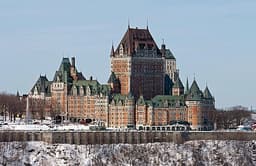
Louis de Buade de Frontenac
General · Modern
60.5Total
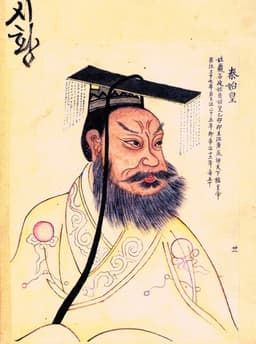
Qin Shi Huang
Emperor · Ancient
85.2Total
Basic Information
Born
1622
-259
Died
1698
-210
Era
Modern
Ancient
Nationality
France
China
Occupation
General
Emperor
Civilization
Western
Eastern
Score Comparison
Military (10%)
50.0
80.0
Political (20%)
68.0
90.0
Influence (20%)
61.0
85.0
Legacy (20%)
49.2
90.0
Leadership (15%)
80.0
78.0
Strategy (15%)
57.5
82.0
TOTAL
60.5
85.2
Louis de Buade de Frontenac — Complete Timeline
1672 AD
Appointment as Governor General of New FrancePolitical Action◆ Major
Louis XIV appointed Frontenac as Governor General of New France. He arrived in Quebec and immediately pursued expansionist policies, strengthening French control over the colony and its fur trade.
Colonial AdministrationNew France
Impact: regional
1673 AD
Construction of Fort FrontenacWar◆ Major
Frontenac ordered the construction of Fort Frontenac on Lake Ontario to secure French access to the interior fur trade and to counter Iroquois and English influence. The fort became a key military and trading post.
FortificationFur TradeIroquois
Impact: regional
Expedition against the Iroquois (1673)War◆ Major
Frontenac led a military expedition into Iroquois territory, forcing the Iroquois to negotiate a peace treaty that temporarily secured French trade routes and reduced hostilities.
Iroquois WarsDiplomacy
Impact: regional
1682 AD
Recall to France (1682)Political Action
Due to conflicts with the Sovereign Council and the Bishop of Quebec over authority and trade policies, Frontenac was recalled to France. This ended his first term as governor.
Political ConflictRecall
destructive
1689 AD
Second Appointment as Governor GeneralPolitical Action◆ Major
Louis XIV reappointed Frontenac as Governor General of New France during King William's War. He returned to Quebec to defend the colony against English and Iroquois attacks.
King William's WarColonial Defense
Impact: regional
1690 AD
Battle of Quebec (1690)War
Frontenac successfully defended Quebec City against an English invasion force led by Sir William Phips. He refused to surrender, and the English fleet withdrew after a failed siege.
King William's WarSiege of Quebec
Impact: regionalconstructive
Raid on Schenectady (1690)War
Frontenac ordered a French and Indigenous raid on the English settlement of Schenectady in New York. The attack destroyed the town and killed many inhabitants, escalating the conflict in North America.
King William's WarRaid
destructive
1698 AD
Peace with the Iroquois (1698)Political Action◆ Major
Frontenac negotiated a peace treaty with the Iroquois Confederacy, ending years of warfare. The treaty secured French trade routes and reduced hostilities, though it was fragile.
Iroquois WarsDiplomacy
Impact: regionalconstructive
Qin Shi Huang — Complete Timeline
246 BC
Construction of the Mausoleum and Terracotta ArmyOther◆ Major
Qin Shi Huang commissioned a vast mausoleum complex near Xi'an, guarded by thousands of life-sized terracotta soldiers, horses, and chariots. The project employed hundreds of thousands of workers and reflected his obsession with immortality and imperial power.
Impact: global
230 BC
Conquest of the Six Warring StatesWar
From 230 to 221 BCE, Ying Zheng led the Qin state in a series of campaigns that conquered the Han, Zhao, Wei, Chu, Yan, and Qi states. This unified China under a single ruler for the first time, ending the Warring States period.
Impact: global
221 BC
Standardization of Writing, Currency, and MeasurementsReform◆ Major
Qin Shi Huang ordered the standardization of Chinese script, currency, and weights and measures across the unified empire. This facilitated administration, trade, and cultural integration, laying a foundation for future dynasties.
Impact: globalconstructive
Proclamation of the Qin DynastyPolitical Action
After conquering the last independent state, Ying Zheng declared himself Shi Huangdi (First Emperor), founding the Qin Dynasty. He adopted a new title to signify his supreme authority and initiated centralized imperial rule.
Impact: global
214 BC
Initiation of the Great Wall ConstructionOther◆ Major
Qin Shi Huang ordered the connection and extension of existing northern fortifications to create a unified defensive wall against nomadic Xiongnu raids. This project involved massive conscripted labor and became the precursor to the later Great Wall.
Impact: regional
213 BC
Burning of Books and Burying of ScholarsPolitical Action◆ Major
On the advice of Li Si, Qin Shi Huang ordered the burning of historical records and philosophical texts not aligned with Legalist doctrine. He also had 460 Confucian scholars buried alive to suppress dissent and consolidate ideological control.
Impact: nationaldestructive
Expert Analysis
louis-de-buade-de-frontenac-vs-qin-shi-huang
# The Emperor and the Governor: Two Paths to Power
On a winter morning in 1690, an aging French nobleman stood on the ramparts of Quebec, watching English ships approach the St. Lawrence. When the messenger arrived demanding his surrender, Louis de Buade de Frontenac reportedly replied with a phrase that would echo through Canadian history: "I have no reply to make to your general other than from the mouths of my cannons." Fifteen hundred years earlier and half a world away, a young king in China had answered his own ultimatums not with cannons but with armies that swallowed kingdoms whole. These two men—one the First Emperor of a unified China, the other the governor of a fragile French colony—both built empires from the edge of chaos. Yet their paths, their methods, and their legacies could not have been more different.
Origins
Qin Shi Huang was born into violence. In 259 BC, the Warring States period had torn China apart for two centuries. His father, King Zhuangxiang of Qin, ruled a state that had already begun to perfect the art of war. The young Ying Zheng grew up in a palace where survival meant ruthlessness. His mother, a former concubine, and his regent, Lü Buwei, taught him that trust was a weapon and that power required absolute control. By the time he took the throne at thirteen, he had already learned that the world was a battlefield.
Frontenac, by contrast, was born into privilege in 1622, the son of a French nobleman who served King Louis XIII. His childhood was spent in the glittering salons of Paris, where ambition was measured in titles and favors. He fought in the Thirty Years' War as a young officer, earning a reputation for bravery and arrogance. But when peace came, he found himself restless, his debts mounting, his prospects dim. France's New World offered a second chance—a place where a man of noble birth could reinvent himself far from the king's court.
Rise to Power
Ying Zheng's rise was a masterpiece of calculated annihilation. From 230 to 221 BC, he unleashed the Qin military machine against the six remaining Warring States. Each campaign was a lesson in total war: he conquered Han first, then Zhao, Wei, Chu, Yan, and finally Qi. He did not merely defeat armies; he erased kingdoms. Captured nobles were executed or exiled; their armies were absorbed; their lands were reorganized into commanderies under his direct control. When the last state fell, he declared himself **Shi Huangdi**—the First Emperor—and proclaimed a new dynasty that would last "ten thousand generations."
Frontenac's rise was more bureaucratic but no less dramatic. Appointed Governor General of New France in 1672, he arrived in Quebec with grand ambitions. The colony was a fragile outpost of a few thousand souls, surrounded by English colonies and Iroquois warriors. Frontenac immediately pushed inland, ordering the construction of Fort Frontenac on Lake Ontario in 1673. He led expeditions into Iroquois territory, forcing a temporary peace. But his arrogance alienated the colony's clergy and merchants, and in 1682, King Louis XIV recalled him to France in disgrace.
Leadership & Governance
The contrast in their ruling styles is stark. Qin Shi Huang governed through terror and uniformity. He standardized writing, currency, and measurements across his empire—a reform that would shape China for two millennia. But he also burned books and buried scholars alive, as recorded in 213 BC, to eliminate dissent and control history. His philosophy was Legalist: the state was everything, the individual nothing. He built roads, canals, and the first sections of the Great Wall, but he conscripted millions of laborers, many of whom died in the process.
Frontenac governed through persuasion and spectacle. He understood that in New France, authority could not be imposed—it had to be earned. He cultivated alliances with Indigenous nations, trading gifts for loyalty. He encouraged the coureurs des bois—the fur traders who pushed French influence deep into the continent. When war returned in 1689, he organized raids on English settlements like Schenectady, destroying the village in a brutal winter attack. His greatest moment came in 1690, when he defied the English fleet at Quebec, rallying the colony's defenders with sheer force of will.
Triumph & Tragedy
Qin Shi Huang's triumph was the unification of China—a feat that no ruler had accomplished before and that would define the nation's destiny. His tragedy came swiftly. Obsessed with immortality, he consumed mercury elixirs prescribed by alchemists. He died in 210 BC at the age of forty-nine, likely poisoned by his own desperation. Within three years, the Qin Dynasty collapsed in rebellion, its harsh laws and forced labor having sown the seeds of its destruction.
Frontenac's triumph was the survival of New France. When he returned for a second term in 1689, the colony was on the verge of extinction. He rebuilt its defenses, restored its morale, and negotiated a lasting peace with the Iroquois in 1698. His tragedy was that he never saw the colony he saved flourish. He died in Quebec later that year, his body buried in the city he had defended. New France would fall to the British just sixty years later.
Character & Destiny
What drove these men? Qin Shi Huang was consumed by a vision of order. He could not tolerate chaos, difference, or opposition. His personality was forged in the crucible of the Warring States, where mercy was weakness and unity required absolute submission. He believed that history began with him—that everything before was merely prelude. That belief made him a tyrant, but it also made him the father of China.
Frontenac was driven by pride. He craved glory, recognition, and the approval of his king. His personality was shaped by the court of Louis XIV, where reputation was everything. He could be petty, vindictive, and insubordinate—but he could also be charismatic, courageous, and inspiring. He understood that in a colony of a few thousand, every leader was only as strong as the loyalty he commanded.
Legacy
Qin Shi Huang's legacy is the Chinese empire itself. The standardization he imposed—the script, the currency, the measurements—created a common culture that outlasted his dynasty. The Great Wall, though rebuilt many times, remains his monument. The Terracotta Army, discovered in 1974, is a testament to his obsession with eternity. His name is synonymous with both unification and tyranny, a paradox that China still grapples with.
Frontenac's legacy is more modest but no less real. He is remembered as the savior of New France, the man who stood at the walls of Quebec and refused to surrender. His name adorns streets, schools, and a lake. But his true inheritance is the French Canadian identity itself—a people who survived against the odds, who learned to adapt, negotiate, and endure.
Conclusion
Standing at the gates of eternity, these two men faced the same question: How do you build something that lasts? Qin Shi Huang answered with iron, blood, and absolute control. Frontenac answered with diplomacy, courage, and the art of the possible. One created an empire that would define a civilization; the other saved a colony that would become a nation. Both succeeded. Both failed. History, in its infinite patience, judges them not by their intentions but by their consequences—and in the end, it leaves us with a question that neither emperor nor governor could answer: Is it better to be feared or loved? The First Emperor chose fear. Frontenac chose both. And the world, still uncertain, continues to choose its own.
Rankings
🥇
Qin Shi HuangLeader
Mil: 80.0Pol: 90.0Inf: 85.0
85.2
🥈
Louis de Buade de Frontenac
Mil: 50.0Pol: 68.0Inf: 61.0
60.5
+24.7 behind
How This Comparison Works
Algorithm
Each figure is scored on 6 dimensions (0—100 scale) based on structured historical data: Military (10%), Political (20%), Influence (20%), Legacy (20%), Leadership (15%), Strategy (15%). The weighted total produces the final ranking.
Data Sources
Scores are computed from structured sub-indicators in the database. Scale factors adjust for era (Ancient ×0.85, Modern ×1.0) and civilization size (Eastern ×1.05, Other ×0.80) to account for differences in population and military scale.
Maximum 3 Figures
Comparisons are limited to 2—3 figures to ensure readability and statistical meaningfulness.
Error Margins
±5 points per dimension — Sub-scores are derived from historical records with inherent uncertainty. Two figures within 5 points on a dimension should be considered roughly equivalent in that area.
Total Score Accuracy
±3 points overall — The weighted combination of 6 dimensions produces a total score with approximately ±3 points of uncertainty. Differences of less than 3 points are not statistically significant— the figures are effectively tied.
Known Limitations
- Historical records are incomplete and uneven across civilizations
- Figures from oral-tradition societies may be underrepresented
- Occupation labels can misclassify multi-role figures
- Scores measure capability and impact, not moral character
- Quantitative scoring is a comparison tool, not absolute truth
Capability Radar
Military (10%) — Battles & Warfare
Battles
45
85
Win Rate
55
90
Expansion
50
90
Political (20%) — Governance & Reform
Reform
45
95
Diplomacy
55
75
Economy
40
90
Influence (20%) — Cultural & Global Reach
Cultural
40
95
Global
35
85
Legacy (20%) — Historical Impact
Historical
45
95
Longevity
40
95
Leadership (15%) — Power & Stability
Tenure
60
70
Stability
35
65
Strategy (15%) — Tactics & Innovation
Strategy
55
85
Tactics
50
80
Reform
40
95
Similar Comparisons
Comments & Discussion
CannonBaron6/17/2026
Frontenac’s "cannons reply" was pure theater for a starving colony—Quebec had only 200 soldiers in 1690. Qin Shi Huang would’ve laughed, then conscripted those English into building the Great Wall. Frontenac gambled on bluff; the First Emperor gambled on genocide. One was a desperate salesman, the other a sovereign butcher. Give me the man who could actually back up his threats.数据铁匠|zh|这比较根本不对等!Frontenac治理的是7万人口的殖民据点,而秦始皇管理的是2000万人的帝国。拿魁北克的冬季困守对比长城的百万劳工,就像用小鱼钩钓巨鲸。Frontenac的成功在于活命,秦始皇的成功在于创新——他是个