Loading...
Louis Grand Conde vs Qin Shi Huang
Qin Shi Huang leads by 20.7 pts · 2 figures compared
…

Louis Grand Conde
General · Modern
64.5Total
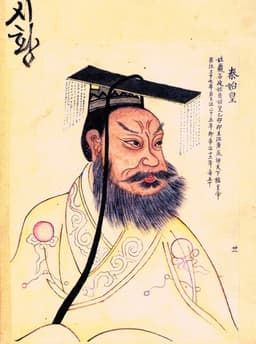
Qin Shi Huang
Emperor · Ancient
85.2Total
Basic Information
Born
1621
-259
Died
1686
-210
Era
Modern
Ancient
Nationality
France
China
Occupation
General
Emperor
Civilization
Western
Eastern
Score Comparison
Military (10%)
78.5
80.0
Political (20%)
68.0
90.0
Influence (20%)
65.0
85.0
Legacy (20%)
55.0
90.0
Leadership (15%)
62.0
78.0
Strategy (15%)
72.0
82.0
TOTAL
64.5
85.2
Louis Grand Conde — Complete Timeline
1643 AD
Battle of RocroiWar
At age 21, Cond
BattleVictorySpanish Decline
Impact: globalconstructive
1648 AD
Battle of LensWar◆ Major
Condé won a decisive victory over the Spanish at Lens, capturing the Spanish commander and thousands of troops. This victory forced Spain to negotiate the Peace of Westphalia, ending the Thirty Years' War.
BattleVictoryPeace
Impact: globalconstructive
1650 AD
Leadership of the Fronde RebellionWar◆ Major
Condé led the aristocratic Fronde rebellion against the French crown, fighting royal forces in a civil war. He was defeated and forced into exile in Spain, where he served as a Spanish general against France.
RebellionCivil WarExile
Impact: nationaldestructive
1659 AD
Return to French ServicePolitical Action
After the Treaty of the Pyrenees, Cond
PardonReturnMilitary
Impact: nationalconstructive
Qin Shi Huang — Complete Timeline
246 BC
Construction of the Mausoleum and Terracotta ArmyOther◆ Major
Qin Shi Huang commissioned a vast mausoleum complex near Xi'an, guarded by thousands of life-sized terracotta soldiers, horses, and chariots. The project employed hundreds of thousands of workers and reflected his obsession with immortality and imperial power.
Impact: global
230 BC
Conquest of the Six Warring StatesWar
From 230 to 221 BCE, Ying Zheng led the Qin state in a series of campaigns that conquered the Han, Zhao, Wei, Chu, Yan, and Qi states. This unified China under a single ruler for the first time, ending the Warring States period.
Impact: global
221 BC
Standardization of Writing, Currency, and MeasurementsReform◆ Major
Qin Shi Huang ordered the standardization of Chinese script, currency, and weights and measures across the unified empire. This facilitated administration, trade, and cultural integration, laying a foundation for future dynasties.
Impact: globalconstructive
Proclamation of the Qin DynastyPolitical Action
After conquering the last independent state, Ying Zheng declared himself Shi Huangdi (First Emperor), founding the Qin Dynasty. He adopted a new title to signify his supreme authority and initiated centralized imperial rule.
Impact: global
214 BC
Initiation of the Great Wall ConstructionOther◆ Major
Qin Shi Huang ordered the connection and extension of existing northern fortifications to create a unified defensive wall against nomadic Xiongnu raids. This project involved massive conscripted labor and became the precursor to the later Great Wall.
Impact: regional
213 BC
Burning of Books and Burying of ScholarsPolitical Action◆ Major
On the advice of Li Si, Qin Shi Huang ordered the burning of historical records and philosophical texts not aligned with Legalist doctrine. He also had 460 Confucian scholars buried alive to suppress dissent and consolidate ideological control.
Impact: nationaldestructive
Expert Analysis
louis-grand-conde-vs-qin-shi-huang
# The First Emperor and the Last Prince: Two Paths to Power
On a winter morning in 221 BC, a thirty-eight-year-old king stood before his assembled army in the plains of central China, having just witnessed the surrender of the last independent state. He declared himself *Shi Huangdi*—the First Emperor—and in that single act, invented a concept that would define Chinese civilization for two millennia. Nearly two thousand years later, on a spring afternoon in 1643, a twenty-one-year-old French prince led his cavalry against the Spanish tercios at Rocroi, shattering the myth of Spanish invincibility and announcing himself as the greatest military commander of his age. One built an empire; the other nearly destroyed his own. Their stories, separated by centuries and continents, reveal how character, circumstance, and the nature of power itself can lead to radically different destinies.
Origins
Ying Zheng was born in 259 BC, the son of a Qin prince who had been held hostage in the rival state of Zhao. His childhood was marked by instability and danger—his father fled back to Qin when Ying Zheng was young, leaving the boy to navigate the treacherous politics of a warring kingdom. When he ascended the Qin throne at thirteen, he inherited a state already hardened by centuries of warfare and Legalist philosophy, which taught that human nature was fundamentally selfish and could only be controlled through strict laws and harsh punishments.
Louis II de Bourbon, Prince de Condé, arrived into the world in 1621 with a silver scepter in his cradle. Born into the highest ranks of French nobility—his uncle was the Great Condé's namesake, his father a prince of the blood—he was educated in the arts of war and courtly grace. Where Ying Zheng learned to distrust everyone, Condé learned to command everyone. Where the Chinese prince grew up surrounded by enemies who wanted him dead, the French prince grew up surrounded by courtiers who wanted his favor.
Rise to Power
Ying Zheng's rise was methodical, almost mechanical. Between 230 and 221 BC, he unleashed a series of military campaigns that consumed the six warring states one by one: Han, Zhao, Wei, Chu, Yan, and finally Qi. Each conquest followed a pattern of overwhelming force, strategic deception, and ruthless efficiency. He did not win through personal battlefield heroism—he won through organization, logistics, and the willingness to do whatever was necessary. When the city of Handan resisted, he ordered the entire population buried alive.
Condé's rise was instantaneous and glorious. At Rocroi in 1643, he did not merely defeat the Spanish—he annihilated them. The Spanish Army of Flanders had been the finest in Europe for a century, and Condé, barely out of his teens, broke their formation, captured their artillery, and killed or captured over half their force. He became a national hero overnight, celebrated in poems, paintings, and songs. Where Ying Zheng's path was paved with the bones of anonymous soldiers, Condé's was paved with laurel wreaths.
Leadership & Governance
The First Emperor governed as he conquered: absolutely. After proclaiming the Qin Dynasty in 221 BC, he standardized writing, currency, weights, and measures across his empire. He ordered the connection of existing northern fortifications into what would become the Great Wall. He commissioned a mausoleum guarded by thousands of life-sized terracotta soldiers, a monument to his own immortality. But his most infamous act came in 213 BC, when he ordered the burning of all historical records and philosophical texts not aligned with Legalist doctrine, and the burying alive of scholars who protested. Knowledge, he believed, was a threat to unity.
Condé governed through charisma and personal magnetism. His soldiers adored him; his peers envied him; his king feared him. When the Fronde rebellion erupted in 1648—a revolt of the nobility against the centralizing power of the French crown—Condé initially fought for the king. But by 1650, his pride wounded by court intrigues, he switched sides and led the aristocratic rebellion himself. He was a brilliant general fighting a hopeless cause, and within two years he was defeated and exiled.
Triumph & Tragedy
Ying Zheng's triumph was his unification of China—a feat so complete that the name "China" itself derives from his dynasty. His tragedy was the fragility of his achievement. He died in 210 BC while on a tour of his empire, and within three years his dynasty collapsed, torn apart by rebellion and civil war. The First Emperor had built an empire, but he had not built the institutions to sustain it.
Condé's triumph was Rocroi, a victory that still echoes in French military history. His tragedy was the Fronde—a rebellion that wasted his talents, damaged his reputation, and nearly destroyed France. After the Treaty of the Pyrenees in 1659, he was pardoned by Louis XIV and returned to service, fighting bravely for the king who had once been his enemy. But he was never again trusted, never again given independent command. The prince who had been the hope of France became a cautionary tale.
Character & Destiny
Ying Zheng was paranoid, ruthless, and visionary. He saw the world as a problem to be solved through force and control. His personality drove him to create a unified China, but also to alienate everyone around him—his ministers, his generals, his own family. He died alone, surrounded by sycophants and poisoners.
Condé was proud, impulsive, and magnetic. He saw the world as a stage for his own glory. His personality drove him to extraordinary military achievements, but also to the disastrous decision to rebel against his own king. He could not tolerate being second, and that intolerance nearly destroyed him.
Legacy
Qin Shi Huang's legacy is immense and paradoxical. He is remembered as both the unifier of China and the tyrant who burned books and buried scholars. His Terracotta Army has become one of the world's great archaeological wonders. His standardized script and measurements survived his dynasty and shaped Chinese civilization for two thousand years. His score of 83.5 in our assessment reflects a figure of extraordinary influence, even if his military and strategic scores (80 and 75) are lower than his political and leadership scores (88 and 88).
The Great Condé's legacy is more modest but more personal. He is remembered as one of France's greatest generals, the hero of Rocroi, but also as a cautionary example of aristocratic ambition. His score of 74.2 reflects a figure of considerable military genius (84.3 for military, 81.7 for strategy) whose political misjudgments limited his lasting impact. He is studied in military academies, but he did not change the course of French history the way Qin Shi Huang changed Chinese history.
Conclusion
Two men, two worlds, two very different fates. The First Emperor built an empire that outlasted him in spirit, if not in dynasty. The Great Condé won battles that outlasted him in memory, if not in consequence. One ruled through fear, the other through glory. One died paranoid, the other died reconciled. Their stories remind us that power is not merely a matter of talent or opportunity—it is a matter of character, of the choices we make when the world is at our feet. And those choices, more than any battlefield or throne room, determine what we leave behind.
Rankings
🥇
Qin Shi HuangLeader
Mil: 80.0Pol: 90.0Inf: 85.0
85.2
🥈
Louis Grand Conde
Mil: 78.5Pol: 68.0Inf: 65.0
64.5
+20.7 behind
How This Comparison Works
Algorithm
Each figure is scored on 6 dimensions (0—100 scale) based on structured historical data: Military (10%), Political (20%), Influence (20%), Legacy (20%), Leadership (15%), Strategy (15%). The weighted total produces the final ranking.
Data Sources
Scores are computed from structured sub-indicators in the database. Scale factors adjust for era (Ancient ×0.85, Modern ×1.0) and civilization size (Eastern ×1.05, Other ×0.80) to account for differences in population and military scale.
Maximum 3 Figures
Comparisons are limited to 2—3 figures to ensure readability and statistical meaningfulness.
Error Margins
±5 points per dimension — Sub-scores are derived from historical records with inherent uncertainty. Two figures within 5 points on a dimension should be considered roughly equivalent in that area.
Total Score Accuracy
±3 points overall — The weighted combination of 6 dimensions produces a total score with approximately ±3 points of uncertainty. Differences of less than 3 points are not statistically significant— the figures are effectively tied.
Known Limitations
- Historical records are incomplete and uneven across civilizations
- Figures from oral-tradition societies may be underrepresented
- Occupation labels can misclassify multi-role figures
- Scores measure capability and impact, not moral character
- Quantitative scoring is a comparison tool, not absolute truth
Capability Radar
Military (10%) — Battles & Warfare
Battles
92
85
Win Rate
88
90
Expansion
75
90
Political (20%) — Governance & Reform
Reform
45
95
Diplomacy
55
75
Economy
40
90
Influence (20%) — Cultural & Global Reach
Cultural
65
95
Global
55
85
Legacy (20%) — Historical Impact
Historical
75
95
Longevity
60
95
Leadership (15%) — Power & Stability
Tenure
60
70
Stability
50
65
Strategy (15%) — Tactics & Innovation
Strategy
90
85
Tactics
95
80
Reform
70
95
Similar Comparisons
Comments & Discussion
天下一统6/17/2026
孔代打得赢罗克鲁瓦,但他撑不起一个帝国。秦始皇灭了六国后不搞分封,直接设郡县,书同文车同轨,连度量衡都统一了。公元前221年起,华夏就走上了一条跟欧洲完全不同的路。孔代再猛,也只是一个在旧制度里跳舞的贵族。秦始皇不是皇帝,他是“皇帝”这个词本身的发明者。
Chronicler29216/17/2026
Comparing Louis and Qin is like putting a chef’s knife next to a guillotine. Condé was a tactical genius at Rocroi, sure—but he fought for a king and a system that eventually imprisoned him. Qin Shi Huang didn’t just conquer; he standardized writing, money, and axle lengths across China. Condé won battles; the First Emperor built a civilization that still bears his imprint. Scale matters. Qin wins by an empire’s worth of impact.