Loading...
Louis VII of France vs Ly Thai To
Ly Thai To leads by 8.6 pts · 2 figures compared
…
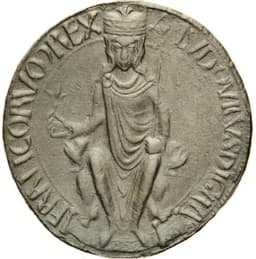
Louis VII of France
Emperor · Medieval
46.0Total
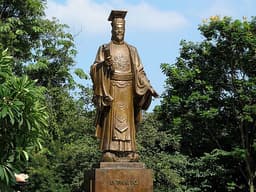
Ly Thai To
Emperor · Medieval
54.6Total
Basic Information
Born
1120
974
Died
1180
1028
Era
Medieval
Medieval
Nationality
France
Vietnam
Occupation
Emperor
Emperor
Civilization
Western
Eastern
Score Comparison
Military (10%)
25.9
45.0
Political (20%)
37.9
68.0
Influence (20%)
51.8
61.0
Legacy (20%)
45.0
58.0
Leadership (15%)
64.0
40.0
Strategy (15%)
39.6
41.7
TOTAL
46.0
54.6
Louis VII of France — Complete Timeline
1137 AD
Reign as King of the FranksPolitical Action◆ Major
Louis VII succeeded his father Louis VI as King of the Franks. His reign was marked by the expansion of royal territory through marriage to Eleanor of Aquitaine, but also by conflicts with the Church and nobles.
KingshipCapetianReign
Impact: national
1147 AD
Second CrusadeWar◆ Major
Louis VII led the Second Crusade with his wife Eleanor of Aquitaine and the German king Conrad III. The crusade was a failure, with the army suffering heavy losses in Anatolia and failing to capture Damascus. The campaign damaged Louis's prestige.
CrusadeWarFailure
Impact: globaltragic
1152 AD
Conflict with Henry II of EnglandWar◆ Major
After Eleanor of Aquitaine married Henry II of England, Louis VII fought a series of wars against Henry over control of French territories. The conflicts were inconclusive, but they established the rivalry between the Capetian and Plantagenet dynasties.
WarPlantagenetTerritorial Conflict
Impact: regional
Divorce from Eleanor of AquitainePolitical Action◆ Major
Louis VII's marriage to Eleanor of Aquitaine was annulled on grounds of consanguinity. Eleanor then married Henry II of England, bringing the vast Duchy of Aquitaine under English control and leading to centuries of conflict between France and England.
DivorceAquitaineAnglo-French Conflict
Impact: globaltragic
1179 AD
Coronation of Philip II AugustusPolitical Action
Louis VII had his son Philip II Augustus crowned as co-king to ensure the succession. This act strengthened the Capetian dynasty and ensured a smooth transition of power after Louis's death.
CoronationSuccessionCapetian
Impact: nationalconstructive
Ly Thai To — Complete Timeline
1009 AD
Foundation of the Ly DynastyPolitical Action
Ly Cong Uan, later known as Ly Thai To, was proclaimed emperor after the death of the last Le dynasty ruler. He founded the Ly dynasty, which would rule Vietnam for over 200 years. His accession was supported by Buddhist monks and the court.
Dynasty FoundingLy DynastyBuddhist Influence
Impact: nationalconstructive
1010 AD
Move of the Capital to Thang Long (Hanoi)Political Action
Ly Thai To moved the capital from Hoa Lu to Dai La, renaming it Thang Long (Rising Dragon), now Hanoi. The move was intended to centralize power and promote economic development. Thang Long became the political and cultural center of Vietnam for centuries.
Capital MoveThang LongHanoi
Impact: nationalconstructive
Promotion of Buddhism and EducationCultural◆ Major
Ly Thai To promoted Buddhism as the state religion and built many pagodas and temples. He also established the first Vietnamese university, the Quoc Tu Giam, to educate scholars in Confucian classics. These policies laid the foundation for Vietnamese culture and governance.
BuddhismEducationCultural Development
Impact: nationalconstructive
Expert Analysis
Origins
Louis VII of France was born in 1120, the second son of King Louis VI. He was raised in the Capetian court, receiving an education focused on piety and chivalry. His older brother Philip's death in 1131 made him heir, and he was crowned co-king in 1137. His marriage to Eleanor of Aquitaine that same year brought the vast Duchy of Aquitaine to the crown, but the union was strained from the start.
Ly Thai To, born Ly Cong Uan in 974 in Co Phap village (now Bac Ninh), was orphaned early and raised by a Buddhist monk. He served as a palace guard under the Le dynasty, rising to commander of the imperial guard. His Buddhist education and military experience shaped his pragmatic and spiritual approach to rule. Unlike Louis, he came from humble origins and seized power through opportunity.
Rise to Power
Louis VII ascended the throne in 1137 upon his father's death. His early reign was dominated by his powerful mother, Adelaide of Maurienne, and his chancellor, Suger. The marriage to Eleanor gave him control over Aquitaine, but his piety and indecisiveness led to conflict with the Church and nobility. In 1147, he embarked on the Second Crusade, a turning point that exposed his military weaknesses.
Ly Thai To's rise was more calculated. In 1009, the last Le emperor died, and Ly Cong Uan, as commander of the palace guard, was in a position to seize power. With the support of Buddhist clergy and the imperial court, he was proclaimed emperor on 21 November 1009, founding the Ly dynasty. He immediately moved to consolidate power by relocating the capital to Thang Long (Hanoi) in 1010, a strategic decision that centralized authority and promoted economic growth.
Leadership & Governance
Louis VII's governance was marked by religious devotion and administrative centralization, but he struggled with feudal conflicts. He supported the growth of royal justice and the Church, but his indecisiveness led to a loss of royal authority. The annulment of his marriage to Eleanor in 1152 was a political disaster: she married Henry II of England, bringing Aquitaine to the English crown and triggering decades of conflict. Louis's later years were spent countering Henry II's power, but he achieved little territorial gain.
Ly Thai To was a visionary reformer. He moved the capital to Thang Long, a site with better access to trade routes and fertile land. He promoted Buddhism as a unifying force, building pagodas and temples, but also respected other beliefs. He established the Quoc Tu Giam, Vietnam's first university, in 1076 (though completed by his successors), focusing on Confucian education for civil servants. His policies fostered a strong central government and cultural identity. He scored 68.0 in political leadership compared to Louis's 37.9, reflecting his effectiveness.
Triumph & Tragedy
Louis VII's greatest success was securing the Capetian dynasty through the coronation of his son Philip II Augustus in 1179, ensuring a smooth succession. His greatest failure was the Second Crusade (1147-1149), which ended in disaster: the army was decimated, and he achieved no strategic gains. The divorce from Eleanor also proved catastrophic, empowering the Angevin Empire.
Ly Thai To's triumph was founding the Ly dynasty, which ruled for 216 years, and establishing Thang Long as a capital that remains Vietnam's political center. His promotion of Buddhism and education created lasting institutions. His tragedy was a relatively short reign (1010-1028), limiting his reforms. He also faced rebellions from local lords, though he suppressed them effectively. His military score of 45.0 reflects moderate success, but his political score of 68.0 shows his governance strengths.
Character & Destiny
Louis VII was deeply pious, earning the nickname 'the Pious', but his religious fervor often overshadowed political pragmatism. He was indecisive and easily influenced by advisors like Suger and Bernard of Clairvaux. His character led to the loss of Aquitaine and the rise of Henry II, shaping the future of France and England.
Ly Thai To was pragmatic and visionary, blending Buddhist spirituality with Confucian statecraft. His decision to move the capital demonstrated strategic foresight. He was known for his mercy and justice, avoiding purges. His character fostered stability and cultural flourishing, setting the stage for Vietnam's golden age.
Legacy
Louis VII's legacy is mixed: he expanded royal territory initially but lost Aquitaine, and his crusade failed. However, his son Philip II Augustus would recover and expand the kingdom, building on Louis's dynastic stability. He is remembered as a transitional figure between feudalism and stronger monarchy.
Ly Thai To's legacy is profound: he founded Vietnam's longest dynasty, established its capital, and promoted Buddhism and education. The Ly dynasty's cultural and political achievements are foundational to Vietnamese identity. His total score of 54.6 compared to Louis's 46.0 reflects greater impact on his nation's history.
Conclusion
Ly Thai To had greater impact than Louis VII. While Louis's reign was shaped by personal failures and lost opportunities, Ly Thai To's strategic decisions—moving the capital, founding a dynasty, promoting education—created lasting institutions. Louis scored 46.0 in total, while Ly Thai To scored 54.6, a gap of 8.6 points. Ly Thai To's political and influence scores (68.0 and 61.0) far exceed Louis's (37.9 and 51.8). In the long arc of history, Ly Thai To's foundational role in Vietnamese civilization outweighs Louis's contribution to medieval France.
Rankings
🥇
Ly Thai ToLeader
Mil: 45.0Pol: 68.0Inf: 61.0
54.6
🥈
Louis VII of France
Mil: 25.9Pol: 37.9Inf: 51.8
46.0
+8.6 behind
How This Comparison Works
Algorithm
Each figure is scored on 6 dimensions (0—100 scale) based on structured historical data: Military (10%), Political (20%), Influence (20%), Legacy (20%), Leadership (15%), Strategy (15%). The weighted total produces the final ranking.
Data Sources
Scores are computed from structured sub-indicators in the database. Scale factors adjust for era (Ancient ×0.85, Modern ×1.0) and civilization size (Eastern ×1.05, Other ×0.80) to account for differences in population and military scale.
Maximum 3 Figures
Comparisons are limited to 2—3 figures to ensure readability and statistical meaningfulness.
Error Margins
±5 points per dimension — Sub-scores are derived from historical records with inherent uncertainty. Two figures within 5 points on a dimension should be considered roughly equivalent in that area.
Total Score Accuracy
±3 points overall — The weighted combination of 6 dimensions produces a total score with approximately ±3 points of uncertainty. Differences of less than 3 points are not statistically significant— the figures are effectively tied.
Known Limitations
- Historical records are incomplete and uneven across civilizations
- Figures from oral-tradition societies may be underrepresented
- Occupation labels can misclassify multi-role figures
- Scores measure capability and impact, not moral character
- Quantitative scoring is a comparison tool, not absolute truth
Capability Radar
Military (10%) — Battles & Warfare
Battles
15
20
Win Rate
20
25
Expansion
5
30
Political (20%) — Governance & Reform
Reform
30
60
Diplomacy
40
50
Economy
30
55
Influence (20%) — Cultural & Global Reach
Cultural
30
55
Global
20
30
Legacy (20%) — Historical Impact
Historical
40
60
Longevity
30
55
Leadership (15%) — Power & Stability
Tenure
60
55
Stability
35
60
Strategy (15%) — Tactics & Innovation
Strategy
10
25
Tactics
10
20
Reform
5
30
Similar Comparisons
Comments & Discussion
No comments yet. Be the first to share your thoughts!