Loading...
Louis the German vs Olaf II of Norway
Louis the German leads by 2.1 pts · 2 figures compared
…
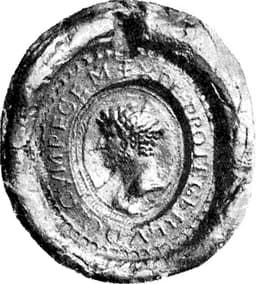
Louis the German
Emperor · Medieval
48.6Total
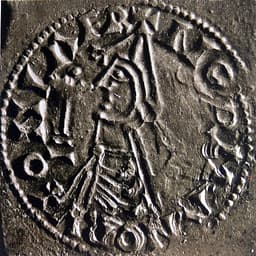
Olaf II of Norway
Emperor · Medieval
46.5Total
Basic Information
Born
806
995
Died
876
1030
Era
Medieval
Medieval
Nationality
East Francia
Norway
Occupation
Emperor
Emperor
Civilization
Western
Western
Score Comparison
Military (10%)
30.0
40.0
Political (20%)
54.7
45.1
Influence (20%)
54.1
56.7
Legacy (20%)
47.5
40.0
Leadership (15%)
40.0
48.4
Strategy (15%)
60.0
43.3
TOTAL
48.6
46.5
Louis the German — Complete Timeline
841 AD
Battle of Fontenoy (841)War◆ Major
Louis the German allied with Charles the Bald to defeat their brother Lothair I at the Battle of Fontenoy. This battle was a decisive conflict in the Carolingian civil war that followed the death of Louis the Pious. The victory led to the Treaty of Verdun.
Civil WarBattleCarolingian
Impact: regional
842 AD
Oaths of Strasbourg (842)Political Action◆ Major
Louis the German and Charles the Bald swore mutual allegiance against Lothair I at Strasbourg. The oaths were recorded in both Old High German and Old French, providing early evidence of the linguistic divergence between German and French. This alliance solidified their partnership.
AllianceOathLinguistic Record
Impact: regionalconstructive
843 AD
Treaty of Verdun (843)Political Action
Louis the German, along with his brothers Lothair I and Charles the Bald, signed the Treaty of Verdun, dividing the Carolingian Empire into three kingdoms. Louis received East Francia, comprising roughly modern Germany, laying the foundation for a distinct German kingdom.
TreatyDivision of EmpireEast Francia
Impact: global
844 AD
Campaigns against the SlavsWar◆ Major
Louis the German led multiple campaigns against Slavic tribes along his eastern borders, including the Obotrites, Sorbs, and Bohemians. These campaigns expanded East Frankish influence and secured the frontier, but faced mixed success and frequent rebellions.
ExpansionSlavic WarsFrontier
Impact: regional
876 AD
Death of Louis the GermanOther
Louis the German died on August 28, 876, at Frankfurt. His kingdom of East Francia was divided among his three sons: Carloman, Louis the Younger, and Charles the Fat. His death led to further fragmentation of the Carolingian realm.
DeathSuccessionDivision
Impact: regional
Olaf II of Norway — Complete Timeline
1015 AD
Became King of NorwayPolitical Action◆ Major
Olaf II became King of Norway after returning from Viking expeditions abroad. He claimed the throne with support from local chieftains and began consolidating power, aiming to unify Norway under a single monarchy and reduce the influence of regional lords.
CoronationNorwayUnification
Impact: regionalconstructive
Introduced Christianity to NorwayCultural◆ Major
Olaf II enforced the Christianization of Norway, using missionaries and laws to replace pagan practices. He built churches, appointed bishops, and suppressed resistance, making Christianity the official religion. This transformation aligned Norway with Christian Europe.
ChristianizationReligionNorway
Impact: regionalconstructive
1030 AD
Defeated at the Battle of StiklestadWar
Olaf II was killed at the Battle of Stiklestad while fighting against a coalition of Norwegian nobles and Danish forces led by Cnut the Great. His defeat was due to betrayal and superior enemy numbers, but his death soon led to his canonization as a saint.
BattleMartyrdomNorway
Impact: regionaltragic
1031 AD
Canonized as Saint OlafCultural◆ Major
Within a year of his death, Olaf II was declared a saint by Bishop Grimkell, with popular veneration spreading rapidly. His canonization was confirmed by the Pope in 1164. Saint Olaf became the patron saint of Norway and a symbol of Norwegian independence.
CanonizationSaintNorway
Impact: regionalconstructive
Expert Analysis
Origins
Louis the German (born c. 806) was the third son of Emperor Louis the Pious and grandson of Charlemagne. Raised in the Carolingian court, he received a Frankish education and was appointed King of Bavaria in 817 at age 11. His early years were shaped by the dynastic struggles of the Carolingian family, with his father's attempts to secure a unified succession leading to civil war.
Olaf II of Norway (born c. 995) was the son of King Harald Grenske of Vestfold, a minor Norwegian king. After his father's death, Olaf spent his youth as a Viking raider, participating in campaigns across the Baltic, England, and France. He converted to Christianity around 1010 while in Normandy and returned to Norway in 1015 to claim the throne.
Rise to Power
Louis the German's path to power was defined by the Carolingian civil wars. In 833, he joined his brothers Lothair I and Pepin in rebelling against their father, but later switched sides. After their father's death in 840, Louis allied with his half-brother Charles the Bald against Lothair. At the Battle of Fontenoy in 841, they decisively defeated Lothair. The Oaths of Strasbourg in 842 formalized their alliance, with Louis swearing in Old High German and Charles in Old French. The Treaty of Verdun in 843 divided the empire into three kingdoms: Louis received East Francia, comprising modern Germany and surrounding territories.
Olaf II returned to Norway in 1015 with a band of followers and quickly gained support from local chieftains. He defeated Earl Hakon Eiriksson at the Battle of Nesjar in 1016 and established himself as king. His rise was aided by the absence of Cnut the Great, who was occupied in England. Olaf then systematically consolidated power, eliminating rivals and centralizing authority.
Leadership & Governance
Louis the German governed East Francia through a network of counts and bishops, relying on Carolingian administrative traditions. He focused on securing his eastern borders against Slavic tribes, leading campaigns against the Obotrites, Sorbs, and Bohemians. His military score of 30.0 reflects limited aggressive expansion, but his political score of 54.7 indicates effective management of a fragmented kingdom. He maintained stability through diplomacy and marriage alliances, dividing his kingdom among his three sons before his death.
Olaf II was a more autocratic ruler. He introduced a centralized legal system, enforced Christian laws, and suppressed pagan practices. He built churches, appointed bishops, and used missionaries to convert the population. His leadership score of 48.4 shows a strong-willed but controversial approach, alienating many nobles who resented his heavy-handed reforms. His political score of 45.1 reflects the fragility of his rule, which ultimately collapsed under noble opposition.
Triumph & Tragedy
Louis the German's greatest success was securing East Francia as a lasting entity, which became the foundation of the Holy Roman Empire and modern Germany. He successfully defended his borders and maintained internal peace. His greatest failure was the continued division of the kingdom after his death, leading to further fragmentation among his sons. His strategy score of 60.0 indicates effective long-term planning, but his legacy score of 47.5 shows limited enduring fame.
Olaf II's triumph was the Christianization of Norway, which he enforced through laws and violence. He is revered as a saint and is credited with unifying Norway under Christianity. His greatest failure was his death at the Battle of Stiklestad in 1030, where he was killed by a coalition of nobles and Danish forces. His military score of 40.0 reflects his defeat, but his influence score of 56.7 is boosted by his posthumous sainthood.
Character & Destiny
Louis the German was pragmatic and cautious, prioritizing stability over conquest. His decision to ally with Charles the Bald against Lothair demonstrated strategic thinking, but his reluctance to expand beyond his borders limited his military achievements. His character was shaped by the Carolingian tradition of family conflict, and he died peacefully in 876 at Frankfurt.
Olaf II was a determined and often ruthless leader, driven by religious conviction. His decision to enforce Christianity alienated powerful nobles, leading to his downfall. His martyrdom at Stiklestad transformed him into a symbol of Norwegian independence and Christian faith. His personality—stubborn and uncompromising—both defined his reign and caused its collapse.
Legacy
Louis the German's legacy is primarily political: he founded East Francia, which evolved into the Kingdom of Germany and later the Holy Roman Empire. His reign established a distinct Germanic identity within the Carolingian world. However, his name is not widely known outside academic circles, and his total score of 48.6 reflects a moderate historical impact.
Olaf II's legacy is both religious and national. He became Norway's patron saint, with his cult spreading across Scandinavia. His canonization within a year of his death was unprecedented, and his feast day (July 29) is still celebrated. He is credited with completing the Christianization of Norway, and his story is central to Norwegian medieval history. His influence score of 56.7 exceeds Louis's, but his overall score of 46.5 is slightly lower due to his short reign and military failure.
Conclusion
Louis the German had a greater political and structural impact, founding a kingdom that lasted for centuries, while Olaf II's impact was more symbolic and religious. With a total score of 48.6 to Olaf's 46.5, Louis edges ahead. However, in terms of lasting cultural influence, Olaf's sainthood and role as national patron give him a unique resonance. Ultimately, Louis's creation of East Francia was a foundational act for German history, whereas Olaf's Christianization shaped Norwegian identity. The score gap of 2.1 points reflects Louis's superior political achievements, but Olaf's spiritual legacy arguably endures more vividly in the popular imagination.
Rankings
🥇
Louis the GermanLeader
Mil: 30.0Pol: 54.7Inf: 54.1
48.6
🥈
Olaf II of Norway
Mil: 40.0Pol: 45.1Inf: 56.7
46.5
+2.1 behind
How This Comparison Works
Algorithm
Each figure is scored on 6 dimensions (0—100 scale) based on structured historical data: Military (10%), Political (20%), Influence (20%), Legacy (20%), Leadership (15%), Strategy (15%). The weighted total produces the final ranking.
Data Sources
Scores are computed from structured sub-indicators in the database. Scale factors adjust for era (Ancient ×0.85, Modern ×1.0) and civilization size (Eastern ×1.05, Other ×0.80) to account for differences in population and military scale.
Maximum 3 Figures
Comparisons are limited to 2—3 figures to ensure readability and statistical meaningfulness.
Error Margins
±5 points per dimension — Sub-scores are derived from historical records with inherent uncertainty. Two figures within 5 points on a dimension should be considered roughly equivalent in that area.
Total Score Accuracy
±3 points overall — The weighted combination of 6 dimensions produces a total score with approximately ±3 points of uncertainty. Differences of less than 3 points are not statistically significant— the figures are effectively tied.
Known Limitations
- Historical records are incomplete and uneven across civilizations
- Figures from oral-tradition societies may be underrepresented
- Occupation labels can misclassify multi-role figures
- Scores measure capability and impact, not moral character
- Quantitative scoring is a comparison tool, not absolute truth
Capability Radar
Military (10%) — Battles & Warfare
Battles
45
45
Win Rate
50
50
Expansion
35
40
Political (20%) — Governance & Reform
Reform
40
55
Diplomacy
55
40
Economy
45
30
Influence (20%) — Cultural & Global Reach
Cultural
35
70
Global
30
55
Legacy (20%) — Historical Impact
Historical
45
75
Longevity
40
80
Leadership (15%) — Power & Stability
Tenure
65
35
Stability
50
25
Strategy (15%) — Tactics & Innovation
Strategy
45
35
Tactics
40
40
Reform
30
30
Similar Comparisons
Comments & Discussion
No comments yet. Be the first to share your thoughts!