Loading...
Lt Gen Sagat Singh vs Qin Shi Huang
Qin Shi Huang leads by 30.5 pts · 2 figures compared
…

Lt Gen Sagat Singh
General · Modern
54.7Total
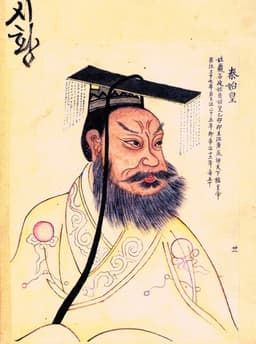
Qin Shi Huang
Emperor · Ancient
85.2Total
Basic Information
Born
1918
-259
Died
2001
-210
Era
Modern
Ancient
Nationality
India
China
Occupation
General
Emperor
Civilization
Indian
Eastern
Score Comparison
Military (10%)
80.0
80.0
Political (20%)
35.1
90.0
Influence (20%)
58.0
85.0
Legacy (20%)
50.0
90.0
Leadership (15%)
50.7
78.0
Strategy (15%)
68.1
82.0
TOTAL
54.7
85.2
Lt Gen Sagat Singh — Complete Timeline
1939 AD
Service in World War IIWar◆ Major
Singh served in the Burma Campaign during World War II, fighting in the Arakan and Imphal operations. He was awarded the Military Cross for his leadership.
World War IIBurmaMilitary Cross
Impact: regional
Commissioned into Indian ArmyPolitical Action◆ Major
Sagat Singh was commissioned as a second lieutenant in the British Indian Army. He served in the 1st Gorkha Rifles, beginning a military career known for bold tactics.
Indian ArmyCommissionMilitary career
Impact: national
1971 AD
Command of 4th Corps in 1971 warWar◆ Major
Singh commanded the Indian Army's 4th Corps during the 1971 war. He led a rapid advance into East Pakistan, using helicopter-borne troops and bold maneuvers to bypass Pakistani defenses.
1971 war4th CorpsManeuver warfare
Impact: regionalconstructive
Helicopter assault on SylhetWar◆ Major
Singh ordered a helicopter-borne assault on Sylhet in East Pakistan on December 7, 1971, landing troops behind enemy lines. This bold move cut off Pakistani forces and accelerated the Indian advance.
1971 warSylhetHelicopter assault
Impact: regionalconstructive
Capture of DhakaWar
Singh's 4th Corps was the first to enter Dhaka on December 16, 1971, after a rapid advance. His forces secured the city, leading to the Pakistani surrender later that day.
1971 warDhakaCapture
Impact: globalconstructive
Qin Shi Huang — Complete Timeline
246 BC
Construction of the Mausoleum and Terracotta ArmyOther◆ Major
Qin Shi Huang commissioned a vast mausoleum complex near Xi'an, guarded by thousands of life-sized terracotta soldiers, horses, and chariots. The project employed hundreds of thousands of workers and reflected his obsession with immortality and imperial power.
Impact: global
230 BC
Conquest of the Six Warring StatesWar
From 230 to 221 BCE, Ying Zheng led the Qin state in a series of campaigns that conquered the Han, Zhao, Wei, Chu, Yan, and Qi states. This unified China under a single ruler for the first time, ending the Warring States period.
Impact: global
221 BC
Standardization of Writing, Currency, and MeasurementsReform◆ Major
Qin Shi Huang ordered the standardization of Chinese script, currency, and weights and measures across the unified empire. This facilitated administration, trade, and cultural integration, laying a foundation for future dynasties.
Impact: globalconstructive
Proclamation of the Qin DynastyPolitical Action
After conquering the last independent state, Ying Zheng declared himself Shi Huangdi (First Emperor), founding the Qin Dynasty. He adopted a new title to signify his supreme authority and initiated centralized imperial rule.
Impact: global
214 BC
Initiation of the Great Wall ConstructionOther◆ Major
Qin Shi Huang ordered the connection and extension of existing northern fortifications to create a unified defensive wall against nomadic Xiongnu raids. This project involved massive conscripted labor and became the precursor to the later Great Wall.
Impact: regional
213 BC
Burning of Books and Burying of ScholarsPolitical Action◆ Major
On the advice of Li Si, Qin Shi Huang ordered the burning of historical records and philosophical texts not aligned with Legalist doctrine. He also had 460 Confucian scholars buried alive to suppress dissent and consolidate ideological control.
Impact: nationaldestructive
Expert Analysis
lt-gen-sagat-singh-vs-qin-shi-huang
# The Emperor and the General
In the winter of 221 BC, a man who had conquered six kingdoms stood before his assembled court and declared himself Shi Huangdi—the First Emperor—inaugurating a dynasty he expected to last ten thousand generations. Two thousand two hundred years later, on a December morning in 1971, another commander landed troops by helicopter behind enemy lines in Sylhet, a move so audacious it would crack open the gates of Dhaka. One man built an empire from blood and iron, the other liberated a nation in a fortnight. Both were masters of war and statecraft, yet their paths diverged as sharply as the eras that shaped them. What separates a tyrant from a liberator, a founder from a finisher? The answer lies not in their ambition, but in the worlds they inherited.
Origins
Qin Shi Huang was born into chaos. The Warring States period had torn China apart for centuries, a brutal age of shifting alliances and endless conflict. As a child prince of Qin, Ying Zheng watched his mother’s regency crumble into palace intrigue and assassination plots. The kingdom he inherited at thirteen was a military machine forged by Legalist philosophy—a doctrine that valued order above all, that saw law as the sword and the people as the stone to be carved. His tutor Li Si taught him that mercy was weakness, that unity required absolute control. The boy grew into a man who saw the world not as a garden to tend, but as a fortress to command.
Sagat Singh, by contrast, was born into an empire that was itself a prisoner of its own contradictions. In 1918, British India was a vast, restless land, its people divided by caste, religion, and the humiliations of colonial rule. Singh came from a Rajput family in Rajasthan, a warrior tradition that valued honor and service. He was commissioned into the 1st Gorkha Rifles in 1939, just as the world erupted into war. His classroom was the Burma jungle, where he learned that victory belonged not to the strongest, but to the swiftest and most adaptable. Where Qin Shi Huang was shaped by the cold calculus of Legalism, Singh was forged in the heat of the monsoon, fighting alongside men who laughed and bled and died together.
Rise to Power
Qin Shi Huang’s rise was a matter of inheritance and conquest. By 230 BC, he had consolidated power at home, purging rivals and centralizing authority. Then began the campaigns: Han fell in 230, Zhao in 228, Wei in 225, Chu in 223, Yan in 222, and finally Qi in 221. Each conquest was methodical, brutal, and final. He did not negotiate; he annihilated. When the last king surrendered, Ying Zheng did not simply take a throne—he erased the old world. The title “king” was no longer enough. He became Huangdi, a word that fused the legendary Yellow Emperor with divine authority.
Sagat Singh’s rise was slower, less spectacular, but no less determined. He fought through Burma, earning a reputation for courage and tactical flair. After independence in 1947, he remained in the Indian Army, a quiet professional in a force still finding its identity. His moment came in 1971, when East Pakistan seethed with rebellion. As commander of 4th Corps, Singh was given a task that seemed impossible: capture Dhaka before international pressure forced a ceasefire. He did not have the First Emperor’s legions or his absolute power. He had helicopters, Gurkhas, and the audacity to use them.
Leadership & Governance
Qin Shi Huang governed as he conquered: with iron uniformity. He standardized writing, currency, and measurements across his empire, binding a fractured land into a single administrative unit. He ordered the construction of roads and canals, and began linking the northern walls into what would become the Great Wall. But his vision was shadowed by paranoia. In 213 BC, he ordered the burning of all books not deemed useful—history, philosophy, poetry—and the burial of scholars who protested. He sought to control not just the present, but the past itself. His rule was efficient, but it was a machine that crushed everything it touched.
Sagat Singh led differently. He was not a builder of walls but a breaker of them. His command style was fluid, decentralized, and trusting. He gave his subordinates objectives, not orders, and expected them to improvise. When his corps faced the heavily fortified town of Sylhet, he did not waste time with a siege. He loaded troops into helicopters and dropped them into the enemy’s rear. The Pakistani defenders, expecting a conventional advance, found themselves surrounded by men who had appeared from the sky. Singh’s war was not about erasing the enemy’s identity, but about giving a people the chance to forge their own.
Triumph & Tragedy
Qin Shi Huang’s greatest triumph was also his deepest tragedy. He unified China, but at a cost so terrible that the dynasty he founded collapsed within four years of his death. His mausoleum, guarded by the Terracotta Army, stands as a monument to his ambition—and his fear of death. He spent his final years obsessed with immortality, consuming mercury pills that likely killed him. The man who conquered death itself could not conquer his own mortality.
Sagat Singh’s triumph was swift and clean. On December 16, 1971, his 4th Corps rolled into Dhaka, meeting little resistance. The Pakistani army surrendered, and Bangladesh was born. Singh did not build a palace or a wall; he helped break the chains of oppression. His tragedy was quieter: he retired to relative obscurity, a hero whose name few remembered outside military circles. He died in 2001, a modest man in a world that had moved on.
Character & Destiny
Qin Shi Huang’s character was his destiny. His paranoia, his need for absolute control, his refusal to tolerate dissent—these drove him to conquer, but also to destroy. He could not imagine a world where unity coexisted with freedom. His legacy is the Chinese empire, but also the lesson that power without wisdom becomes tyranny.
Sagat Singh’s character was defined by trust. He believed in his men, in their ability to think and act independently. He did not need to control everything because he had faith in those around him. That faith, more than any helicopter or rifle, won the war in 1971.
Legacy
Qin Shi Huang is remembered as the First Emperor, the man who made China. His standardized script and currency still echo in modern China. But he is also remembered as a tyrant, a burner of books, a builder of tombs. His legacy is a question: can unity be achieved without oppression?
Sagat Singh is remembered by those who know the 1971 war, by the soldiers who served under him, by the people of Bangladesh. His legacy is a proof: that audacity, speed, and trust can win wars that seem unwinnable. He is not a name in a textbook; he is a story told in mess halls and barracks.
Conclusion
One man built an empire from the ashes of war; the other liberated a nation in a flash of helicopters. Both were warriors, both were leaders, but they lived in different worlds. Qin Shi Huang’s world was one of scarcity, where power meant hoarding and controlling. Sagat Singh’s world was one of possibility, where power meant trusting and releasing. The emperor’s walls still stand; the general’s bridges still connect. Perhaps the difference is not in the men themselves, but in what they believed the purpose of power to be. One sought to conquer death; the other sought to give life. In the end, it is not the size of the empire that matters, but the freedom it leaves behind.
Rankings
🥇
Qin Shi HuangLeader
Mil: 80.0Pol: 90.0Inf: 85.0
85.2
🥈
Lt Gen Sagat Singh
Mil: 80.0Pol: 35.1Inf: 58.0
54.7
+30.5 behind
How This Comparison Works
Algorithm
Each figure is scored on 6 dimensions (0—100 scale) based on structured historical data: Military (10%), Political (20%), Influence (20%), Legacy (20%), Leadership (15%), Strategy (15%). The weighted total produces the final ranking.
Data Sources
Scores are computed from structured sub-indicators in the database. Scale factors adjust for era (Ancient ×0.85, Modern ×1.0) and civilization size (Eastern ×1.05, Other ×0.80) to account for differences in population and military scale.
Maximum 3 Figures
Comparisons are limited to 2—3 figures to ensure readability and statistical meaningfulness.
Error Margins
±5 points per dimension — Sub-scores are derived from historical records with inherent uncertainty. Two figures within 5 points on a dimension should be considered roughly equivalent in that area.
Total Score Accuracy
±3 points overall — The weighted combination of 6 dimensions produces a total score with approximately ±3 points of uncertainty. Differences of less than 3 points are not statistically significant— the figures are effectively tied.
Known Limitations
- Historical records are incomplete and uneven across civilizations
- Figures from oral-tradition societies may be underrepresented
- Occupation labels can misclassify multi-role figures
- Scores measure capability and impact, not moral character
- Quantitative scoring is a comparison tool, not absolute truth
Capability Radar
Military (10%) — Battles & Warfare
Battles
75
85
Win Rate
80
90
Expansion
65
90
Political (20%) — Governance & Reform
Reform
20
95
Diplomacy
25
75
Economy
15
90
Influence (20%) — Cultural & Global Reach
Cultural
40
95
Global
40
85
Legacy (20%) — Historical Impact
Historical
55
95
Longevity
35
95
Leadership (15%) — Power & Stability
Tenure
30
70
Stability
20
65
Strategy (15%) — Tactics & Innovation
Strategy
80
85
Tactics
85
80
Reform
60
95
Similar Comparisons
Comments & Discussion
SwordVsScroll6/17/2026
This matchup is absurd. Qin Shi Huang unified China through decades of brutal warfare and Legalist ruthlessness, while Sagat Singh won a single theater of a 14-day war. Comparing a general who engineered the fall of Dhaka to the man who standardized writing, currency, and built the Great Wall is like comparing a lightning strike to an earthquake. Singh was brilliant in his moment, but the First Emperor reshaped civilization itself. Not even close.
铁血史官6/17/2026
把萨加特·辛格和秦始皇放一起,简直就是关公战秦琼。辛格将军在1971年战争中表现英勇,但那是20世纪的一场局部冲突,背后有印度整体国力和国际局势支撑。秦始皇可是从零开始,用二十年时间横扫六国,统一文字、度量衡、车轨,开创了延续两千年的帝国体制。论格局和影响力,辛格连给始皇帝提鞋都不配。别被那些现代军事迷的浪漫幻想误导了。
DataSkeptic6/17/2026
Show me the body count. Qin Shi Huang conquered six kingdoms with armies numbering hundreds of thousands over decades. Sagat Singh captured 30,000 Pakistani POWs in a single campaign. Objectively, Singh's tactical brilliance achieved decisive results with minimal casualties. The First Emperor's "unification" killed millions and left behind a legacy of paranoia and tyrannical control. If we're measuring by lives saved and wars ended, the 20th-century general outperforms the ancient emperor by eve
墨家遗民6/17/2026
秦始皇统一六国靠的是血腥屠杀和严刑峻法,杀的人比辛格将军见过的士兵还多。坑儒术、焚诗书,把天下变成一个大监狱。萨加特·辛格将军在孟加拉国解放战争中,用精妙的直升机突袭战术解放了被压迫的人民,为东巴基斯坦带来了自由。一个是用屠刀和铁链建立帝国,一个是用智慧和勇气赢得战争。历史评价,高下立判。