Loading...
Magnus IV of Sweden vs Napoleon Bonaparte
Napoleon Bonaparte leads by 32.6 pts · 2 figures compared
…
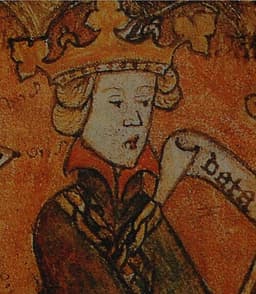
Magnus IV of Sweden
Emperor · Medieval
38.3Total

Napoleon Bonaparte
General · Modern
70.9Total
Basic Information
Born
1316
1769
Died
1374
1821
Era
Medieval
Modern
Nationality
Sweden
France
Occupation
Emperor
General
Civilization
Western
Western
Score Comparison
Military (10%)
21.2
94.0
Political (20%)
30.8
72.0
Influence (20%)
47.9
40.0
Legacy (20%)
37.5
80.0
Leadership (15%)
41.5
78.0
Strategy (15%)
39.6
90.0
TOTAL
38.3
70.9
Magnus IV of Sweden — Complete Timeline
1319 AD
Coronation as King of SwedenPolitical Action◆ Major
Magnus IV was crowned King of Sweden at the age of three, succeeding his grandfather Birger Magnusson. His minority led to a regency council ruling Sweden until he came of age.
CoronationMinority Rule
Impact: national
Union of Sweden and NorwayPolitical Action◆ Major
Magnus IV inherited the throne of Norway from his grandfather Haakon V, becoming king of both Sweden and Norway. This personal union united the two kingdoms under a single monarch for the first time.
UnionPersonal Union
Impact: regionalconstructive
1364 AD
Deposition by Swedish noblesPolitical Action◆ Major
Magnus IV was deposed by Swedish nobles led by Albert of Mecklenburg, who was elected king. Magnus was forced into exile in Norway, ending his rule over Sweden after 45 years.
DepositionNoble Revolt
Impact: nationaltragic
1374 AD
Death in exileOther
Magnus IV died in exile in Norway after being shipwrecked off the coast of Bergen. His death marked the end of the Swedish-Norwegian personal union, as Norway passed to his son Haakon VI.
DeathExile
Impact: nationaltragic
Napoleon Bonaparte — Complete Timeline
1799 AD
Coup of 18 BrumaireOther◆ Major
Napoleon Bonaparte, with support from his brother Lucien and key political figures, overthrew the Directory in a bloodless coup. He established the Consulate with himself as First Consul, effectively becoming the ruler of France. This event ended the French Revolution's most unstable period.
French RevolutionCoupRise to Power
Impact: regional
1804 AD
Promulgation of the Napoleonic CodeOther◆ Major
Napoleon enacted the Civil Code of the French, known as the Napoleonic Code, a comprehensive set of laws that replaced the fragmented feudal legal systems. The code established legal equality, protected property rights, and secularized law. It became the basis for legal systems in many European and world countries.
Legal ReformNapoleonic CodeCivil Law
Impact: globalconstructive
1805 AD
Battle of AusterlitzWar◆ Major
Napoleon's Grande Arm
Napoleonic WarsBattleDecisive Victory
Impact: global
1812 AD
Invasion of RussiaWar◆ Major
Napoleon led the Grande Arm
Napoleonic WarsInvasionDisaster
Impact: globaldestructive
1815 AD
Battle of WaterlooWar◆ Major
Napoleon's French army was defeated by the combined forces of the Duke of Wellington's Anglo-Allied army and Gebhard Leberecht von Bl
Napoleonic WarsBattleFinal Defeat
Impact: globaldestructive
Expert Analysis
magnus-iv-of-sweden-vs-napoleon-bonaparte
# The Emperor and the King: Two Crowns, Two Destinies
On a June morning in 1815, Napoleon Bonaparte stood on a muddy field near Waterloo, watching his Imperial Guard march into cannon fire for the last time. Nearly five centuries earlier, another ruler—a boy king crowned at three—watched his own empire crumble not on a battlefield but in the cold chambers of noble councils. One changed the face of Europe; the other faded into exile, remembered only by scholars. What separates a titan from a footnote? The answer lies not in crowns or titles, but in the currents of history that shaped them—and the choices they made when those currents turned against them.
Origins
Napoleon Bonaparte was born in 1769 on the island of Corsica, a place only recently annexed by France. His family was minor nobility, but their world was one of Mediterranean ambition and resentment toward French rule. Young Napoleon learned early that the world was a ladder, and he intended to climb. Sent to military school in mainland France at age nine, he was mocked for his accent and small stature—but he devoured books on strategy, artillery, and the campaigns of Caesar and Alexander. His era was one of revolution: the old order of kings and aristocrats was collapsing, and a man of talent could rise faster than ever before.
Magnus IV of Sweden, born in 1316, entered a world where birth was everything and merit meant little. He was the grandson of King Birger Magnusson, but his inheritance came through blood, not conquest. Medieval Scandinavia was a patchwork of feuding noble families, weak kings, and constant threats from Denmark and the Hanseatic League. Magnus never chose his path; it was chosen for him. At three years old, he was crowned King of Sweden—a child sitting on a throne while barons and bishops pulled the strings. The difference in their starting points is stark: Napoleon fought for every step upward; Magnus was lifted onto a stage he could not control.
Rise to Power
Napoleon’s ascent was a masterpiece of timing and audacity. In 1793, at age 24, he drove British forces from the port of Toulon, earning promotion to brigadier general. Two years later, he saved the revolutionary government from a royalist uprising with a “whiff of grapeshot”—cannon fire that cleared the streets of Paris. Then came Italy: in 1796, he led a ragged army across the Alps and defeated larger Austrian forces in a series of lightning campaigns. His victories were not just military; he wrote proclamations that inspired soldiers and terrified enemies. By 1799, he was First Consul of France. By 1804, Emperor.
Magnus IV’s rise was quieter, slower, and far less glorious. His coronation in 1319 was a formality; real power belonged to regents and noble councils. The Union of Sweden and Norway that same year was not his doing but an inheritance from his grandfather Haakon V. He became king of two realms without lifting a sword. For decades, he governed through compromise, granting privileges to nobles and the Church to maintain peace. He was not a conqueror but a caretaker—and caretakers rarely survive turbulent times.
Leadership & Governance
Napoleon ruled with a blend of iron discipline and visionary reform. His Napoleonic Code, enacted in 1804, standardized French law, abolished feudal privileges, and established merit-based advancement. It influenced legal systems across Europe and beyond. As a military commander, he was unmatched: his campaigns in Austria, Prussia, and Russia showcased brilliant logistics, rapid marches, and decisive battles like Austerlitz in 1805, where he crushed a larger coalition army. Yet his governance was also autocratic. He suppressed dissent, controlled the press, and crowned himself Emperor in a ceremony where he took the crown from the Pope’s hands—a gesture of supreme self-confidence.
Magnus IV governed in a different key. His style was conciliatory, not commanding. He issued charters, confirmed noble privileges, and tried to balance factions. His political score of 59.8 reflects a ruler who managed but never mastered. He faced revolts—peasant uprisings and noble conspiracies—but responded with negotiations, not force. His military score of 30.0 tells the story: he was no general. When war came, he relied on others. In an age when kings were expected to lead armies, Magnus stayed in his castle. That choice cost him everything.
Triumph & Tragedy
Napoleon’s greatest moment was Austerlitz, where he turned a potential disaster into his most brilliant victory. His worst came in 1812: the invasion of Russia. He marched 600,000 men into the vast, frozen emptiness; fewer than 100,000 returned. The tragedy was not just military but personal—his hubris, his refusal to retreat, his belief that will alone could conquer nature. Exiled to Elba in 1814, he escaped, raised another army, and met final defeat at Waterloo in 1815. The man who had conquered Europe died alone on a remote island in the South Atlantic.
Magnus IV’s tragedy was quieter but no less complete. After decades of rule, Swedish nobles turned against him. In 1364, they deposed him and elected Albert of Mecklenburg as king. Magnus fled to Norway, where he died in exile ten years later—shipwrecked off the coast of Bergen. No grand battle, no epic last stand. Just a man washed ashore, his reign erased by the very nobles he had tried to appease.
Character & Destiny
Napoleon was driven by an insatiable hunger for glory. “Impossible is a word to be found only in the dictionary of fools,” he once said. His personality—ambitious, calculating, ruthless—shaped every decision. He believed he was destined to remake Europe, and for a time, he did. But that same belief blinded him. He could not stop, could not compromise, could not accept limits. His fall was as dramatic as his rise.
Magnus IV was a different creature. He lacked Napoleon’s fire. He was cautious, pious, and perhaps too reasonable for his brutal age. His leadership score of 72.8 suggests competence, not brilliance. He tried to rule by consensus in an era that rewarded force. His personality did not shape his era; his era shaped him—and crushed him.
Legacy
Napoleon’s legacy is immense. The Napoleonic Code, modern warfare, the spread of nationalism, the redrawing of European borders—his shadow stretches across two centuries. He is remembered as both liberator and tyrant, reformer and conqueror. His score of 82.4 reflects a figure who still divides opinion, still fascinates, still matters.
Magnus IV’s legacy is faint. His union of Sweden and Norway did not last. His deposition marked the end of a dynasty. His total score of 53.3 places him among history’s minor kings—a cautionary tale of what happens when a ruler cannot command. He is remembered, if at all, as a footnote in Swedish history.
Conclusion
Stand at Waterloo and you feel the weight of Napoleon’s ambition. Stand at Bergen, where Magnus drowned, and you feel only the cold sea. The difference between them is not just talent or luck. It is the difference between a man who seized history by the throat and a man who let history slip through his fingers. Napoleon teaches us that greatness demands audacity, but also that audacity without wisdom ends in ruin. Magnus teaches us that caution, in certain ages, is its own kind of failure. Both were kings. Only one made the world remember his name.
Rankings
🥇
Napoleon BonaparteLeader
Mil: 94.0Pol: 72.0Inf: 40.0
70.9
🥈
Magnus IV of Sweden
Mil: 21.2Pol: 30.8Inf: 47.9
38.3
+32.6 behind
How This Comparison Works
Algorithm
Each figure is scored on 6 dimensions (0—100 scale) based on structured historical data: Military (10%), Political (20%), Influence (20%), Legacy (20%), Leadership (15%), Strategy (15%). The weighted total produces the final ranking.
Data Sources
Scores are computed from structured sub-indicators in the database. Scale factors adjust for era (Ancient ×0.85, Modern ×1.0) and civilization size (Eastern ×1.05, Other ×0.80) to account for differences in population and military scale.
Maximum 3 Figures
Comparisons are limited to 2—3 figures to ensure readability and statistical meaningfulness.
Error Margins
±5 points per dimension — Sub-scores are derived from historical records with inherent uncertainty. Two figures within 5 points on a dimension should be considered roughly equivalent in that area.
Total Score Accuracy
±3 points overall — The weighted combination of 6 dimensions produces a total score with approximately ±3 points of uncertainty. Differences of less than 3 points are not statistically significant— the figures are effectively tied.
Known Limitations
- Historical records are incomplete and uneven across civilizations
- Figures from oral-tradition societies may be underrepresented
- Occupation labels can misclassify multi-role figures
- Scores measure capability and impact, not moral character
- Quantitative scoring is a comparison tool, not absolute truth
Capability Radar
Military (10%) — Battles & Warfare
Battles
15
95
Win Rate
10
90
Expansion
5
95
Political (20%) — Governance & Reform
Reform
30
95
Diplomacy
25
80
Economy
20
85
Influence (20%) — Cultural & Global Reach
Cultural
15
85
Global
10
90
Legacy (20%) — Historical Impact
Historical
20
95
Longevity
15
90
Leadership (15%) — Power & Stability
Tenure
40
85
Stability
10
70
Strategy (15%) — Tactics & Innovation
Strategy
10
95
Tactics
10
98
Reform
5
92
Similar Comparisons
Comments & Discussion
CRONOS_REBEL6/17/2026
别扯“权谋失败”,君主本质就是暴力的执行者。拿破仑敢炮轰巴黎街头来稳政权,马格努斯连个叛军首领都砍不利索。真正的大帝靠的是冷酷和行动,不是求神拜佛式的王国管理。一个死于剑,一个亡于懦——高下立判。
WATERLOO_WHISPERER6/17/2026
Militarily, Napoleon in his prime would’ve crushed Magnus by lunch. Waterloo was a tactical near-miss against the best British Prussian coordination ever; Magnus’s main claim is losing his crown without firing a shot at civil war. Give Napoleon 10,000 Old Guard with 1805 discipline, and he’d steamroll 14th-century Sweden by dinnertime. History remembers winners, not passive losers.
BATTLE_MATH_GUY6/17/2026
People romanticize Napoleon, but let’s data-check: his final defeat at Waterloo was one of the most avoidable military blunders ever—splitting forces, ignoring weather reports, sending cavalry against unbroken infantry squares. Magnus never lost a major battle because he barely fought any, but Napoleon lost TWO empires through hubris. Any competent general from 1500 onward could match his early victories; the real test is finishing the war.
罗盘与十字6/17/2026
拿破仑的崛起靠的是法国革命撕裂旧秩序,而马格努斯是封建联盟的牺牲品。两人最本质的分歧不在能力,而在时代:马格努斯若生在18世纪,也许只是个平庸的领主;拿破仑若生在14世纪,可能连船都跨不过海峡。历史的机遇才是真正的国王。
FOOTNOTE_HUNTER6/17/2026
Let’s be brutally honest: Magnus IV is a historical nobody outside Scandinavian academic circles. Napoleon reshaped law (Code Napoléon), military doctrine (corps system), and European borders. Magnus is remembered mostly for being deposed by his own nobles and losing Norway. Comparing them is like comparing a candle to a nuclear reactor—both emit energy, but the scale is laughably mismatched.