Loading...
Mahmud I of Great Seljuk vs Napoleon Bonaparte
Napoleon Bonaparte leads by 31.5 pts · 2 figures compared
…
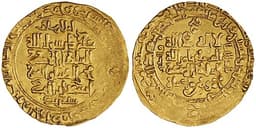
Mahmud I of Great Seljuk
Emperor · Medieval
39.4Total

Napoleon Bonaparte
General · Modern
70.9Total
Basic Information
Born
1087
1769
Died
1094
1821
Era
Medieval
Modern
Nationality
Seljuk Empire
France
Occupation
Emperor
General
Civilization
Middle Eastern
Western
Score Comparison
Military (10%)
20.0
94.0
Political (20%)
35.0
72.0
Influence (20%)
45.5
40.0
Legacy (20%)
35.0
80.0
Leadership (15%)
49.9
78.0
Strategy (15%)
45.0
90.0
TOTAL
39.4
70.9
Mahmud I of Great Seljuk — Complete Timeline
1092 AD
Accession as SultanPolitical Action◆ Major
Following the death of his father Malik Shah I, Mahmud I was proclaimed sultan at age five. His mother Terken Khatun acted as regent, but the succession was contested by his half-brothers Barkiyaruq and others, leading to civil war.
SuccessionRegencyCivil War
Impact: national
1093 AD
Battle of Al-RuhaymiWar◆ Major
Forces loyal to Mahmud I, led by his mother Terken Khatun and general Kerbogha, fought against Barkiyaruq's army near Al-Ruhaymi in Iraq. Mahmud's forces were defeated, weakening his claim to the sultanate.
Civil WarBarkiyaruqKerbogha
Impact: nationaldestructive
1094 AD
Death of Mahmud IPolitical Action
Mahmud I died at age seven, likely from illness. His death ended his brief reign and allowed Barkiyaruq to consolidate power as the sole Seljuk sultan, though the empire remained divided by ongoing succession conflicts.
DeathChild SultanSuccession
Impact: nationaltragic
Napoleon Bonaparte — Complete Timeline
1799 AD
Coup of 18 BrumaireOther◆ Major
Napoleon Bonaparte, with support from his brother Lucien and key political figures, overthrew the Directory in a bloodless coup. He established the Consulate with himself as First Consul, effectively becoming the ruler of France. This event ended the French Revolution's most unstable period.
French RevolutionCoupRise to Power
Impact: regional
1804 AD
Promulgation of the Napoleonic CodeOther◆ Major
Napoleon enacted the Civil Code of the French, known as the Napoleonic Code, a comprehensive set of laws that replaced the fragmented feudal legal systems. The code established legal equality, protected property rights, and secularized law. It became the basis for legal systems in many European and world countries.
Legal ReformNapoleonic CodeCivil Law
Impact: globalconstructive
1805 AD
Battle of AusterlitzWar◆ Major
Napoleon's Grande Arm
Napoleonic WarsBattleDecisive Victory
Impact: global
1812 AD
Invasion of RussiaWar◆ Major
Napoleon led the Grande Arm
Napoleonic WarsInvasionDisaster
Impact: globaldestructive
1815 AD
Battle of WaterlooWar◆ Major
Napoleon's French army was defeated by the combined forces of the Duke of Wellington's Anglo-Allied army and Gebhard Leberecht von Bl
Napoleonic WarsBattleFinal Defeat
Impact: globaldestructive
Expert Analysis
mahmud-i-of-great-seljuk-vs-napoleon-bonaparte
### The Emperor and the Child
History has a peculiar habit of placing the most colossal figures alongside the most fleeting ones, as if to remind us that the stage of power is vast enough to hold both a tempest and a whisper. Consider two rulers, separated by seven centuries and an entire world of ambition: one, Napoleon Bonaparte, whose name still echoes in the halls of law and war; the other, Mahmud I of the Great Seljuk Empire, who was barely old enough to hold a scepter before he was gone. One conquered a continent; the other could not conquer his own childhood. Why does one man’s story fill libraries while the other’s is a footnote? The answer lies not in the accidents of birth, but in the forces of history that shaped their rise, their rule, and their ruin.
### Origins
Napoleon was born in 1769 on the island of Corsica, a place only recently annexed by France. His family was minor nobility, but his world was one of upheaval. The French Revolution, which erupted when he was twenty, tore down the old order and created a vacuum of opportunity. A young artillery officer of modest birth could rise, and rise quickly, because the old rules no longer applied. His era was one of new ideas—nationalism, meritocracy, and the power of the masses—and he was its perfect son.
Mahmud I, by contrast, was born into a dynasty that had already mastered the art of empire. The Great Seljuk Empire, in 1087, was a vast, sprawling machine of Turkic warriors and Persian administrators. His father, Malik Shah I, ruled from the Mediterranean to the borders of China. But this world was not one of opportunity; it was one of inheritance, of bloodlines, of courtly intrigue. Mahmud was born into a system where power was a birthright, but also a poison. At five years old, upon his father’s death in 1092, he was proclaimed sultan—not because he could lead, but because his mother, Terken Khatun, could scheme. His origins were not a launching pad but a cage.
### Rise to Power
Napoleon’s rise was a masterclass in seizing the moment. He first gained attention in 1793 at the Siege of Toulon, where his tactical brilliance recaptured the port from royalist rebels. By 1796, he was commanding the French army in Italy, a general at twenty-six. His path was paved with victories—Lodi, Arcole, Rivoli—each one a stepping stone. He did not inherit power; he conquered it, using the chaos of the Revolution as his ladder. When he returned from Egypt in 1799, he found a government in crisis and overthrew it in the coup of 18 Brumaire. By 1804, he crowned himself Emperor of the French. Every step was his own.
Mahmud’s rise was not a rise at all, but a proclamation. At age five, he was placed on the throne by his mother and her allies, a pawn in a succession war against his half-brother, Barkiyaruq. The key event of his brief reign was the Battle of Al-Ruhaymi in 1093, where forces loyal to him—led by his mother and the general Kerbogha—fought Barkiyaruq’s army. But Mahmud was not there; he was a child, a symbol. His rise was not his doing, but the work of others who needed a name to rally behind. He did not climb; he was carried.
### Leadership & Governance
Napoleon’s leadership was defined by two things: military genius and political reform. As a commander, he was relentless, using speed, concentration of force, and psychological warfare. His battle record is staggering—Austerlitz in 1805, Jena in 1806, Friedland in 1807—each a masterpiece of strategy. But he was more than a soldier. He rebuilt France through the Napoleonic Code, a legal system that enshrined equality before the law, property rights, and secular governance. He centralized the state, created the Bank of France, and reformed education. He ruled with iron, but also with order.
Mahmud’s governance was a fiction. He was a child sultan, and real power lay with his mother and the court factions. There were no reforms, no laws, no vision—only survival. The Seljuk Empire was already fracturing under the weight of succession disputes, and Mahmud was a placeholder, not a ruler. His leadership score of 29.4 and political score of 33.7 reflect this emptiness. He did not govern; he was governed.
### Triumph & Tragedy
Napoleon’s greatest moment was Austerlitz, the Battle of the Three Emperors, where he crushed the combined armies of Russia and Austria. It was a triumph of strategy and nerve, a victory so complete that it secured his dominance over Europe. His greatest tragedy was the invasion of Russia in 1812. He marched with 600,000 men; he returned with fewer than 100,000. The Russian winter, the scorched earth, the endless retreat—it was a self-inflicted wound from which he never recovered. His final defeat at Waterloo in 1815 was the closing act of a tragedy he had written himself.
Mahmud’s life had no such peaks or valleys. His triumph was surviving to age seven; his tragedy was never living to rule. The Battle of Al-Ruhaymi was not a personal victory, but a battle fought in his name. His death in 1094, likely from illness, was not a dramatic fall but a quiet end. He was a victim of his era’s brutal logic: in a world of dynastic warfare, a child sultan was a target, not a leader.
### Character & Destiny
Napoleon was driven by an insatiable ambition and a belief in his own destiny. “Impossible is a word to be found only in the dictionary of fools,” he once said. His character was a blend of brilliance and hubris—he could plan a campaign with mathematical precision, yet he could not see the limits of his own power. His destiny was shaped by his choices: he chose to invade Russia, to fight on two fronts, to refuse compromise. His personality made him a conqueror, but also a prisoner of his own ambition.
Mahmud’s character is unknowable. He was a child, and children do not make history; history makes them. His destiny was not his own. The Seljuk Empire’s culture of succession wars placed him on the throne not because he could rule, but because his mother could use him. His personality was irrelevant—he was a symbol, not a man.
### Legacy
Napoleon’s legacy is immense. The Napoleonic Code influenced legal systems across Europe and the world. His military tactics are still studied in war colleges. He reshaped the map of Europe, sparked nationalism in Germany and Italy, and left a mark on everything from architecture to governance. His legacy score of 78.0 reflects a man who changed history, for better and worse.
Mahmud I’s legacy is a whisper. He is remembered, if at all, as a brief interruption in the Seljuk succession. His influence score of 57.4 is generous—it reflects the dynasty’s power, not his own. His death allowed Barkiyaruq to consolidate power, but the empire continued its slow decline. He left no laws, no battles, no ideas. He was a footnote.
### Conclusion
To compare Napoleon and Mahmud I is to compare a volcano to a candle. One erupted with fury and changed the landscape forever; the other flickered and was gone. But the contrast is not merely one of scale—it is one of era, opportunity, and the nature of power itself. Napoleon lived in an age where a man could remake the world through will and talent; Mahmud lived in an age where power was a birthright that could crush a child as easily as it could crown him. History judges them differently, but it judges them fairly. Napoleon’s story is a warning about ambition; Mahmud’s is a reminder that not all who sit on thrones are kings.
Rankings
🥇
Napoleon BonaparteLeader
Mil: 94.0Pol: 72.0Inf: 40.0
70.9
🥈
Mahmud I of Great Seljuk
Mil: 20.0Pol: 35.0Inf: 45.5
39.4
+31.5 behind
How This Comparison Works
Algorithm
Each figure is scored on 6 dimensions (0—100 scale) based on structured historical data: Military (10%), Political (20%), Influence (20%), Legacy (20%), Leadership (15%), Strategy (15%). The weighted total produces the final ranking.
Data Sources
Scores are computed from structured sub-indicators in the database. Scale factors adjust for era (Ancient ×0.85, Modern ×1.0) and civilization size (Eastern ×1.05, Other ×0.80) to account for differences in population and military scale.
Maximum 3 Figures
Comparisons are limited to 2—3 figures to ensure readability and statistical meaningfulness.
Error Margins
±5 points per dimension — Sub-scores are derived from historical records with inherent uncertainty. Two figures within 5 points on a dimension should be considered roughly equivalent in that area.
Total Score Accuracy
±3 points overall — The weighted combination of 6 dimensions produces a total score with approximately ±3 points of uncertainty. Differences of less than 3 points are not statistically significant— the figures are effectively tied.
Known Limitations
- Historical records are incomplete and uneven across civilizations
- Figures from oral-tradition societies may be underrepresented
- Occupation labels can misclassify multi-role figures
- Scores measure capability and impact, not moral character
- Quantitative scoring is a comparison tool, not absolute truth
Capability Radar
Military (10%) — Battles & Warfare
Battles
5
95
Win Rate
5
90
Expansion
5
95
Political (20%) — Governance & Reform
Reform
5
95
Diplomacy
10
80
Economy
5
85
Influence (20%) — Cultural & Global Reach
Cultural
5
85
Global
5
90
Legacy (20%) — Historical Impact
Historical
5
95
Longevity
5
90
Leadership (15%) — Power & Stability
Tenure
10
85
Stability
5
70
Strategy (15%) — Tactics & Innovation
Strategy
5
95
Tactics
5
98
Reform
5
92
Similar Comparisons
Comments & Discussion
细数尘埃6/17/2026
拿一个七岁夭折的娃娃皇帝跟拿破仑比?当年塞尔柱帝国马赫穆德一世连朝政都没摸过,全靠母后和大臣撑着,莫名其妙病死。拿破仑却是亲手从科西嘉杀到巴黎,再到奥斯特里茨的战场天花板。这俩人根本不是一个量级,硬凑对比只能暴露历史知识浅薄。
Sultan’s Shadow6/17/2026
Let’s be real: comparing a toddler-caliph who died at 7 to Napoleon is like comparing a firecracker to a supernova. Mahmud I ruled maybe three years under regents before smallpox took him. Napoleon redefined warfare, law, and nationalism across Europe for two decades. One is a historical curio, the other is a blueprint for modern ambition. Stop padding weak parallels.